
The Report
The Week Pickleball Got Less Simple
World Pickleball Report
The Week Pickleball Got Less SimpleThe stories you may have missed, and what they reveal about where the sport is heading next.
This is the World Pickleball Report.
This week was not defined by one result, one signing or one announcement.
It was defined by a harder pattern.
Pickleball’s next phase is becoming less casual, less forgiving and less easy to manage. Equipment is moving faster than local enforcement. Pro teams are discovering that roster building is now a front-office discipline. Asia is turning calendars and junior pathways into competitive infrastructure. Regional tours are exposing the economics beneath the top tier. Even recreational sport is being pulled into questions of safety, sound, culture and responsibility.
The sport is still accessible. It is simply no longer as simple as its image suggests.
Lead feature: the hot paddle issue has reached the rec court
The most important story of the week may not have been professional at all.
The hot paddle debate is now moving into local tournaments, club play and recreational environments where proper equipment checks are rare, inconsistent or impossible.
That changes the conversation. This is no longer only about fairness. It is about reaction time, safety, trust and whether amateur pickleball can govern the speed of the modern game.
What matters: recreational pickleball may now be dealing with professional-level pace inside volunteer-led environments. That gap cannot be ignored forever.
Pressure Points: Asia is no longer a distant subplot
Several of this week’s strongest stories came from Asia, but they were not all saying the same thing.
PPA Asia’s calendar is becoming dense enough to shape careers. India’s junior pathway work is turning ambition into structure. China’s residential academy points toward earlier specialisation. Malaysia’s governance dispute shows how fragile rapid expansion can become when institutions are not ready.
This is the sharper read: Asia is not just receiving pickleball. It is beginning to decide what serious pickleball could look like outside North America.
What matters: influence follows infrastructure. The regions building pathways, calendars and governance fastest may eventually shape the sport’s balance of power.
Read the India power-shift analysis

Beyond the Score: junior pickleball is becoming more serious
The Asia Elite Pickleball Academy in Hainan was one of the week’s most revealing stories because it changes the tone around junior development.
A full-residence academy is not a casual participation project. It is a performance environment. It asks families, coaches and young players to treat pickleball as something that can justify relocation, routine and long-term investment.
That is a major cultural shift for a sport still commonly sold through ease and informality.
What matters: the next generation may not discover pickleball casually. Some of them may be raised inside systems designed to produce elite players from the start.
Read the Asia Elite Academy feature
The Reset: not every structure is stable
Malaysia offered the week’s cautionary note.
The sport can add players, courts, events and sponsors quickly. It cannot always build trust, process and governance at the same speed.
That is why federation disputes matter. They may look administrative from the outside, but they often reveal whether a young sport is ready for the pressure that comes with popularity.
What matters: momentum is not the same as maturity. The places growing fastest may also face the hardest institutional tests.
Read the Malaysia governance analysis
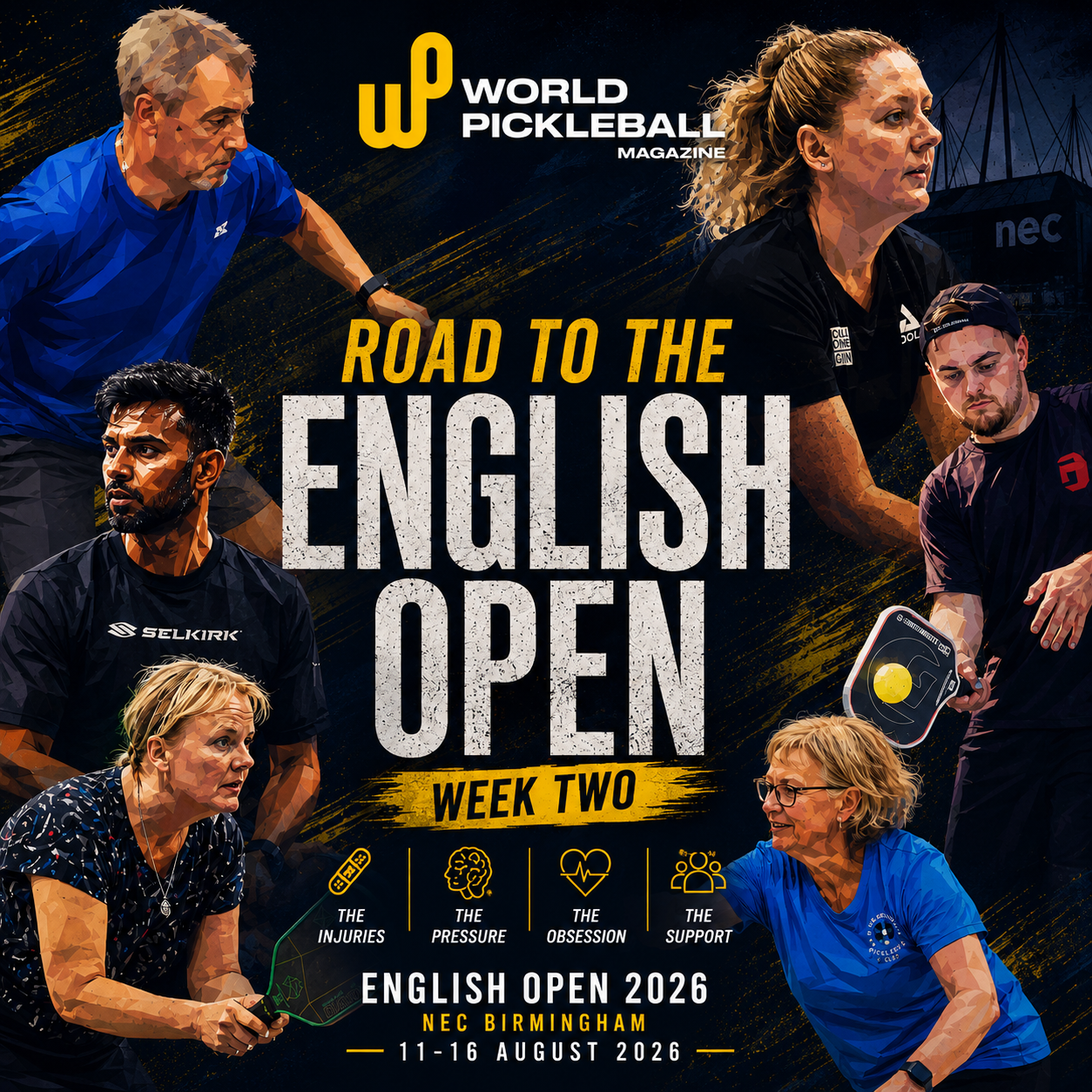
The human layer: ambition started meeting evidence
Road to the English Open reached its most useful stage this week.
Not the announcement stage. Not the motivational stage. The honest stage.
Week two began to show the distance between wanting to compete seriously and preparing in a way that makes serious competition possible. That means weaknesses, confidence dips, technical habits and the awkward reality of whether training is actually building readiness.
What matters: the best participation stories are not built on vague inspiration. They are built on the visible work of getting better.
Read Road to the English Open week two
One Thing to Watch: the pro job is being redefined
MLP’s Dallas week, Anna Bright’s behind-the-scenes workload and the rise of circuits such as Brick Wall all pointed toward the same issue from different angles.
Professional pickleball is no longer only about who can win on court.
Teams need scouting and roster judgement. Players need to handle travel, sponsors, media and visibility. Secondary tours need to create viable economics for the players outside the very top layer.
What matters: the sport is creating professional demands before every part of the professional ecosystem is fully built.
Read the MLP front-office analysis
What matters most
The week’s stories were not really about expansion.
They were about consequences.
Faster paddles create safety questions. Bigger calendars create workload questions. Junior academies create pathway questions. Federation disputes create trust questions. New circuits create economic questions. Serious preparation creates personal questions.
That is the shape of pickleball now: every exciting next step brings a harder question with it.

The May issue gives the deeper read
Daily news tells you what moved.
The magazine explains the forces underneath it.
Across player development, governance, global pathways, tactics and the changing demands of the modern game, the May issue connects the stories shaping where pickleball goes next.