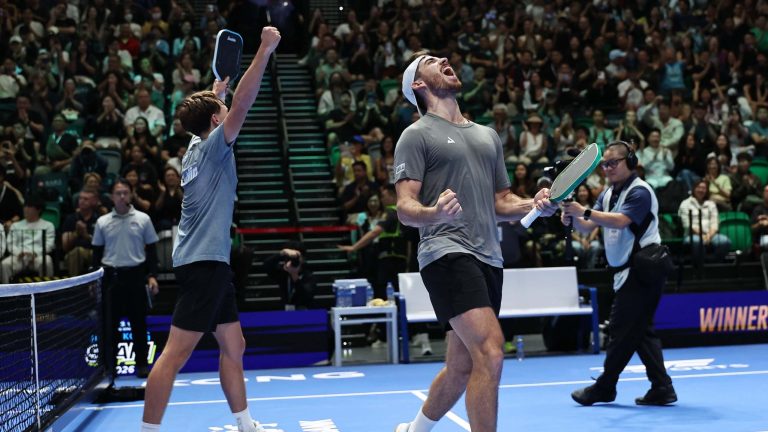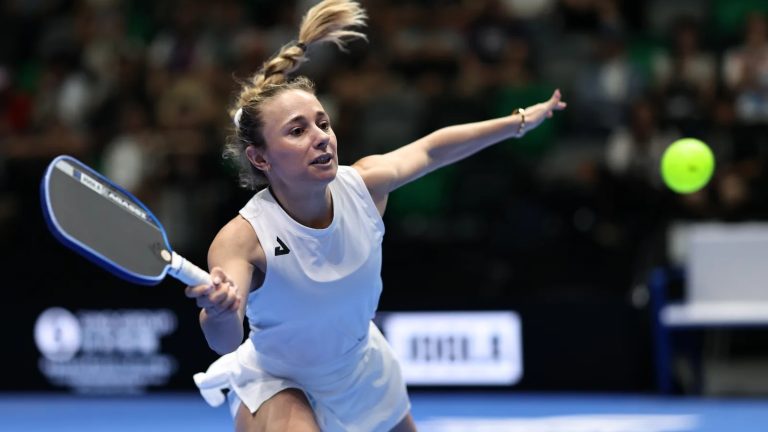

Major League Pickleball begins its 2026 season this week in Dallas with new tactical rules, rising player valuations, and growing scrutiny around roster construction. For the first time, the league feels less like an ambitious start-up competition and more like a professional sports ecosystem where poor decisions carry real consequences.
- The 2026 MLP season opens in Dallas amid growing focus on roster construction, trade value, and front-office competence.
- A major six-player rule change could reshape how franchises build teams and approach Dreambreakers.
- Reported six-figure player discussions and controversial offseason moves suggest the league’s financial and competitive pressure is accelerating quickly.
Dallas enters the season under the spotlight
The Dallas Flash spent part of the offseason paying to escape decisions they had only recently made.
In previous years, that kind of roster confusion may barely have registered outside hardcore MLP circles. This time it became one of the defining talking points of the winter.
That shift matters.
When Major League Pickleball returns this Friday at Pickler Universe in Carrollton, Texas, the obvious focus will sit on the league’s familiar contenders. The Anna Leigh Waters-led New Jersey 5s still look loaded. The St. Louis Shock remain frighteningly balanced. Defending champions Columbus Sliders arrive carrying expectations that now follow every proven roster in the league.
But the biggest storyline entering 2026 is not who looks strongest on paper.
It is how quickly MLP has become an environment where front offices are now exposed to the same scrutiny, pressure, and second-guessing seen across established professional sports.
The offseason that changed the conversation
Dallas became the clearest example of that reality.
The Flash stunned much of the league by moving on from Jorja Johnson before the draft, only to spend the weeks afterwards scrambling through a sequence of moves that raised even more questions. Dallas selected Callie Smith for $50,000, then quickly traded her to the Las Vegas Night Owls alongside a reported $100,000 in cash for Brooke Buckner.
Meanwhile, Johnson landed with New Jersey.
Even within a young league still evolving rapidly, the optics were brutal.
Not necessarily because Buckner cannot help Dallas compete. She absolutely can. But because the process itself suddenly mattered. Fans analysed it. Rival executives discussed it. The league’s growing audience treated it like a genuine front-office gamble rather than routine offseason churn.
That is new territory for professional pickleball.
So is the money.
Miami Pickleball Club General Manager Johnny Goldberg is reportedly fielding trade offers around the $200,000 mark for Nicolas Acevedo, one of the league’s most intriguing emerging talents. Whether Miami ultimately accepts an offer is almost secondary. The significance lies in the valuation itself.
A year ago, numbers like that still felt theoretical in pickleball.
Now they are being discussed openly.
The sport has reached the point where teams are no longer simply collecting players. They are managing assets, balancing roster timelines, and trying to project long-term value in a league whose rules continue shifting beneath them.
The rule change that could reshape the league
And that is where the 2026 season may genuinely separate smart organisations from reactive ones.
The league’s new six-player participation rule could become the most important competitive change of the entire year. Teams can now deploy all six rostered players during a match, dramatically increasing the strategic value of depth, flexibility, and singles ability in Dreambreakers.
On paper, it sounds like a simple tweak.
In practice, it changes almost everything.
For years, MLP roster construction revolved heavily around stable doubles pairings and star chemistry. Now teams suddenly need to think more carefully about bench balance, substitution pathways, matchup planning, and specialist roles. Singles players who may once have felt like luxuries could become decisive weapons late in ties.
That places enormous pressure on scouting and recruitment.
Some organisations look ready. Others look expensive.
Some franchises appear prepared for this version of MLP already.
New Jersey looks frightening not only because Waters remains the defining force in professional pickleball, but because the organisation has assembled a roster with flexibility and overlap across formats. St. Louis carry similar structural stability. Hayden Patriquin and Gabe Tardio continue to give the Shock arguably the strongest men’s pairing in the league, while Anna Bright and Kate Fahey provide reliability that few teams can consistently match.
Those organisations increasingly look coherent.
Others look expensive.
Dallas enters its home event carrying more questions than almost any contender in the field, while the Columbus Sliders immediately face adaptation challenges after Parris Todd’s suspension forced Alix Truong into the opening-weekend lineup. Under previous roster structures, losing a player of Todd’s calibre could heavily damage a team’s event ceiling. The new rules may soften that impact slightly, but only for teams capable of adjusting quickly.
That idea sits underneath almost every major storyline entering Dallas.
Professional pickleball is becoming structurally more demanding.
The margins are tightening. Player valuations are climbing. Draft decisions are becoming public talking points. Teams are now expected to think several moves ahead rather than simply collect recognisable names and hope chemistry follows.
And perhaps most significantly, the league no longer feels protected by its own newness.
Excuses disappear quickly once serious money enters the room.
MLP’s next phase has arrived
The 2026 season begins with more depth, more tactical complexity, and more organisational pressure than MLP has ever faced before. Some franchises already look equipped for that reality. Others may discover very quickly that talent alone is no longer enough to survive it.
Further Reading
- Latest pickleball news from around the world
- Tournament coverage and results
- Rankings and player profiles
- Regional pickleball coverage

Chris Beaumont
Founder and Editor-in-ChiefChris Beaumont is the founder and Editor-in-Chief of World Pickleball Magazine, published by World Pickleball Media Ltd. He follows the global game closely, reporting on news, developments, stories and tournaments from all five continents. He also hosts the World Pickleball…
View All Articles →