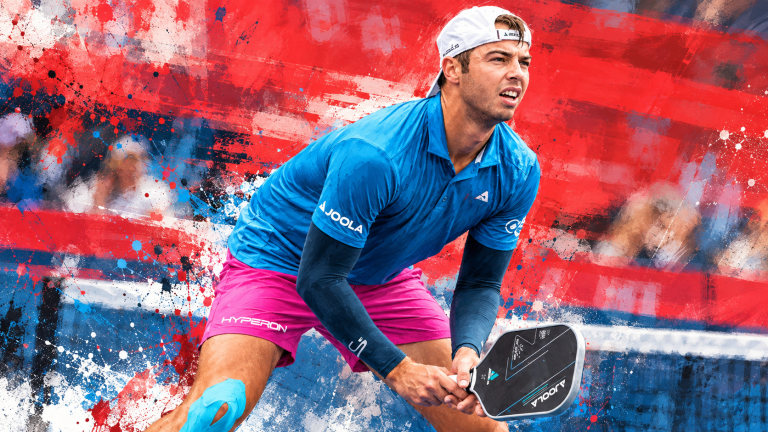
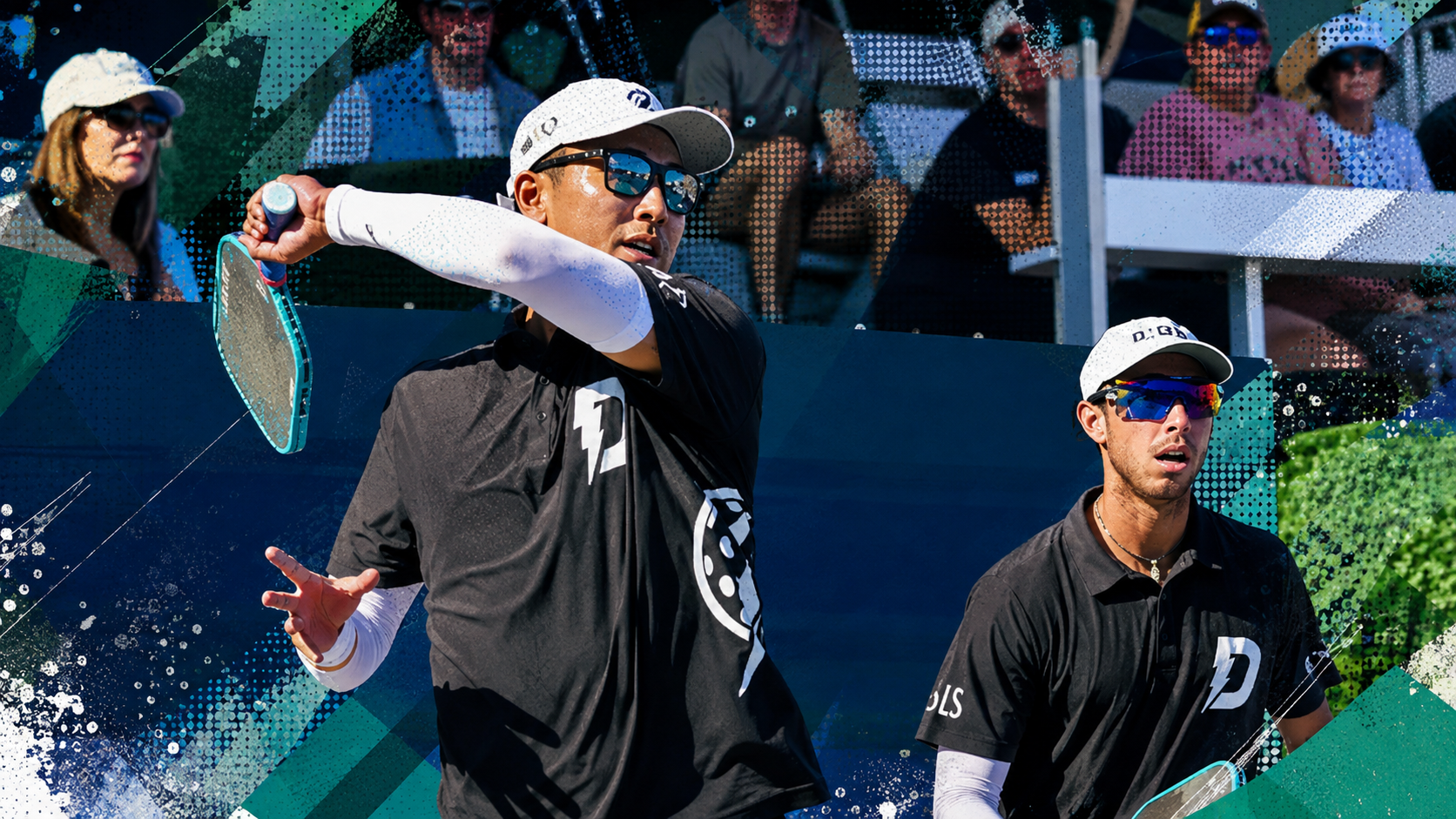
The MLP playoff field is down to four. St. Louis barely broke stride, New Jersey survived an uncomfortable weekend, Dallas punished Los Angeles for choosing them, and Brooklyn ended the Columbus Sliders’ title defence. Newport Beach delivered the results. It also left the remaining contenders with some awkward questions about what a championship roster actually looks like.
Key Takeaways
- Dallas Flash eliminated No. 3 seed Los Angeles after the Mad Drops selected them as their quarterfinal opponent.
- Brooklyn ended defending champion Columbus’ season, while New Jersey and St. Louis completed the semifinal field.
- Mid-season trades, partnership fit and the ability to adjust across a three-match series are becoming as important as individual star power in MLP.
Los Angeles had a choice.
That is worth remembering now.
The MLP playoff format in Newport Beach rewards the highest seeds with something more useful than home court. They get to choose who they want to play. After Dallas Flash arrived in the postseason as one of the league’s hottest teams and came through the opening playoff round as the No. 6 seed, the third-seeded Mad Drops looked across the available opponents and picked them.
By Sunday afternoon, Dallas were heading to New York and Los Angeles were heading home.
There are selections that age badly. This one managed it in less than 48 hours.
Dallas won a superb three-match quarterfinal series 2-1, completing the job after JW Johnson and Augie Ge dismantled Ben Johns and Max Freeman 11-2 in men’s doubles and Johnson returned alongside Brooke Buckner to beat Johns and Jade Kawamoto in mixed.
Then came Ge and Danni-Elle Townsend.
They raced 9-0 ahead of Catherine Parenteau and Connor Garnett in the final game, watched the lead shrink alarmingly as Los Angeles dragged it back to 9-7, and finally closed the match 11-8.
It was the sort of afternoon the MLP playoff format was designed to produce. Match-ups mattered. Pairings mattered. Everything that had happened over the previous two days was suddenly relevant. A season came down to one mixed doubles game with everybody in the building knowing exactly what it meant.
Dallas were through, but they were not the only lower seed leaving Newport Beach with somebody else’s semifinal place.
Brooklyn Pickleball Team eliminated defending champion Columbus Sliders in another three-match series, winning the decider 3-1 after Columbus had twice been dragged into DreamBreakers earlier in the weekend.
By the time the quarterfinals were finished, half of the top four seeds had gone.
New Jersey 5s, St. Louis Shock, Dallas Flash and Brooklyn will play for the championship in New York.
How they got there could hardly have been more different.
St. Louis did not hang around
While everyone else was producing complications, St. Louis Shock produced six games of very uncomplicated pickleball.
They beat the Texas Ranchers 3-0.
Then they did it again.
Across the two matches, St. Louis won 66 points and Texas won 20.
That is not a competitive series so much as a removal.
The first match went 11-3, 11-2, 11-4. The second was 11-2, 11-4, 11-5. No DreamBreaker, no deciding third match and none of the Sunday anxiety experienced elsewhere in the bracket.
For a team that has spent the last two seasons being very good without ultimately becoming champions, it was probably the ideal quarterfinal.
Anna Bright and Kate Fahey gave St. Louis the women’s foundation it has relied upon throughout the season, and the rest of the roster never allowed Texas enough room to turn the tie into something uncomfortable.
There is a tendency in playoff sport to assume adversity is somehow necessary. A contender is supposed to survive something dreadful before emerging hardened by the experience.
St. Louis will presumably cope with having missed out.
While Dallas, Los Angeles, Brooklyn and Columbus were still solving one another, the Shock had finished their work and could watch.
The harder questions were elsewhere.
New Jersey advanced. Palm Beach gave them something to think about
The scoreboard says New Jersey swept Palm Beach 2-0.
It does not say how close the Royals came to making the No. 1 seed considerably more nervous.
The first match went to a DreamBreaker before New Jersey escaped 21-17, with Will Howells closing against Casey Diamond. The 5s then won the second match 3-1 to avoid a deciding third contest.
Job done, except for one rather conspicuous detail.
Anna Leigh Waters and Noe Khlif lost both of their mixed doubles games to Dekel Bar and Tina Pisnik, 11-4 and 11-9.
Waters and Khlif entered the playoffs having gone 29-3 together during the regular season. They had been the best mixed pairing in the league by winning percentage. Losing once can be filed under playoff variance. Losing the same match-up twice in one quarterfinal is harder to ignore.
New Jersey’s great advantage is that it has alternatives.
The trade-deadline acquisition of Federico Staksrud gave the 5s another elite piece without providing an obvious answer to how every piece should fit. WPM had already examined how New Jersey’s expanded roster changed the championship picture before the playoffs began. Staksrud and Howells have been playing men’s doubles. Khlif has remained with Waters, while Staksrud partners Jorja Johnson in the other mixed game.
That structure got New Jersey through Newport Beach and may well remain the correct one.
But postseason series are good at turning small uncertainties into large ones because opponents get repeated opportunities to test them. Whoever New Jersey faces next will have watched what Bar and Pisnik did. If Khlif and Waters struggle again, the 5s have Howells and Staksrud sitting inside the same roster and a decision available to them.
This is the strange luxury of depth. Sometimes having several answers creates another question.
Dallas stopped being a No. 6 seed a while ago
Los Angeles can be forgiven for looking at the bracket and seeing a sixth seed.
The problem was that Dallas had stopped playing like one.
Their season changed during the summer.
At MLP Austin they failed to collect a single standings point and looked a long way from a championship team. Then came the roster changes. Tyra Black went to Columbus in the deal that brought Danni-Elle Townsend to Dallas, while Alix Truong arrived from Phoenix.
Since then, Dallas have become a different proposition.
They won two regular-season events. They dispatched Las Vegas in the opening playoff round. After Newport Beach, they have won 15 of their last 16 matches.
Los Angeles still took the opening match of the quarterfinal series, 3-1.
Dallas responded by forcing the second into a DreamBreaker. Ge and Townsend won the second mixed game 11-5 to get them there, then the Flash tore through the breaker 21-11.
So Sunday began at 1-1.
The deciding match began badly for Dallas when Buckner and Truong, who had won women’s doubles in each of the first two meetings, lost 11-6.
Then Johnson and Ge walked onto court against Johns and Freeman and beat them 11-2.
It was not simply a useful victory. It changed the temperature of the series.
Johnson followed it by partnering Buckner against Johns and Kawamoto. Dallas raced 6-0 ahead and won 11-6. That left Ge and Townsend needing one more game.
Their 9-0 lead nearly disappeared.
It did not.
Dallas had beaten the team that selected them.
There will be plenty of amusement attached to that fact, but the more consequential part of the story happened months earlier. Townsend and Ge are now 19-4 together since the Black trade, continuing a transformation WPM first traced when Dallas traded its way back into the MLP title race.
And it brings us to the defending champions.
Columbus built the roster everyone was supposed to fear
On paper, it was difficult to dislike what Columbus had done.
The Sliders added Tyra Black before the trade deadline to a roster already containing Parris Todd, Andrei Daescu and CJ Klinger. All four had been inside the top 10 of the previous PPA Tour gender-doubles rankings.
Four elite players. Proven winners. No obvious weak link.
It looked like a championship roster because championship rosters are supposed to look like that.
Brooklyn beat it.
The first match offered an early warning. Columbus forced a DreamBreaker but lost it heavily, 21-10.
The second reached another, and this time Columbus changed the personnel. Alex Crum and Judit Castillo, both dangerous singles players, had featured in the first breaker. For the second, Columbus went with Black and Klinger instead.
The adjustment worked. The Sliders won 21-18, Klinger closing the match against Chris Haworth, and the series went to a third contest.
There would be no DreamBreaker this time.
Brooklyn made sure of it.
Rachel Rohrabacher and Jackie Kawamoto won women’s doubles 11-5. Dylan Frazier and Riley Newman followed with another 11-5 in the men’s.
Columbus stayed alive when Daescu and Todd took the first mixed game 11-6.
Then Newman returned alongside Kawamoto and won 11-8.
The defending champions were gone.
For Brooklyn, the achievement is greater because their season has repeatedly threatened to come apart physically. Newman has been dealing with a bone bruise in his knee. Rohrabacher has also had injury problems. At different points it was difficult to know whether the roster that looked so strong on paper would ever spend enough time healthy together to matter.
It matters now.
Columbus had almost the opposite problem. They got the talent onto the court but never became quite as formidable together as the names suggested they should.
One trade, two playoff stories
There is a particularly cruel symmetry in Dallas advancing while Columbus went out.
The two teams are connected by the same trade.
Columbus acquired Black. Dallas acquired Townsend.
At the time, WPM described Columbus’ move for Black as a major roster gamble. Dallas, meanwhile, were reworking a team that had stalled.
Now Townsend and Ge have become one of the league’s most productive mixed partnerships, while the Sliders’ collection of top-ranked talent has been eliminated in the quarterfinals.
That does not mean Dallas “won” the trade in any simple sense. Black remains an exceptional player, and one playoff weekend is a poor way to evaluate a roster move in isolation.
What Newport Beach did reinforce is how difficult MLP roster construction has become.
This is not a fantasy draft.
Every player has to appear in gender doubles and mixed. DreamBreaker ability can suddenly decide a season. Partnership chemistry matters, as do left-right combinations and the order in which strengths and weaknesses appear across a match.
The best-of-three playoff format makes all of that harder to hide.
Palm Beach found something against Waters and Khlif and went back to it. Columbus changed its DreamBreaker personnel after being hammered in the first one and won the second. Dallas lost the opening match against Los Angeles, survived the next one and arrived on Sunday knowing considerably more about the opponent that had chosen them.
A series remembers what happened yesterday.
That is different from turning up at the next regular-season stop and starting again.
And now New Jersey gets to choose
There is no obvious favourite coming out of Newport Beach.
St. Louis probably played the best pickleball, although Texas gave the Shock little reason to reveal much about themselves.
New Jersey remains the No. 1 seed and has the deepest collection of options, but Palm Beach found a match-up that worked against the most successful mixed pairing of the regular season.
Dallas arrives in New York having won 15 of its last 16 matches.
Brooklyn has finally reached the point in the season when enough of its best roster appears healthy at the same time, and the defending champions have just discovered what that looks like.
The semifinal bracket now contains one final piece of MLP mischief.
As the highest remaining seed, New Jersey gets to choose its opponent. The 5s can take Dallas or Brooklyn. St. Louis gets whoever remains.
There are good reasons for preferring either.
Brooklyn carries injury questions. Dallas is still the lowest remaining seed.
There will be data, match-up analysis and plenty of discussion about which route gives New Jersey the better chance of reaching the final.
They have earned that privilege.
Los Angeles had it too.
Further Reading
- MLP Wants Emotion. Dallas Showed the Difficulty of Controlling It
- New Jersey Answer the Biggest Question Ahead of the MLP Playoffs
- Dallas Flash Traded Their Way Back Into the MLP Title Race
- Columbus Make Major Tyra Black Trade Gamble
- Latest pickleball news from around the world
- Tournament coverage and results
- Rankings and player profiles
- Regional pickleball coverage

Chris Beaumont
Founder and Editor-in-ChiefChris Beaumont is the founder and Editor-in-Chief of World Pickleball Magazine. Chris follows the global game closely, reporting on the latest news, developments, stories and tournaments from all five continents. He also hosts the World Pickleball Podcast, interviewing people at…
View All Articles →