The 2026 Pickleball World Cup will bring 81 countries and territories to Vietnam, from established professional markets to nations barely visible on pickleball’s competitive map. Getting them there is an achievement. Building an international competition that means something once they arrive is the more interesting challenge.
Key Takeaways
- The 2026 Pickleball World Cup in Da Nang is expected to bring nearly 5,000 athletes from 81 countries and territories.
- The size of the field makes selection, competitive depth, national identity and meaningful international rivalry more important than participation numbers alone.
- Vietnam’s strong Open roster shows how quickly national-team pickleball can become something countries genuinely expect to win.
There are some group-stage fixtures that make you look twice.
United States against Iran is one.
Not because anybody should pretend a pickleball match carries the political weight of the countries involved, but because it is difficult to imagine that fixture existing in this sport even a few years ago.
Then keep reading.
Samoa and Bolivia are in the same group. Hong Kong, Mexico, Tanzania and Kazakhstan share another. Australia has Belgium, Kenya and Nepal. England will play Pakistan, Greece and Saudi Arabia. Japan has Thailand, Ukraine and the Cook Islands.
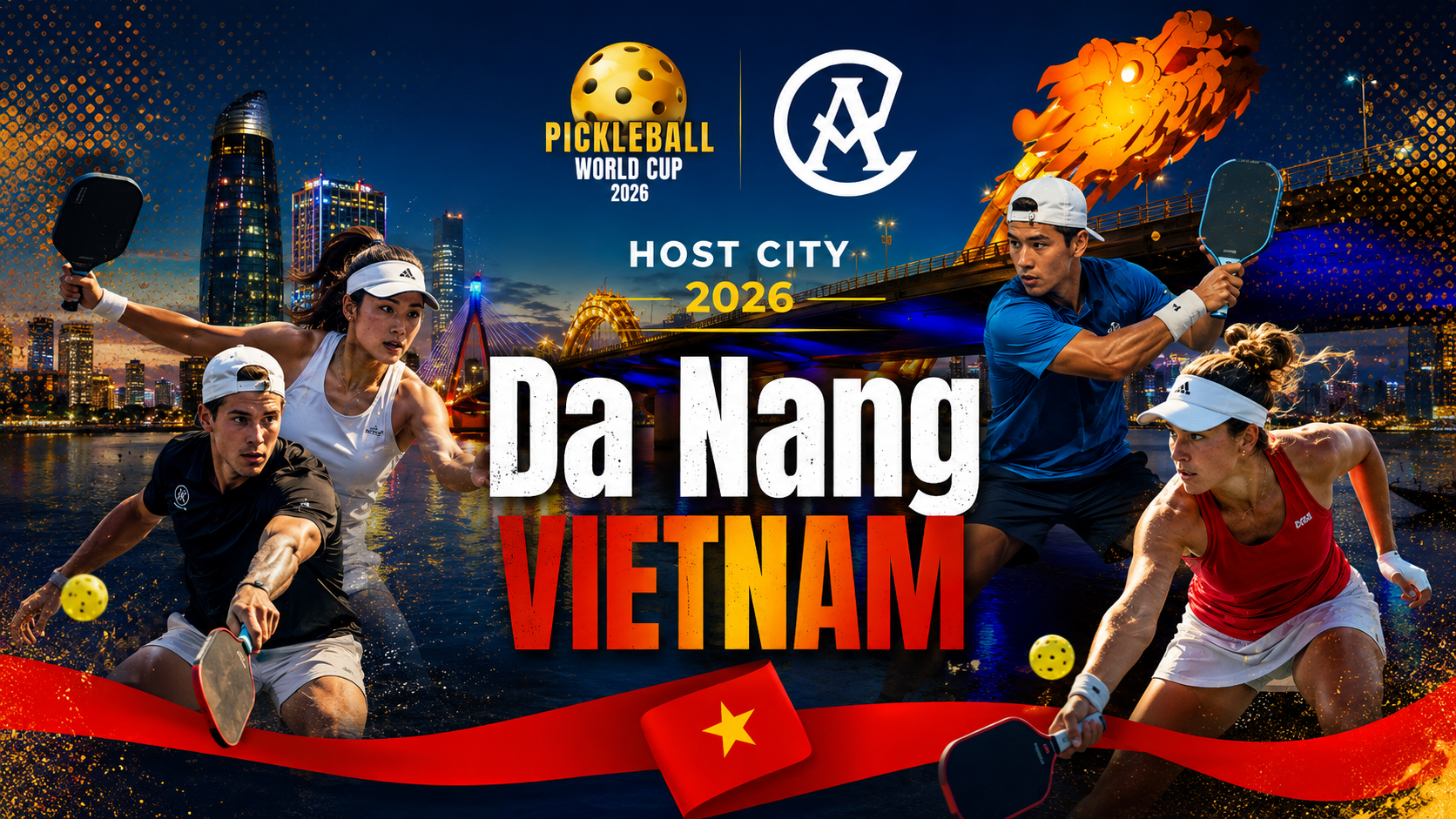
There are 81 countries and territories heading to Da Nang for the 2026 Pickleball World Cup.
That number will inevitably do much of the promotional work. Eighty-one countries sounds global because it is global. Updated figures following the official draw put the field at nearly 5,000 athletes, with 156 teams entered across the national categories.
But scale is no longer the most interesting thing about international pickleball.
The flags have arrived.
Now the sport has to work out what representing one of them actually means.
A World Cup Needs More Than Countries
Pickleball has become very good at accumulating geography.
Tours announce new destinations. Federations emerge. International events add countries. Professional players cross borders with increasing regularity. Almost every month produces another map with another pin pushed into it.
There was a time when simply getting dozens of countries into the same pickleball competition would have been the story.
Da Nang feels different.
An 81-country field is large enough that the questions become sporting rather than promotional.
How are national teams selected? Who is eligible to represent them? How deep is the talent beneath the first few players? How much preparation takes place before countries arrive?
And how badly does anybody want to win?
Mature international sports have spent decades, sometimes more than a century, developing answers to those questions.
Pickleball has barely started accumulating the history that gives those answers weight.
The professional game is still dominated by tours and leagues in which individual players, partnerships and franchises carry most of the meaning. A player can spend an entire season thinking about PPA points, APP events, MLP standings, prize money, contracts and DUPR without national representation affecting their professional life very much at all.
WPM has already examined the unusual consequences of that through pickleball’s competing ideas of what a national team actually is.
The World Cup is asking players to put on a national shirt inside a sport that has not yet established what that shirt is worth.
Da Nang begins testing the answer.
Vietnam Has Something to Defend
The hosts provide a useful measure of how quickly things can change.
Vietnam does not need to manufacture a national team from enthusiastic recreational players.
Its Open roster is captained by Đỗ Minh Quân and includes Lý Hoàng Nam, Quang Dương, Phúc Huỳnh, Trương Vinh Hiển, Trịnh Linh Giang, Ken Tam, Sophia Huỳnh Trần, Trang Huỳnh and Sĩ Bội Ngọc.
Several are already familiar well beyond the country.
Quang Dương has competed against the best players in professional pickleball. Phúc Huỳnh has become one of the most important figures in Vietnam’s competitive rise, something WPM has followed through his recent domestic battles with Quang Dương. Lý Hoàng Nam spent years at the forefront of Vietnamese tennis before becoming a significant pickleball player.
That makes the usual discussion about home advantage slightly beside the point.
Familiar courts may help. Climate may help. Crowds certainly can.
More important is that Vietnam can put athletes on court who already understand what high-level racket-sport competition feels like when expectation arrives with it.
For the home nation, this World Cup is therefore not simply a celebration of participation.
Vietnam has enough talent for losing to hurt.
That is a useful threshold for any international competition.
It also exposes what an 81-country tournament will inevitably contain.
Enormous differences.
Let the Scoreboard Expose the Gaps
World Cups are supposed to contain mismatches.
Football has them. Rugby has them. Cricket has them. International basketball has them.
Part of the fascination comes from discovering exactly how large the distance is between countries, and occasionally watching somebody close it much faster than expected.
Pickleball needs that information.
For all the discussion of global expansion, there is still remarkably little common understanding of the competitive distance between nations.
We know where most of the world’s leading professionals play.
That isn’t the same thing.
A country can possess one outstanding player without possessing a functioning competitive system underneath them. Another can have thousands of recreational players but very few capable of competing internationally. Some nations benefit from tennis, badminton, table tennis or soft-tennis cultures that allow elite racket athletes to transition rapidly. Others are building largely from pickleball itself.
Put scores of national teams into one tournament and those differences stop being theoretical.
They appear on the scoreboard.
Some early matches may be ugly.
Good.
If international pickleball is serious about developing, it needs an honest picture of where countries stand rather than another collection of participation estimates and social-media claims.
Da Nang can begin providing one.
Which countries can compete with the strongest teams? Which supposedly emerging markets are further along than expected? Who has one excellent pairing and little behind it? Where do the unexpected players emerge? Which sporting cultures are producing them?
A presentation about global growth cannot answer those questions.
Competition can.
Who Gets the Shirt?
The better the World Cup becomes, the more people will care about eligibility and selection.
That is almost inevitable.
International sport has spent generations arguing about birthplace, citizenship, residency, ancestry and switching allegiance. Pickleball’s unusually mobile population gives it plenty of material for arguments of its own.
National associations are already building formal processes. India’s published selection policy for Da Nang, for example, requires Open and senior players to be Indian citizens holding valid Indian passports, while performance and association-registration criteria also apply.
Other countries have developed their own selection routes, from trials and ranking criteria to federation appointments.
Many players have lived in several countries. Expats have helped establish pickleball communities far from where they were born. Dual nationals are common. Coaches and professionals travel constantly. In younger pickleball nations, one internationally experienced player can alter the strength of an entire team.
There is nothing inherently wrong with that.
But the larger and more important international pickleball becomes, the more supporters will need to understand how national representation works and trust the standards being applied.
Nobody spends much time arguing about eligibility when nothing is at stake.
Give countries something worth winning and people become interested very quickly.
That would be a healthy problem for pickleball to acquire.
A Tournament Needs a Past
International sport carries memory.
Today’s match inherits yesterday’s.
England against Australia means something before the first ball because generations have played it. Argentina and Brazil do not require organisers to manufacture a rivalry. India and Pakistan can turn almost any cricket match into an event because the shirts arrive carrying decades of history.
Pickleball cannot shortcut that.
It can start accumulating it.
USA against Iran may never become a pickleball rivalry. Samoa against Bolivia probably will not either.
Something else might.
Perhaps Vietnam repeatedly meets another Asian nation deep in international tournaments. Perhaps an unexpected European country develops a habit of troubling the Americans. Perhaps two neighbours discover that losing to one another is considerably more irritating than losing to everybody else.
Nobody gets to decide those things in advance.
They happen.
That is why continuity may ultimately matter more to the World Cup than the size of its first impressive Asian field.
WPM made a similar argument when the World Cup’s move to Asia was first confirmed. The location mattered because the competitive centre of the international game was beginning to move with it.
If Da Nang is followed by another meaningful edition, and another after that, results begin accumulating. Players return. Defeats linger. Selection decisions become controversial. Countries remember who knocked them out last time.
A tournament acquires a past.
Then it starts acquiring weight.
Eventually, the Best Players Have to Care
There is a ceiling on how important any World Cup can become if the professional elite regards it as optional exhibition material.
That does not require every major player to attend every edition. Tennis has spent decades wrestling with the uneasy relationship between individual careers and national competition.
Pickleball has its own complications.
Professional calendars are crowded. Tours have commercial priorities. Players have contracts and sponsorship obligations. Travel is expensive. Prize money matters. National federations operate with wildly different resources.
International pickleball has to earn space rather than assume patriotism will solve the scheduling problem.
Yet national competition possesses one advantage that the sport’s professional leagues spend considerable money trying to manufacture.
Identity already exists.
Franchise pickleball has to persuade people to care about a team.
Vietnam does not have to persuade Vietnamese supporters what Vietnam means.
India does not have to explain India. Brazil does not have to explain Brazil.
The emotional infrastructure is already there.
What pickleball lacks is enough sporting history to activate it.
Eighty-One Is Where the Questions Start
There will be photographs in Da Nang containing more national flags than pickleball has probably ever assembled in one place.
They will be impressive.
There will be stories about global reach, participation figures and how quickly the sport has travelled.
Fine.
The more interesting evidence will be on the courts.
Can the tournament identify the world’s strongest pickleball nations?
Can countries create selection systems their best players respect?
Can weaker teams discover how far they actually have to travel?
Can an unexpected nation leave Vietnam with everybody wondering where its players came from?
Can two countries begin a rivalry without realising they have done it?
And, eventually, can representing your country become something the best pickleball players genuinely hate missing?
Da Nang cannot manufacture all of that in one tournament.
Nor should it try.
International sport becomes meaningful through repetition. Somebody wins. Somebody loses. Somebody remembers.
Then they meet again.
The 2026 Pickleball World Cup has already achieved something by bringing 81 countries and territories together.
Now they have to play until the flags mean something.
Further Reading
- Two Team USAs, No Clear Authority: Pickleball’s National Identity Problem Explained
- The Pickleball World Cup Is Moving to Asia
- Vietnam’s Pickleball Leadership: Building an Ecosystem
- More WPM coverage of the 2026 Pickleball World Cup

Chris Beaumont
Founder and Editor-in-ChiefChris Beaumont is the founder and Editor-in-Chief of World Pickleball Magazine. Chris follows the global game closely, reporting on the latest news, developments, stories and tournaments from all five continents. He also hosts the World Pickleball Podcast, interviewing people at…
View All Articles →