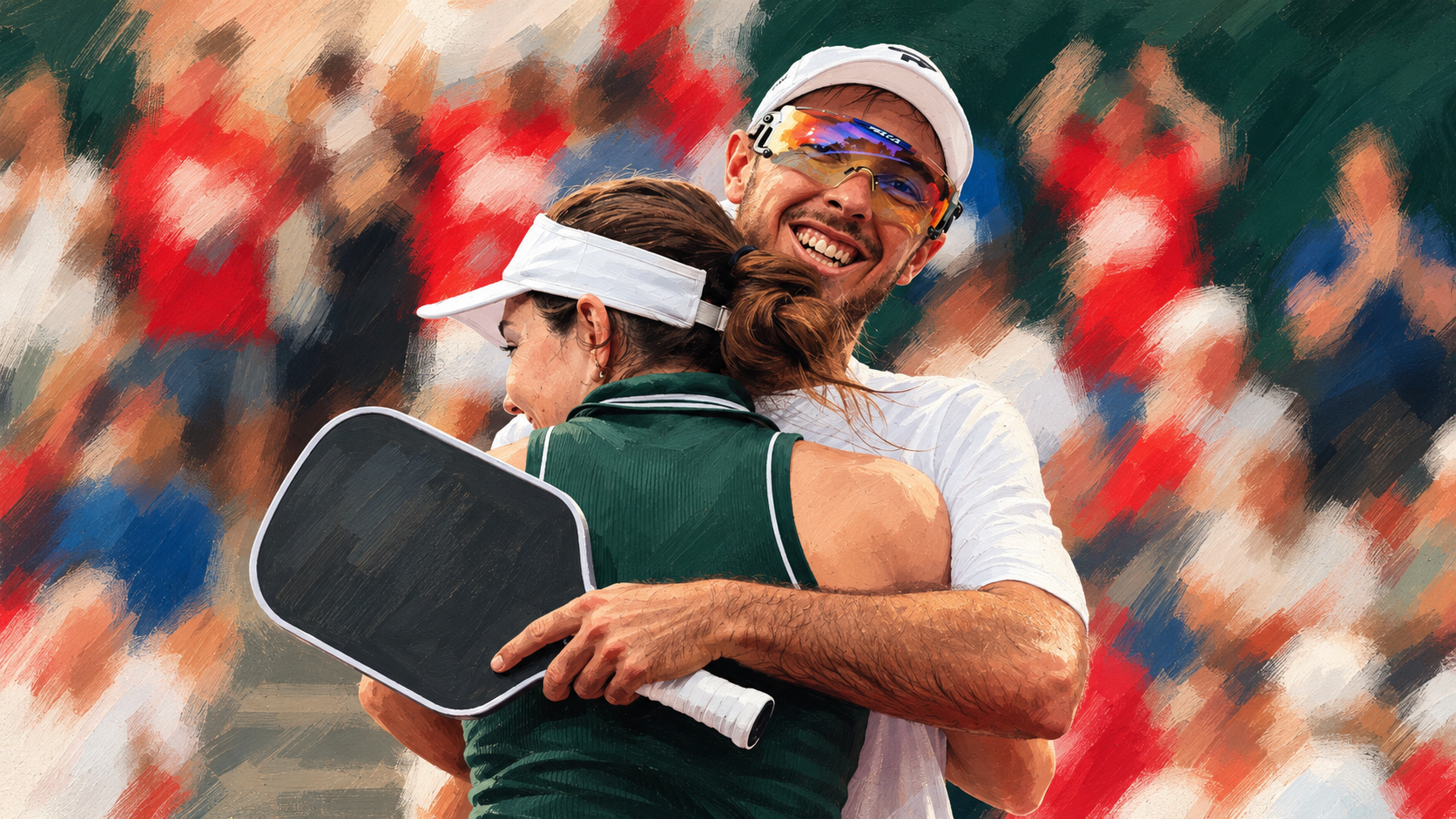
Jorja and JW Johnson have beaten Anna Leigh Waters and Ben Johns in Cary for the second successive season. Their comeback transformed Championship Sunday and left the siblings with unfinished business.
Key takeaways
- Jorja and JW Johnson recovered from losing the opening game to defeat Anna Leigh Waters and Ben Johns 4-11, 11-9, 11-6.
- The siblings have now beaten the dominant mixed doubles partnership at the Cary event in consecutive seasons.
- Jorja Johnson will contest two of Sunday’s five finals, while Kate Fahey and Hunter Johnson have significant singles opportunities.
Anna Leigh Waters and Ben Johns do not lose often enough for coincidence to go unnoticed.
When they do lose to the same partnership, in the same city, in consecutive seasons, it starts to look like something more.
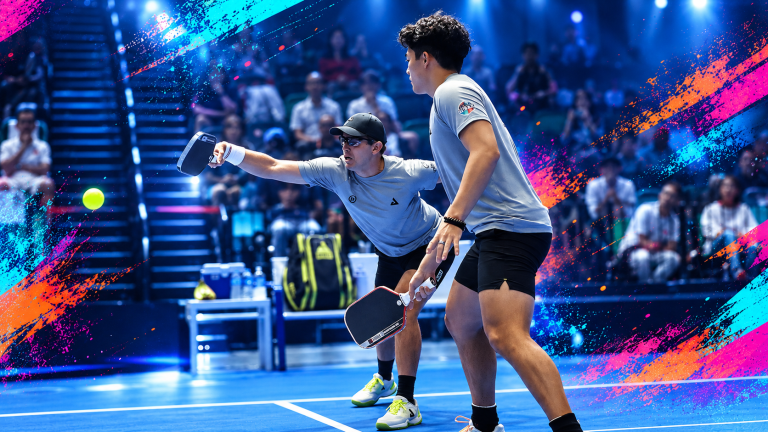
For the second year running in Cary, Jorja and JW Johnson found a way past the mixed doubles team that has defined the discipline. The siblings recovered from a ragged opening game to defeat Waters and Johns 4-11, 11-9, 11-6 in Saturday night’s semi-final at the Veolia Pickleball National Championships, removing the top seeds and changing the shape of Championship Sunday.
Waters will still play for two titles. Johns still has the men’s doubles final. Neither can leave the opening event of the PPA’s 2026-27 season with a triple crown.
Once again, the Johnsons made sure of it.
Cary remains the exception
Their previous Cary victory came in the 2025 final, when they beat Waters and Johns across five games. That was remarkable enough in isolation. Before Saturday’s semi-final, Waters and Johns held a reported 22-2 advantage across their recorded meetings with the siblings.
The wider record says dominance. Cary keeps producing an exception.
At first, there was little reason to expect another. Waters and Johns won the opening game 11-4 while the Johnsons struggled with an unusually high number of errors. Too many attacks were being forced from poor positions, and too many exchanges were ending before the siblings could establish themselves at the kitchen line.
The match had the look of another occasion when a challenger had arrived with an idea, only to discover how quickly the leading partnership could take it away.
Then Jorja began to change the terms.
Her counters became cleaner and more assertive. Instead of giving Waters time to dictate the women’s exchanges, she began meeting pace with pace and taking balls early enough to stop the point from settling into a familiar pattern. Alongside her, JW used his reach and anticipation through the middle, crowding the spaces Johns usually opens and making the top seeds play through a narrowing court.
The errors did not disappear completely. They stopped deciding the match.
The Johnsons edged the second game 11-9, then carried that momentum into a 6-2 lead in the third. Waters and Johns made the expected push, but the decisive difference was that their opponents were no longer depending on mistakes from the other side. The Johnsons were creating the pressure themselves.
At 9-6, Jorja took control of another rapid exchange at the line. A failed Waters challenge then moved the score to 10-6, and the Johnsons completed the victory soon afterwards.
The final two games showed the narrow route available to anyone trying to beat Waters and Johns. It requires aggression without impatience, enough discipline to withstand the inevitable recovery and, above all, the nerve to keep playing forwards when the match begins to tighten.
The Johnsons found all three.
Asked afterwards which weaknesses they had identified in the top seeds, JW declined the premise.
“Definitely no weaknesses at all.”
The victory provided the defining answer to one of the questions hanging over Saturday’s semi-finals. Waters had arrived with her triple-crown pursuit intact, but the Johnsons ensured it ended before Sunday. That possibility formed part of our PPA Cary semi-final preview.
A mixed doubles final without the top seeds
The reward is not a gentle landing.
Sunday’s mixed doubles final brings a meeting with Anna Bright and Hayden Patriquin, who defeated Rachel Rohrabacher and Christian Alshon 11-5, 11-2 in their semi-final.
Bright and Patriquin were responsible for the other recent defeat suffered by Waters and Johns, beating them at the 2026 Mesa Cup. The top seeds may be gone, but the final still contains the two partnerships who have demonstrated most recently that they can disrupt them.
For Jorja, it is only half of the assignment.
She and Tyra Hurricane Black advanced to the women’s doubles final with a 13-11, 11-3 victory over Kate Fahey and Lea Jansen. The opening game was the test. Once Black and Johnson had survived it, the second moved quickly.
They will face Bright and Waters, who swept past Rachel Rohrabacher and Parris Todd 11-3, 11-4. That result restored some order to Waters’ Saturday and left her with two chances to respond after the mixed doubles disappointment.
It also placed Jorja at the centre of Championship Sunday. She could leave Cary with two titles, but winning either will require her to beat one of the strongest teams in its discipline.
The mixed final asks whether the Johnson siblings can turn another famous result into a championship. The women’s doubles final asks whether Jorja and Black can stop Waters and Bright before the top seeds establish their usual control at the line.
Fahey gets another opportunity against Waters
Waters’ other final comes in singles, where the draw has delivered the match expected from the moment the leading seeds were placed on opposite sides.
Waters defeated Kaitlyn Christian 11-5, 11-1. Kate Fahey was almost as emphatic in beating Brooke Buckner 11-3, 11-4.
Fahey has done enough to make another final against Waters feel like more than the completion of a bracket. She has established herself as the most persistent challenger at the top of women’s singles, with the movement, reach and defensive resilience to extend points that others cannot keep alive.
The remaining question is whether she can turn resistance into authority when Waters begins taking time away from her.
Reaching the final reinforces Fahey’s position. Winning it would alter the terms of the women’s singles conversation.
Hunter Johnson removes the top seed
The men’s draw has produced a different kind of opportunity.
Hunter Johnson removed top seed Christopher Haworth 11-9, 11-1, turning a competitive first game into a startlingly decisive second. Haworth had entered the semi-final without dropping a game. By its end, he had been held to one point across the final game of his tournament.
Johnson now faces Federico Staksrud, who defeated Christian Alshon 11-5, 11-8.
Staksrud’s appearance on Championship Sunday is familiar enough. He has spent several seasons making deep singles runs feel routine. Johnson arrives with the momentum of the weekend’s clearest men’s singles statement and the chance to convert one breakthrough victory into a title.
It would also represent a significant response to a more difficult moment earlier in his season. Johnson’s Sacramento Open ended in a disqualification after a paddle struck a spectator, an incident examined in our report on Hunter Johnson’s abrupt Sacramento exit.
Tardio and Johns face Daescu and Alshon
The fifth final returns Johns to the stage.
He and Gabriel Tardio were pushed hard in the opening game of their men’s doubles semi-final against Staksrud and Hayden Patriquin, eventually taking it 15-13 before pulling clear to win the second 11-3.
Their opponents will be Andrei Daescu and Christian Alshon, who produced one of Saturday’s most unusual scorelines. After beating Tama Shimabukuro and JW Johnson 11-6 in the first game and losing the second 8-11, they closed the match with an 11-0 decider.
For Johns, it is the remaining route to a title after the mixed defeat. For Tardio, it is another measure of how quickly his doubles game is maturing.
Playing beside Johns requires more than accepting the junior role in a partnership. It requires recognising when to control the point himself, when to create space and when to let Johns expand into it. Sunday will show how far that understanding has developed.
Five finals and one unfinished job
Five titles remain available in Cary. Around them sit several questions that extend beyond one final day.
Can Fahey move from leading challenger to champion against Waters? Can Hunter Johnson follow the best singles win of his week by defeating Staksrud? Can Tardio complete a title run beside Johns? Can Black and Jorja Johnson prevent Waters and Bright from reasserting their control?
The defining question belongs to the siblings who changed the weekend.
Jorja and JW Johnson have completed the rarest part of the assignment. They have beaten Waters and Johns again, in the city where they had already proved it could be done. That makes Cary a pattern. Whether it becomes another championship depends on what follows.
JW understood the distinction immediately.
“Job’s not done.”
Further reading
- Waters Stays on Triple-Crown Course as Cary’s Semi-Finals Arrive
- Cary’s Outsiders Broke the Draw. Now the Contenders Have to Collide
- Cary Has Already Broken the Draw: What Matters Before the Round of 16
- Cary’s Draw Has a Ranking-Lag Problem. Sofia Sewing Is the Clearest Example

Chris Beaumont
Founder and Editor-in-ChiefChris Beaumont is the founder and Editor-in-Chief of World Pickleball Magazine. Chris follows the global game closely, reporting on the latest news, developments, stories and tournaments from all five continents. He also hosts the World Pickleball Podcast, interviewing people at…
View All Articles →