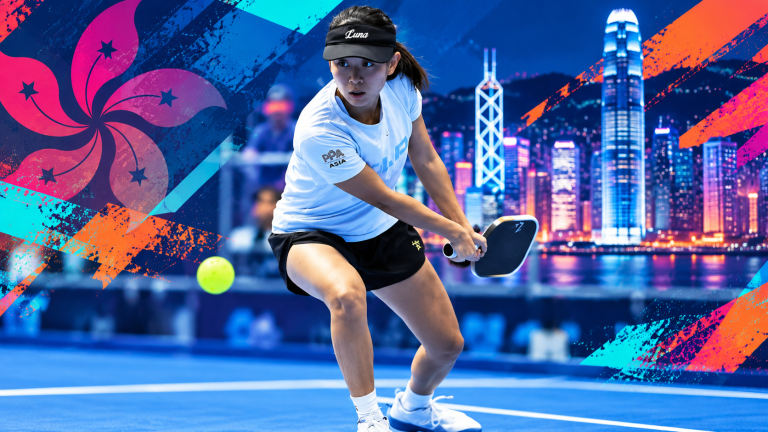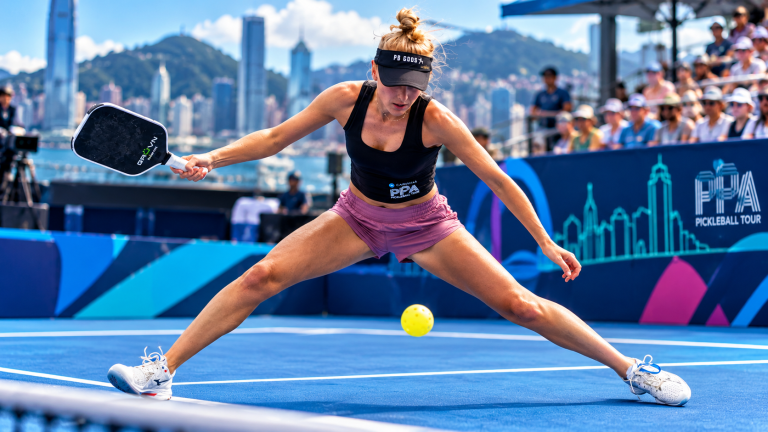
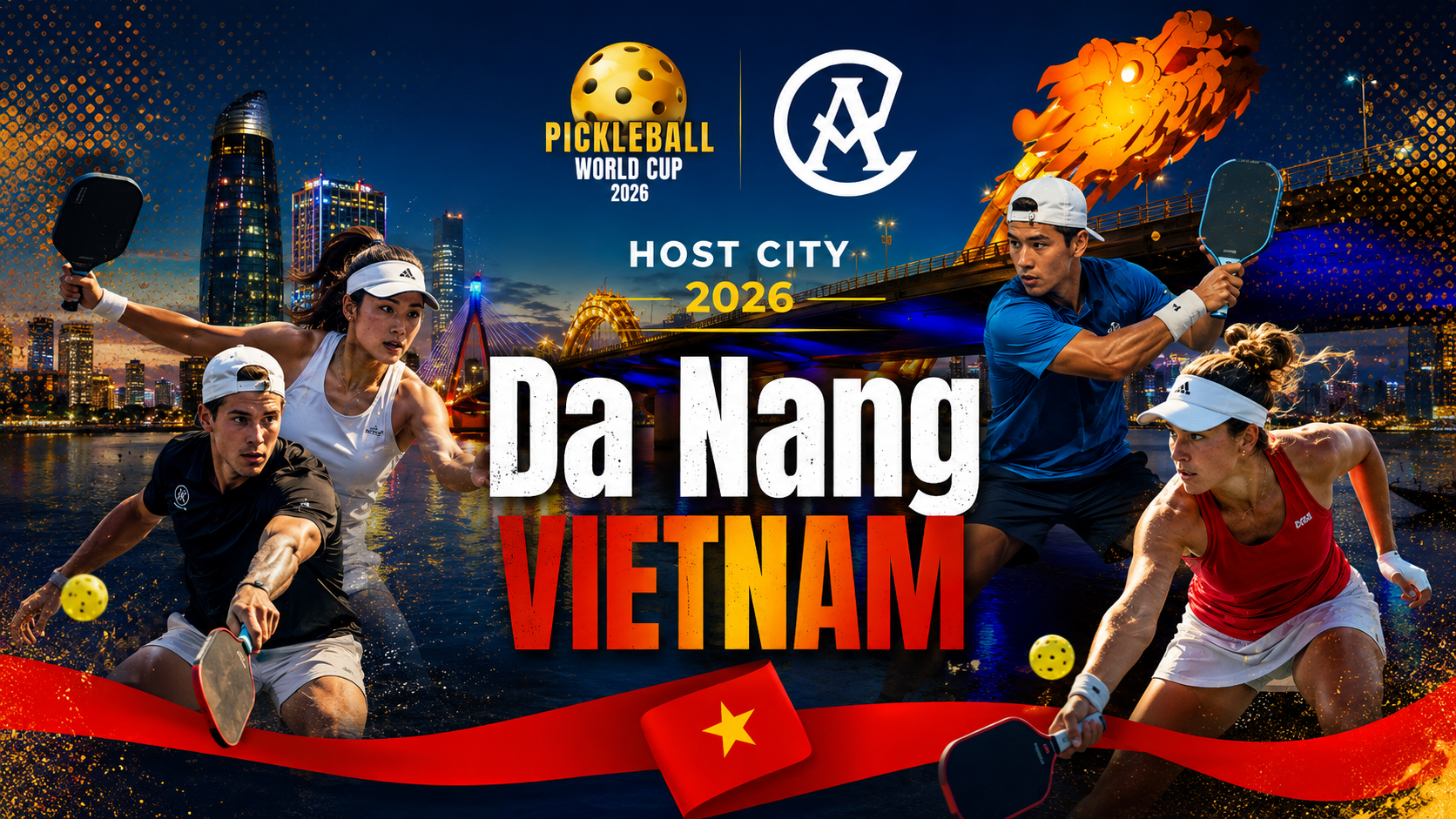
The Heineken Pickleball World Cup is bringing more than 5,000 athletes from 81 countries and territories to Da Nang. Canada will be among them, but its players have been told to budget thousands of dollars to represent their country. International pickleball has acquired the scale, sponsors and spectacle of a global sport. The question of who pays for the people inside it remains far less settled.
Key Takeaways
- The Heineken Pickleball World Cup will bring more than 5,000 athletes from 81 countries and territories to Da Nang from August 30 to September 6.
- Team Canada Pickleball tells selected players to expect costs of roughly C$3,000 to C$5,000 and describes its World Cup programme as self-funded.
- The contrast exposes a wider question for international pickleball: the event economy is growing faster than the funding structures supporting national-team athletes.
The numbers coming out of Da Nang are difficult to reconcile with the idea of a small sport finding its feet.
More than 5,000 athletes.
Eighty-one countries and territories.
One hundred and fifty-six national teams across Open, Senior, Master, Junior and Kids competition.
Leading players from the PPA and APP tours. A world development forum. Training programmes. A sports and technology conference. International business networking. A World Market. Heineken’s name attached to the tournament.
For eight days from August 30, the Heineken Pickleball World Cup in Da Nang will look very much like what its name promises: a substantial international sporting event.
And somewhere inside that enormous gathering will be Canadian players who were warned before applying that representing their country could cost them between C$3,000 and C$5,000 each.
Flights.
Hotels.
Food.
Team Canada Pickleball describes itself as an entirely self-funded collective. Its website tells prospective players that it receives no financial support from government organisations or official governing bodies and encourages those selected to find sponsors and community backing to reduce the cost of getting to Vietnam.
This is not a peculiarity of Canada, nor an accusation that somebody has forgotten to pick up the bill.
It is something more interesting.
Pickleball has become capable of staging international sport before it has built much of the financial machinery that normally sits underneath international athletes.
Da Nang is where those two realities are about to meet.
The World Cup has grown up quickly
There is nothing tentative about the ambition in Vietnam.
The tournament is being treated locally as a major international event. Da Nang’s authorities have promoted it not simply as a sporting competition but as an opportunity for tourism, international business, cultural exchange and the development of the sports economy.
The city was originally preparing for roughly 4,000 athletes, officials, coaches and other participants from around 80 countries and territories. By this week’s official draw, the announced athlete figure had passed 5,000 and the national competition alone contained 156 teams.
That is serious scale.
It also creates an interesting contrast with the way some of the people representing those nations get there.
Canada offers one of the clearest examples because its situation has been unusually public.
The independent Team Canada Pickleball programme set out to send Open, Senior and Junior teams to Vietnam. Players applying for selection were told plainly what the commitment could involve. There was no pretence that pulling on a Canadian shirt meant somebody else would cover the flight.
The estimated personal cost was C$3,000 to C$5,000.
Then, last month, the junior team was withdrawn.
WPM reported at the time that Canada’s junior team would miss the World Cup after funding attempts failed. The previous Canadian junior team had finished fourth at the World Cup. This time, the juniors were the team left at home.
The Open and Senior teams continued.
So did the fundraising.
There is something jarring about putting those facts beside the scale of Da Nang.
Not because a title sponsor should automatically be expected to buy Canada’s plane tickets. That is not how tournament sponsorship works.
The contrast matters because it tells us where international pickleball currently is.
The event has commercial value.
Representing a country does not necessarily have financial value to the person doing it.
What exactly are you paying for?
At grassroots level, nobody finds this arrangement particularly strange.
Amateur athletes have always paid to compete. They buy flights, book hotels and spend annual leave travelling to tournaments because the experience matters enough to them.
Pickleball is full of that economy.
Da Nang complicates things because this is no longer an ordinary amateur tournament.
The athletes are representing countries.
There are national teams, national shirts and national categories. There will be opening ceremonies, flags, medal tables and all the familiar language of international sport. Some of the world’s leading professional players will be there.
The event itself benefits from the emotional power of national representation.
That power is part of what makes a World Cup marketable.
Yet for many of the athletes creating it, national representation remains something they purchase.
That does not make the competition illegitimate. It does make the economics worth examining.
If a Canadian player spends C$4,000 getting to Vietnam, what exactly have they bought?
A holiday would be the cynical answer.
A place in sporting history might be the romantic one.
The truth is probably more ordinary. They have bought the chance to test themselves internationally, to wear their country’s colours and to participate in something that feels larger than the domestic competitions available to them.
People spend money on experiences they value all the time.
The interesting question is what happens when everybody else begins making money around that experience.
Follow the money, carefully
There is an easy version of this article that says: Heineken is sponsoring the World Cup, therefore players should be paid.
That would be satisfying and mostly useless.
Sponsorship money has many places to go. Venues cost money. Officials cost money. Production costs money. Marketing, administration, staffing, security and event infrastructure cost money. We do not know the commercial terms of the title sponsorship or the complete tournament budget.
A large event can have prominent sponsors without producing a giant pool of spare cash.
Nor is the organiser of an international tournament normally responsible for funding every national delegation attending it.
The more difficult question is where responsibility begins and ends.
Should national bodies fund their teams?
Should governments?
Should sponsors?
Should tournament organisers provide travel grants to smaller nations?
Should players continue funding themselves until the commercial value of international competition becomes large enough to support them?
There is no universal answer, particularly in a sport where the structures representing a country can themselves be complicated.
Canada demonstrates that problem unusually well.
Canada has more than one version of Team Canada
The group travelling to the World Cup should not be confused with the official high-performance programme being developed by Pickleball Canada.
That distinction matters.
Pickleball Canada announced its inaugural high-performance programme this year and began selecting an official National Player Development Pool. In June, it named an inaugural Team Canada roster for the MLP event in Grand Rapids following a selection combine run with Steve Deakin Pickleball. Further selections are being made through the Canadian national championships and other pathways.
Team Canada Pickleball, the organisation sending players to the World Cup in Vietnam, is separate.
Its own description is explicit: it is a self-funded collective representing Canada at the event and receives no financial support from official governing bodies.
WPM examined that distinction earlier this summer in Canada’s Pickleball Divide Heads Overseas.
Two groups, both using the language of Team Canada, operating in different international competitions.
One is part of the recognised national organisation’s developing high-performance pathway.
The other is trying to get Canadian players to a World Cup.
If international pickleball sometimes feels as though it is building the roof before agreeing where the walls go, Canada is a fairly good illustration.
It also makes the funding question harder.
Before asking who should pay for a national team, the sport sometimes has to answer who the national team actually is.
The juniors made the problem impossible to ignore
Adults deciding to spend thousands of dollars on international pickleball is one thing.
Juniors change the conversation.
Canada’s junior withdrawal mattered because those players had already demonstrated that they belonged at this level. The previous Canadian junior team finished fourth at the World Cup.
They were not being sent to Vietnam to discover whether they liked pickleball.
Yet when the money could not stretch across three squads, the junior programme was the one that disappeared.
That is where self-funded international sport reaches its obvious limit.
A 42-year-old with a career, savings and the ability to turn a tournament into a week’s travel can decide whether representing their country is worth C$4,000.
A teenager’s international career depends much more heavily on somebody else’s bank account.
The pathway therefore begins selecting for two things.
Ability is one.
Affordability is the other.
Every emerging sport goes through some version of this. Young tennis players have relied on parents for decades. Olympic athletes in less commercially attractive disciplines have held jobs alongside training. National federations constantly make difficult decisions about where limited resources should go.
Pickleball has not invented the problem.
What makes the present moment unusual is the speed at which the front of the sport is becoming commercial.
The stage is being built faster than the pathway leading onto it.
Eighty-one countries means eighty-one different realities
It is tempting to look at the Da Nang numbers and see proof that international pickleball has arrived.
In one sense, they are exactly that.
Eighty-one countries and territories at one tournament would have seemed absurdly ambitious not very long ago.
But those delegations are not arriving on equal terms.
Some come from countries where pickleball already has substantial commercial systems, thousands of courts and professional opportunities. Others represent communities still fighting for facilities, recognition and basic competitive structure.
A flight to Vietnam does not cost the same relative amount to everybody.
Nor does a week away from work.
That is why the long-term importance of World Cup funding extends beyond whether Canadian players can afford C$3,000 or C$5,000.
If international pickleball wants genuine geographic diversity, eventually it has to think about who can afford to appear.
Otherwise the flags remain wonderfully international while the economics quietly narrow the field.
A country can have excellent players and still lack the money to send them.
A junior can be the best available player and still have parents who cannot fund an international trip.
A developing pickleball nation can qualify in every meaningful sporting sense while being excluded by geography.
The scoreboard never records any of that.
The sponsor is not the villain
Heineken’s presence actually makes the story more encouraging in one respect.
A global consumer brand sees enough value in international pickleball to put its name on the event.
That matters.
So does the wider commercial programme around Da Nang. This is being presented as more than courts and medals. Business, technology, tourism and international networking have been deliberately attached to the competition.
That is how sporting systems begin to acquire money.
The next question is whether some of that expanding value eventually finds its way towards participation.
Not necessarily through salaries.
International pickleball is nowhere near the point where every national-team player should reasonably expect a wage.
Travel support would already change the equation.
Accommodation partnerships. National-team sponsors. Federation grants. Junior bursaries. Central travel funds. Commercial partners underwriting particular countries or divisions.
None is especially radical.
Established international sport is full of mechanisms that separate the privilege of selection from the ability to purchase a plane ticket.
Pickleball now has an opportunity to build some of those mechanisms while the expectations around international competition are still being formed.
Canada is also building the answer
There is an important counterpoint to the Canadian story.
The country is not simply sitting still while its players pass around a fundraising link.
Pickleball Canada’s new high-performance programme is an attempt to build a more formal pathway. The National Player Development Pool will contain senior and junior athletes, with selections coming through combines, national championships, provincial competition and further evaluation.
That is what institutional development looks like.
It will take time.
It may also produce uncomfortable overlap while different organisations, competitions and international bodies continue using the language of national representation.
But the direction matters.
A mature international programme should eventually make selection, preparation, competition and funding parts of the same conversation rather than four separate problems handed to the athlete.
Canada is not there.
Very few pickleball nations are.
Da Nang may reveal how far everyone still has to travel.
A World Cup can be successful and still expose a weakness
There is no contradiction in celebrating what is about to happen in Vietnam while questioning the economics underneath it.
Five thousand athletes travelling to Da Nang is extraordinary.
Eighty-one countries and territories is extraordinary.
A title sponsor, leading professionals and a week of international competition are signs of a sport acquiring genuine global scale.
Canada’s experience does not diminish any of that.
It makes the achievement more interesting.
Because every flag at a World Cup represents a journey that happened before the player walked onto court.
Somebody selected them.
Somebody trained them.
Somebody booked the flight.
And, in pickleball, there is still a decent chance the final person on that list was the player themselves.
That arrangement can sustain an ambitious amateur event for a long time. People will spend remarkable amounts of their own money to represent somewhere they care about.
The question is whether it can sustain the international sport pickleball says it wants to become.
The Heineken Pickleball World Cup already has the numbers.
It has the countries.
It has the sponsor.
It has the stage.
Now the sport has to work out how everyone gets there.
Further Reading
- Canada’s Junior Team Will Miss The World Cup. The Real Crisis Is What It Revealed About Canadian Pickleball.
- Canada’s Pickleball Divide Heads Overseas
- The World Cup Just Found The One Partner It Could Not Build Alone
- More World Cup 2026 coverage
- Latest pickleball news from around the world
- Tournament coverage and results
- Rankings and player profiles
- Regional pickleball coverage
## WORDPRESS PUBLISH PACKAGE
**TITLE:**
**SLUG:**
“
**CATEGORY:**
World Cup 2026
**TAGS:**
**EXCERPT:**
**YOAST SEO TITLE:**
**YOAST META DESCRIPTION:**
**YOAST FOCUS KEYPHRASE:**
**CANONICAL URL:**
Leave blank.
**FEATURED IMAGE ALT TEXT:**
International pickleball players representing national teams at the 2026 Heineken Pickleball World Cup in Da Nang
—
## ARTICLE HTML
“`html

Chris Beaumont
Founder and Editor-in-ChiefChris Beaumont is the founder and Editor-in-Chief of World Pickleball Magazine. Chris follows the global game closely, reporting on the latest news, developments, stories and tournaments from all five continents. He also hosts the World Pickleball Podcast, interviewing people at…
View All Articles →