
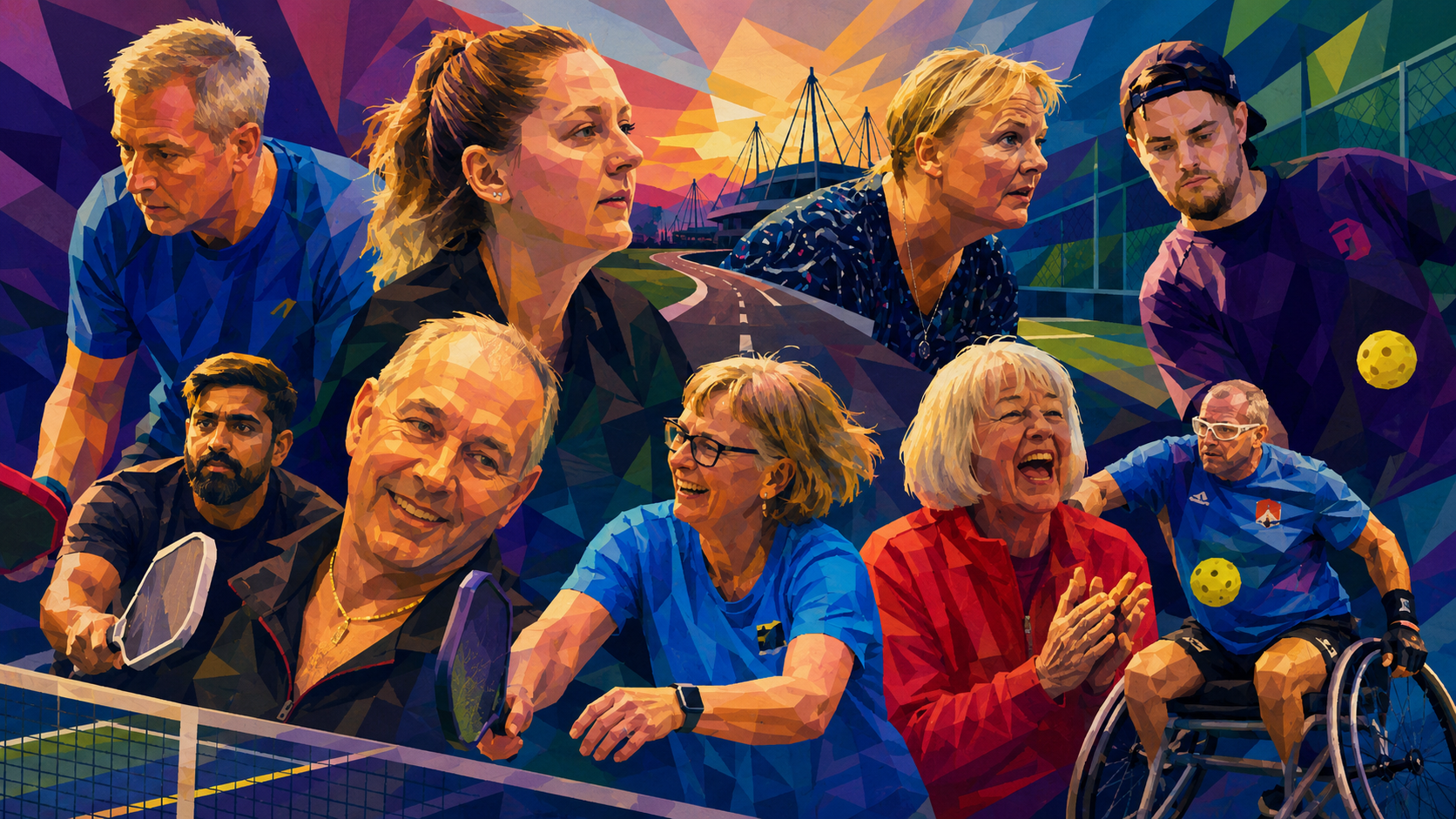
For ten weeks, 11 amateur pickleball players have invited us into their lives as they prepared for the English Open. They have shared new techniques, coaching breakthroughs, frustrations, injuries and small victories. But with just two weeks remaining, something remarkable has happened. The conversation has shifted. This is no longer about finding the perfect serve or one last tactical adjustment. It is about trusting the player each of them has become.
Key Takeaways
- With only two weeks until the English Open, every player has reached the point where preparation gives way to trust.
- The focus has shifted from learning new skills to protecting confidence, health and doubles partnerships.
- Kath Knowles has made the heartbreaking decision to withdraw after her partner David was diagnosed with advanced pancreatic cancer, reminding everyone that life will always be bigger than sport.
- The series has evolved into a study of amateur competition, revealing that the greatest challenges are often psychological rather than technical.
There comes a point before every major tournament when improvement becomes an illusion.
The coaching sessions continue.
The practice games continue.
Players still chase one more hour on court, one more basket of serves, one more conversation with their doubles partner.
Yet somewhere, quietly and almost without noticing, the preparation changes.
It stops being about becoming a different player.
It becomes about trusting the one who will walk through the doors on tournament morning.
Listening to this week’s Road to the English Open updates, every player has reached that moment.
None of them believes they are the finished article.
All of them know there is still more to learn.
But none of them is chasing perfection anymore.
They are learning something far more valuable.
Acceptance.
When Life Redefines Priorities
For Kath Knowles, however, even that conversation has changed.
After revealing that her partner of 26 years, David, has been diagnosed with pancreatic cancer that has spread to his liver, she explained why she has withdrawn from the English Open, ending a sequence that stretches back to the tournament’s inaugural edition in 2019.
There was no bitterness.
No self-pity.
Only love.
“My man and I will ride this terrifying storm together until our journey ends.”
Few sentences spoken throughout this project have carried greater weight.
It was a reminder that, however important sport feels, there are moments when it simply finds its rightful place.
Kath’s courage has become part of this story, and everyone connected with Road to the English Open will undoubtedly join us in wishing both her and David every possible strength for the weeks and months ahead.
Trusting The Work
For the six players still travelling to Birmingham who we are following this week, a fascinating pattern emerged.
Emily Williams spoke about finally accepting that “it’ll be what it is on the day.”
Simon Heaps believes the preparation is effectively finished.
“The winners will be the ones that play best on the day.”
Hari Sankar Bollineni deliberately stepped away from pickleball altogether, choosing recovery, strength work and mobility over squeezing in another session.
Sarah Reading admitted the ambitious training plan she imagined 12 weeks ago never fully materialised, but reached a simple conclusion: she now just wants to get on court and compete.
Karen Farnhill continues adapting to a new paddle while strengthening two very different doubles partnerships.
Julie Vickerman can still list the technical areas she would like to improve, but knows they will remain a work in progress long after Birmingham.
Different personalities.
Different journeys.
One shared realisation.
There is not enough time left to become someone else.
The Real Opponent
Earlier in this series, the biggest challenge always seemed technical.
Could the third-shot drop become more consistent?
Would the serve become deeper?
Could another coaching session finally unlock the missing piece?
Those questions have quietly disappeared.
Now the opposition looks very different.
Confidence.
Emily worries about avoiding injury.
Sarah is balancing work, family commitments, a late change of women’s doubles partner and a troublesome Achilles.
Julie openly admits that confidence under pressure remains her greatest challenge.
Simon has carefully mapped every remaining practice session to avoid arriving overplayed.
Hari believes the biggest danger is the temptation to do too much in the final fortnight.
None of those concerns can be solved with another drill.
They are the realities every competitor eventually faces.
Doubles Is Still About People
One of the unexpected joys of this series has been discovering how different every doubles partnership really is.
Simon and Andy have already had the tactical conversations.
They know each other’s games.
Sarah describes playing with Steve as two pieces of a jigsaw fitting naturally together, yet will meet her new women’s doubles partner for the first time at the tournament itself.
Karen faces a similar challenge in mixed doubles, knowing communication may matter more than technical ability.
Julie smiles at the contrast between one partner encouraging her to poach more at the net, while another simply says:
“Let’s just do our best.”
The tournament draw may pair names together.
Real partnerships are built through trust.
Why We Really Play
Perhaps the most revealing answers came when each player was asked to complete one simple sentence.
“With two weeks to go, I now realise…”
Not one answer centred on medals.
Hari spoke about becoming calmer and no longer judging himself by the scoreboard.
Karen described herself as “just a small cog in a very big wheel,” recognising that tournaments only exist because thousands of ordinary players choose to enter them.
Julie reflected on representing herself, her partners and her club, before gently reminding herself that “it is not life or death.”
Even Simon, arguably the most openly competitive of the group, returned to the personal target he set himself 15 months ago rather than talking about podium finishes.
As Birmingham draws closer, the conversation has become less about winning.
And much more about why they wanted to compete in the first place.
Two Weeks From The Start Line
When Road to the English Open began, it promised to follow seven amateur players preparing for one of Britain’s biggest pickleball tournaments.
Ten weeks later, it has become something richer.
A story about confidence.
Friendship.
Preparation.
Resilience.
Community.
Perspective.
Acceptance.
In two weeks’ time, medals will be won.
Dreams will be realised.
Others will fall just short.
But perhaps the greatest success of this project has already happened.
Seven ordinary people set out hoping to become better pickleball players.
Along the way, they have shown us what it really means to become better competitors.
And, in some cases, better people.

Chris Beaumont
Founder and Editor-in-ChiefChris Beaumont is the founder and Editor-in-Chief of World Pickleball Magazine. Chris follows the global game closely, reporting on the latest news, developments, stories and tournaments from all five continents. He also hosts the World Pickleball Podcast, interviewing people at…
View All Articles →

