The closeness matters. Players rem em ber fewer scores than they imagine. They rem em ber the rally which became ridiculous, the disputed call, the person who fell over and the conversation between games.
They rem em ber being hit by the ball. They rem em ber who made room for them when they were new. The sport repeats these small rewards quickly.
A terrible point does not require waiting until next Saturday for redemption. Another serve arrives. Something good may happen within 30 seconds.
So may something funny. That rhythm gives pickleball its social character more reliably than any brand can. Friday recognised it and built an identity around it.
Osben’s task is to carry that recognition into British clubs without pretending he invented what he finds there. The Van on the Road The launch details are still being completed. Osben promises that Friday will arrive soon.
The equipment will go on sale. The tour will begin. A van bearing the name will appear on British roads and, he suspects, attract a predictable amount of horn-based misunderstanding.
He will travel to clubs whose members have already built versions of the culture hew ants to encourage. Some will be highly competitive. Others will be social.
Several will contain both groups negotiating court space, ratings and what exactly counts as a useful game. Each stop will provide a different answer to the question with which the tour begins. What does British pickleball want to be?
Friday cannot settle that question on the country’s behalf. Nor should it try. A company can supply imagery, equipment and an excuse for people to gather.
It cannot create the relationships which turn a session into a community. The van is useful because it converts a brand launch into an act of discovery. Osben will see which clubs welcom e strangers, which events people rem em ber and which organisers have understood that the personality of a place matters as much as its playing schedule.
He will also encounter communities which care little about branded culture and would prefer another hour of court time. All of them belong to the sport. “It’s Just Pickleball” is most useful when pickleball begins forgetting itself.
It does not ask players to care less. It reminds them what their care is for. The medal can matter.
The rating can rise. A paddle can perform at a high level and also look good. There is room for ambitious players, professional competition and people who analyse every lost point on the drive home.
There must also remain room for the person who has arrived alone, the player whose number is lower and the friend who comes primarily for what happens afterwards. A culture proves itself through the room it leaves for those people. Britain does not yet have millions of pickleball players.
It has something the United States no longer possesses at the same scale: the opportunity to recognise many of the people building the game while it is still being built. Clubs can collaborate. Ideas can move quickly.
One unusually good event can influence organisers elsewhere. A van can travel between communities which remain close enough to learn from one another. Smallness is not only a stage to escape.
For now, it is an advantage. Osben is bringing an American brand into that opening, but the best version of his project will not leave British pickleball feeling more American. It will help the country become more confident about its own oddness.
That means keeping the hum our dry, thew elcom e genuine and the hierarchies loose enough for people to move through them. It means giving ambitious players som ew here to go without making everybody else feel they are standing in the way. It means understanding that a sports hall can contain a culture, but a culture should never be allowed to feel like another entry on the sports hall timetable.
It may mean pink clothes, a tour van and an unlikely Burger King paddle. A rogue sport is allowed a few bad ideas. It should be wary only of becoming too respectable to try them.
The Space Between the Points For six days at the English Open, Nick Hobbis and Chris Beaum ont will talk about pickleball for as long as their voices and concentration allow. One has medicine used by singers. The other has black coffee and the complication of stepping out of the booth to compete.
Together, they are learning when a young sport needs words and when it is confident enough to be left alone. By Chris Beaum ont Nick Hobbis will arrive at the English Open with Dr Sanderson’s throat medicine, menthol voice tablets and several weeks of research. I will have black coffee.
This may explain quite a lot about us. For six days at Birmingham’s N EC, Nick and I will occupy the commentary positions beside two championship courts and attempt to describe what happens on them. We expect the days to begin around eight in the morning.
The schedule says they will finish at six. Experience suggests we should prepare for eight. That is a long time to talk about anything.
The voice is the obvious concern. Nick approaches its preservation with the seriousness of a singer preparing for a run of performances. He will drink warm liquids, remain hydrated and take the medicine used by professional vocalists when the first soreness arrives.
Som ew here nearby, I will be asking whether anybody knows where the coffee has gone. The greater difficulty has less to do with the throat. Across ten or twelve hours of pickleball, the commentator must remain interested without pretending that every point is interesting.
There will be medal matches, extraordinary rallies and players producing shots which demand noise. There will also be group games moving towards predictable conclusions on a Wednesday afternoon while several more hours remain. The moment of the day may arrive in either.
You cannot behave as though every rally is historic. Nor can you allow an ordinary match to persuade you that nothing historic is about to happen. Nick has prepared the players, partnerships and stories.
I have been thinking about goalkeepers. Between us, we may have the beginnings of a commentary team. A Very Large Room The English Open has outgrow n Telford.
This year, it moves into three halls at theN EC, with more than 60 courts, two championship courts and players travelling from over 50 countries. There will be 44 referees, a collection of vendors, seminars, line calling and enough matches to make the idea of seeing everything faintly ridiculous. Numbers communicate scale efficiently.
They do not quite explain what it will feel like. When Iwas young, theN EC seemed to be one of those places where large things happened. Its name appeared beside concerts, exhibitions and national events which needed more room than an ordinary building could provide.
Earl’s Court was the London version. TheN EC belonged to the Midlands and to the general idea of enormity. Crufts is held there.
Nick knew this, although he initially pronounced it with the slight uncertainty of a man about to reveal more knowledge of championship dog shows than he intended. Now pickleball is moving in. For a player accustomed to local tournaments and sports-hall sessions, walking into Telford could already be arresting.
Courts stretched across the venue. Games were happening in every direction. Players who had previously known the sport through aweekly club session suddenly found themselves inside something which looked like a proper sporting event.
TheN EC will multiply that sensation. Pickleball still spends much of its British life beneath basketball hoops and beside stacks of gym mats. It borrows badminton lines, shares storage cupboards and leaves the hall when the next booking arrives.
That has helped the game grow. It has also conditioned players to the feeling that their sport is temporarily occupying somebody else’s space. For one week in Birmingham, the space will belong to pickleball.
The building is large enough to make a statement without anybody saying one. The question for those of us holding microphones is whether we can resist saying it too often. Young sports are understandably eager to announce their arrival.
Every increase becomes evidence. More players, more courts, more countries, more prize money, more viewers. The language of growth becomes so familiar that the sport risks sounding like a series of progress reports.
TheN EC matters because it can be seen. Sixty courts do not need an adjective from us. A player entering the hall and stopping for a moment will say more about the scale of the event than another declaration that pickleball is booming.
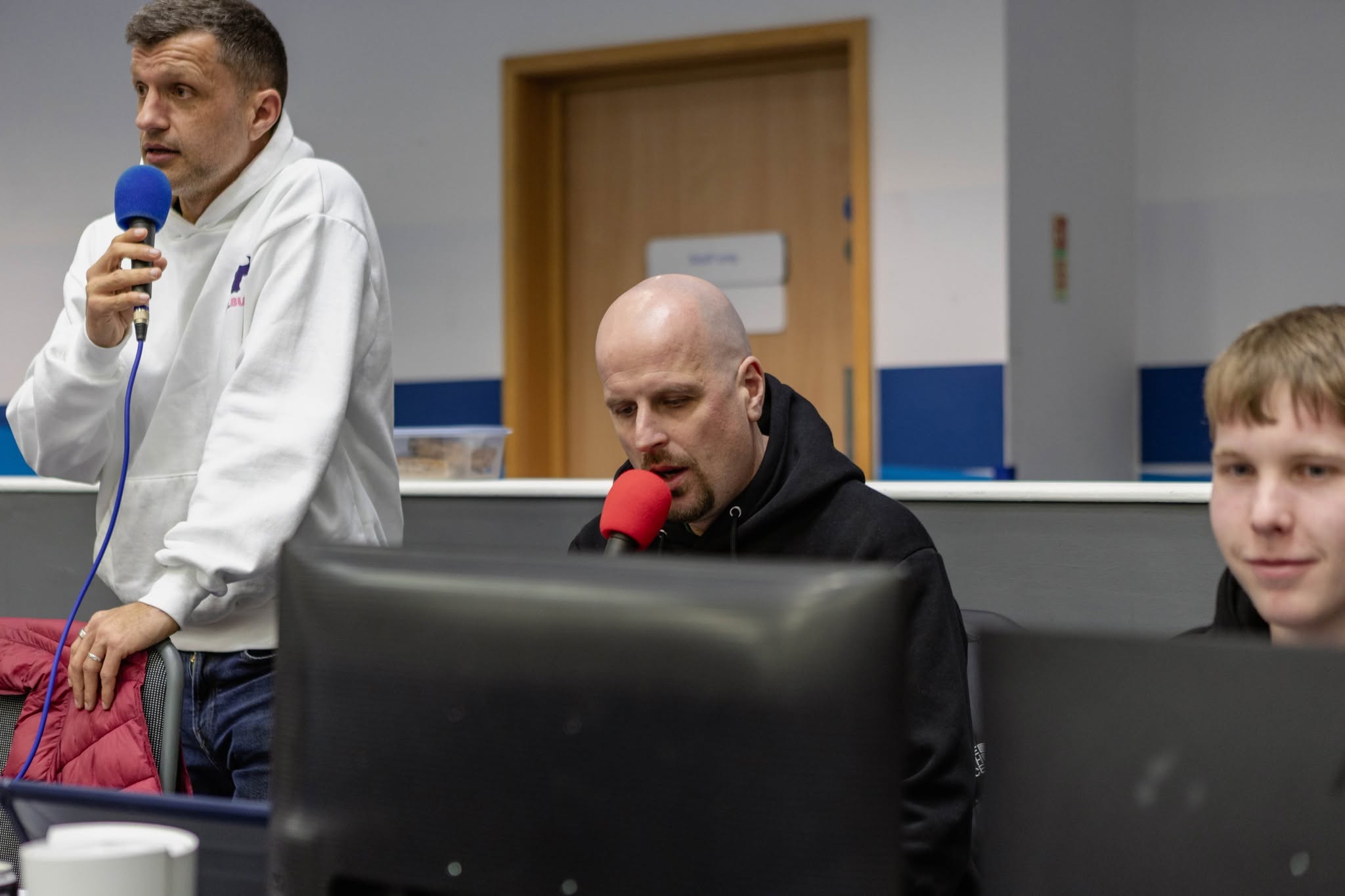
Commentary has to recognise the difference between describing significance and insisting upon it. Two Ways of Preparing Nick and I have worked together often enough to know that we approach the booth differently. He is the organised one.
His research begins weeks before an event. He studies the entrants, previous results, partnerships and stories which may become relevant if a particular player reaches the championship court. Hew ants the information ready before the moment asks for it.
That preparation is largely invisible when it works. The viewer hears a name, a relevant result and a short explanation of why the match matters. What they do not hear is the time spent checking whether a player won bronze last year, changed partners or produced a significant result at another event six months ago.
When it does not work, we argue on air about who won thew om en’s singles in 2025. This happened during our English Open preview. Nick believed Lee Whitwell had not entered.
Iwas sure she had completed a triple crown. Marcia Aubibert and Tara Jones entered the discussion without being present. Neither of us wished to retreat.
Som ew here beneath the disagreement sat the uncomfortable knowledge that one of us would be telling viewers the wrong thing if we did not settle it before the event. The exchange was funny because it was familiar. Pickleball does not yet have the statistical infrastructure surrounding established professional sports.
Information lives across tournament software, social media posts, federation pages, broadcasts and the mem ories of people who were standing near the court. Names are misspelled. Results disappear into brackets.
Partnerships change. A player may be prominent inone country and almost unknown in another. The commentator becomes part researcher, part archivist and part person desperately searching Facebook while the other commentator makes polite conversation.
During the preview, I confused Martin Thomas with Martin Clark. Nick filled the space by making a medal prediction. The machinery of broadcasting continued.
My preparation relies more heavily upon im mersion. I write about pickleball every day, interview people across the sport and watch enough of it that names, patterns and half-rem em bered stories gather without always being filed properly. I am com fortable following a conversation wherever the match takes it.
I am less likely than Nick to arrive with Dr Sanderson’s medicine or a neatly protected voice. There are advantages and liabilities to both approaches. Research gives commentary authority, but too much information can make the broadcast sound like somebody reading the notes they worked hard to compile.
Instinct provides energy, but instinct without facts can confidently place the wrong medal around the wrong person’sneck. The good booth contains both. One voice notices the tactical change.
The other rem em bers the match in which the same player used it before. One senses that a conversation has run far enough. The other introduces something new.
One becomes excited and creates room for the other to explain why. This is not arranged in advance. Commentary has no turn-taking light.
The rhythm em erges through listening. In that respect, two-person commentary resembles doubles. Both people must cover the court without standing in the same place.
Each needs to recognise when the other has taken the middle. A strong intervention can end the exchange. The wrong one produces a collision.
Nick and I will collide occasionally. The viewer should probably expect it. The Goalkeeper Problem Not every game will be excellent.
This should not be a controversial admission. Any tournament containing hundreds of matches will include m ism atches, nervous beginnings, flat periods and games which never become what the players or commentators hoped. The difficulty is that an extraordinary point can appear inside an ordinary match.
A group game may be heading towards an unremarkable conclusion when somebody reaches a ball they had no right to reach, sends it around the post and turns an indifferent contest into the clip everybody shares that evening. The commentator has seconds to recognise what is happening, find thew ords and then get out of the way. I compared it during our conversation to goalkeeping.
A goalkeeper can spend long periods outside the action. The game is happening at the other end. They remain involved through positioning, communication and attention, but may have made no save of consequence.
Then the opposition breaks through. Their entire afternoon may be judged on the next three seconds. It does not matter that they have been cold, inactive or largely ignored.
The moment has arrived and they must be ready for it. Commentary can feel similar. During an average passage of play, the temptation is to create work.
Silence makes broadcasters nervous. We reach for another fact, another observation or another explanation because the microphone is present and we assume it must be filled. That uses energy.
It can also make the broadcast exhausting to hear. The job across six long days is to remain prepared without manufacturing urgency. We must pay attention to the match in front of us while accepting that it may not currently require much from us.
When the point arrives, we have to make the save. Nick puts the challenge differently. “One of the biggest challenges in commentating is som etim es finding the right moments just to be quiet,” he says.
That may be the more difficult skill. The Noise of the Ball Pickleball has a sound which broadcasters cannot hide. The ball cracks against the paddle.
Shoes stop sharply on the court. Players call scores, talk to partners and occasionally question whether a ball landed where their opponents claim. The championship court creates its own rhythm before the commentator contributes anything.
Silence allows the viewer into that rhythm. In tennis, long stretches of a rally pass without commentary because the convention is established and the game is allowed to speak. Football commentators regularly leave room for the crowd after a goal.
Cricket can move between close technical description, conversation and the sounds of the ground. Pickleball is still deciding what it wants from its voices. The points are short enough that speaking during them can cover a substantial part of the action.
The exchanges at the kitchen are fast enough that a sentence started at the wrong moment may continue through three attacks and the winner. Players stand close to one another and frequently communicate. The broadcaster must decide whether adding words improves the experience or places another layer between the viewer and the court.
There is also the problemof enthusiasm. Nick wants the person watching on a telephone, tablet or television to feel some of what we feel in the hall. That requires energy.
A flat call can make an excellent point feel smaller than it was. Too much excitement creates the opposite problem. If every ATP is unbelievable, every Erne extraordinary and every game a thriller, the language loses its ability to distinguish.
The commentator may be working desperately to make the sport sound important while gradually making nothing sound important at all. The credible voice has to admit what it sees. A straightforward match can be straightforward.
A poor decision can be called a poor decision. A player can be praised without becoming one of the greatest athletes ever to hold a paddle. The excitement becomes more convincing when the audience knows it has not been given away cheaply.
Som etim es a rally needs no explanation. The picture is clear, the sound is good and the people watching already understand that something unusual is happening. At theN EC, the strongest moments will make their own argument.
If you're following how the global game is shifting week by week, the World Pickleball Report breaks this down every day in our morning briefing.
Our task is to recognise them quickly enough. The Com mentator Who Has to Play Nick gave up serious ideas about playing some time ago. I have not yet developed the same good sense.
On Friday morning, after four days around the commentary courts, I will enter the men’s 35-plus 4.5 singles. There are 22 players in the category. I would place myself som ew here around 20th, 21st or 22nd.
This is not false modesty. I have looked at the draw. My objectives are realistic.
I would prefer not to be pickled. I would like to improve upon the experience of losing 7-0 to Luke O ’Connor in last year’s group stage without feeling that I had done very much wrong. Tim Spurw ay, my recurring tournament opponent and occasional commentary colleague, will probably appear in my group because the administrative forces of pickleball enjoy an old rivalry.
The peculiar part is moving between the booth and the court. Commentary may help the playing. Spending several days watching the ball closely can tune the eyes to its speed and movement.
Patterns become easier to recognise. Good decisions repeat in front of you. By the time I hold a paddle, I have already spent hours concentrating on where the ball goes and why.
The body receives fewer benefits. Four days of commentary require energy even if most of them are spent sitting down. Concentration is tiring.

Meals are fitted around matches. Breaks disappear. The day runs later than expected and the next one begins early.
By Friday, any reserve I brought to Birmingham will have been disturbed. Singles is an unforgiving way to discover how much remains. The concern is not that commentary will make me play badly.
I am capable of achieving that independently. It is that I may divide the available energy so poorly that I do both jobs at an average level. After playing, I will return to the booth.
The viewer does not need to hear that the commentator’s legs are tired, their tournament has ended or they are privately replaying the backhand missed at 8-8. The next match belongs to the people on court. Whatever disappointment or satisfaction follows the playing has to be put som ew here else.
There is value in the complication. Com peting prevents the commentary position from becoming entirely separate from the event. The nerves are recent.
The hall feels different from court level. Waiting for a match, reading a draw, managing fatigue and discovering that an opponent is much better than hoped all provide information which cannot be gathered from a results page. It also removes any temptation to treat mistakes too casually.
A commentator can see the correct shot clearly from a chair. The player has to find it while moving, breathing and aware of the score. My own results provide regular reminders that recognising a decision and executing it are separate abilities.
Nick can provide the professionalism. I will supply empathy through personal failure. Again, it may prove a useful combination.
The Stories Prepared in Advance A live event punishes certainty. Before the English Open begins, we can identify the defending champions, likely contenders and partnerships which appear particularly strong. We can research the players who have im proved over the past year and those arriving with results elsewhere.
Then somebody loses in the group stage. The story the commentator prepared disappears. A player barely mentioned in the notes reaches the championship court.
A partnership which looked obvious on paper never settles. The match expected to define the day finishes quickly, while two less familiar players produce its best contest. This is where preparation must become flexible.
Nick talks about arriving with the stories ready for the big moments. He does not mean writing the ending in advance. The notes provide routes into the person and the match.
The competition decides which route remains useful. The distinction matters because pickleball broadcasts can easily become too dependent upon rating, reputation and prior results. A famous player arrives carrying a ready-made narrative.
The lesser-known opponent appears as an obstacle within it. The court may tell a different story. At an international event with players from more than 50 countries, some will be unfamiliar because their achievements occurred outside the competitions most visible to us.
Others will have developed since they were last watched. A rating may lag behind a player or flatter them. The commentator must be willing to abandon the hierarchy brought into the booth.
Watching properly is a form of research conducted in real time. It requires adm itting surprise. That should happen often at theN EC.
Pickleball is moving too quickly for anybody to know everybody. Players improve between tournaments. New partnerships arrive without an archive.
Somebody who looked raw 12 months ago returns with control, patience and a much clearer idea of what to do with the third shot. The booth needs enough preparation to recognise the change and enough humility to let the match correct it. Commentary as Company Most people watching the English Open will not be inside the halls.
They will encounter it on a screen, som etim es for an entire match and som etim es for a few minutes while doing something else. The commentary becomes part of their company. That changes the tone.
Nick and I are not delivering a formal record from the edge of the court. We are inviting viewers to sit with us for a long day of pickleball. The conversation will move between tactics, people, results, memory and whatever happens to be visible near the court.
There will be stretches of close attention and moments when the event’s oddness becomes impossible to ignore. The tone cannot be manufactured. Nick and I have disagreed over results, forgotten names, recalled matches differently and made confident predictions which the sport was kind enough to disprove.
He once commentated the gold-medal match while I covered the bronze, a fact I raised when his memory of the champions became uncertain. “I don’t get the opportunity to forget who wins the golds, mate,” I told him. The complaint contains part of what makes the partnership work.
We know enough about one another to challenge a claim without making the exchange uncomfortable. Mild grievance is one of the more dependable forms of British affection. The commentary improves when it feels like two people genuinely watching together rather than alternating prepared statements.
There will be other voices during the week. Players will join us. Tim Spurw ay will appear, perhaps with an account of whatever happened when we met on court.
Different combinations will alter the mood and level of technical detail. No single voice should own the tournament. A sport becomes richer when it can be discussed in several ways.
One commentator sees court positioning. Another notices emotion. A current player understands the tactical adjustment.
Somebody else knows the history between the pair. The broadcast gathers these perspectives without forcing them into a single official language. Nick and I are not inheriting decades of English pickleball commentary convention.
Much of it is being worked out as w ego. How much technical explanation does the audience need? Which term scan be assumed?
How should a tactical exchange be described without talking through it? When does hum our help? When does the importance of the point require a cleaner voice?
How much background should be given about a player whom regular viewers know but a newcomer has never seen? There is no completed manual. That uncertainty is freeing.
It allows the commentary to sound like the sport around it: serious about the game, informal about almost everything else and still close enough to the players that conversation does not require a press conference. The danger will come when pickleball begins believing that professionalism dem ands imitation. Tennis already has tennis commentary.
Pickleball needs voices suited to its own speed, intimacy and peculiar capacity to become funny at important moments. The English Open is large enough for us to learn more about what that sounds like. It remains young enough for us to get some of it wrong in public.
Tuesday Morning We have not yet seen the commentary positions. There are two championship courts, which introduces several possibilities. Nick and I may be placed close enough to speak to one another.
We may be at opposite ends of a large hall, waving across the distance. Each commentary may bleed into the other, leaving viewers to hear a faint competing voice celebrating a point on the neighbouring court. At eight o’clock on Tuesday morning, the first balls will be struck.
Nick should be prepared. His research will be complete, his throat protected and his stories organised. He lives in the Midlands and will return to his own bed each night, which gives him an advantage he has mentioned often enough to become irritating.
I will have travelled from Anglesey and will probably be at the venue before him. My hotel is nearby. He has threatened to appear for breakfast.
It is his turn to buy the coffee after Rome, and I intend to maintain an accurate historical record of this obligation even if we forget every medal winner from last year. Then the matches will begin interfering with everything we expected. A player will surprise us.
A name will be pronounced differently from the version we practised. A routine group game will produce something wonderful. One of us will begin a sentence as the rally accelerates and discover that the point has moved beyond it.
We will talk at the same time, stop at the same time and invite the other to continue. By the end of the week, Nick may be rationing his voice tablets. I may be carrying the result of my singles tournament in my legs.
The hall will sound different on Sunday from the way it did on Tuesday. Six days of shoes, paddles, announcements, arguments, applause and conversation will have passed through it. Champions will have been created.
Predictions will have been quietly forgotten. Som ew here within those hours, the broadcast may find the right words for a moment that deserves them. The harder achievement will be recognising when the sound of the ball is enough.
For a clearer view of where the sport is heading each week, you can join the World Pickleball Report here.

Chris Beaumont
Founder and Editor-in-ChiefChris Beaumont is the founder and Editor-in-Chief of World Pickleball Magazine. Chris follows the global game closely, reporting on the latest news, developments, stories and tournaments from all five continents. He also hosts the World Pickleball Podcast, interviewing people at…
View All Articles →