
VVV Sports’ acquisition of TOPSERIES Pickleball and planned £5 million raise is not simply another expansion announcement. It is an early signal that ownership, media control, and tour infrastructure outside the United States are beginning to consolidate.
- VVV Sports has acquired TOPSERIES Pickleball and plans to raise £5 million
- The company is building across tours, media, facilities, athlete management, and US expansion
- The deal raises bigger questions about who will control international pickleball’s next phase
Infrastructure Is Becoming Influence
The battle to control international pickleball may already have started.
Not through players.
Not through rankings.
But through ownership of the systems sitting underneath the sport itself.
VVV Sports Limited has acquired 100 per cent of TOPSERIES Pickleball, while announcing plans for a proposed £5 million raise and a future dual listing on the NASDAQ Global Market.
On the surface, this is a business story about capital, expansion, and market ambition.
Underneath, it is about power.
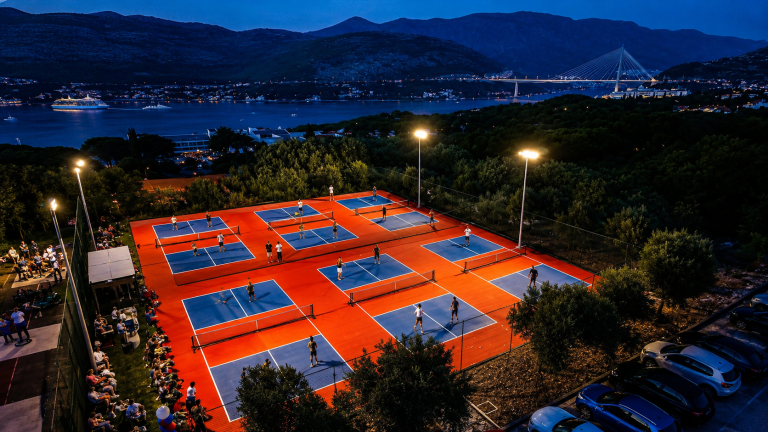
The acquisition gives VVV immediate control of a tour infrastructure operating across Europe, the Middle East, and Africa. The company also intends to establish a Miami-based US operating entity while building across pickleball, padel, media production, athlete management, and facilities.
That combination matters.
Because infrastructure is influence.
Pickleball’s next global phase may not be decided by participation numbers alone. It may be decided by who owns the ecosystem surrounding the sport.
This Is Bigger Than One Tour Acquisition
For years, much of international pickleball existed in fragmented form.
Independent tournaments emerged regionally. Tours operated separately. Commercial relationships remained localised. Media coverage largely followed isolated events rather than connected ecosystems.
That model is beginning to shift.
VVV’s move suggests parts of the sport are evolving toward integrated ownership structures where tours, media rights, sponsorship, athlete pathways, facilities, and storytelling can sit inside the same commercial framework.
That is where the stakes become clearer.
A company controlling tours, media production, and facilities can eventually influence more than event dates. It can shape where tournaments are staged, which athletes gain visibility, which sponsors dominate the landscape, and how regional circuits connect to wider professional pathways.
Other sports have already shown where this can lead.
Football’s multi-club ownership era changed how talent pipelines and commercial influence operate globally. LIV Golf demonstrated how rapidly outside capital can reshape a sports ecosystem once infrastructure and media attention move together. Combat sports increasingly revolve around organisations controlling both events and the narrative around those events.
Pickleball may now be entering its own version of that phase.
Why the Media Layer Matters
One of the more revealing details inside the announcement was not the acquisition itself.
It was the reference to premium content production, including a six-part docuseries in development with Amazon Prime.
That is not decorative.
It is strategic.
Owning the tour is one layer of influence.
Owning the story around the tour is another.
Modern sports ecosystems increasingly revolve around narrative control as much as event control. The organisations shaping documentaries, behind-the-scenes access, athlete visibility, and commercial storytelling often gain disproportionate influence over how audiences emotionally connect with a sport.
That creates another competitive battleground entirely.
It also suggests some ownership groups no longer view pickleball as simply a participation opportunity.
They are treating it as a full entertainment property.
Europe and the Middle East Are No Longer Side Markets
The acquisition also reflects a wider shift happening across the international game.
For years, conversations around pickleball remained overwhelmingly centred on the United States. International regions were often discussed as secondary growth territories rather than strategically important ecosystems in their own right.
That perception is changing.
Europe and the Middle East are increasingly being viewed as commercially valuable infrastructure markets capable of supporting tours, sponsorship ecosystems, media products, and professional player pathways independently of North America.
TOPSERIES already gave VVV access to part of that framework.
The acquisition accelerates the company’s ability to shape it.
And that introduces larger questions for the sport globally.
Because consolidation creates power.
It also creates dependency.
As ownership groups expand across tours, media, facilities, and athlete representation simultaneously, independent operators may eventually find themselves competing inside ecosystems controlled by a smaller number of commercial entities.
That does not automatically make consolidation negative.
But it does make governance, transparency, and competitive access significantly more important over time.
The Question Is Control
The most important part of this story is not the £5 million raise itself.
Nor is it the NASDAQ ambition.
It is the direction of travel underneath both decisions.
International pickleball is beginning to move away from scattered entrepreneurial growth and toward organised commercial competition between ownership structures seeking long-term influence across the sport.
That is a very different phase of development.
And potentially a far more consequential one.
If international pickleball eventually becomes concentrated around a handful of ownership groups, who protects competitive independence inside the sport?
That question may soon matter as much as prize money, rankings, or broadcast reach.
The global pickleball land grab may still be in its early stages.
But the organisations shaping the sport’s future are no longer simply building tournaments.
They are building influence.
Further Reading
- Latest pickleball news from around the world
- Tournament coverage and results
- Rankings and player profiles
- Regional pickleball coverage

Chris Beaumont
Founder and Editor-in-ChiefChris Beaumont is the founder and Editor-in-Chief of World Pickleball Magazine. Chris follows the global game closely, reporting on the latest news, developments, stories and tournaments from all five continents. He also hosts the World Pickleball Podcast, interviewing people at…
View All Articles →