Ben Johns is out of men’s singles, Sofia Sewing has already removed a top-10 seed and Anna Leigh Waters has opened with a double pickle. Two rounds into the PPA National Championships, Cary’s brackets are beginning to tell us more than their seedings did.
Key Takeaways
- John Lucian Goins eliminated Ben Johns 11-0, 6-11, 11-0 in one of the most remarkable results of the opening two rounds.
- No. 46 seed Sofia Sewing has reached the women’s singles Round of 16 after beating No. 9 Liz Truluck 11-7, 11-4.
- Thursday’s Round of 16 is where Cary’s early surprises must become sustained tournament runs, while the leading doubles combinations face their first serious tests.
Two days into the Veolia Pickleball National Championships, the brackets no longer look quite as orderly as they did on Monday morning.
Ben Johns is out of men’s singles. Liz Truluck is out of women’s singles. Sofia Sewing, seeded 46th in a draw that already appeared to underestimate her current playing level, is still there. John Lucian Goins has produced one of the strangest scorelines of the opening PPA Major of the season, losing the middle game against Johns before handing him an 11-0 in both the first and third.
Meanwhile, the leading doubles teams have begun the more complicated business of establishing partnerships after a summer dominated by Major League Pickleball.
And this is only the Round of 16.
Cary’s progressive schedule has given the tournament room to breathe. The Round of 64 was played on Tuesday, the Round of 32 on Wednesday and all five professional draws reach the last 16 on Thursday, before quarter-finals on Friday, semi-finals on Saturday and championships on Sunday.
It is the first Major of the PPA’s new September-to-May season, with 2,000 ranking points available in every division.
That makes Thursday the first useful point at which to stop treating the brackets as predictions and start reading what the tournament has actually told us.
Some of the favourites have moved through with very little disturbance.
Others have already discovered that the numbers beside their names offered considerably less protection than expected.
Goins gives Ben Johns two 11-0 games
There are upsets, and then there are scorelines that require a second look.
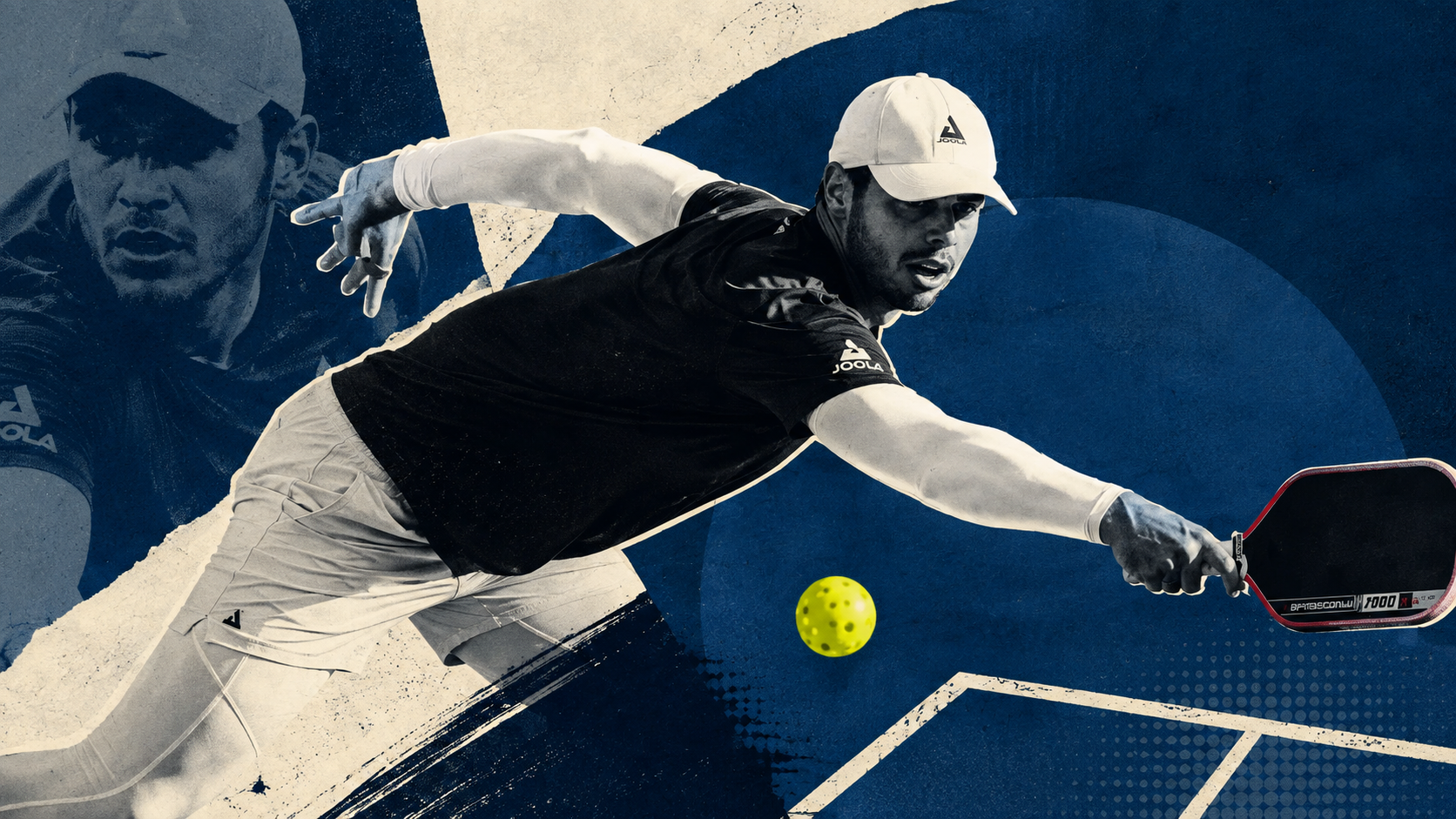
Goins beat Johns in three games in Wednesday’s men’s singles Round of 32, but the shape of the match was extraordinary: 11-0, 6-11, 11-0.
Johns recovered from being pickled in the opener to win the second game and apparently restore order, only for Goins to shut him out again in the deciding game.
Twenty-two points to zero across the two games he won.
That becomes more striking because of the player on the other side of the net. Johns remains the No. 1 man in the current World Pickleball Rankings and has spent much of professional pickleball’s modern era setting the standard across disciplines.
None of that helps once a new singles match begins.
The discipline offers reputation less protection than doubles once movement and patterns begin breaking down. There is no partner to absorb pressure, no second paddle to protect space and nobody else available to change the geometry when an opponent repeatedly finds the same winning pattern.
Goins did not merely find a way through.
Twice, he prevented Johns from scoring a point.
The harder part begins now. One extraordinary victory creates attention, but Cary’s format gives Goins an entire night to come down from it before returning to a bracket that has not awarded him anything yet.
Beating Johns is the result everybody will remember from Wednesday.
What Goins does next determines whether it changes anything beyond Johns’ week.
Sofia Sewing is doing exactly what her seed suggested she shouldn’t
If Goins supplied Wednesday’s most startling result, Sewing supplied perhaps its least surprising upset.
That sounds contradictory until her No. 46 seed is considered.
Sewing opened the tournament by beating Marcela Aguila Ampon 11-8, 11-6, then faced No. 9 Liz Truluck in the Round of 32.
She won 11-7, 11-4.
This was not a three-game escape in which a lower seed survived a handful of decisive points. Sewing allowed Truluck 11 points across two games and moved into Thursday’s Round of 16 against Kiora Kunimoto.
WPM flagged Sewing before the tournament precisely because the seed and the player appeared to describe two different things.
Her season outside the PPA ranking structure had already supplied evidence that she could operate at a considerably higher level than 46th suggested. Cary has now supplied the tournament evidence.
Truluck became the first significant casualty of that mismatch.
Kunimoto now has to deal with the consequences.
This is where the progressive draw becomes particularly revealing. On Tuesday, Sewing was an unusually dangerous No. 46 seed buried deep in the bracket. By Thursday morning, she is no longer a theoretical problem.
She has put a top-10 seed out in straight games.
Waters has taken the opposite route
Anna Leigh Waters has encountered rather less ambiguity.
Her Round of 32 victory over Allyce Jones was 11-0, 11-0.
Where Sewing’s opening two matches have challenged the relationship between seed and playing level, Waters has reinforced the most obvious piece of hierarchy in the women’s draw.
There is a particular brutality to a double pickle at this level because it removes most of the comforting explanations available after one bad game. A slow start can happen, a sequence of missed returns can distort a short race to 11 and a player can lose control of a match before finding the adjustment required to change it.
Doing it twice means the adjustment never arrived.
That has been the recurring problem opponents face against Waters. Her return depth compresses the time available on the third shot, her movement allows her to remain in points that appear finished and, once she takes control of a rally, she can keep an opponent playing at a speed and from court positions they did not choose.
Cary has not yet asked her a serious question.
Sewing’s progress matters partly because the tournament is gradually determining who might be capable of asking one.
Five brackets are beginning to become one tournament
Singles has supplied the shocks, but the wider significance of Thursday is that Cary’s five professional competitions are finally becoming manageable enough to read.
The tournament began with more than 1,400 players across its professional and amateur competitions, while the professional side introduced a new season, new World Pickleball Rankings and a series of doubles combinations emerging from the MLP summer.
By the Round of 16, the noise starts falling away.
That is particularly useful in doubles because Cary began with a number of partnerships that looked convincing on paper without having accumulated much evidence together in this phase of the season.
The individual quality is obvious.
How that quality divides the court is not.
Men’s doubles asks who controls the middle, which player can create offence when a rally becomes neutral and whether a right-side player can withstand opponents repeatedly trying to isolate him. Women’s doubles creates its own pressure around hands, speed-ups and the ability to turn sustained kitchen exchanges into attackable balls. Mixed remains brutally sensitive to positioning because one player drifting half a step too far can change the space available to all four paddles.
Those questions cannot be answered by reading two names next to each other on a bracket.
Cary is beginning to answer them with matches.
Waters and Johns have started mixed doubles without complication
There is also something revealing about the teams that have so far refused to join the chaos.
Waters and Johns moved through Michael Loyd and Angie Walker 11-1, 11-4 in mixed doubles, a result which required none of the recovery Johns needed before eventually losing his singles match to Goins.
That contrast is worth holding onto.
Professional pickleball’s five disciplines are related, but they do not reward identical skills. A player can look exposed covering an entire singles court and several hours later appear completely secure within a partnership whose positioning and patterns have been refined over years.
Johns’ singles tournament is finished.
His Cary tournament is not.
The same distinction applies throughout the field. Thursday is not merely sorting players into winners and losers. It is beginning to separate those whose level travels cleanly across disciplines from those whose tournament depends much more heavily upon a particular format or partner.
At a Major carrying 2,000 ranking points in every division, those distinctions become expensive quickly.
Sewing’s mixed defeat tells us something too
Sewing provides the reverse example.
Her singles run has survived, but her mixed campaign with Casey Diamond ended against Catherine Parenteau and Riley Newman after a match that went all the way to a deciding game.
They lost 11-8, 5-11, 12-10.
The defeat matters because it provides another piece of evidence about Sewing’s level without pretending that losing is somehow equivalent to winning.
Diamond and Sewing are out.
But they took Parenteau and Newman into extra points in the third game.
Across two days in Cary, Sewing has therefore beaten the No. 9 women’s singles seed comfortably and come within two points of eliminating an established high-level mixed pairing.
That is a much more useful description of where her pickleball currently sits than the number 46.
The ranking system makes these rounds more expensive
There is another layer to Cary that was absent from many previous early-season tournaments.
The new World Pickleball Rankings combine performance across disciplines, with gender doubles carrying 50 per cent of the calculation, mixed doubles 35 per cent and singles 15 per cent. Cary is also one of four Majors on the new schedule, with 2,000 points available to a champion.
That weighting changes how we should read a player having very different weeks across different brackets.
Singles can create the spectacular result. Goins beating Johns 11-0 in two games is the result most likely to escape Cary and circulate around the sport.
But gender doubles carries more weight in the ranking structure.
For players trying new partnerships, this is therefore not a gentle September reintroduction after MLP. The combinations being tested this week are doing so at one of the most valuable tournaments of the season.
By Thursday, experimentation starts becoming consequence.
The progressive draw removes one excuse
Cary’s format also changes the way an upset has to be processed.
Nobody can simply ride the emotional momentum of a huge victory into another match 40 minutes later.
Win today and the next round waits until tomorrow.
Every opponent can watch. Every coach gets an evening to prepare. The tendencies exposed in one round can become the game plan for the next.
For Goins, the Johns match is already over.
For Sewing, Kunimoto has had time to study precisely how she dismantled Truluck.
For the favourites, there is increasingly little excuse for being surprised.
The PPA has effectively given each round its own day, and Thursday is where the benefit of that format becomes clearest. The low seeds and unfamiliar combinations who were merely interesting on Tuesday have either disappeared or earned another 24 hours of somebody else’s attention.
Thursday tells us which surprises are real
That is the distinction worth watching now.
The first upset gets a player noticed.
The next victory changes the tournament.
Goins has already removed Johns, but Cary will not give him a medal for doing it. Sewing has removed the No. 9 seed, but Kunimoto is now standing between her and the quarter-finals. Across men’s, women’s and mixed doubles, combinations that arrived with reputations or intriguing possibilities are reaching the point where those possibilities have to survive opponents who have now seen them play.
Meanwhile, the strongest favourites have had two rounds to settle.
Friday will reduce every professional bracket to its quarter-finalists. Saturday will leave only the players and partnerships capable of reaching Championship Sunday.
Thursday sits between the two versions of Cary.
The opening rounds have already told us that several assumptions embedded in the draw were wrong.
The Round of 16 determines whether those were early-week disturbances or results that will still matter when the Major is decided.
Further Reading
- Latest pickleball news from around the world
- Tournament coverage and results
- Rankings and player profiles
- Regional pickleball coverage

Chris Beaumont
Founder and Editor-in-ChiefChris Beaumont is the founder and Editor-in-Chief of World Pickleball Magazine. Chris follows the global game closely, reporting on the latest news, developments, stories and tournaments from all five continents. He also hosts the World Pickleball Podcast, interviewing people at…
View All Articles →