
At 33, Shusaku Kumakura represents a new generation of entrepreneurs attempting to build not just a company, but an entire category in Japan. His path into pickleball is rooted in a much longer personal history with sport, followed by a high-performing career in finance, and ultimately a deliberate decision to step away from that path and build something independently.
He began playing tennis in elementary school, around the age of ten, and continued for more than a decade with serious intent, at one stage aiming to become a professional player. When that did not materialize, he transitioned into the corporate world and joined Nomura Securities, one of Japan’s most prestigious financial institutions, where he established himself as a top performer within his cohort.
During his time at Nomura, he also spent a period in Hong Kong, where he interacted with investors and entrepreneurs and began to develop a broader perspective on business beyond the structure of a large organization. That experience proved influential in shifting his mindset. He later pursued management studies at Globis, deepening his understanding of business strategy and reinforcing his interest in entrepreneurship.
His first entrepreneurial idea did not involve pickleball but was centered on tennis, reflecting his long-standing connection to the sport. He explored building a tennis-related business, potentially focused on coaching or academy-style services, and began working on elements such as online content, marketing, and positioning.
That process, however, remained exploratory until 2023, when he began hearing about pickleball’s rapid growth in the United States, particularly in markets such as Texas. The turning point came when he played the sport himself. What he encountered was not just a new racket sport, but a format with structural advantages: it was easy to learn, inherently social, and required a lower technical barrier to entry than tennis. From a business perspective, these characteristics suggested scalability, broad appeal, and multiple potential revenue streams.
At that point, the decision became clear. He abandoned the tennis-focused concept and pivoted fully toward pickleball, leading to the creation of Pickleball One.

Lowering barriers and defining the future of the sport
Alongside infrastructure, Kumakura places strong emphasis on culture, particularly the concept of social or open play. In more mature pickleball markets, players can arrive at a court, join a rotation, and play without needing to organize a group in advance, significantly lowering the barrier to participation.
In Japan, that culture has not yet been fully established, and players often rely on pre-arranged groups or structured bookings, which introduces friction. Kumakura’s objective is to reduce that friction by creating environments where individuals can simply show up, play, and leave, making participation more spontaneous and accessible. This has broader implications for the growth of the sport, as ease of access is closely tied to expansion beyond niche communities. 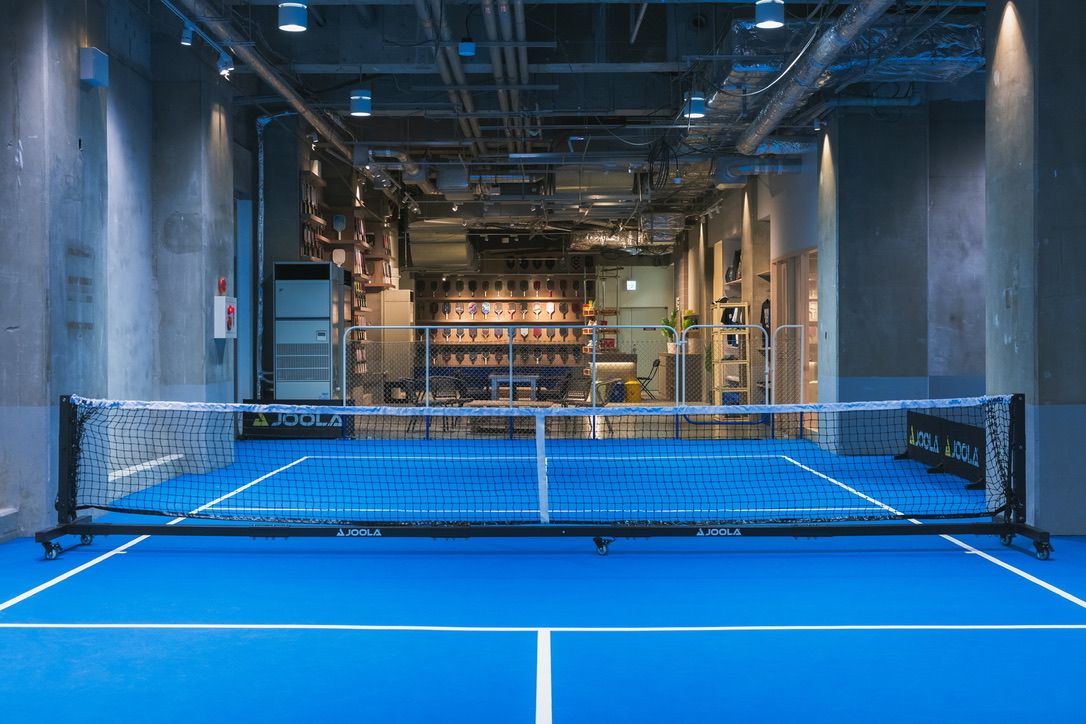
Building the ecosystem
From the beginning, Kumakura approached pickleball not as a single product or service, but as an ecosystem that needed to be built. In more mature markets, pickleball is supported by a network of courts, events, equipment suppliers, media platforms, and community structures. In Japan, many of these elements were either missing or fragmented, and Pickleball One’s response was to address several gaps simultaneously.
One of the first initiatives was the creation of web-based media, designed to provide accessible information in Japanese at a time when reliable content was limited and often scattered. By building a centralized platform, the company created an entry point for new players.
This was followed by events, including collaborations with major organizations, which allowed people to experience pickleball directly while also providing feedback on how the sport resonated locally.
Equipment became another focus, as more committed players quickly discovered that higher-quality paddles and gear were difficult to source in Japan. Pickleball One began importing and distributing products, effectively bridging the gap between international supply and domestic demand. This move supported player progression and reinforced engagement with the sport.
Together, these activities—media, events, and product distribution—formed the early layers of a broader ecosystem, allowing the company to engage players at multiple stages of their journey rather than relying on a single business line.
If you're following how the global game is shifting week by week, the World Pickleball Report breaks this down every day in our morning briefing.
From Ginza to Ikebukuro
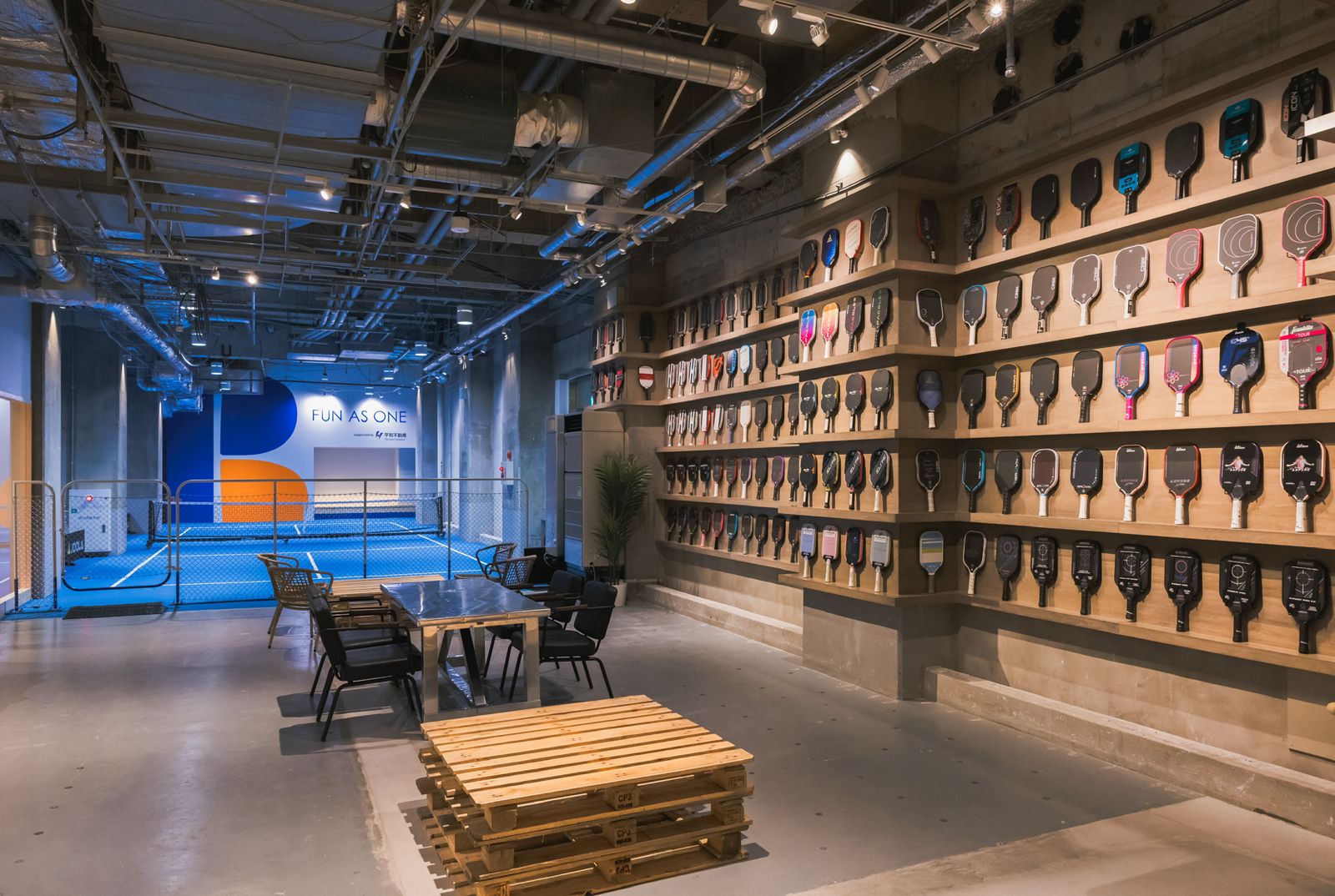
The most significant constraint, however, remains infrastructure. Court availability is still limited, and access is often constrained by location, cost, or scheduling, placing Japan behind the United States and parts of Southeast Asia in terms of development.
Kumakura has been explicit in identifying this as a central challenge, and Pickleball One’s response has been to invest directly in facilities. Its first venue is located in Ginza, at the center of Tokyo’s most prominent commercial district, a deliberate positioning choice that places pickleball within one of the city’s most visible and commercially significant environments.
The Ginza location is not only a place to play but also a statement about where the sport belongs in urban life.
Later this year, the company is expected to take on the management of additional locations in Ikebukuro, marking a transition from flagship presence to broader operational scale. If Ginza establishes identity and visibility, Ikebukuro introduces network expansion and operational depth.
What began as a founder-driven effort is now moving into a different phase.
Shortly after our conversation, Pickleball One announced a funding round alongside strategic partnerships with major Japanese corporates, including Asics Ventures, Mitsui Fudosan, Dentsu Group, TBS Innovation Partners, and Sansan. The significance of this development lies not only in the capital involved but in the alignment of key industry players across real estate, media, equipment, and corporate networks.
In practical terms, this is less about scaling a single company and more about assembling the structural components of an industry, with Pickleball One positioned at the center as an operator and coordinator.
His background in finance also shapes how he approaches scaling. One of the ideas he is exploring is the separation of ownership and operations in court development, where investors provide capital for facilities while Pickleball One focuses on management, programming, and activation. This approach, similar to real estate investment structures, could allow for faster expansion while distributing risk.
The company remains relatively lean but already operates across multiple interconnected areas, including media, events, product sales, and venue management, creating a pathway into the sport that begins with awareness and extends to regular participation.
As the organization grows, talent is becoming increasingly important, particularly in roles that involve direct interaction with players. While artificial intelligence can support operational efficiency, Kumakura emphasizes that pickleball remains fundamentally human, relying on instructors, operators, and community builders to shape the experience.
Although the immediate focus is on Japan, the longer-term ambition extends beyond the domestic market. Kumakura has expressed a desire for Pickleball One to become an enabler of the pickleball industry more broadly, potentially expanding into Asia and engaging with international players and talent.
At the same time, he recognizes that Japan itself is still in a formative stage, with many of the basic elements of the sport still being established. Compared to the United States, where pickleball has already reached mainstream recognition, Japan is still building its foundation, and this creates an opportunity not only to participate in growth but to shape it.
Pickleball One’s trajectory so far—from content and events to product distribution, from a flagship presence in Ginza to expanded operations in Ikebukuro, and now to partnerships with major corporate players—reflects a strategy aimed at occupying multiple critical positions in that emerging landscape.
If pickleball in Japan is still in the process of being defined, Kumakura is positioning himself not simply as a participant, but as one of the individuals actively defining what that future will look like.
For a clearer view of where the sport is heading each week, you can join the World Pickleball Report here.

Fabrizio Lavezzari
Founder and Editor-in-ChiefFabrizio Lavezzari is a contributor to World Pickleball Magazine.
View All Articles →