The Tournament Where the Pineapple Hat Matters More Than the Medal For ten days each July, players travel to Australia’s Capricorn Coast for serious pickleball, regional rivalry, sea air and the chance to win some unusually tropical headwear. Yeppoon has understood something important about the amateur game: the best tournaments give people a reason to stay after the final point. By Gordon Watson There are medals to be won at the Yeppoon Pickleball Festival.
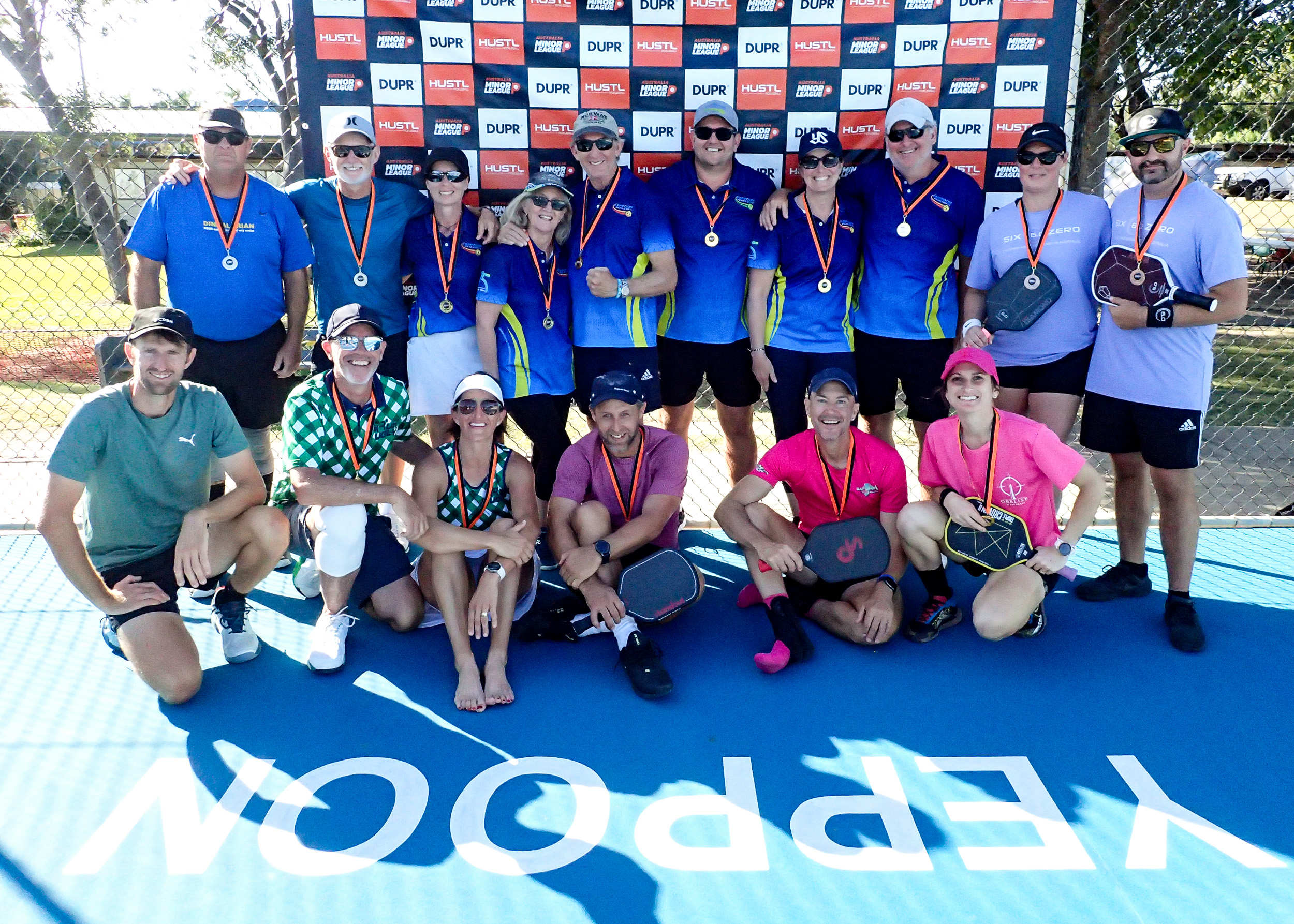
They are presented at the end of matches, photographed and carried home with the rest of the tournament luggage. Players appreciate them. Some have travelled a longway and played a great deal of pickleball to earn one.
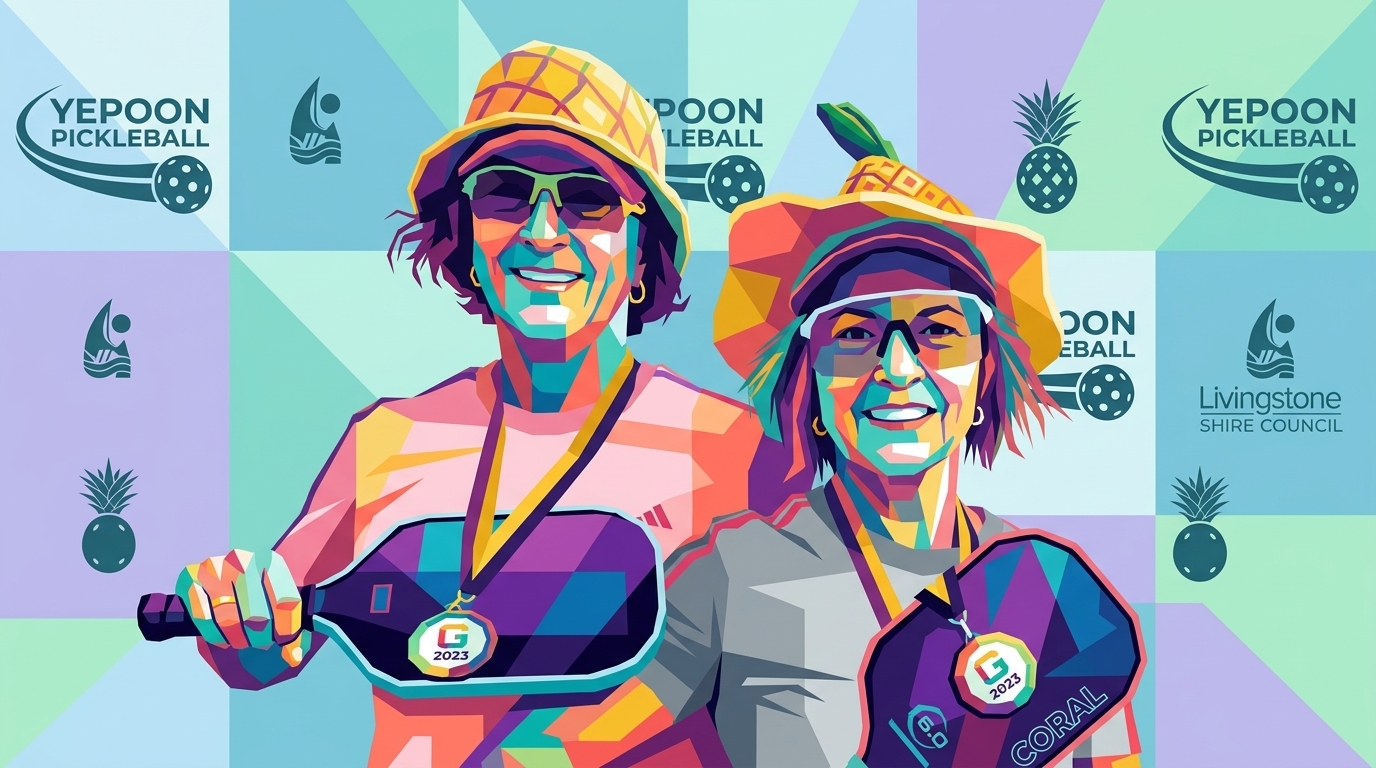
Still, the object with the greater cultural weight may be the pineapple hat. It is bright, faintly ridiculous and difficult to wear without attracting attention. It has also become Yeppoon’s unofficial badge of honour, the piece of evidence that distinguishes an ordinary tournament victory from one achieved during ten days of pickleball on Queensland’s Capricorn Coast.
The hat works because everyone understands the joke and takes the ritual seriously anyway. It belongs to a festival that has gradually developed its own customs. Players arrive for the competition, but they also come for the people they met last time, the regional rivalries, the social programme and the strange pleasure of carrying a paddle through a coastal town where many of the other visitors appear to have brought one too.
Plenty of tournaments can produce a champion. Yeppoon has built a place that people want to return to. That difference matters as the pickleball calendar becomes more crowded.
Players now have more events, divisions and tours competing for their weekends. A competent tournament can offer good courts, sensible organisation and enough matches to justify the entry fee. Those things remain essential, but they no longer make an event distinctive.
The ones that endure tend to acquire something less easy to reproduce. They develop a personality. In Yeppoon, that personality involves coastal Queensland, regional teams, social play, Masters competition, barbecues, recovery pools and a pineapple that has escaped from the fruit bow land entered local sporting folklore.
It sounds like a holiday because, in part, it is. The pickleball still matters. That is why the holiday works.
Ten Days Is a Long Time for a Tournament Most amateur tournaments ask players to arrive, compete and leave. The individual experience is often compressed into a single day. Registration takes place early.
Matches follow one another. There is a medal ceremony, a final conversation beside the car and a drive home with damp clothes hanging som ew here in the back. Yeppoon’s fifth annual festival, held from 17 to 26 July 2026, worked differently.
It opened with four days of the Queensland Pickleball Tour, beginning with singles before moving through age-group and open gender doubles, mixed doubles and the older divisions. That alone would have been a substantial event. The festival then continued.
There was social play, a meet-and-greet barbecue, the Battle of the Regions team competition and the Yeppoon Retro Classic for players aged 50 and over. The final Sunday included the Pineapple Alley Rally, a name that would sound improbable almost anywhere else and entirely reasonable by the end of aweek in Yeppoon. Ten days changes the character of a tournament.
Nobody can remain sealed inside competition mode for that long. The routines soften. People who arrived as opponents keep encountering one another away from the immediate pressure of the score.
A partnership arranged for one bracket begins to feel like part of a wider group. Even the waiting changes. At most events, waiting is dead time.
Players watch the court-assignment screen, calculate how much they can safely eat and worry that leaving the venue will cause their name to be called immediately. A festival can turn some of that waiting into the experience itself. It is no longer judged only by how efficiently people can complete their matches and escape.
Yeppoon wants them to stay. Four new competition courts expanded the venue for 2026, bringing the Yeppoon Tennis and Pickleball Centre to 18 purpose-built pickleball courts. Next door, the new aquatic centre offered a different form of tournament infrastructure, including recovery pools for legs that had spent several days lunging, reaching and changing direction.
A swimming complex does not create a pickleball culture. Its significance lies in what it permits. Serious competition can take place without requiring the entire occasion to feel severe.

That balance runs through Yeppoon. The players are there to win. They have entered divisions, travelled with partners and prepared for matches that matter to them.
The festival does not ask them to pretend otherwise. It simply refuses to accept that competitive seriousness must drain all the pleasure from the occasion. This is harder to achieve than it looks.
Events that lean too heavily into competition can become efficient but forgettable. Those that em phasise the social side without protecting the quality of the play risk feeling like a holiday camp with brackets attached. Yeppoon needs both.
The matches give the week its structure. Everything around them gives it an identity. The Geography of Staying Yeppoon sits on the Capricorn Coast in Central Queensland, looking towards Keppel Bay and the islands beyond it.
This is more than attractive scenery for the event photographs. The coast alters what the festival can ask of its visitors. Yeppoon is not Brisbane, Sydney or Melbourne.
It does not offer the frictionless convenience of a major-city tournament beside an airport and a line of international hotels. Reaching it requires intent, particularly for those travelling from overseas or from distant parts of Australia. That can be a weakness for an ordinary event.
For a pilgrimage, it becomes part of the appeal. Pickleball has begun developing its own travel rituals. Players construct holidays around tournaments and choose destinations partly by the game they expect to find there.
They are not merely travelling to compete. Competition becomes the organising reason to go som ew here. Golf has understood this for generations.
Runners cross continents form arathons whose appeal depends partly on their host cities. Cyclists seek famous climbs. Cricket supporters build journeys around grounds and tours, knowing that the match may supply only part of the story.
Pickleball is particularly suited to its own version because participation remains central. The player does not travel simply to watch somebody else perform. They enter the event, play and join the temporary community that forms around it.
A destination tournament therefore has to do more than place courts som ew here photogenic. The setting must change the experience of attending. Yeppoon’sten-day programme gives that process time.
The morning match and the afternoon away from the venue belong to the same trip. So do the regional competition, the barbecue and the conversations that become possible when everyone is not hurrying towards the car park. The setting also makes the event easier to share with somebody who does not wish to spend ten consecutive days watching age-group doubles.
A partner or family member can be part of the journey without becoming a full-time spectator. A trip that would be difficult to justify for one day of competition begins to make sense as a wider holiday. This is where tournament tourism becom es more interesting than a package of courts and hotel discounts.
People are more likely to stay because there is som ew here worth staying. The event gains the time in which recognition, habit and affection can develop. By the second or third visit, the journey is no longer simply a journey.
It is the beginning of the ritual. Accom modation is discussed with the players met last time. Partners are arranged.
Divisions are considered. A few extra days are added because nobody wants to travel that far and see only the inside of a sports venue. The date begins to organise the year.
That is when a tournament becomes more than an entry on the calendar. When Travel Becomes Identity The Battle of the Regions made the festival’s reach visible on court. Ten regional groupings took part in the 2026 competition, drawn from attendance at previous Yeppoon festivals.

There were teams representing Yeppoon, the Gold Coast, North Queensland, Brisbane and Toow oom ba, the Sunshine Coast, New South Wales and the Australian Capital Territory, Rockham pton and Gladstone, Wide Bay, and a combined Victoria, Tasm ania and New Zealand side. The map was not perfectly tidy. That was part of its charm.
Regional identities had been assem bled from the people who actually came, rather than im posed upon the event as a neat administrative exercise. Distance became affiliation. The journey supplied the shirt.
A standard doubles bracket asks players to represent themselves and their partner. A regional team competition gives everybody beside the court a reason to become involved. Fast timed games, rotating partnerships and an overall score encourage the noise and collective anxiety that individual tournament play can lack.
The person watching is no longer waiting politely for their own match. They need this result. Team formats change amateur pickleball in useful ways.
They spread emotional investment across a group and give players a role even when they are not holding the paddle. The strongest individual cannot secure the outcome alone. A match taking place away from the main court may matter to everybody.
At Yeppoon, the format also gives the festival a memory. Players recognise the shirts and recall previous meetings. Rivalries are allowed to become real enough to energise the competition without growing too important to survive the social programme.
The regional team offers a temporary sporting identity which can be taken seriously for the duration of the match and laughed about afterwards. Many events say that they are building community. Usually, they mean that people have occupied the same venue at the same time.
Community requires repeated encounters, shared references and reasons to become invested in other people’s experiences. A ten-day festival creates those conditions. The regional competition gives them volume.
By the end, players know which team shave been making the most noise. They know who won, who nearly won and who has already begun discussing the following year. Some will also have identified the opponents they would prefer to avoid next time.
That counts as community too. The Masters Are Part of the Main Story The closing days belonged to the Yeppoon Retro Classic, a sanctioned event for players aged 50 and over. Growing sports som etim es treat older divisions as a valuable but separate constituency.
The main event happens first. Masters players arrive later, once the atmosphere and attention have begun to recede. Yeppoon places them within the same festival story.
That feels appropriate for a sport shaped so substantially by people who continued, returned to or discovered competition later in life. Players over 50 are not an audience segment borrowed from outside pickleball. They are part of its centre.
The Retro Classic recognises that without becoming solemn about it. Its divisions extended through 50-plus, 60-to-67 and 68-plus. Gender doubles, mixed doubles and the Pineapple Alley Rally supplied three more days of competition after aweek in which the venue had already acquired its temporary population.
The festival was therefore able to contain different versions of pickleball without asking them to compete for legitimacy. Open players, regional teams, social participants and Masters divisions could occupy the same event while wanting different things from it. Not everyone needed the same rating, ambition or reason for entering.
They needed enough common ground to recognise one another as part of the occasion. By the time the Retro Classic began, stories from the opening weekend had already travelled. The results, minor disasters and long tournament days had entered festival conversation.
New arrivals joined an atmosphere that was already present rather than attempting to create one from an empty venue. There is an important point here about who amateur sport is for. Professional pickleball is naturally organised around its best players.
Its purpose is to identify exceptional performance, create rivalry and present the highest available standard. Amateur competition serves more complicated needs. Some players want to test the limits of their game.
Some want a medal. Some are returning after injury or years away from organised sport. Others want to spend aweek with people who understand why they have become so interested in a game that, not long ago, many of their friends had never heard of.
If you're following how the global game is shifting week by week, the World Pickleball Report breaks this down every day in our morning briefing.
A successful festival does not flatten those motives into one official reason for attending. It gives them som ew here to coexist. Why the Pineapple Survives Every successful sporting gathering eventually produces an object whose importance makes little sense outside it.
It might be a shirt, badge, scarf, song or badly designed trophy. Its value is not inherent. The group supplies it.
Yeppoon has the pineapple hat. The choice is rooted in place. Pineapple growing has long formed part of the agricultural identity of the Capricorn Coast.
The fruit belongs to the region in away that a generic tournament mascot never could. On a pickleball court, however, it becomes something else. The hat is conspicuous enough to invite photographs and silly enough to stop the ceremony becoming self-important.
A player who wears it is celebrating a result while accepting that the celebration may involve looking like an enormous piece of tropical fruit. This is an excellent arrangement. Amateur sport needs symbols capable of carrying pride without pretending the stakes are greater than they are.
The medal recognises achievement. The hat rem em bers the experience around it. Years later, a medal in a drawer may require close inspection before its owner can identify the tournament.
A photograph in a pineapple hat leaves less room for confusion. Its success also explains why tournament personality cannot be bought as easily as promoters som etim es imagine. Another event could order pineapple hats tomorrow.
It could place them on winners, photograph the ceremony and describe the result as iconic. The effect would probably be hollow because the object had not acquired any shared meaning. Yeppoon’shat matters because players now expect it, recognise it and talk about it.
It belongs to the previous festivals as well as the current one. Returning competitors understand the reference. First-time visitors quickly learn.
Tradition is repetition noticed by a community. By its fifth year, the festival did not need to invent a fresh identity. It needed to deepen the one already there.
The pineapple could then perform several jobs at once. It connected the tournament to the region, kept victory playful and gave the festival something instantly recognisable that had not been created by a branding meeting. Most importantly, it gave players a story that could travel home with them.
The Amount of Life Around the Competition It would be easy to reduce Yeppoon to the claim that pickleball is more enjoyable when played som ew here beautiful. It probably is. Beauty alone does not explain why an event lasts.
Holiday destinations can hire courts. Tourism organisations can sponsor tournaments. Promoters can attach a list of local attractions to the registration page.
None guarantees that people will feel any attachment to the event itself. Yeppoon’s deeper achievement is the way its elements have become entangled. The setting is not merely a backdrop to the competition.
The length of the festival, social events, regional teams, venue and local identity allow the town to enter the memory of the tournament. The event still depends on practical competence. A charming hat cannot rescue poor courts, unreliable schedules or inadequate competition.
Personality becomes valuable only after the fundamentals have been respected. Once they have, though, personality may be what brings people back. Pickleball’s growth is producing larger venues, better presentation and increasingly crowded calendars.
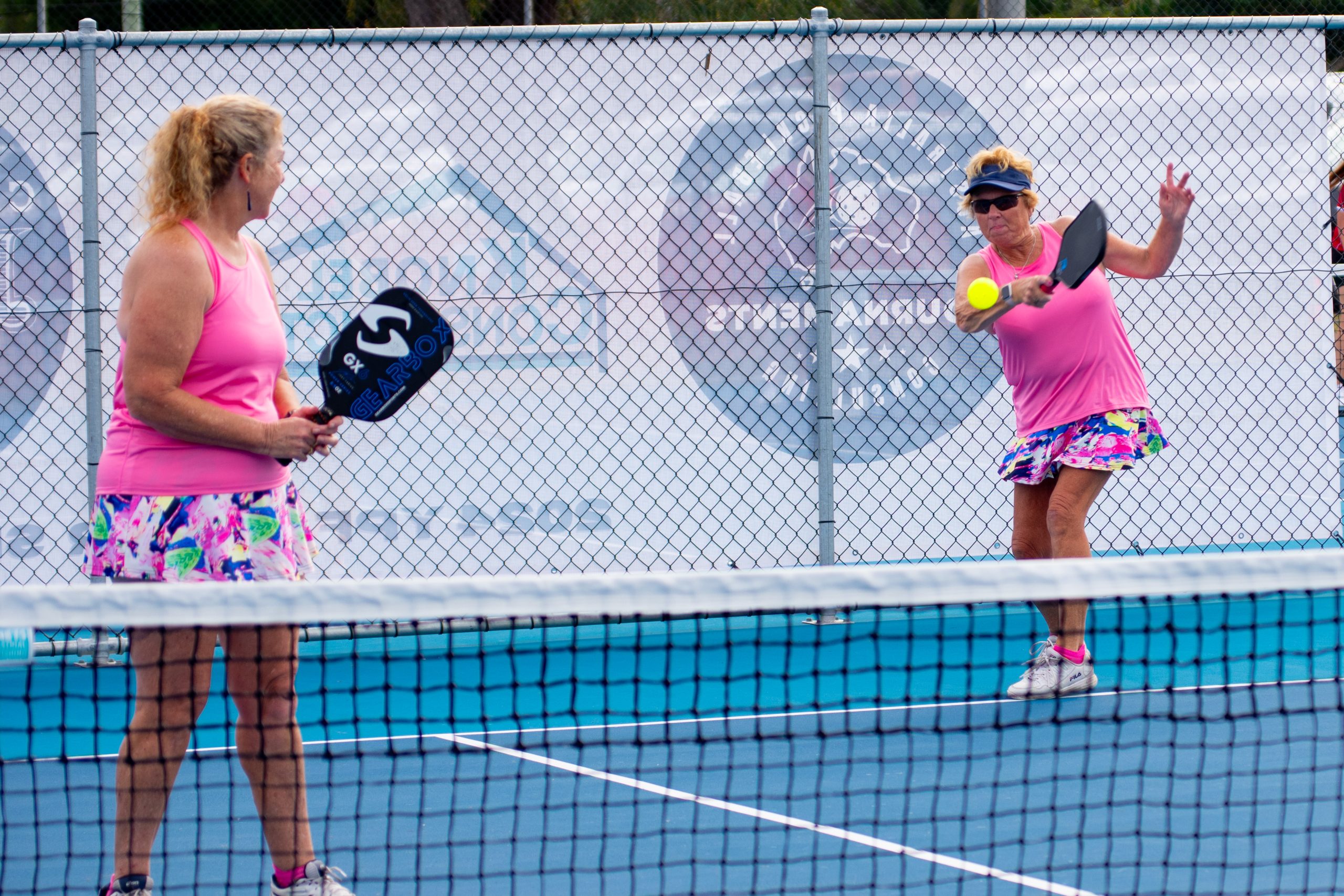
Much of that development is welcom e. Better courts and better organisation improve the experience for everybody. There is still a danger that amateur tournaments begin im itating the surface of professional sport while forgetting what participants actually value.
Most will not rem em ber the sponsor wall. They may not recall whether music played between matches or whether the medal presentation began exactly on schedule. They will rem em ber the partner who agreed to enter with them, the match that went to a deciding game and the people they kept encountering over the course of the week.
They will rem em ber whether the event felt generous. Generosity, in this sense, is not an entry gift or a larger medal. It is the amount of life a tournament allows around its competition.
Yeppoon gives players room to compete, recover, socialise and return to the courts. It allows pickleball to provide the purpose of the journey without insisting that it occupy every moment. That is a useful model for a young global game.
The future of amateur pickleball will not be secured simply by giving people more events. It will depend on creating some that become part of how players organise their lives. The date is reserved before the draw appears.
Accom modation is discussed. Partners are recruited. The tournament becomes the reason the group will be together again.
Eventually, attendance becomes habit. The habit becomes tradition. Something Worth Bringing Home The 2026 Yeppoon Pickleball Festival ended as tournaments do.
Final points were played. Medals were presented. Bags were repacked.
Players who had spent days discussing ratings, brackets and regional scores began the journey back towards ordinary life. For ten days, though, Yeppoon had offered another version of what a pickleball event could be. Competition remained at its centre.
Without that, the gathering would have been a holiday with some courts attached. The matches gave people a reason to travel, a structure for the week and stories to tell afterwards. Everything around them supplied the attachment.
The coast. The recovery pool. The regional shirts.
The social games. The conversations that become possible when people are given enough time to have them. The opponents who will be recognised immediately if they return next year.
And the hat. The pineapple is funny because a hat shaped like a pineapple is funny. It matters because, within this small sporting world, everybody knows what it means.
It says that the wearer won something in Yeppoon. It also says they were there. The second distinction may last longer.
The League That Was Never Really Just a League Australia’s National Pickleball League has professional players, regional conferences and a finals weekend. Yet Ron Shell’s larger project begins away from the league table. He wants NPL to shape the first experience of the next million Australians who pick up a paddle.
By Chris Beaum ont Ron Shell is not especially concerned about the Australian pickleball player who has already found a cheap court, a portable net and three friends willing to dink for four hours. That player is fine. They may never visit an NPL venue.
They may question the price, prefer the familiar sports hall or remain perfectly happy on a converted tennis court. Shell believes trying to win every one of them over would weaken the thing he is attempting to build. “There are still another million people ahead of us who haven’t played the sport,” he says.
“We’ve got a chance to define their first experience.” That sentence explains the National Pickleball League more clearly than its name does. NPL has teams, conferences, professional players and a tournament pathway. Its leading Australians can use it as a platformtow ards opportunities elsewhere.
The best three teams from each of the Queensland, New South Wales and Victorian conferences will meet at the organisation’s finals in Melbourne on 29 and 30 August. Eight Division Two teams, including the league’s first New Zealand contingent, will be there too. All of that matters.
For a clearer view of where the sport is heading each week, you can join the World Pickleball Report here.