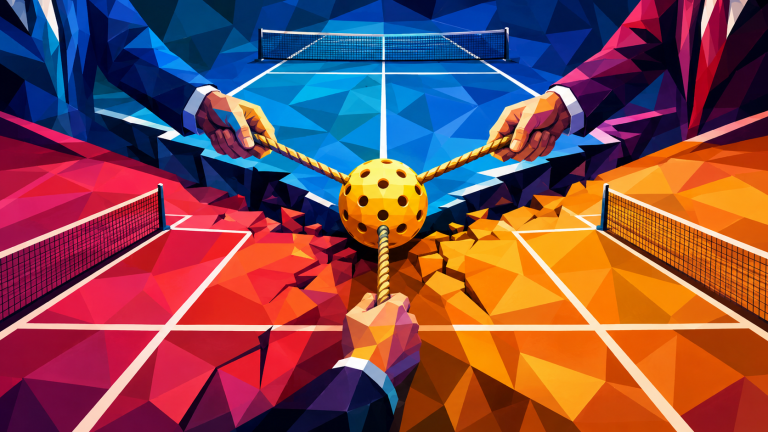
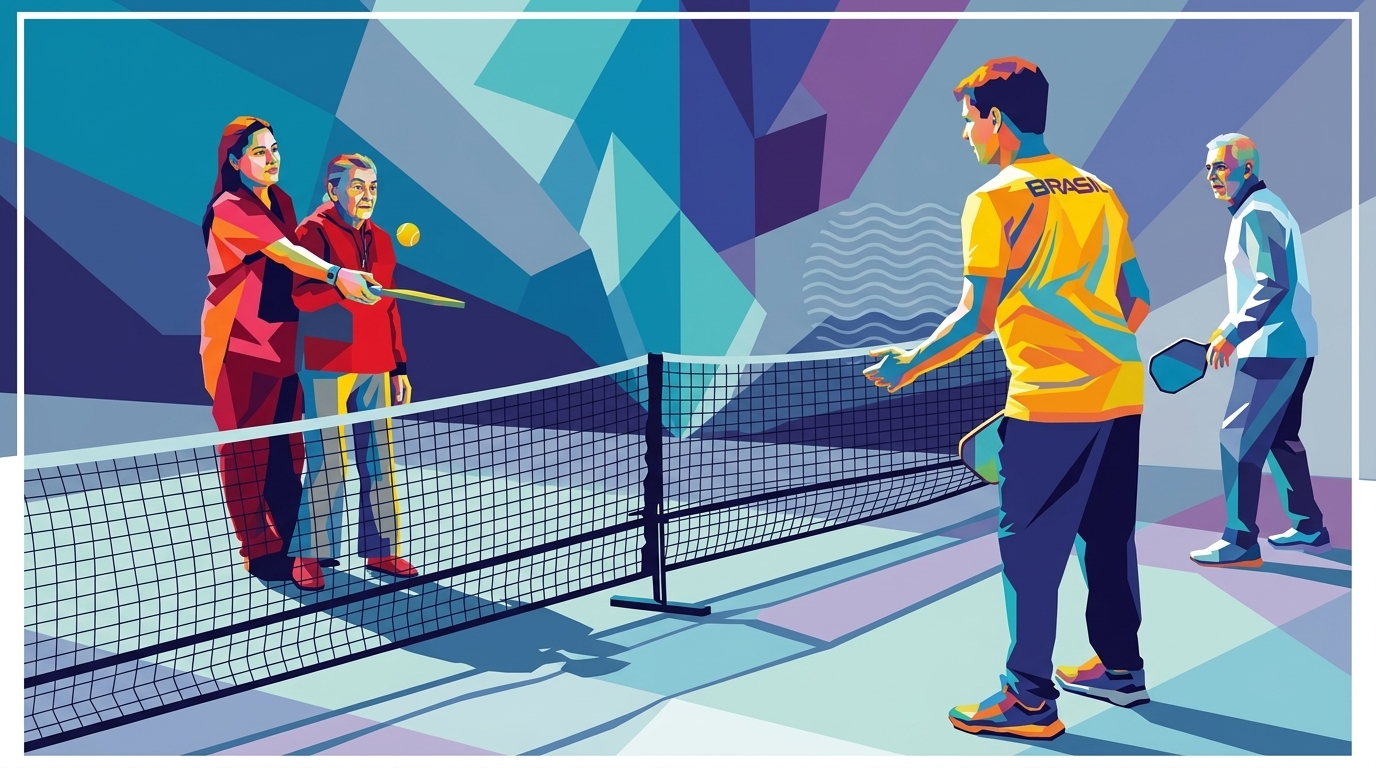
PickleLuz: What Happens When Winning Is Not the Point? At a nursing home in Petrópolis, Brazil, pickleball has become something quieter: a sound, a colour, a memory and a reason for one family to spend time with people too easily forgotten. By Marcelo Abelheira PickleLuz is not really a pickleball club.
There is no court. Nobody keeps score. There are no rankings, medals or arguments about whether a ball landed in.
Some of the people we visit can hold a paddle. A few may be able to hit a ball. Many cannot.
Some respond when we place the equipment in their hands. Others show little visible reaction. That does not mean the visit has failed.
The intention was never to teach the residents how to play pickleball. It was to take something our family enjoys and use it to offer a different experience to people living in nursing homes. The answer did not require them to learn the rules.
It only required us to arrive. Where PickleLuz Began PickleLuz is an evolution of FELUZ, a voluntary project conceived by my wife, Juliana Koeler. For several years, Juliana has conducted storytelling sessions at nursing homes and children’s shelters.
Our daughters have always gone with her, so visiting these places and spending time with the people who live there was already a natural part of our family life. They are Girl Scouts and regularly take part in charitable activities. Voluntary work was familiar to them long before pickleball entered the picture.
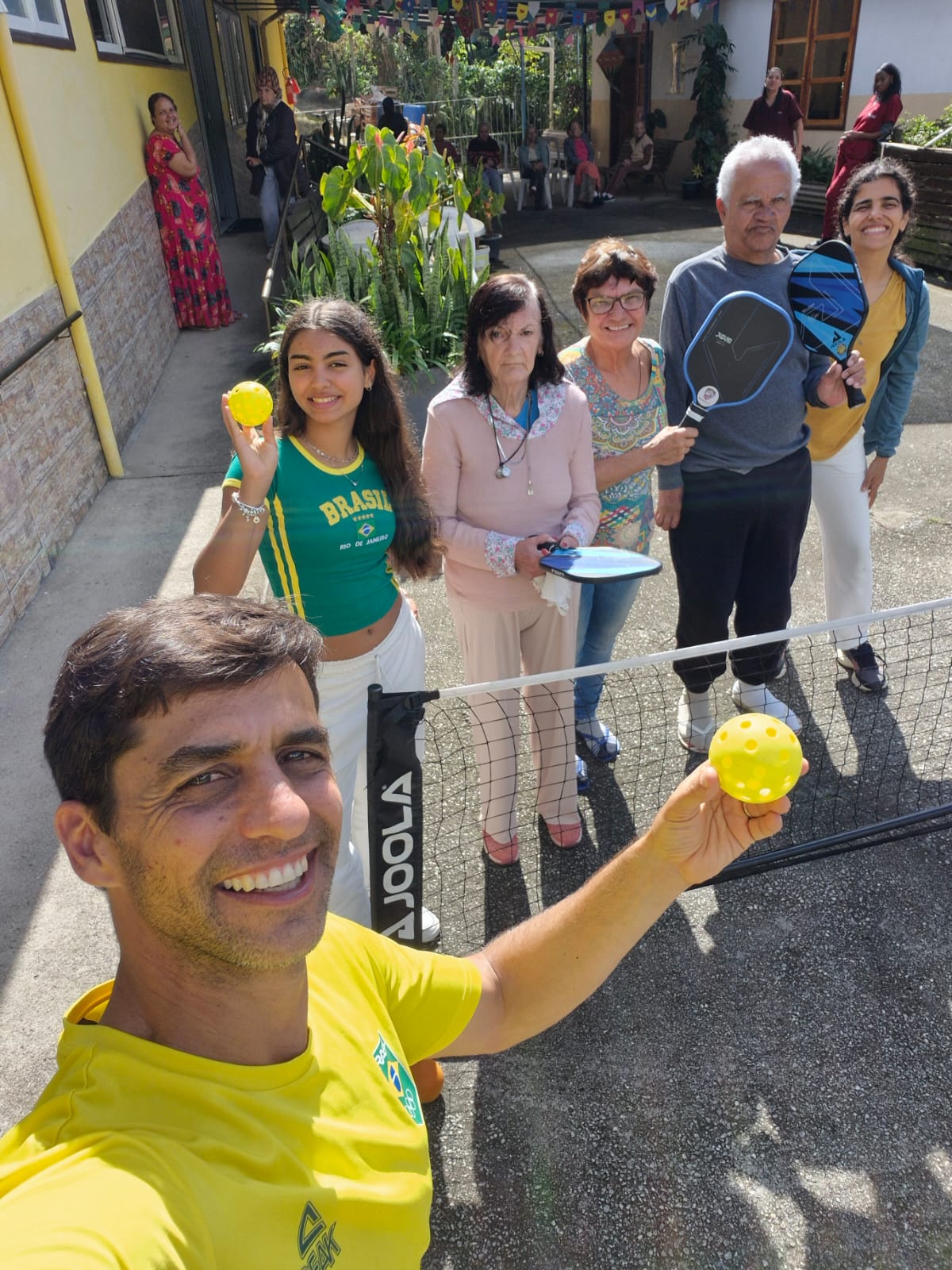
The first PickleLuz visit took place at 10.30am on Sunday, 17 May 2026, during the permitted visiting hours at Lar Alcides de Castro in Petrópolis, Rio de Janeiro. We knew the facility well because we had visited it several times through FELUZ. We began with one of Juliana’s storytelling sessions.
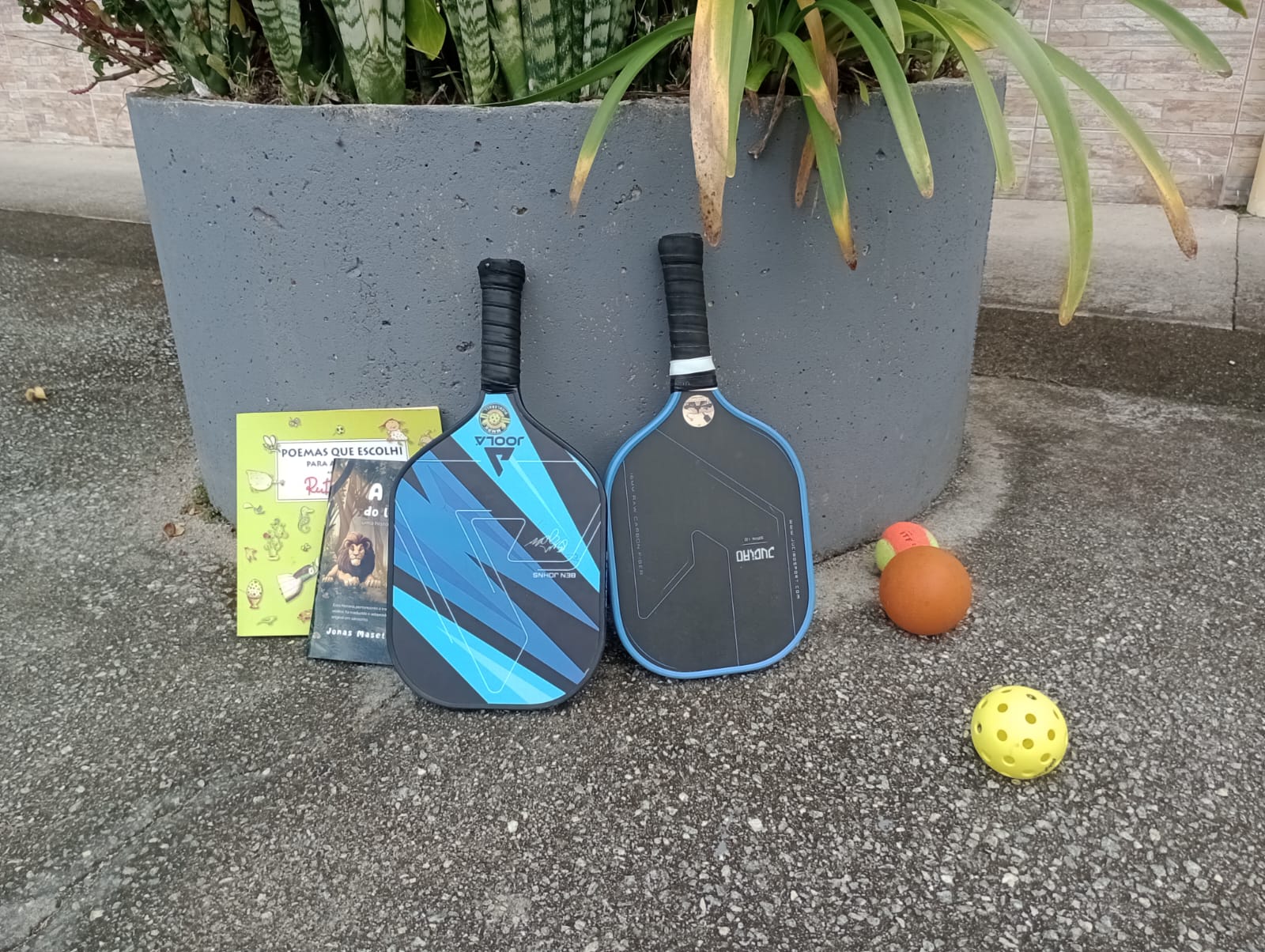
Afterwards, we brought out our pickleball paddles and balls. We passed the equipment among the residents and watched their responses. Some wanted to hold the paddles.
Some exam ined the balls. Others appeared indifferent or gave no visible response. This is common during the storytelling sessions, too.
Some people interact readily, while others do not react at all. When I showed them the equipment, I wanted to discover whether anybody was familiar with sports such as tennis, table tennis, beach tennis or frescobol, the Brazilian paddle game commonly played on beaches and in public spaces. A few residents shared very brief accounts of their experiences.
They were not long or detailed sporting mem ories. Som etim es only a fragment em erged. That was enough.
More Than Playing the Game Many of the residents are very frail. Some no longer possess the motor or cognitive ability required to perform basic tasks. I knew before we arrived that many of them would not be able to play pickleball.
That did not frustrate or discourage me because playing the game was never the purpose of the visit. PickleLuz was intended to introduce something different into their day. The paddle has weight and texture.
The plastic ball feels unusual in the hand. When the two meet, they make a distinctive sound. The images we project add colour and movement.
Some residents have enough physical and cognitive ability to try hitting the ball. For somebody else, the experience may be holding a paddle, hearing the sound or recognising that the equipment resembles something they once used. Others may simply enjoy having visitors around them.
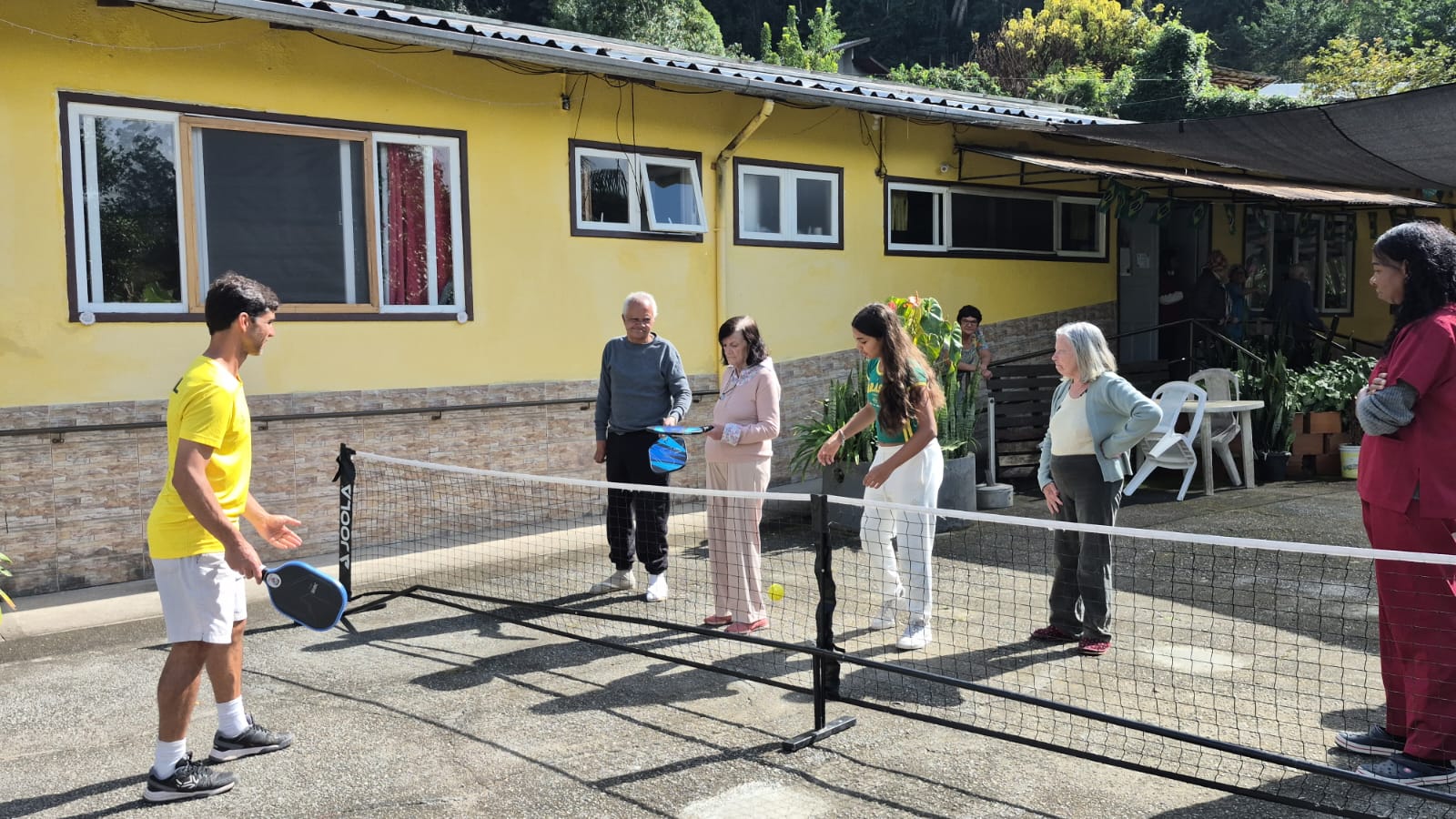
Those different reactions were expected. PickleLuz does not depend upon everybody participating in the same way. Sport usually encourages us to look for a result.
We want to know whether the ball crossed the net, whether somebody im proved and who won the point. None of those measurements applies here. The equipment gives us something to share.
It can begin a conversation, prompt a brief sporting memory or provide a sensory experience. Pickleball happens to be what our family can bring. Another family might bring music, art, photographs or stories.
If you're following how the global game is shifting week by week, the World Pickleball Report breaks this down every day in our morning briefing.
The activity matters, but so does the decision to visit. A Family Project PickleLuz would not exist without FELUZ. The project did not begin with pickleball and then search for a charitable purpose.
It developed from Juliana’s years of storytelling, the relationships our family had already formed with local institutions and our daughters’ experience of accompanying us. That history is important. We are bringing pickleball into an existing practice of voluntary work and human contact.
Juliana created the foundation from which the idea grew. Our daughters have also helped to give the project its character. For them, coming with us is not an unusual activity arranged for a special occasion.
Visiting nursing homes and shelters has been part of their upbringing. PickleLuz therefore remains small, personal and uncomplicated. The project receives no funding, and I do not intend for it to.
Its only cost is transportation, which is negligible. We use our own paddles and balls, and the activities cause very little wear to the equipment. There is no membership fee, fundraising structure or commercial package.
We already have what we need. We simply take it with us. An Idea That Can Travel I would love to see other people create similar projects elsewhere.
They would not need to use the PickleLuz name or copy our visits exactly. Every nursing home, shelter and community contains people with different circumstances, needs and abilities. The basic idea is what matters.
Take something that brings you pleasure and find a gentle way to share it. Do not expect everybody to participate. Do not judge the visit by the number of balls hit or the size of the reaction.
Allow people to engage in whatever way remains possible for them. I would be happy to support and promote anyone who wanted to establish a similar initiative, provided there was no financial motive involved. That condition matters tome.
PickleLuz should not become a commercial concept built around vulnerable people. Its value lies in the fact that it is freely offered. The equipment is already ours, the cost is minimal and the time is volunteered.
The idea is simple enough to be repeated anywhere. Pickleball communities often talk about the game’s ability to bring people together. Usually, that means players meeting on a court, joining a club or entering a tournament.
PickleLuz takes that idea beyond the court. The people we visit may never play a match. They may never learn how to serve, stand at a kitchen line or understand why so many people have become attached to this strange game.
They do not need to. If a paddle begins a conversation, it has served a purpose. If the sound of the ball attracts somebody’s attention, it has served a purpose.
If it brings back even a small sporting memory, it has served a purpose. And if nothing visible happens, a resident has still spent part of a Sunday morning with a family who chose to visit. Pickleball usually gives us a winner and a loser.
PickleLuz asks what the game can give when neither is necessary.
For a clearer view of where the sport is heading each week, you can join the World Pickleball Report here.

Marcelo Abelheira
Founder and Editor-in-ChiefMarcelo Abelheira is a contributor to World Pickleball Magazine.
View All Articles →