
The Edward Jones MLP Mid-Season Tournament brings every franchise together in Grand Rapids this week, but the most revealing battles may not be between teams. They may be inside them. As Major League Pickleball enters the second half of the season, the league is discovering that collecting elite players is only the beginning of building a champion.
Key Takeaways
- The Grand Rapids tournament is the first major MLP event where roster construction, depth and tactical flexibility will be tested over multiple rounds of pressure.
- The New Jersey Fives and St. Louis Shock arrive as the favourites, but the format creates opportunities for teams built around balance rather than individual brilliance.
- The tournament provides a glimpse into the future of professional team pickleball, where recruitment, chemistry and strategy may matter as much as individual talent.
The Difference Between Having Players and Building a Team
The best teams in sport are rarely created simply by collecting the best available talent.
They are created by understanding what each piece is supposed to do.
That principle is about to be tested in Grand Rapids.
The Edward Jones MLP Mid-Season Tournament brings together all 20 Major League Pickleball franchises alongside four invited teams from Canada, Europe, Australia and the collegiate ranks for five days of high-pressure competition.
There will be elite players everywhere.
That is no longer unusual in professional pickleball.
The more interesting question is whether those players have been assembled into something greater than the sum of their parts.
Major League Pickleball is reaching a point where individual brilliance alone may not be enough. The strongest players can win matches. But tournaments are won by teams that understand pressure, manage combinations and survive moments when their preferred plan fails.
Grand Rapids will be the first major examination of which franchises have solved that problem.
A Tournament Built Around Pressure
The format guarantees pressure.
The double-elimination bracket gives teams a second chance, but not an easy one. A defeat sends a franchise into the elimination path, where every future match carries greater consequences.
The championship match is reserved for teams that remain unbeaten.
That changes everything.
In a normal event, teams can rely heavily on their strongest pairings. They can find their rhythm. They can recover from difficult moments.
Over five days, that becomes harder.
A championship contender needs more than one successful partnership.
It needs players who can handle different roles, combinations that can be adjusted and enough trust in the wider roster to make difficult decisions.
Grand Rapids is not just a competition.
It is a test of construction.
The Favourites Have Earned Their Status
The New Jersey Fives enter Grand Rapids as the team everyone wants to beat.
Their dominance has been built on the most valuable asset in professional pickleball: reliability.
Anna Leigh Waters has been exceptional, carrying a 42-2 overall record and providing the kind of individual security few teams can match.
But the Fives’ success is not only about one player.
Their strength comes from clarity.
They know their identity. They understand their preferred combinations. They rarely appear uncertain about their approach.
The question for opponents is finding a situation where that certainty disappears.
The St. Louis Shock arrive with a different type of momentum.
Their 11-match winning streak has been built on collective performance rather than a single dominant storyline. Kate Fahey has been one of the league’s standout performers, but St. Louis have also benefited from a roster that appears comfortable adapting during matches.
That matters in a tournament environment where the ability to adjust may be as important as the ability to dominate.
Teams to Watch: Five Franchises With Something to Prove
The Mid-Season Tournament is not simply about identifying the strongest team. It is about revealing which approaches to roster construction hold up when every match matters.
Here are five franchises whose performances could tell us the most in Grand Rapids.
New Jersey Fives — Can Anyone Slow the League Leaders?
The obvious benchmark.
New Jersey have combined elite individual talent with remarkable consistency, led by Anna Leigh Waters’ extraordinary season. Their challenge is not proving they can beat teams at their best. They already have.
The question is whether opponents can create enough uncertainty to disrupt their rhythm across a demanding tournament format.
St. Louis Shock — Are They the Most Complete Team?
The Shock enter Grand Rapids with perhaps the strongest momentum in MLP.
Their 11-match winning streak has been built on balance rather than dependence on one player. Kate Fahey has been outstanding, but St. Louis’ biggest strength has been their ability to find solutions during matches.
If the tournament rewards adaptability, they may be the team best positioned to benefit.
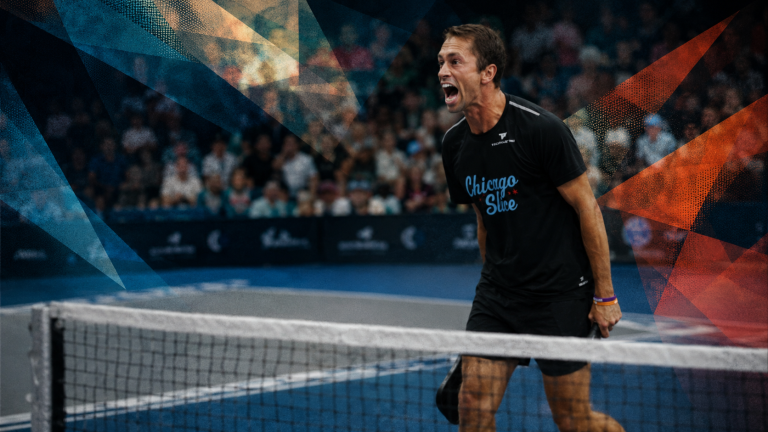
Chicago Slice — Can Youth Become an Advantage?
The Chicago Slice arrive as the 13th seed, but their roster decisions make them one of the most interesting teams to follow.
The addition of 13-year-old Elsie Hendershot alongside John Lucian Goins represents a long-term bet on upside.
The tournament will reveal whether that ambition can translate immediately against established professional teams.
Atlanta Bouncers — Can Experience Change Their Direction?
The Atlanta Bouncers have turned to a combination of youth and experience by adding Mari Humberg alongside Jessie Irvine.
The challenge is finding the right balance.
Veteran leadership can provide stability in pressure moments, but successful teams need more than experience. They need partnerships that can compete at the highest level.
Team Europe — How Close Is the International Gap?
The international invitees are one of the tournament’s biggest storylines.
Team Europe, featuring players from Spain, England and Poland, arrives without the same MLP history as established franchises.
Their performance will offer one of the clearest indicators yet of how quickly international talent can adapt to the professional team environment.
The International Test
The inclusion of Team Canada, Team Europe, Team Australia and the College Allstars adds another layer to the tournament.
These teams arrive without the same season-long history as MLP franchises. They have not experienced the same pressure situations, partnership development or tactical adjustments.
That makes them difficult to evaluate.
But it also makes them fascinating.
The College Allstars, featuring players from programmes including Ohio State, Utah Tech, Arizona State and James Madison, represent the next generation entering the professional pathway.
Team Europe and Team Australia provide another test entirely.
The question is not simply whether they can win matches.
It is whether they belong.
Grand Rapids and the Franchise Experiment
There is another reason this tournament matters.
MLP is not only trying to create a competition.
It is trying to create teams people care about.
That is a much harder challenge.
Traditional sports are built on decades of history, rivalries and identity. Pickleball does not have that advantage yet.
The franchise model has to create those connections from scratch.
Events like Grand Rapids are where that experiment becomes visible.
The tournament will receive significant television exposure, including FS1 coverage before Sunday’s championship match moves to Fox’s national broadcast window.
The audience will not simply see individual players competing.
They will see whether the league can make team-based pickleball feel meaningful.
Why It Matters
The Edward Jones MLP Mid-Season Tournament is more than a race for prize money and standings points.
It is an examination of what professional team pickleball actually rewards.
The best teams are not necessarily the ones with the best individual players. They are the ones that can combine talent, chemistry and decision-making under pressure.
As MLP continues to develop, moments like this reveal which franchises understand the difference between assembling a roster and building one.
Grand Rapids may produce a champion.
It may also reveal which teams are closest to becoming genuine contenders.
Further Reading
- Latest pickleball news from around the world
- Tournament coverage and results
- Rankings and player profiles
- Regional pickleball coverage

Chris Beaumont
Founder and Editor-in-ChiefChris Beaumont is the founder and Editor-in-Chief of World Pickleball Magazine. Chris follows the global game closely, reporting on the latest news, developments, stories and tournaments from all five continents. He also hosts the World Pickleball Podcast, interviewing people at…
View All Articles →