Nine weeks after open-heart surgery, most people would still be taking life one cautious step at a time.
Karen Latinovic is standing courtside at the Yeppoon Pickleball Centre, smiling, cheering on players, refereeing matches and already dreaming about the day she will pick up her paddle again.
She cannot play just yet, but in many ways, pickleball has already given her the greatest victory of all.
Karen’s story is one of strength, friendship and hope. It is a reminder that staying active is not simply about adding years to your life. It can also add life to your years.
It All Started with One Paddle
Karen and her husband, John, moved from Sydney to the beautiful Capricorn Coast more than a decade ago, bringing with them a lifelong passion for community sport.
Tennis had always been woven into their family’s story. Their children competed nationally, while Karen and John volunteered countless hours organising competitions, helping at tournaments and ensuring their local club continued to thrive.
Then, in 2020, everything changed.
Their daughter Amanda returned from a visit to Naples, Florida, with a simple message.
“You have to try this.”
Karen and John purchased a handful of paddles and some balls before holding a free introductory session on 11 July 2020.
They hoped a few curious locals might turn up.
They had no idea they were planting the seed for one of Australia’s greatest pickleball success stories.
Today, the Yeppoon Pickleball Centre boasts 18 purpose-built courts and hosts one of Australia’s largest pickleball festivals, attracting players from across the country and overseas.
But while pickleball was transforming the community, it was quietly transforming Karen too.
A Heart Condition That Never Went Away
Karen was born with a bicuspid aortic valve, a congenital heart condition discovered more than 40 years ago after the birth of her second child.
From that day forward, she knew surgery would eventually become part of her life.
“It was always in the back of my mind,” she says.
“I mostly got on with life because I felt healthy, but every annual check-up reminded me that one day my number would come.”
When that day finally arrived, even someone as positive as Karen admits it was confronting.
“I was shocked because I considered myself fit and healthy.”
Being active could not remove the condition or prevent the surgery she needed. Yet instead of allowing fear to take over, Karen continued doing something she had been doing for years.
She kept moving.
Building Strength Without Even Realising It
Ask Karen what she believes best prepared her body for surgery and she does not hesitate.
“Pickleball.”
Like millions of players around the world, she discovered that the sport can deliver an impressive workout almost by accident.
There is constant movement. Short bursts of speed. Quick changes of direction.
Balance. Coordination. Strength. Cardiovascular fitness.
And perhaps best of all, you rarely notice you are exercising because you are simply having fun.
“I believe pickleball played a huge role in preparing my body for surgery,” Karen says.
“It built my cardiovascular fitness, my endurance and my overall strength.”
Her physical condition did not go unnoticed by her medical team.
Before the operation, doctors repeatedly commented on her fitness and believed her active lifestyle would be helpful as she faced surgery and recovery.
Medicine and the medical team performed the essential work. Karen believes that arriving at hospital as fit as possible gave her body the best preparation she could offer it.
The Medicine Nobody Can Prescribe
If pickleball strengthened Karen physically, it may have helped her even more emotionally.
Waiting for major surgery can be mentally exhausting.
Yet pickleball gave Karen something priceless.
Distraction. Routine. Purpose. Connection.
Even when she was no longer able to play, she still turned up to the courts.
She watched. She encouraged others. She laughed.
And afterwards came one of pickleball’s greatest traditions.
Coffee.
“The Tuesday and Saturday sessions followed by coffee became really important,” she smiles.
“Sometimes we’d sit there talking for hours.”
Those conversations rarely centred on hospitals. Instead, they were filled with laughter, stories, friendly banter and plenty of pickleball.
For a few hours each week, life felt wonderfully normal.
That is the hidden power of pickleball. The game brings people together. The friendships keep them coming back.
Recovery Powered by Community
Karen will not pretend recovery has been easy.
“The first few weeks were really tough,” she admits.
“It is a pretty horrible surgery.”
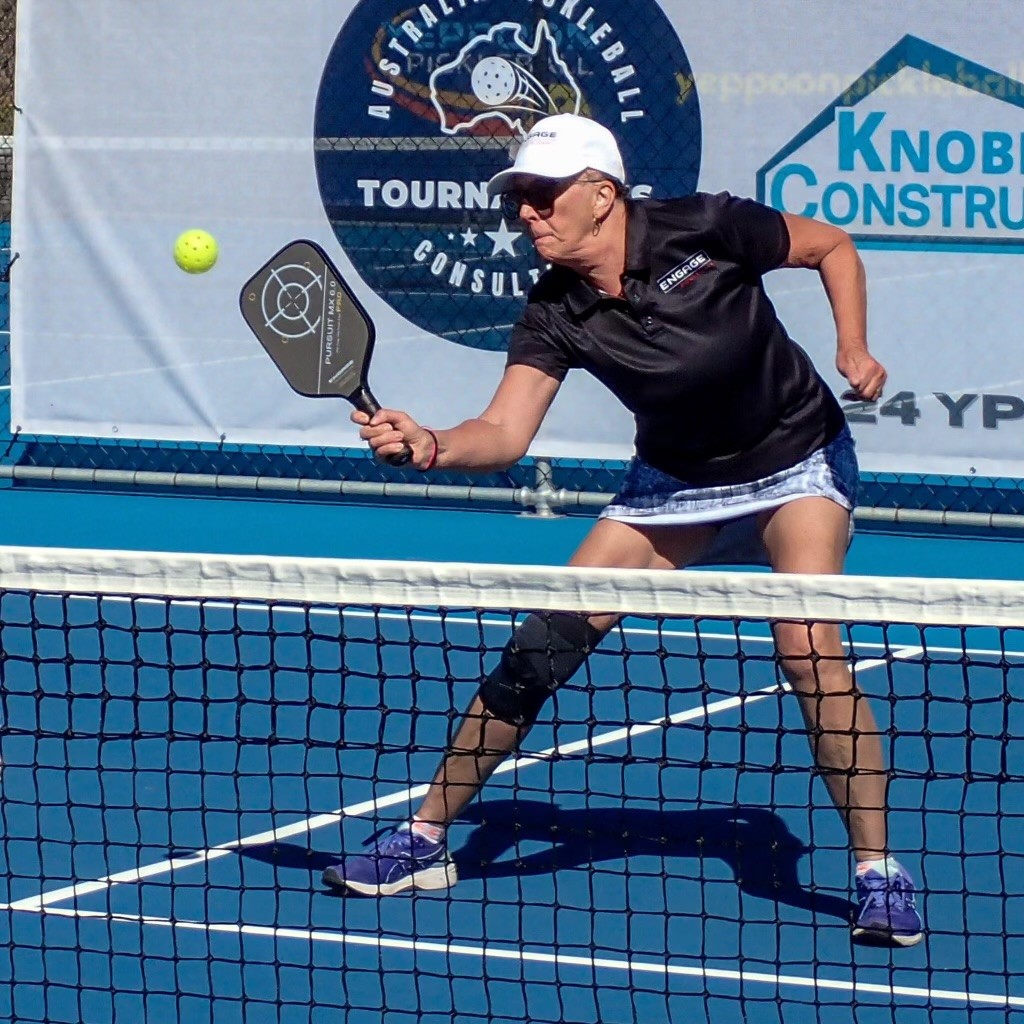
Recovery has come through a series of gradual steps.
If you're following how the global game is shifting week by week, the World Pickleball Report breaks this down every day in our morning briefing.
Only weeks after the operation, she was back enjoying beach walks, driving again and becoming actively involved in the community that had helped carry her through.
Unable to compete, she completed her referee accreditation.
She officiated matches. She tried commentary. She found ways to contribute.
Most importantly, she remained connected.
“It has been really good mentally.”
Those six simple words say everything.
Recovery is not only physical.
It is emotional. It is social. It is having somewhere to belong while your body heals.
Why Pickleball Is Different
At 65, Karen believes staying active has never been more important.
“If you don’t keep active, your body just seizes up,” she says.
But pickleball offers something many sports struggle to provide.
Accessibility.
Whether you are 15 or 85. A complete beginner or an experienced athlete. Looking for fun or fierce competition.
There may be a place for you.
Karen never imagined she would one day compete in tournaments and win medals.
Now, those medals mean very little compared with something far more valuable.
Friendship. Purpose. Belonging.
Looking Ahead
Karen still has goals.
She wants to rebuild her fitness. Return to gentle drills. Ease back into social play.
Perhaps competitive tournaments will return next year. Perhaps sooner.
Time, her body and her doctors will tell.
What has changed forever is her perspective.
“Going through major heart surgery gave me a new appreciation for life and for the people around me,” she says.
“I worry less about the small things now.
“I’m grateful for my family, my friends, the incredible medical team who cared for me and the amazing pickleball community we’ve built together.”
The Biggest Win
If Karen hopes her journey inspires just one person, her message is beautifully simple.
Do not wait.
Do not wait for a diagnosis. Do not wait until your doctor tells you it is time to become active. Find something you genuinely love.
Walk. Swim. Ride a bike. Dance.
Or perhaps, like Karen, pick up a pickleball paddle.
Because while medals eventually gather dust, the friendships, enjoyment and sense of purpose created through an active life can remain.
As thousands of players chase gold medals every weekend, Karen’s story reminds us that pickleball’s greatest prize is not necessarily something hung around your neck.
It is feeling stronger when life throws you an unexpected challenge.
It is the laughter shared over coffee after a morning on court.
It is friendships that rally around you when you need them most.
It is discovering purpose at every stage of life.
Sometimes the biggest victory is not standing on top of a podium.
Sometimes it is standing courtside, smiling and grateful simply to be there, knowing that before long you will once again hear the sound of a pickleball meeting the middle of your paddle.
After everything Karen has been through, that first shot may well be the sweetest victory of all.
For a clearer view of where the sport is heading each week, you can join the World Pickleball Report here.