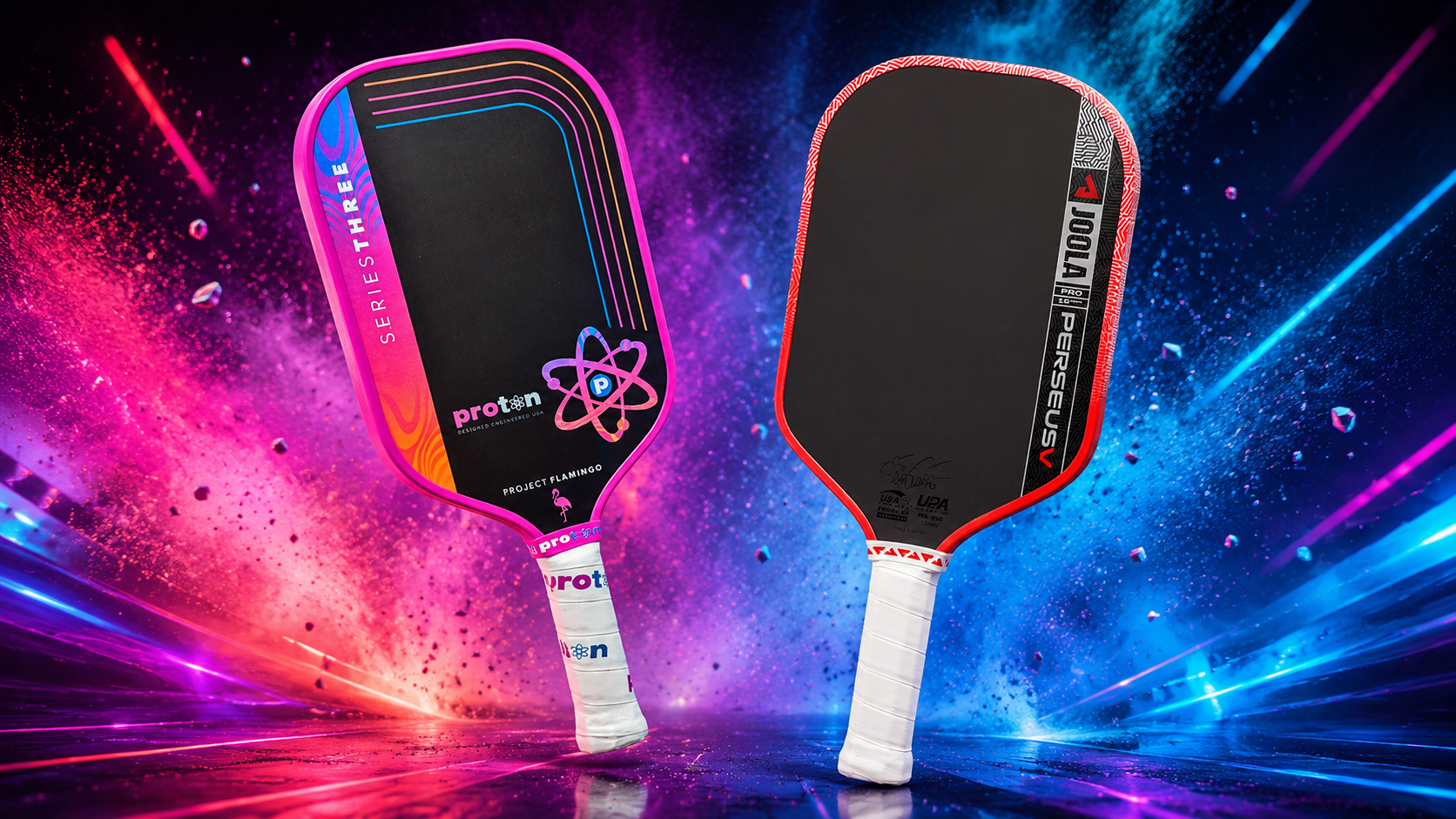
JOOLA’s agreement with Proton is more than another paddle dispute quietly disappearing into legal paperwork. Taken alongside recent settlements involving other manufacturers, it may represent an early indication that pickleball equipment is moving beyond its experimental boom years and into an era increasingly shaped by patents, licensing agreements and ownership of technology.
Key Takeaways
- JOOLA has reached a settlement with Proton over claims linked to its Propulsion Core paddle technology.
- Proton can sell remaining affected inventory through the summer, but must carry JOOLA branding, patent references and pay royalties.
- The wider question is whether pickleball paddle innovation is now entering a more formal patent and licensing era.
Another Settlement, Another Signal
JOOLA and Proton have reached a settlement resolving all claims arising from JOOLA’s patent infringement complaint concerning its Propulsion Core paddle technology.
Under the agreement, Proton will immediately stop manufacturing the affected paddles. Existing inventory can continue to be sold through the summer, but those paddles must carry a “Powered by JOOLA” sticker and display JOOLA’s patent numbers on their packaging. Proton will also pay royalties to JOOLA, although the financial terms remain undisclosed.
Proton is now the third company to settle following JOOLA’s complaint filed with the United States International Trade Commission in April, which named 11 manufacturers. Paddletek and ProXR had previously reached agreements of their own.
Viewed in isolation, another settlement is unlikely to raise many eyebrows. Patent disputes are commonplace in mature sporting goods sectors.
The more interesting question is whether these agreements collectively tell us something about the type of equipment industry pickleball is becoming.
The End of Pickleball’s Paddle Gold Rush?
For the past several years, paddle development has often resembled an arms race.
Manufacturers raced to introduce thermoformed constructions, injected foams, increasingly aggressive surface textures and ever more powerful combinations of spin and pop. Some innovations genuinely advanced performance. Others generated controversy, from delamination concerns to debates over so-called hot paddles and the limits of existing certification frameworks.
It was an environment that rewarded speed.
Brands could experiment, release products quickly and respond to competitors within months rather than years.
JOOLA’s recent legal activity suggests the landscape may be changing.
The company appears to be pursuing more than protection for a single flagship product. By securing settlements that include royalties and explicit branding requirements, it is attempting to establish its Propulsion Core technology as something competitors must either design around or formally license.
There is a subtle but important distinction there.
Winning a lawsuit proves ownership.
Building a licensing ecosystem creates influence.
Opportunity or Barrier?
Industries ranging from outdoor apparel to consumer electronics have shown how companies can maintain an advantage not simply by selling finished products, but by controlling technologies that others eventually incorporate into their own offerings.
Whether pickleball follows a similar trajectory remains uncertain, but the direction of travel has become more visible.
Supporters of stronger patent protection would argue that companies investing heavily in research and development deserve confidence that successful breakthroughs cannot simply be copied by competitors. If manufacturers believe their innovations can be protected, they may be more willing to commit resources to long-term experimentation.
Players could also benefit.
Clearer ownership of technologies may reduce confusion in the marketplace, discourage low-quality imitation products and potentially improve consistency between advertised performance and what ultimately arrives in a player’s hand.
Critics, however, might view the situation differently.
Pickleball’s equipment sector has thrived partly because smaller brands have often been nimble, creative and willing to challenge established thinking. If certain construction methods become heavily protected, independent manufacturers could find themselves spending more time navigating patents and licensing discussions than pursuing the next genuinely disruptive idea.
At this stage, it is far too early to suggest innovation will slow.
History offers examples supporting both outcomes.
Some industries flourish under strong intellectual property protections. Others become concentrated around a handful of dominant players with increasingly difficult barriers to entry.
Pickleball is unlikely to reach that point anytime soon.
Nevertheless, the questions being asked today are notably different from those being asked three years ago.
Who owns the technologies shaping the next generation of paddles?
Which aspects of design should remain freely accessible?
And when the next major breakthrough arrives, will it emerge from a garage workshop, a challenger brand willing to take risks, or from a company large enough to defend and monetise its discoveries?
More Than a Legal Footnote
Most players turning up at their local club this weekend will not notice any immediate change.
Proton paddles will still be used. JOOLA paddles will still be sold. Points will still begin with serves and end with put-aways.
Yet settlements such as this one may ultimately come to represent milestones in pickleball’s industrial coming of age.
For years, manufacturers largely competed to produce the newest paddle.
Increasingly, they may find themselves competing to own the ideas behind them.
Further Reading
- Latest pickleball news from around the world
- Tournament coverage and results
- Rankings and player profiles
- Regional pickleball coverage

Chris Beaumont
Founder and Editor-in-ChiefChris Beaumont is the founder and Editor-in-Chief of World Pickleball Magazine. Chris follows the global game closely, reporting on the latest news, developments, stories and tournaments from all five continents. He also hosts the World Pickleball Podcast, interviewing people at…
View All Articles →