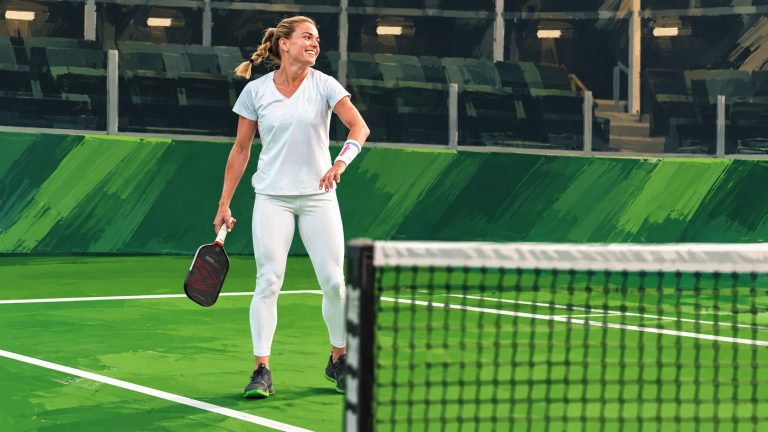

Many new pickleball leagues begin by concentrating their best players in one city before expanding. Manny Pacquiao’s Maharlika Pilipinas Pickleball Tour is attempting something different, spreading its 12 founding teams across the Philippines in the belief that the sport can be built through communities rather than the capital alone.
Key Takeaways
- Manny Pacquiao’s Maharlika Pilipinas Pickleball Tour has introduced 12 founding teams ahead of its inaugural season.
- The teams represent communities across the Philippines rather than being concentrated around Metro Manila.
- The five-leg competition is attempting to make provincial identity part of Philippine pickleball from its first season.
When sporting legends launch new competitions, the temptation is to make the story about the famous name attached to them.
Manny Pacquiao certainly guarantees attention.
But the most interesting decision surrounding the Maharlika Pilipinas Pickleball Tour is not who founded it.
It is how he intends to build it.
Rather than concentrating its inaugural teams around Metro Manila, the tour will begin with 12 sides representing communities across the country: General Santos City, Tacloban, Batangas, Parañaque, Muntinlupa, Rizal, Alfonso in Cavite, Camarines Norte, Pampanga, Bacoor, Bangued and Abra.
The founding teams were formally introduced at an event in Makati, providing the first clear picture of how Pacquiao’s proposed national competition will operate.
That geography feels deliberate.
It may also become one of the most interesting league experiments currently taking place in global pickleball.
Building a National League Before a Capital League
Many emerging sports follow a familiar pattern.
They establish themselves in one major city. The strongest clubs gather there. Sponsors, media and leading players naturally follow before expansion begins.
The Maharlika Pilipinas Pickleball Tour appears to be reversing that process.
Instead of asking the provinces to catch up with Manila later, the league is attempting to give communities across the country immediate representation.
Whether that proves successful remains to be seen.
But it creates a competition that already looks national rather than metropolitan.
That matters in a country where sporting identity is often fiercely regional.
When WPM first examined Pacquiao’s plans for the Maharlika Pilipinas Pickleball Tour, the central question was whether the Philippines might build professional pickleball differently from the United States.
The confirmation of the founding teams brings that idea into sharper focus.
This is not simply a travelling tournament carrying a national name. Its structure is being tied to particular places from the beginning.
More Than a Tournament
Pacquiao’s description of the league reinforces that ambition.
At the Makati launch, he presented the tour as a platform created specifically to give Filipino pickleball players greater visibility while building a lasting legacy for the sport throughout the country.
League commissioner Mark Espinosa described the announcement as the beginning of a new chapter for Philippine pickleball and said the tour intends to provide teams and players with a professionally run competition based on integrity, excellence and fair play.
Those are ambitious promises.
The challenge now is delivering a league capable of matching them.
Professional competitions are not defined by launch events. They are judged by competitive balance, player development, financial durability and whether communities continue supporting their teams after the novelty fades.
The Philippines already possesses much of the enthusiasm required to sustain a new competition. WPM’s previous reporting found a market shaped by crowds, local pride and a sense that pickleball still feels genuinely new.
The Maharlika tour is attempting to turn some of that energy into a repeatable domestic structure.
The Schedule Already Has Shape
The first leg will take place on 3 and 4 October in Angeles, Pampanga, beginning a five-leg inaugural season that will run through the remainder of 2026.
Two further legs are scheduled for November before the competition moves into its final phase in December.
The top eight of the 12 founding teams will advance to compete for the inaugural championship.
For a new competition, that provides a clearer structure than a single exhibition weekend or loosely connected collection of events.
It also gives players and supporters something many emerging tours struggle to establish.
A season.
The format sits alongside wider attempts to organise Philippine pickleball around permanent structures. The country is already combining coach education, mass participation and tournament infrastructure, while plans for a major racquet sports development in Cavite point towards a more deliberate approach to facilities and player pathways.
The Maharlika tour adds another piece: a domestic team competition built around regional representation.
The Bigger Test Comes After the Launch
The easiest part of any new league is announcing it.
The difficult part is convincing people to keep coming back.
That is why the real significance of Pacquiao’s involvement may not be his celebrity alone.
His name opens doors.
The league itself has to justify walking through them.
If the Maharlika Pilipinas Pickleball Tour succeeds, it will not simply be because one of the world’s greatest boxers decided to support pickleball.
It will be because a nationwide structure gave players outside the traditional sporting centres a meaningful place within the country’s competitive landscape.
The Philippines is not short of sporting heroes.
Pacquiao is now attempting something different.
Rather than adding another trophy to his own collection, he is trying to build a competition that communities from Abra to General Santos can regard as their own.
Further Reading
- Latest pickleball news from around the world
- Tournament coverage and results
- Rankings and player profiles
- Regional pickleball coverage

Chris Beaumont
Founder and Editor-in-ChiefChris Beaumont is the founder and Editor-in-Chief of World Pickleball Magazine. Chris follows the global game closely, reporting on the latest news, developments, stories and tournaments from all five continents. He also hosts the World Pickleball Podcast, interviewing people at…
View All Articles →