Junior pickleball is beginning to find its shape in the UK, but the most interesting part is not simply that more children are playing. It is that one of the country’s emerging youth pathways is being built around a deliberately open door.
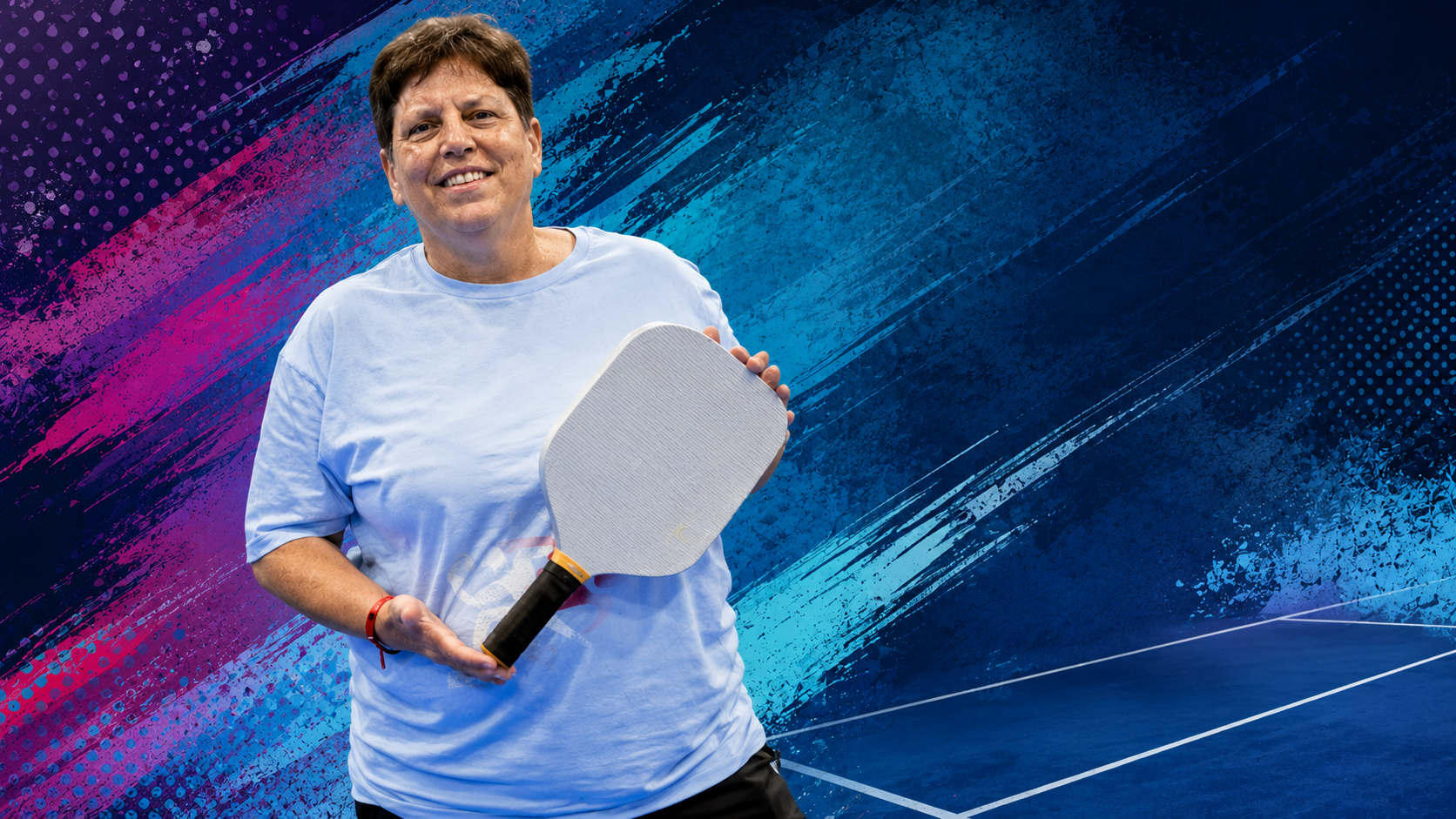
- Lou Stephens says her guiding belief is that pickleball should be accessible to everybody, regardless of background, ability or cost.
- The London Pickleball Fox Academy is offering free weekly sessions for junior players, supported by Fox Pickleball and private backers.
- With junior leagues and fully refereed youth competition now emerging, British pickleball is beginning to move from participation into pathway development.
Most sports become more exclusive as they grow.
Better facilities. Better coaching. More competition. Higher costs.
Lou Stephens wants British pickleball to move in the opposite direction.
Speaking on Episode 19 of the Finding Your Tribe podcast, Stephens set out the principle behind much of her work in the sport.
“My ethos is that pickleball is a sport for everybody,” she said. “I don’t care if you’ve got any kind of lack of ability, any disability, what your background is, whether you can afford to turn up or not. Pickleball is for everybody.”
That philosophy is increasingly shaping the way junior pickleball is developing in the UK. While much of the sport’s growth can be measured in membership numbers and tournament entries, a more important question sits underneath it all.
Can pickleball build a competitive pathway without closing the door on the very people it hopes to attract?
Building Before the Demand Arrives
When Stephens discovered pickleball, the British scene was tiny compared to what exists today.
British pickleball now has a far broader competitive base, with Pickleball England sitting at around 19,000 registered members and overall participation believed to be significantly higher.
New clubs continue to appear, tournaments are becoming more established and a generation of younger players is beginning to appear alongside the sport’s traditional over-50 base.
Stephens has rarely waited for perfect conditions before taking action.
“As soon as I’m asked to do so, I don’t over plan,” she said. “I’m like, ‘Build it and they will come.’ And so, I just get on with it.”
That approach helped create the London Pickleball Fox Academy, which runs free weekly sessions for junior players with support from Fox Pickleball and private backers.
The decision to remove financial barriers is not accidental.
Across many sports, the journey from beginner to competitor gradually becomes more expensive. Coaching costs rise. Equipment costs increase. Tournament travel becomes unavoidable. Participation narrows.
The academy is attempting something different.
It is trying to make entry into the sport as simple as possible.
Why Pickleball Is Different
One reason the model works is that pickleball possesses qualities that many sports struggle to replicate.
A complete beginner can enjoy a meaningful session almost immediately. Parents and children can play together. Stronger players can still rally with newcomers. Mixed-age groups often share the same court.
“What is nice, I think, with pickleball, no matter what standard you are, you can still have a game even if the players aren’t your standard,” Stephens explained.
That may sound like a small detail, but it helps explain why so many people stay involved once they discover the game.
The sport naturally creates interaction between generations, abilities and backgrounds in a way that few organised sports can match.
For young players entering a club environment for the first time, that can be a powerful advantage.
From Participation to Pathway
Participation alone, however, is not enough.
If British pickleball wants to develop future competitors, it also needs structure.
That structure is beginning to emerge.
The newly launched Pickleball England Junior League recently welcomed 30 players under the age of 16 to its inaugural event, providing one of the clearest signs yet that organised youth competition is becoming established.
The next step arrives later this year.
The UK Young Person’s Championship at Courtside in Stourbridge is set to become the first youth pickleball event in the country to feature fully refereed matches. Led by level-two referee Maureen McAden and supported by EPF and USAP-qualified officials, the tournament represents an important milestone.
Referees bring consistency. They introduce standards. They help young athletes understand the expectations of competitive sport.
Most importantly, they signal that junior pickleball is no longer being viewed simply as a participation exercise.
It is becoming a pathway.
The Challenge Ahead
The encouraging news is that the pathway is beginning to take shape.
The difficult part is keeping it accessible.
Youth programmes require coaches, volunteers, safeguarding procedures, venues and funding. Growth creates opportunities, but it also creates pressure. The more successful a programme becomes, the more resources it demands.
That is the challenge British pickleball now faces.
Can it remain open while becoming more competitive?
Stephens believes the sport is only at the beginning of its journey.
“I don’t think it’ll be that long before the sport levels out with the over and under 50s,” she said. “And then the more role models they’ve got… I just think the growth’s going to be ridiculous.”
Perhaps.
But the most important measure of success may not be participation figures or membership totals.
It may be whether the next generation continues to find the same open door that today’s players discovered.
Because the future stars of British pickleball may well emerge from programmes like these.
The bigger achievement would be ensuring every child has the chance to walk through the door before anyone starts deciding who the stars are.
Further Reading
- Latest pickleball news from around the world
- Tournament coverage and results
- Rankings and player profiles
- Regional pickleball coverage

Chris Beaumont
Founder and Editor-in-ChiefChris Beaumont is the founder and Editor-in-Chief of World Pickleball Magazine. Chris follows the global game closely, reporting on the latest news, developments, stories and tournaments from all five continents. He also hosts the World Pickleball Podcast, interviewing people at…
View All Articles →