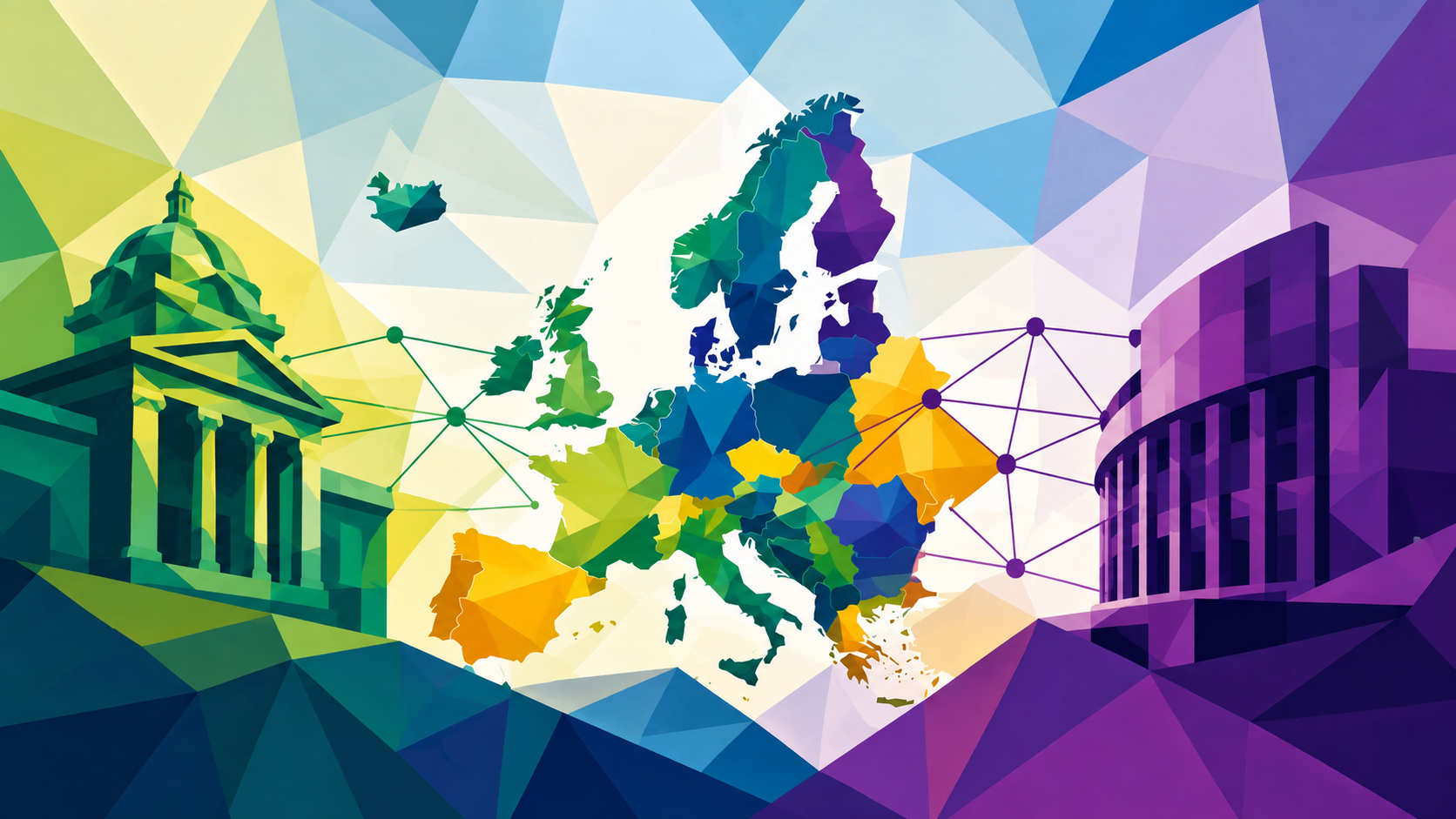
The European Pickleball Federation thought it had found a compromise. Work with both international federations. Stay neutral. Support eventual unification rather than choosing sides. Tuesday’s announcement suggests the current governance landscape may no longer allow that middle ground.
Key Takeaways
- The European Pickleball Federation has been welcomed as a Continental Member of the World Pickleball Federation.
- Earlier this year, EPF members voted overwhelmingly to authorise applications to both the WPF and GPF as part of a neutrality-based strategy supporting eventual unification.
- WPF accepted that approach. GPF has advised that its governance framework requires exclusive affiliation before the application can proceed.
- The announcement highlights a wider governance problem. Neutrality is becoming increasingly difficult to maintain while international pickleball remains divided.
For much of the past year, international pickleball has revolved around a familiar question.
Which side are you on?
The European Pickleball Federation hoped it had found another answer.
Neither.
Instead of aligning exclusively with one international body, Europe’s governing organisation sought to engage with both the World Pickleball Federation and the Global Pickleball Federation while continuing to advocate for a single, unified international federation.
It was a deliberately balanced position.
Tuesday’s announcement suggests that balance is becoming increasingly difficult to sustain.
A Democratic Mandate to Remain Neutral
The foundation for the EPF’s approach was not created in the boardroom.
It came from its members.
According to the federation, delegates at the recent Annual General Meeting voted overwhelmingly to authorise the Board to apply for Continental Membership of both the WPF and the GPF.
That decision was presented not as an attempt to play both sides, but as an interim strategy designed to support the long-term unification of international pickleball governance.
The EPF says its members specifically instructed the Board to engage with both organisations on a “non-exclusive and neutrality-preserving basis” while wider discussions continue.
That distinction matters.
The objective was not dual allegiance.
It was to avoid making Europe choose before the sport itself had resolved its future.
Two Applications. Two Different Outcomes.
The first response has now arrived.
The World Pickleball Federation has accepted the EPF as a Continental Member, with the European body describing the decision as a constructive step taken in support of eventual unification and mutual cooperation.
The second application remains unresolved.
According to the EPF, the Global Pickleball Federation acknowledged receipt of its application and confirmed that the federation demonstrated strong compliance with the relevant continental membership requirements.
However, GPF also advised that its governance framework requires exclusive affiliation before the application can proceed.
That is an important distinction.
The statement does not say the application was rejected because the EPF failed to qualify.
Nor does it suggest the GPF opposed the principle of unification.
Instead, it points to an existing constitutional framework that requires exclusivity before membership can be considered.
Organisations are entitled to establish the membership conditions under which they operate.
The difficulty is that those conditions now collide with the democratically approved strategy Europe’s member nations asked the EPF to pursue.
Yesterday, we argued that another international federation would further complicate pickleball governance. Today’s announcement demonstrates how difficult the current landscape has already become.
The System, Not the Individuals
That is what makes this announcement more significant than a routine membership update.
Nobody involved is arguing against the idea of one international federation.
The EPF again states that it remains committed to one unified, democratic and IOC-compliant international federation.
The WPF accepted Europe’s application in what the EPF describes as that same constructive spirit.
The GPF, meanwhile, has pointed to its own governance framework rather than questioning the EPF’s credentials.
The disagreement therefore appears less about personalities than about systems.
Europe attempted to build a neutral bridge between two international organisations.
The current governance structures have made that bridge extremely difficult to construct.
When Neutrality Becomes the Problem
There is an irony running through the entire announcement.
The EPF did not discover that neutrality was unpopular.
It discovered that neutrality itself may no longer be structurally possible.
That is a very different problem.
A continental federation attempted to engage with both recognised international organisations without abandoning its commitment to eventual unification.
Instead, it found itself navigating governance systems that point in different directions.
No accusations were made.
No public confrontation took place.
Yet the outcome still demonstrates how difficult it has become for organisations seeking to occupy the middle ground.
Why It Matters
The European Pickleball Federation has not changed its position.
It continues to argue that pickleball’s future is best served by one unified, democratic, transparent and IOC-compliant international federation.
That aspiration is shared more widely than recent governance debates sometimes suggest.
The challenge lies in how the sport reaches it.
Until that changes, every organisation involved in international pickleball may eventually face the same question.
Which side are you on?
The EPF hoped it could answer, “Neither.”
Its latest announcement suggests that may no longer be an option.
Further Reading
- Why a Third International Federation Would Be a Failure of Pickleball Governance
- Understanding the Global Pickleball Alliance
- More governance coverage from World Pickleball Magazine
- Subscribe to the World Pickleball Report

Chris Beaumont
Founder and Editor-in-ChiefChris Beaumont is the founder and Editor-in-Chief of World Pickleball Magazine. Chris follows the global game closely, reporting on the latest news, developments, stories and tournaments from all five continents. He also hosts the World Pickleball Podcast, interviewing people at…
View All Articles →