
In 2015, Linda and Lynn Laymon began assembling a referee training programme for pickleball.
There was no substantial certified system to inherit. The handbook, training materials and officiating guidelines had to be created for a sport still learning what organised competition required of it.
That same year, Lucy Kovalova moved from tennis into pickleball. Matt Wright followed her into the professional game. Elsewhere, Dave Weinbach was already collecting major titles in a career that had begun in 2009.
None of them could have known exactly what was coming.
Professional tours would be created. Prize money and player contracts would grow. Matches would be televised. New paddle technology would change how the game was played. Pickleball would spread into countries that had no history with it and then begin developing histories of their own.
The players would have to become better. The officials would have to become more consistent. A sport once held together by personal knowledge and willing volunteers would need systems capable of surviving higher stakes.
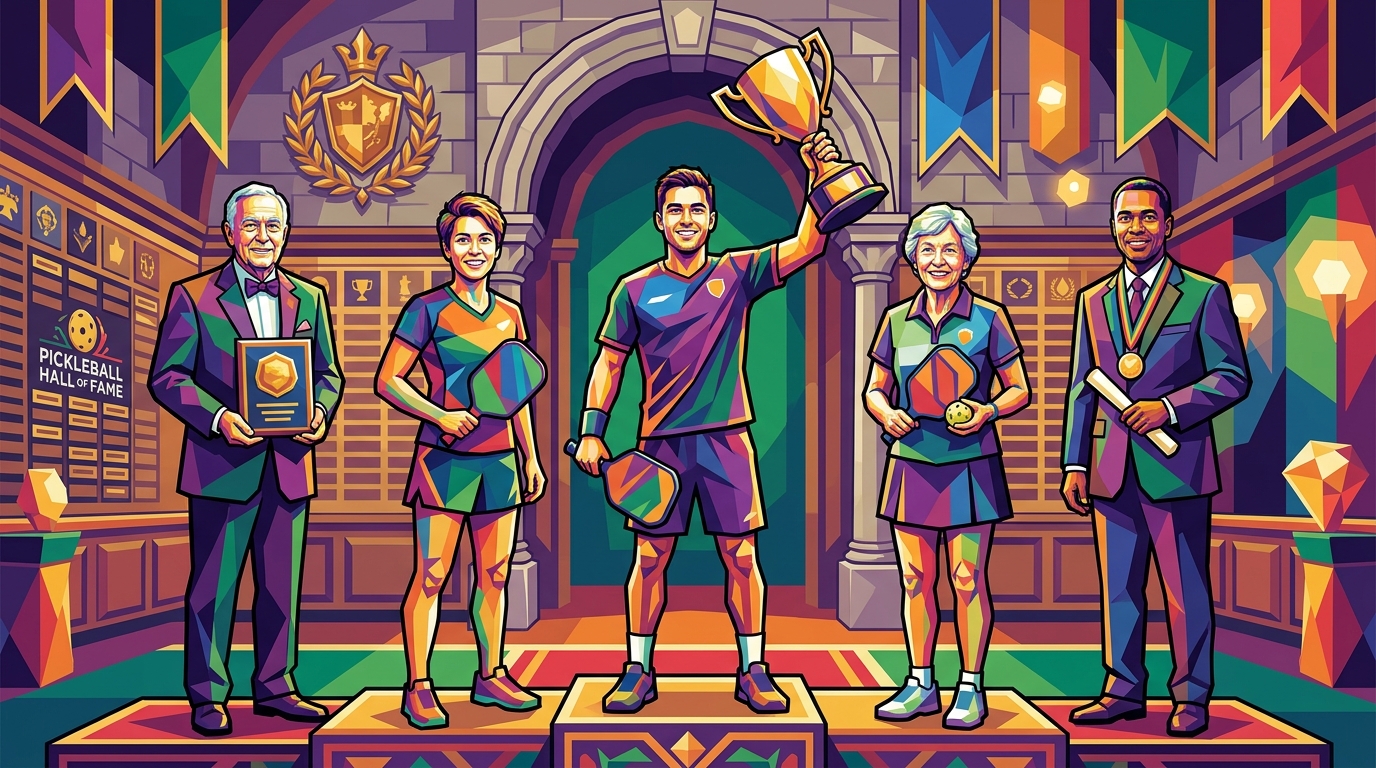
The five members of the Pickleball Hall of Fame Class of 2026 sit on both sides of that transformation.
Wright, Kovalova and Weinbach enter in the Competitor category. Laymon and Marsha Freso are recognised as Contributors. When they are inducted in Arizona this November, the Hall of Fame will grow from 36 members to 41.
This is a class of champions, but it is also a class about infrastructure. It recognises the people who raised the standard of play and those who helped ensure that standard could be judged fairly.
Matt Wright: Making Professionalism Look Normal
Matt Wright entered pickleball before the sport could promise its best players a conventional professional life.
He had one anyway.
Wright built a career as a corporate attorney in Wichita, Kansas, while becoming one of the leading doubles players in pickleball. Legal work did not sit neatly around the edges of his sporting ambition. It remained a demanding full-time profession while tournaments, travel and training filled the rest of his schedule.
The arrangement feels almost impossible when viewed through the modern calendar. It was less unusual in a sport whose leading players were still constructing the meaning of the word “professional”.
Wright turned professional in 2016. By then, pickleball had begun emerging from its earlier identity as a predominantly recreational game, but the structures surrounding its best players remained limited.
There was no guaranteed route to a living. Events varied greatly in scale and presentation. A player could compete at the highest level and still return home to another job.
Wright did more than manage that tension. He made it look sustainable.
The Hall of Fame credits him with major championships and more than 460 professional match victories across a career that has remained relevant for more than a decade. The number records his durability, but it does not fully explain it.
Wright’s game was built for doubles. He read patterns early, protected space at the kitchen and understood when a rally was ready to be accelerated. His power mattered, though it was most dangerous when supported by placement and anticipation.
He became known for emotional intensity, particularly in the biggest matches. It was focused energy. Wright used it to sharpen the atmosphere around a partnership and make important points feel even more important.
His long-running mixed partnership with Lucy Kovalova became part of the sport’s early professional identity.
Based in the same city, they could practise together between events and develop an understanding that newer pairings could not manufacture in a weekend. Their positioning and communication came from accumulated court time. Each knew how the other would respond when a rally changed direction.
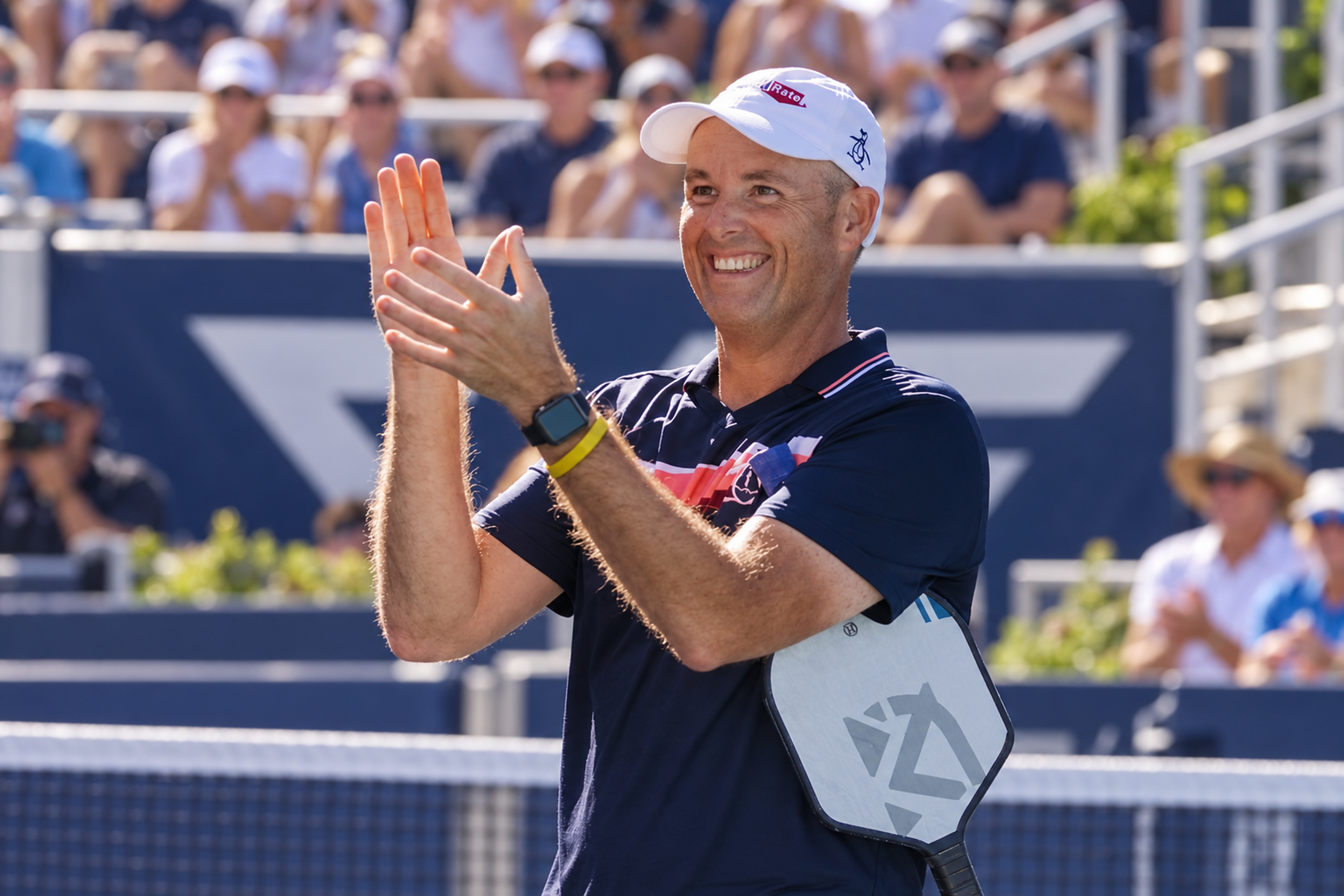
Their partnership arrived when professional mixed doubles was becoming one of pickleball’s most compelling disciplines. The format condensed the sport’s tactical possibilities into a single court. Power, speed, protection of space and partnership dynamics were all visible within the same exchange.
Wright and Kovalova helped teach audiences how to watch it.
Wright also survived the game they helped create.
Each new generation arrived younger, quicker and more specialised. Players increasingly entered pickleball with serious tennis backgrounds and trained specifically for the professional tour. Equipment became more powerful and the speed of attack increased.
Wright adjusted. His career extended from the game’s semi-professional period into a world of contracts, team leagues and year-round broadcasting.
His induction recognises victories and championships. More broadly, it recognises a player who helped make professional pickleball appear normal before the sport had built a normal professional existence around him.
Lucy Kovalova: A Journey Pickleball Would Learn to Follow
Lucy Kovalova’s story began in Slovakia.
She represented her country in junior tennis before moving to the United States and competing collegiately for Wichita State University. The route gave her high-level sporting experience, but it did not point inevitably towards pickleball.
Few careers did in 2015.
Kovalova began playing that year and turned professional in 2016. She entered near the start of the game’s movement towards a regular tour structure and quickly became one of the defining women’s players of the period.
Her tennis background was visible in her movement, reach and ability to create pace. Pickleball required her to add different forms of patience.
At the kitchen, power had to be disguised or delayed. A player could dominate a rally without striking its hardest ball. Control of height, direction and space mattered as much as speed.
Kovalova learned those demands well enough to win across singles, women’s doubles and mixed doubles and reach the No. 1 ranking in professional pickleball.
Her current PPA record lists eight Tour titles, but that database covers only one part of a career played across different tours and stages of the professional game. Her Hall of Fame case depends on the full record and the place she occupied within her era.
Kovalova could win alone, alongside another woman or within the different tactical demands of mixed doubles. That range separates a complete pickleball career from one built around a single successful partnership.
Still, the Wright partnership became central to how many supporters remember her.
Their familiarity gave them control over matches that could otherwise become frantic. Kovalova was capable of absorbing pressure, holding her position and choosing the right moment to redirect a rally. The partnership allowed Wright to impose himself without leaving the court structurally exposed.
Together, they became recognisable at a time when professional pickleball needed players and pairings an audience could remember.
Kovalova’s importance also extends beyond American competition.
Her journey from Slovakia to Kansas and then to the top of professional pickleball arrived before the sport’s modern global expansion. Today, international players travel into established tours, and American professionals are invited to events across Asia, Europe and beyond. That movement is becoming part of the sport’s ordinary life.
It was far less ordinary when Kovalova made it.

Her career showed that pickleball’s elite future would not remain exclusively American, even while most of its professional opportunities were still located there.
The sport now talks constantly about becoming global. Kovalova’s induction recognises someone who had already made that journey.
Dave Weinbach: A Career Too Long for One Era
Dave Weinbach’s career does not fit comfortably into one period of pickleball.
He began playing in 2009, before the present professional tours, the current paddle market and the point at which most of today’s professionals considered pickleball a possible career.
Then he kept playing.
Weinbach won across Open Professional, skill and age-group, and senior professional competition. He collected national and US Open championships while the competitive landscape changed around him.
Published lifetime medal counts differ because they were compiled at different stages of a career that continued to produce results. The exact total is less revealing than the span.
Weinbach won when major pickleball tournaments still felt closely connected to the game’s smaller community. He won as the US Open became a focal point for the sport. He continued competing as specialist professionals, team competitions and larger commercial structures arrived.
Alongside Kyle Yates, he won two US Open professional men’s doubles titles, becoming part of one of the most important partnerships in the competition’s early history.
The nickname made him difficult to forget.
“The Badger” carried Wisconsin into pickleball and captured something about the way Weinbach competed. He was persistent, energetic and prepared to remain inside a contest for as long as it took.
His success was built on fitness and repetition. Weinbach could extend points, resist impatience and force opponents to win exchanges more than once. That style travelled well across age categories because it depended on decisions as much as physical advantage.
Longevity, however, should not be confused with mere survival.
A player who competes across changing eras has to respond to each one. Weinbach encountered more powerful paddles, faster hands and opponents raised within a game more advanced than the one he first learned.
The strategic foundations of his play remained valuable. So did his appetite for competition.
His influence also moved beyond tournament results.
Weinbach became one of pickleball’s most recognisable instructors, taking elite experience into clinics and camps. That teaching work connected the professional and recreational versions of the sport.
Pickleball has always depended on that exchange.
A new player may discover the rules online, but understanding the game usually comes from somebody else. The third shot, the movement towards the kitchen, the point at which patience should become attack and the reason a ball must sometimes be allowed to bounce all make more sense when demonstrated.
Weinbach built a reputation for making those lessons enjoyable. His enthusiasm was part of the instruction, presenting pickleball as a game worth studying without stripping away the pleasure of playing it.
That combination explains the breadth of his Hall of Fame case.
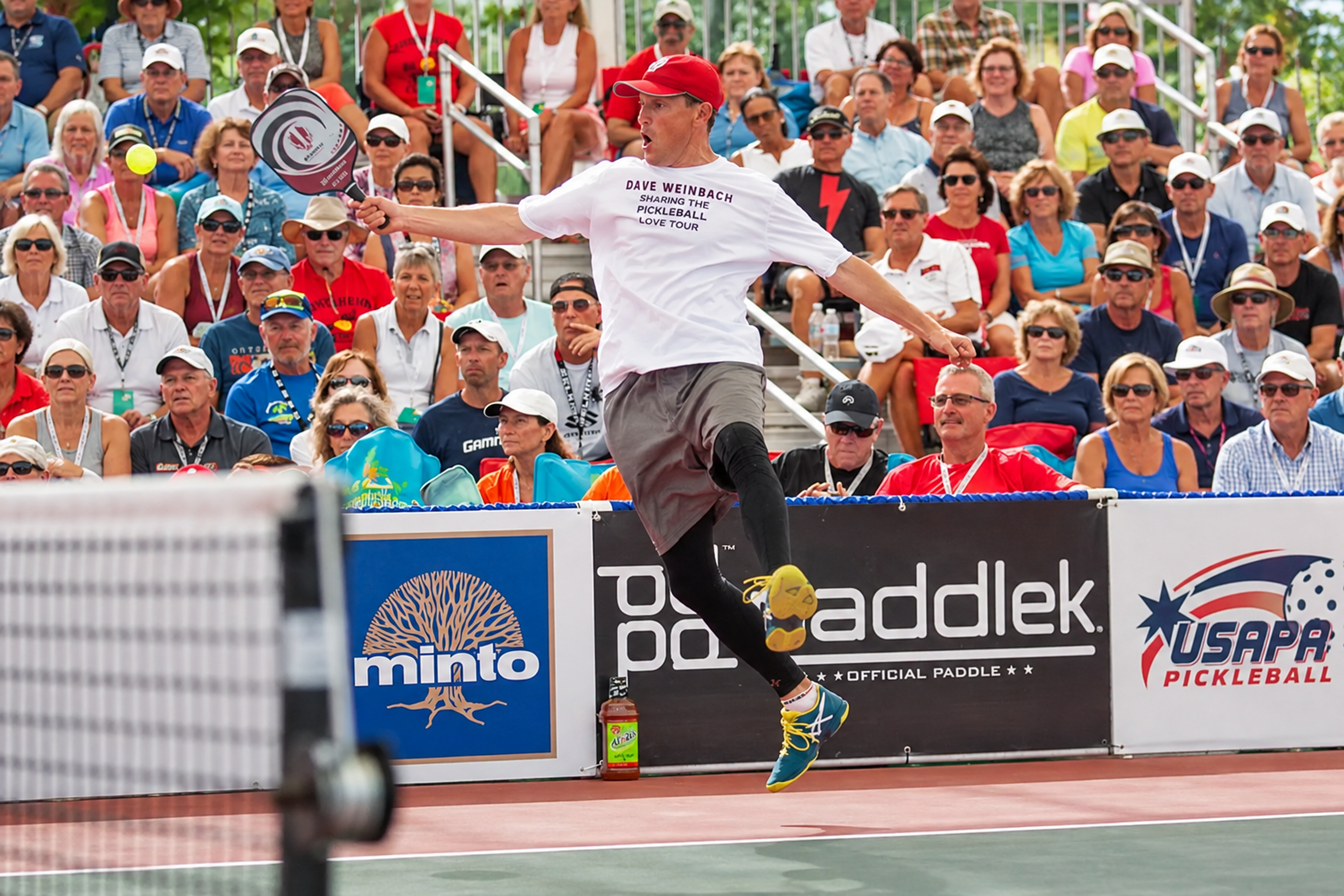
The medals place him among the great competitors of his generation. The teaching helped other generations understand the sport he had mastered.
Linda Laymon: Before Certification Had a Meaning
The best referees rarely become the story.
They manage the score, watch feet at the kitchen, apply the rules and control the rhythm of a match. When everything works, their authority becomes almost invisible.
That invisibility has to be built.
Linda Laymon spent more than 25 years contributing to pickleball as a player, volunteer leader and member of the USA Pickleball Board of Directors. Her most important work came when the sport needed to turn experienced volunteers into consistently trained officials.
In 2015, Linda and her husband, Lynn, developed a referee training programme, handbook and set of officiating guidelines.
The achievement can sound administrative when reduced to a list. In practice, it meant deciding how pickleball wanted its matches to be controlled.
A rulebook states what should happen. A training system teaches somebody how to recognise it under pressure.
Officials needed to know where to stand, what to watch and how to communicate a decision. They needed procedures for managing scores, time-outs and disagreements. They also needed a shared interpretation of situations that might previously have been handled according to local custom or individual experience.
The Laymons helped place that knowledge into a form that could be taught.
If you're following how the global game is shifting week by week, the World Pickleball Report breaks this down every day in our morning briefing.
Their work created the educational foundation from which the certified referee programme developed. Certification gave tournament organisers a standard to request and referees a standard to reach.
It also changed the relationship between official and player.
As competition became more serious, a referee’s authority could no longer rest solely on being the person willing to hold the clipboard. Players needed confidence that the official had been trained and assessed against a recognised system.
That mattered increasingly as prize money, rankings and professional careers entered the game. An incorrect decision was no longer an inconvenience at a local tournament. It could affect a title, payment or future opportunity.
Laymon’s contribution belongs to the stage at which pickleball began preparing for those consequences.
She helped build a system before the sport fully understood how much it would need one.
Marsha Freso: Carrying the Rulebook Across Borders
Marsha Freso represents the next part of that development.
After years as a volunteer official, she became one of the first ten USA Pickleball Certified Referees through the programme created by Linda and Lynn Laymon.
Certification marked the beginning of her wider contribution.
Freso became a referee educator and ambassador, working with her husband, Byron, to train officials across the United States and in countries including India, China, Belgium, England and Vietnam.
The list reflects pickleball’s expansion. It also reveals what expansion requires after the paddles and nets arrive.
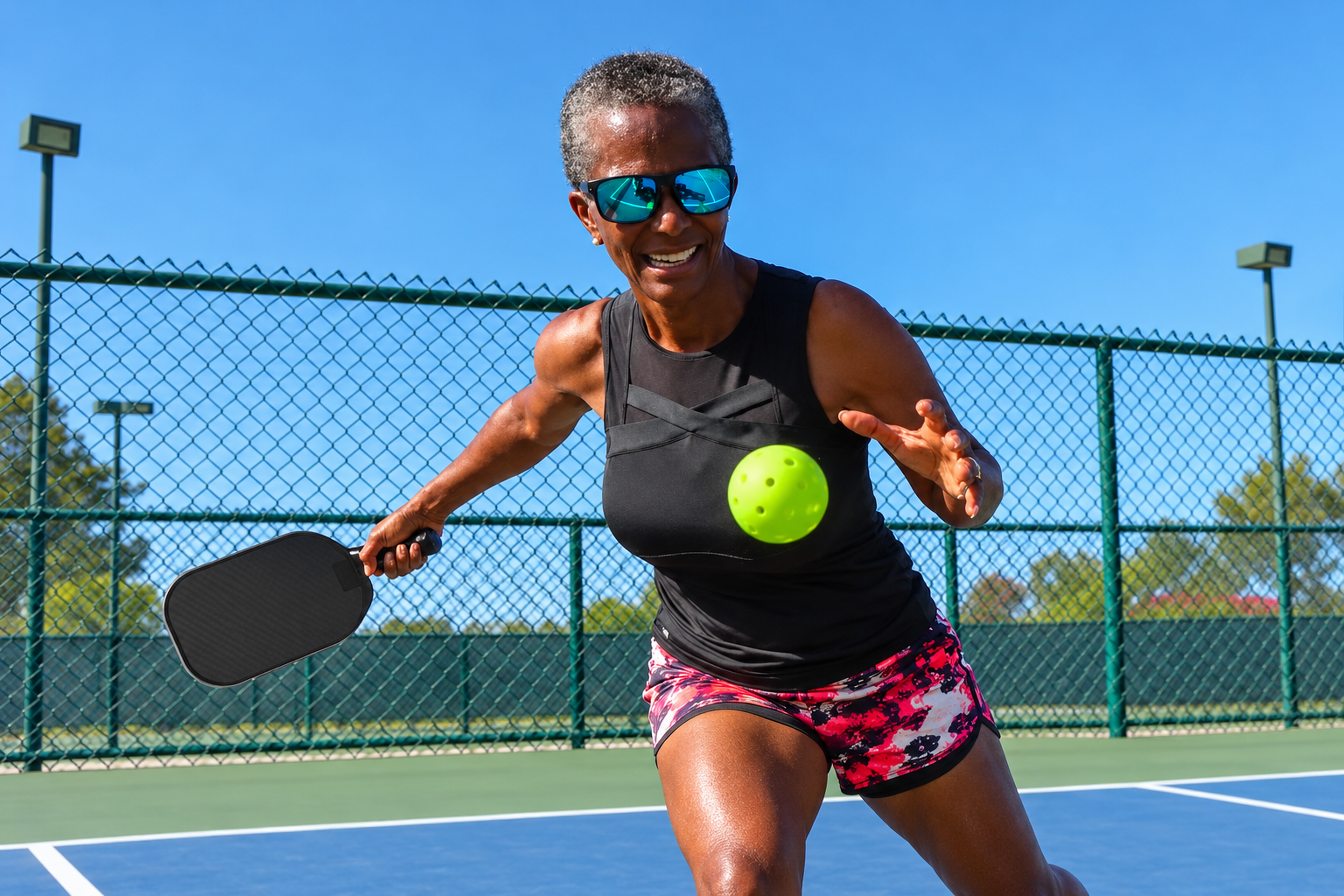
A new community can learn the basic game quickly. Organised competition demands more.
Players must know which rules apply. Tournament directors need officials capable of applying them. Referees need a common method that prevents each country, club or court developing its own version of the sport.
Freso helped carry those methods into places building their tournament cultures from the beginning.
That work is more complicated than exporting a handbook.
Rules exist within language, custom and experience. A person who has never watched elite pickleball may understand the wording of a fault without yet recognising it at match speed. An official familiar with recreational play may need to learn how to manage professionals who challenge calls or use the regulations tactically.
Training therefore has to connect the written rule with the live court.
Freso’s international work helped make that connection. It also gave developing pickleball nations access to lessons the American game had learned gradually and sometimes awkwardly.
Her induction comes at a significant point.
Pickleball is trying to create international alignment while its governing structure remains divided. Different organisations sanction events, write regulations and pursue influence across emerging markets. Consistent officiating cannot solve those disputes, but it can give players a more familiar experience of how the game is administered.
Freso’s career shows how much of international growth happens through individual relationships.
A referee travels. A clinic is held. Local officials learn the system, then begin teaching others. Knowledge that once belonged to a small number of American volunteers becomes part of a competition thousands of miles away.
The sport spreads through people before institutions catch up.
The Players Raised the Standard. The Officials Made It Hold.
The Hall of Fame separates competitors from contributors because their achievements require different kinds of assessment.
The Class of 2026 shows why they belong in the same room.
Wright, Kovalova and Weinbach helped establish what serious pickleball could look like. Their careers crossed the years in which the leading level became faster, more athletic and more recognisably professional.
Laymon and Freso helped build the structure around that competition.
Without players, there is no spectacle. Without trusted rules and competent officials, the spectacle loses meaning.
A ball landing close to a line does not care how much prize money is at stake. A foot touching the kitchen during a volley remains a fault whether the match is taking place in Arizona or Vietnam. Somebody must see it, understand it and possess the authority to make the call.
This class captures pickleball learning both sides at once.
It was creating stars while training referees. It was increasing the stakes while building the systems needed to protect them.
Hall of Fame Weekend
The Class of 2026 will be inducted during three days of events in Gold Canyon and Mesa, Arizona.
The programme begins on Thursday, November 12, with a benefit screening of the documentary The Power of Pickleball.
On Friday, November 13, the Hall of Fame Banquet and Induction Ceremony will take place at Gold Canyon Golf Resort & Spa. The evening includes a meet and greet, dinner and the formal induction of Wright, Kovalova, Weinbach, Laymon and Freso.
The weekend moves to Arizona Athletic Grounds in Mesa on Saturday, November 14.
At 2pm Arizona time, the five inductees will be recognised on court during the APP Mesa Open.
The setting gives the weekend a fitting conclusion. The formal record will have been written the previous evening. On Saturday, that history will return to a live tournament, surrounded by the sport continuing without pause.
The Keepers 100
The Hall of Fame’s responsibilities extend beyond choosing who enters it.
Pickleball’s early record is spread across personal collections, tournament programmes, photographs, old paddles, newsletters and memories. Much of it was created before anybody imagined the sport would one day need a formal archive.
The Hall is using the 2026 induction programme to launch The Keepers 100, seeking 100 individuals, families or organisations willing to contribute $500 each.
The calculation is straightforward:
100 Keepers × $500 = $50,000 for pickleball’s history.
The Hall says the money will support its work to preserve and share the people, stories and material history of the game. Members of the inaugural group will be recognised during Hall of Fame Weekend and listed permanently on its website.
The fundraising target matters. The larger task matters more.
Pickleball has spent decades growing through people doing work that was not always formally recorded. Equipment was developed in workshops. Courts appeared through local persistence. Rules evolved. Volunteers carried tournaments. Players became champions before the sport had decided how to preserve their achievements.
History disappears through ordinary decisions. A box is cleared. A photograph is not labelled. A programme is thrown away because nobody knows it contains the first appearance of a player who later became important.
By the time its value is recognised, the evidence may be gone.
The Record Catches Up
Hall of Fame induction creates a clean date in a career that was rarely clean while it was being lived.
Wright did not know which of his 460-plus victories would matter most. Kovalova could not know that her move from Slovakian tennis to an unfamiliar American paddle sport would become part of pickleball’s international story. Weinbach continued collecting titles while the sport changed repeatedly around him.
Laymon and Freso worked on officiating because the work needed to be done. The historical significance emerged later.
That is how most sporting history is made.
It looks like another match, another handbook, another training session or another journey to teach people in another country. Only with distance does the pattern become visible.
The Class of 2026 is the pattern.
Three competitors helped pickleball learn what professional excellence looked like. Two contributors helped it understand how that excellence should be governed.
The players raised the standard.
The officials made it hold.
For a clearer view of where the sport is heading each week, you can join the World Pickleball Report here.

Chris Beaumont
Founder and Editor-in-ChiefChris Beaumont is the founder and Editor-in-Chief of World Pickleball Magazine. Chris follows the global game closely, reporting on the latest news, developments, stories and tournaments from all five continents. He also hosts the World Pickleball Podcast, interviewing people at…
View All Articles →