
I was six years old when I started hitting tennis balls with my dad in the streets of Chile.
We hit a few cars. Probably more than a few.
I loved having a racquet in my hand, though. At eight, I joined an academy. At nine, I began competing. After that, tennis became my life.
I was part of Chile’s 1998 generation, and by my mid-teens I was the number-one player in the country for my age and ranked among the leading juniors in South America. I played up against guys such as Cristian Garín, Alejandro Tabilo and Nicolás Jarry. At 14, I represented Chile in the South American Cup and we won it.
At that age, becoming a professional tennis player did not feel like a fantasy. I was checking the boxes. I believed I was on my way.
Then, at 17, I suffered a stress fracture in my L5 vertebra.
There was no complicated solution. I needed to stop.
For 10 months, I barely did anything. Once I could play again, it took another three or four months to prepare my body for competition. In junior tennis, losing that much time at that age is enormous.
I came back and went straight into Futures tournaments. At 18, I earned an ATP ranking. That was respectable, but it was nowhere near where I had imagined being when I was 14 or 15.
The Futures tour is a grind. I travelled twice to Tunisia for six-week stretches because, as a South American player, you cannot fly to Europe for one tournament and come home. You stay. You share rooms. You find new roommates to keep the costs down. You compete week after week and try to survive long enough to move to the next level.
Very few players do.
Before the injury, I had turned down scholarship offers from Division I universities because I wanted to play professionally. After almost a year on the Futures circuit, college began to make much more sense.
Because of NCAA eligibility rules, Division I was no longer an immediate option. I went to Saint Leo University in Florida, planning to stay for one year and transfer.
I never left.
I found my friends there. I found another family. I also had a successful college career, earning ITA All-America honours in three different seasons. As a freshman, I was named the ITA National Rookie of the Year and the Sunshine State Conference Freshman of the Year. In my senior season, I earned All-America honours in singles and doubles.
My relationship with my coach, Chad Berryhill, was rocky at first. I arrived thinking I was better than everybody and that I knew how everything should be done.
I had not been the easiest junior to coach either. My uncle had coached me in Chile and we had plenty of arguments. Let’s just say we had our own version of Rafa and Toni Nadal, although at a slightly different level.
College helped me grow up. Chad taught me how to operate within a team and how to listen. Eventually, we developed a great relationship, but he had to deal with a pretty fresh kid at the beginning.
By my junior year, my attention was beginning to move beyond tennis. I was studying business management and marketing, completing internships and thinking seriously about work. Before I graduated, I received a job offer in New York.
One minute, I was playing some of the best tennis of my life. The next, I was working in Manhattan.
That was it. No more tennis.
I went into sales with Wallbox, working as an account executive in the electric vehicle charging industry. Competitive sport prepared me well for it. In sales, you have a number to hit. You work under pressure. You hear no. You have to keep going.
I enjoyed the job, I was good at it and I was progressing. I built a strong portfolio, hit my quotas and earned promotions and raises.
Life was moving forward.
There was still something missing.
I wanted to compete.
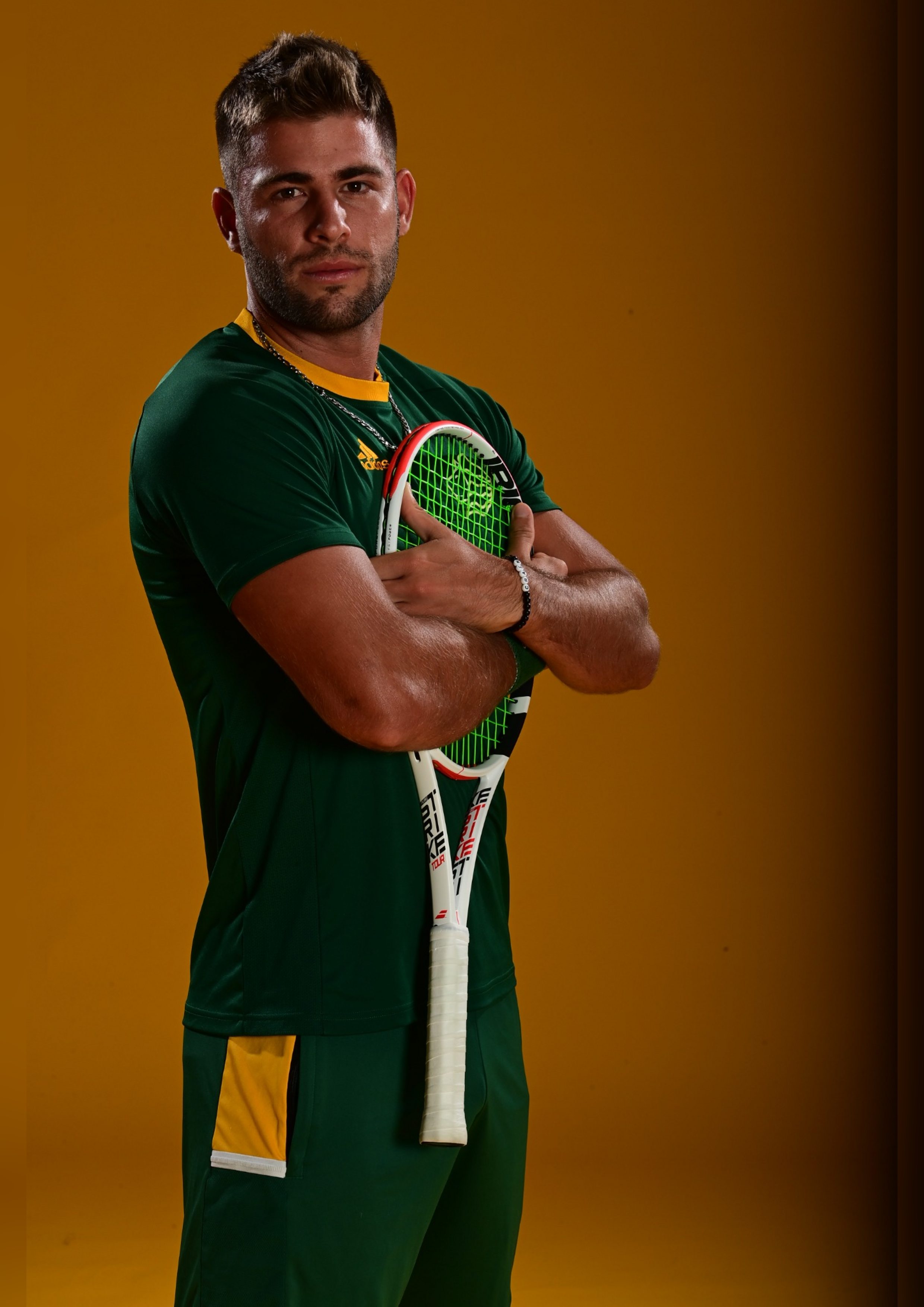
In May 2022, I heard about pickleball and went to try it. I thought it might fill that competitive space without requiring me to give up my career.
Like plenty of tennis players, I arrived believing I could simply hit through everybody.
My tennis game had been built around a big serve and a big forehand, so that was my plan in pickleball too. Hit hard, move forward and assume nobody could handle the pace.
It worked until it didn’t.
I had no idea how to dink, drop or play the soft game. Players I met in New York could see that I had potential, but they also had to teach me how pickleball actually worked.
For six or eight months, I was basically just banging the ball. Eventually, I accepted that I might need to slow down occasionally.
I began playing moneyballs around New York, New Jersey and Philadelphia. I lost in the semifinal or final of the first couple, then went on a run. For close to two years, I hardly lost one locally.
That made me curious.
I did not initially plan to become a professional pickleball player. I simply wanted to enter a professional tournament and find out how much better those players were.
In 2023, my friend Erik Forsythe and I entered an APP event in Philadelphia. We came through qualifying, won three matches in the main draw and reached the semifinals, where we faced Dekel Bar and Rob Nunnery.
Before that event, I had been asking people to play tournaments with me and getting the feeling that they did not believe I was ready. Afterwards, everybody wanted to play.
That tournament changed how I saw my level. It also created the first real conflict with my job.
There was another tournament the following week. I wanted to play, but I couldn’t because of work.
In 2024, I played six or seven APP events. They were easier to fit around my career because I could fly on Friday, compete over the weekend and return. At several events I pushed established teams hard, but kept losing close matches.
Every time, I had the same thought.
If I could train properly, how good could I become?
I watched players I had once competed alongside commit full-time and move ahead. There was no mystery to it. If I wanted to find my level, I needed to give pickleball more time.
The problem was that my job was going well.
I had a good salary, a healthy sales pipeline and a career with momentum. I was also married, and my wife and I were expecting our first child.
Quitting did not look particularly sensible.
So I did not make one dramatic leap. I built towards it.
People in New York had started asking me for lessons. I coached before work, sometimes at eight in the morning, and again after work. Throughout 2025, I kept building my client base while doing enough in my day job to make sure I did not get fired.
By the end of the year, I could see a possible path. If I added a few more lessons each day, perhaps coaching could cover our bills while giving me the freedom to train and compete.
That was important because I remembered what pressure had done to me in tennis. When tennis became something I believed had to support my entire future, I stopped enjoying it. I did not want the same thing to happen with pickleball.
I needed a safety net.
By February 2026, I had enough players to believe I could pay the bills. I was not walking away with nothing. I had spent months creating a coaching business that could give my family some security.
Even so, leaving a successful career with a baby due two months later was scary.
There is never a perfect time to do something like that.
Eventually, I decided I had to find out.
Near the end of February, I played my first PPA Challenger event of the year in Houston and won the men’s doubles title with Anouar Braham.
If you're following how the global game is shifting week by week, the World Pickleball Report breaks this down every day in our morning briefing.
That made the decision feel a little easier.
The biggest change since going full-time is simple: I see so many more balls.
Between coaching and training, I can be on court for five or six hours a day. Some of the players I coach are strong 5.0s, so I am still getting good repetitions.
There is pressure there too. I’m the coach, so I’m not allowed to miss.
The extra court time has improved my consistency and my soft game. I always had aggressive weapons, but at 8–8 or 9–9 I could become tense and miss a ball I should never miss.
Players used to tell me that I needed to see more balls. I would think, Yes, obviously. I’m not trying to miss.
Now I understand what they meant.
Repetition removes some of those silly errors. That gives you confidence. Confidence lets you become more aggressive. Gradually, your entire mentality changes.
When I play a top team at 9–9 in the third game now, I believe I can win.
Before, part of me was hoping they would miss.
That may be the biggest difference between the player I was and the player I am becoming.
The results have arrived faster than I expected. By late summer, I had won four PPA Challenger titles and a PPA 250 event, reached four other finals and earned a PPA contract.

Now I get to test myself against another level of opposition.
I know there are still gaps. I have been working hard on my two-handed backhand dink and roll. My hands can continue to improve too. Against the best players, the speed is different. Until you experience it regularly, it can feel as though the game is moving before you are ready.
I want to play those players and see exactly where they beat me. That will tell me what has to come next.
There is another goal that means even more.
I want to represent Chile again.
Pickleball is growing quickly there, although it remains in its early stages. There are also several Chilean players competing in the United States, so I believe we could put together a strong team.
When I stopped playing tennis, I thought the opportunity to wear my country’s colours had disappeared. Pickleball may give it back to me.
For now, I still have one major target left in 2026. I was drafted by the Grand River Rapids in the Canadian National Pickleball League, and we qualified for the championship tournament. Winning that would complete an extraordinary year.
After that, life changes again.
My wife and I are about to become parents. I will have to learn how to combine a baby with professional pickleball, and I suspect that may be more difficult than learning the soft game.
Sometimes I think about the six-year-old boy hitting tennis balls between parked cars in Chile.
I would tell him to keep going. He has no idea where the racquet will take him.
Tennis gave me a life in the United States, a college family, a career and lessons I still carry onto the court. It taught me how to lose, how to keep competing and, eventually, how to listen.
For a while, I believed that part of my life was finished.
I thought I had finished trying to become a professional athlete.
It turns out I was only between attempts.
Editor’S Notes
The Work Behind the Game
Pickleball no longer needs to prove that people want to play it. The courts are busy. New facilities are opening. Tournaments are appearing in places that barely registered on the sport’s map a few years ago.
The harder question is what happens next.
A sport can attract millions of players without producing stars whom those players recognise. It can stage international events without building meaningful national pathways. It can invite professionals around the world without deciding what those invitations require in return. Growth creates opportunity, but it also exposes everything that has yet to be built.
That tension runs through this issue.
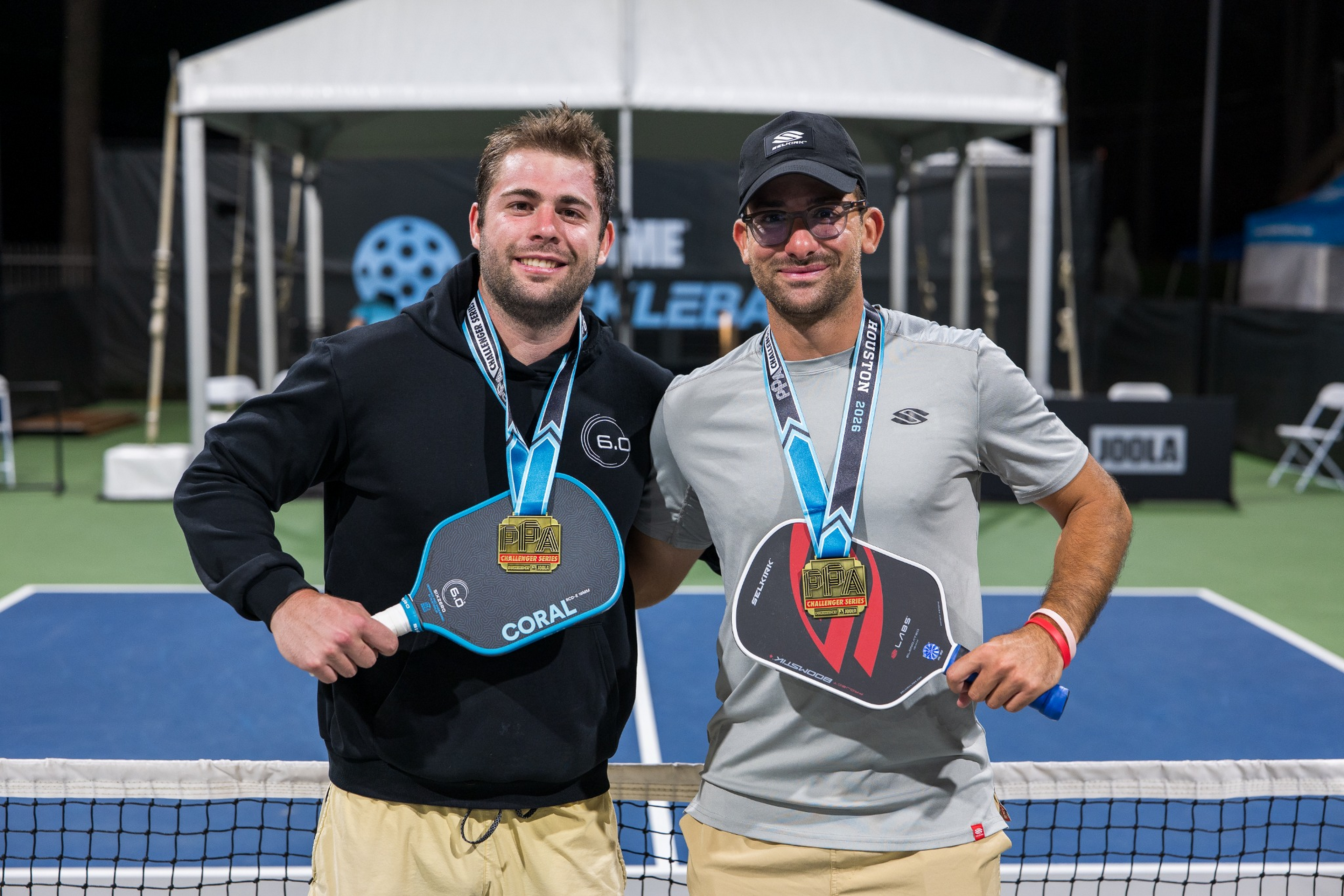
Our cover story examines pickleball’s struggle to turn elite players into lasting public figures. Bruno Faletto writes about the second chance the sport gave him. Elsewhere, we look at university pickleball taking shape in Japan, an academy betting on China, and the small operational failures that tournament technology is trying to eliminate.
There are quieter stories too. Stories about the shot a player already knows how to hit, the question that can cost a match, and the sound inside a paddle that may say more than its marketing. We look at today’s champions through the longer lens of history, then travel to Brazil, where the end of the matches is only the beginning of the evening.
These pieces come from different parts of the game, but they describe the same moment. Pickleball is moving from improvisation towards structure. Its future will depend on whether it can keep the openness and energy that made people love it while accepting the responsibilities that come with becoming a serious international sport.
The crowds have arrived. The institutions, traditions and expectations are still catching up.
That unfinished work is where pickleball’s most important stories now live.
Chris Beaumont Editor, World Pickleball Magazine
For a clearer view of where the sport is heading each week, you can join the World Pickleball Report here.