Venezuela’s devastating earthquakes have claimed thousands of lives, displaced entire communities and created an enormous humanitarian challenge. Amid that tragedy, pickleball has discovered that its most important role is not organising tournaments, but supporting the people who would normally play in them.
Key Takeaways
- The Pickleball Federation of the Americas has launched an emergency relief campaign following Venezuela’s catastrophic earthquakes.
- President Leon Stanga has called on the international pickleball community to support affected players, families and local communities through a coordinated fundraising effort.
- The response demonstrates how South America’s pickleball network has evolved beyond competition into a community capable of mobilising during a humanitarian crisis.
Only a few weeks ago, Venezuela’s pickleball players were thinking about training sessions, local tournaments and the next opportunity to get on court.
Today, many are facing a far harsher reality.
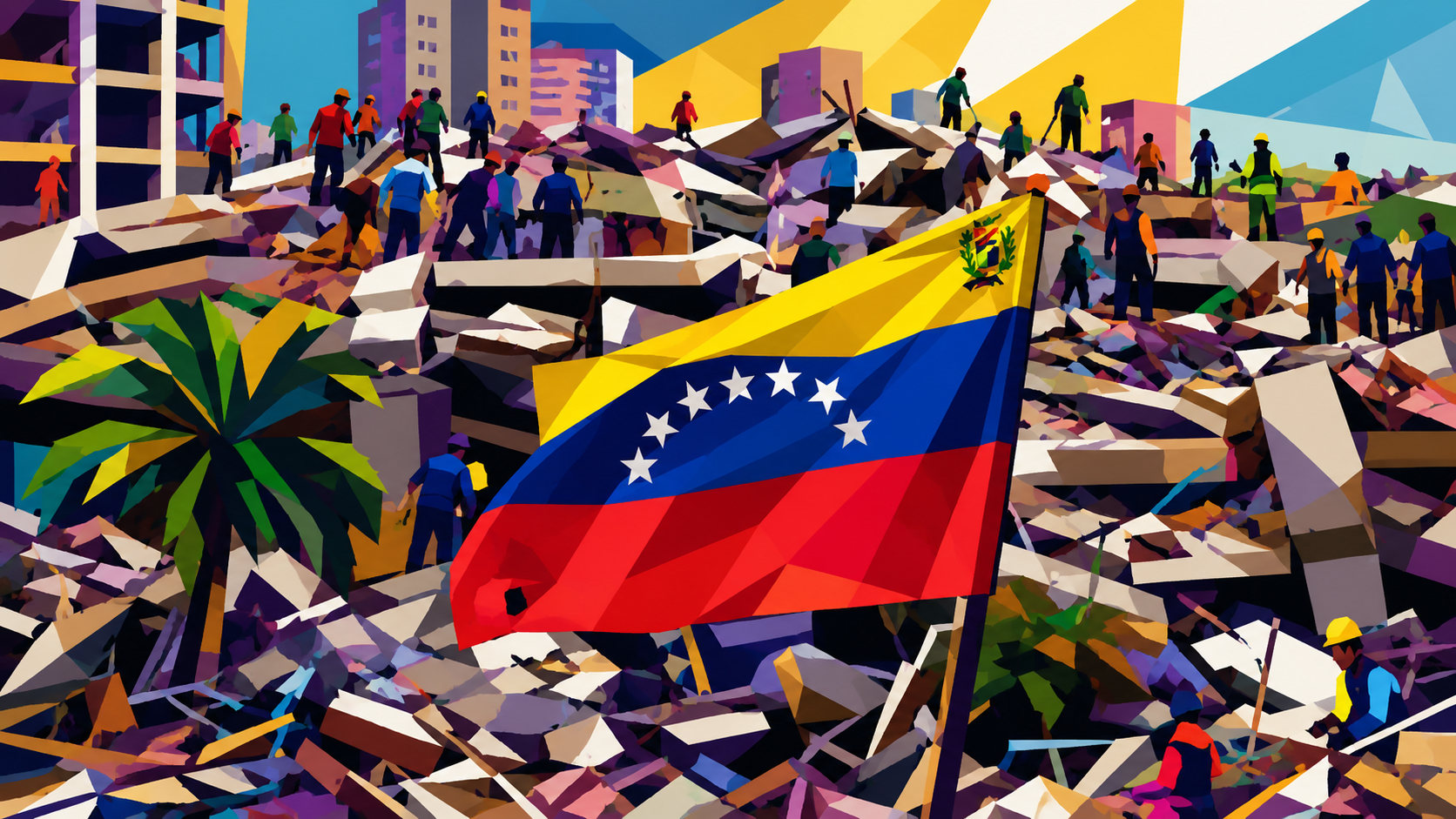
The powerful earthquakes that struck Venezuela in late June claimed thousands of lives, displaced families and left communities across the country confronting a prolonged humanitarian crisis. For those living through the disaster, pickleball has inevitably become secondary.
Yet it has not disappeared.
Instead, it has become a way for people across South America — and increasingly around the wider pickleball world — to help.
Recognising the scale of the crisis, Pickleball Federation of the Americas president Leon Stanga quickly shifted his attention from the administration of the sport to the welfare of its people, launching an emergency appeal that asks the international pickleball community to stand alongside Venezuela during its recovery.
It is an appeal rooted in a simple idea.
Before players represent federations or compete for medals, they belong to a community.
From Competition To Compassion
Sport is usually judged by what happens on the court.
This week, the most important work has happened far away from any baseline.
Working alongside Natalie Hughes’ Pickleball Provides initiative, the federation has begun coordinating emergency fundraising, with donations intended to provide direct assistance to people affected by the earthquakes through trusted contacts already established within Venezuela.
The campaign has already generated more than $2,000.
Measured against the scale of a national disaster, that is only a beginning.
Measured against the size of pickleball’s South American community, it represents something more significant.
It shows that the relationships built through tournaments, regional championships and international competition can become support networks when life changes overnight.
Leon Stanga’s Message
Throughout the federation’s appeal, Stanga’s message has remained consistent.
This is not simply about raising money.
It is about ensuring Venezuelan players and their families know they have not been forgotten by the wider pickleball community.
That distinction matters.
Natural disasters often dominate headlines for a few days before international attention moves elsewhere.
Recovery does not.
Recovery lasts for months and, in many cases, years.
By encouraging federations, clubs and individual players across the Americas to contribute, the campaign is attempting to build support that extends beyond the immediate news cycle.
Stay connected to pickleball’s biggest stories. Join the free World Pickleball Report for independent news, analysis and features from every region of the sport.
What This Says About South American Pickleball
Pickleball frequently measures its international progress through participation figures, tournament calendars and the number of new countries embracing the sport.
Those metrics matter.
They are not the only measure of a sporting community’s maturity.
The real strength of a continental federation is tested when competition stops.
Can it organise people?
Can it communicate quickly?
Can it support members facing circumstances no sporting organisation ever wants to confront?
In this instance, the response has shown that the federation’s purpose extends beyond governance.
It exists to serve the people who make up the sport.
That may ultimately prove more important than any championship it sanctions.
The foundations for that network were already visible in Venezuela. Stanga has spent years building national structures, while the country has created officiating programmes, international competition and pathways such as WPC Latam Venezuela. The relief effort reveals what those connections can become when the need is no longer sporting.
More Than A Fundraising Campaign
The financial support generated by the appeal is intended to provide practical assistance to those it reaches.
Its wider significance lies elsewhere.
Every emerging sport reaches a point where it decides what sort of community it wants to become.
Some remain collections of tournaments and rankings.
Others develop into networks where the relationships formed through sport continue to matter when the competition ends.
This week, South American pickleball has offered a powerful example of the latter.
Nobody inside Venezuelan pickleball wanted this to become the story that defined their year.
Yet the response may reveal more about the values of the sport than any tournament result ever could.
When the courts eventually fill again, the scorelines will matter.
For now, what matters most is that a community separated by borders has chosen to stand together when one of its own needed help.
Independent global pickleball journalism matters. Share this article with a player, club or federation that believes the sport’s community should extend beyond the court.
Further Reading
- How Leon Stanga Built A National Pickleball Powerhouse In Venezuela
- Can WPC Latam Venezuela Produce South America’s Next Federico Staksrud?
- Venezuela Launches GPF Referee Training And A National Referee Board

Chris Beaumont
Founder and Editor-in-ChiefChris Beaumont is the founder and Editor-in-Chief of World Pickleball Magazine. Chris follows the global game closely, reporting on the latest news, developments, stories and tournaments from all five continents. He also hosts the World Pickleball Podcast, interviewing people at…
View All Articles →