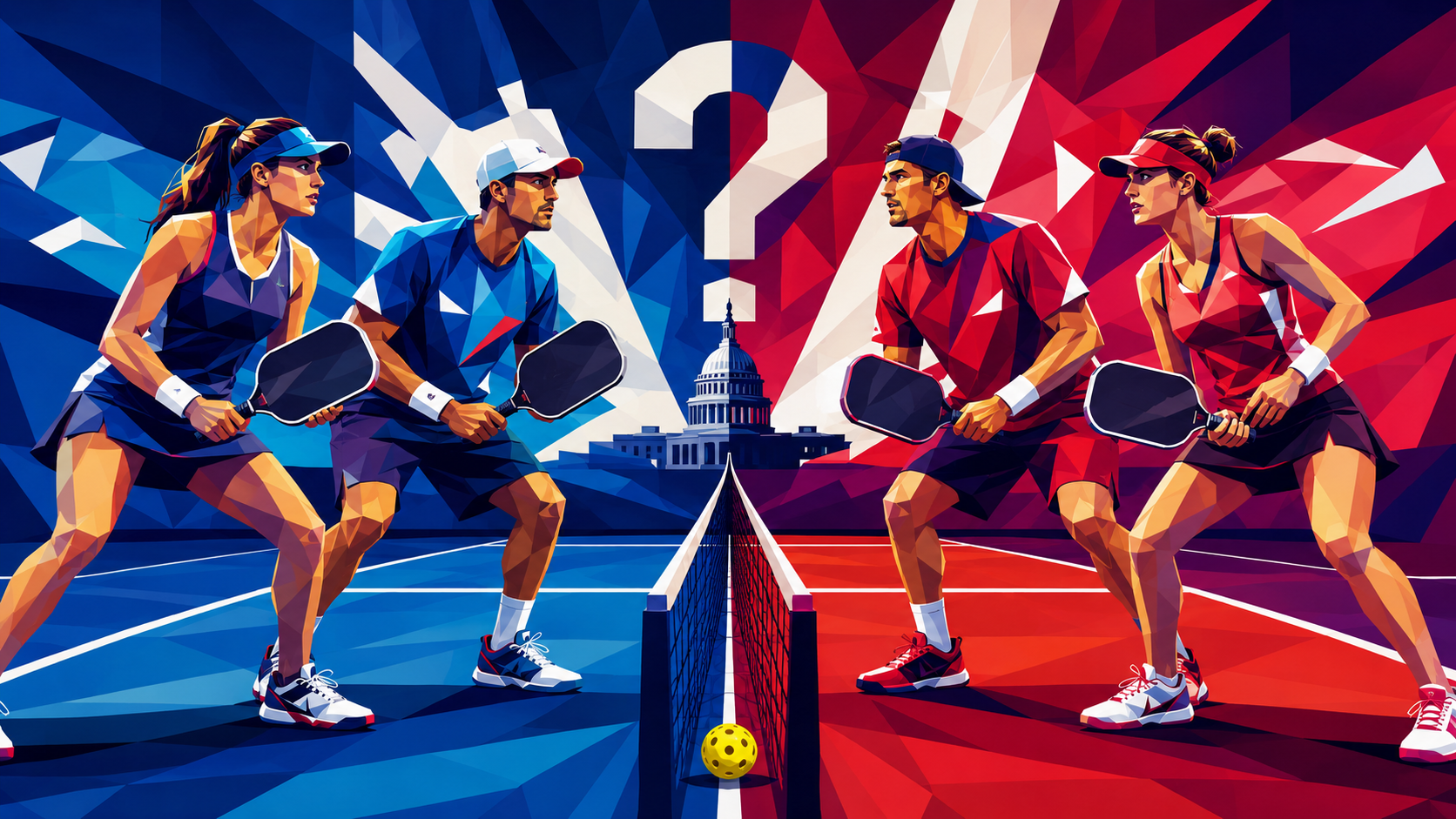
One American team has a World Cup to enter. Another has the reach of the professional tour system. Neither has explained why it should control the national identity across pickleball.
Key Takeaways
- The Pickleball World Cup is recruiting United States players through a combine process for five age-group teams at its 2026 event.
- A separate USA National Pickleball Team project linked to the professional game has promised details on partnerships, event participation and player qualification, but has not yet supplied them publicly.
- USA Pickleball calls itself the national governing body in the United States, yet no universally accepted international structure currently settles which organisation may select Team USA for every competition.
American pickleball has found more than one way to create Team USA without first agreeing who has the authority to choose it.
The Pickleball World Cup is assembling United States teams for its own international competition. On 10 July, the event promoted combine try-outs for five American squads spanning junior, open and senior age groups.
A separate USA National Pickleball Team project has emerged from the orbit of the United Pickleball Association, the professional system behind the PPA Tour and Major League Pickleball. Its public description promises later announcements on partnerships, event participation and how players will qualify.
Both projects use the language and imagery of national representation.
Only one has so far named the competition for which it is selecting players. Neither has established an exclusive right to represent the United States throughout the sport.
The overlap has already become an industry joke. In a discussion devoted to the dispute, Zane Navratil and Nico Montoya compared the competing claims with the “Dirty Dan” argument from SpongeBob SquarePants.
It is an easy situation to mock. The serious question beneath it is harder.
What does Team USA mean when pickleball has no universally accepted international authority capable of deciding who may select it?
For now, the answer depends upon the competition.
One Team Has A Defined Destination
The Pickleball World Cup operation has the clearer immediate purpose.
It is recruiting players to represent the United States at a named event. Its combine material sets out five teams, creating a selection route rather than presenting a permanent national roster assembled without explanation.
That makes the successful players the United States representatives for the Pickleball World Cup.
It does not automatically make the organisation behind them the permanent selector of an American team for every international event.
Pickleball’s international calendar is divided among events and federations that do not sit beneath one accepted global hierarchy. A promoter can invite national delegations without acquiring authority over every future use of the country’s name.
The professional project begins from the opposite position.
The UPA system has contractual access to many of the world’s best American players through the PPA Tour and Major League Pickleball. Any representative team drawn from those circuits could possess greater elite depth and public recognition than a rival squad.
Yet its competitive purpose remains undefined. As of 21 July, the team’s public account says announcements about event participation and qualification are still to come.
That leaves a national identity in place before the public has been told where the team will play, who will select it or how selection can be earned.
Professional reach can make the project influential. It cannot answer those questions by itself.
The Governing Body Outside The Argument
The most revealing absence is USA Pickleball.
The non-profit organisation describes itself as the national governing body for pickleball in the United States. It maintains its official rulebook, sanctions tournaments, oversees equipment standards and stages the USA Pickleball National Championships.
Its domestic position has been challenged by UPA of America, which the professional tour group launched in 2024 with its own rules, certification work and equipment testing.
National-team identity now exposes another part of that division. The organisation with the longest-established domestic governance claim is not selecting either team.
Even USA Pickleball’s stated status does not settle the international question. Pickleball is not an Olympic sport, and the International Olympic Committee has not recognised one worldwide pickleball federation with authority over every national member.
The result is an unfinished chain of recognition.
The World Cup can select or accept an American delegation for its competition. The UPA system can assemble leading professionals for events within its sphere. USA Pickleball can point to its domestic governing work. Each position carries weight, but none currently resolves the whole issue.
Rosters, audiences and logos may determine which team receives more attention. They do not establish who owns the national identity.
“Official” Must Come With An Explanation
The difficult word is “official”.
Used precisely, it can mean the recognised team for a particular event. Used loosely, it allows an organisation to imply authority that it has not demonstrated.
Every national-team announcement should therefore identify the selecting body, the competition, the eligibility rules and the route into the squad.
The World Cup team can already answer the competition question and has shown a combine route. Its claim should remain attached to that event unless a broader mandate is established.
The professional project can point to the UPA’s elite playing pool. It must still explain whether players will qualify through rankings, receive invitations or be chosen by a committee, and which events the team intends to contest.
Until then, it is a national-team project with considerable professional backing, rather than a proven national authority.
Clear descriptions would not solve the wider governance dispute. They would stop the word “official” from doing more work than the evidence allows.
Players Carry The Confusion
For players, the divided structure creates uncertainty rather than a simple choice between two shirts.
No common eligibility code currently establishes that representing the United States at the Pickleball World Cup prevents someone from later appearing for a UPA-backed American team. These are not national sides operating within a FIFA-style system of binding international rules.
That freedom may create opportunities, but it can also weaken the shared meaning of selection.
A place on a national team normally tells the public that an athlete has earned the right to represent the country within an accepted competitive structure. If several organisers can grant that status independently, the honour begins to depend upon the event and the selecting organisation.
The shirt still says USA. What it signifies can change from one competition to another.
The uncertainty will become more serious if contractual restrictions emerge or rival events demand exclusive commitments. There is no public basis for saying that has happened here.
This Is A Symptom, Not An Olympic Crisis
The confusion does not help pickleball present itself as a coherent international sport. It would still be an overstatement to say two American team projects have damaged an Olympic bid.
Pickleball is not on the programme for the 2028 Los Angeles Games. Any route towards later inclusion depends upon international participation, governance standards, anti-doping compliance and IOC recognition, not simply the identity of one American team.
The Team USA overlap is better understood as a symptom of the sport’s unfinished structure.
Commercial tours are expanding internationally, rival federations are recruiting members and domestic bodies maintain separate standards. More than one organisation may therefore have enough power to create something resembling a national team.
That does not make every claim equally strong. It makes accuracy essential.
Name The Competition, Then Name The Team
The immediate remedy is straightforward.
The World Cup operation should be described as the United States team for the 2026 Pickleball World Cup.
The professional project should identify the events its USA National Pickleball Team will enter, the organisation responsible for selection and the limits of its claim.
USA Pickleball should explain whether it intends to select representative sides and how those teams would relate to its stated domestic governing role.
Those answers would not unify international pickleball. They would allow players and supporters to understand what each team is for.
The sport does not yet have two American teams fighting for one Olympic place or entry into the same universally recognised world championship. It has separate projects using the same national identity inside separate systems.
That distinction prevents the story becoming a constitutional crisis.
It does not make the confusion acceptable.
A flag, a roster and the word “official” can create the appearance of national authority. They cannot supply the missing chain of recognition behind it.
American pickleball has enough Team USAs.
What it still lacks is an agreed answer to who gets to choose one.
Further Reading
- Latest pickleball news from around the world
- Tournament coverage and results
- PPA Tour coverage and analysis
- Major League Pickleball coverage

Chris Beaumont
Founder and Editor-in-ChiefChris Beaumont is the founder and Editor-in-Chief of World Pickleball Magazine. Chris follows the global game closely, reporting on the latest news, developments, stories and tournaments from all five continents. He also hosts the World Pickleball Podcast, interviewing people at…
View All Articles →