Most pickleball development stories focus on tournaments, facilities or participation numbers. In rural Maharashtra, a different experiment is unfolding. At the Mauli School, deaf and differently-abled students have moved from makeshift courts and wooden paddles to the same global rating system used by the sport’s top players.
- Five students from the Mauli School have become part of a pioneering pickleball programme for deaf and differently-abled athletes.
- The players have progressed from adapted coaching sessions to registration on the global DUPR rating system.
- The initiative offers a glimpse of how pickleball can create sporting opportunities in communities often overlooked by traditional development pathways.
The most important pickleball ratings in India may not belong to professional players.
They may belong to five schoolchildren in rural Maharashtra.
That is not because those children are about to become national champions. It is because their presence on the sport’s global rating system represents something larger than a result, a medal or a tournament victory.
From a School Campus to a Sporting Pathway
For years, the Mauli School in Sindhudurg has focused on creating opportunities for deaf and differently-abled children from rural communities. Founded by Rekha Gaikwad more than three decades ago, the residential school was built to provide education and support for students who often had limited access to specialist services.
The school’s mission has always stretched beyond the classroom.
The challenge was helping students build confidence, independence and a sense of possibility beyond formal education.
That search eventually led to pickleball.
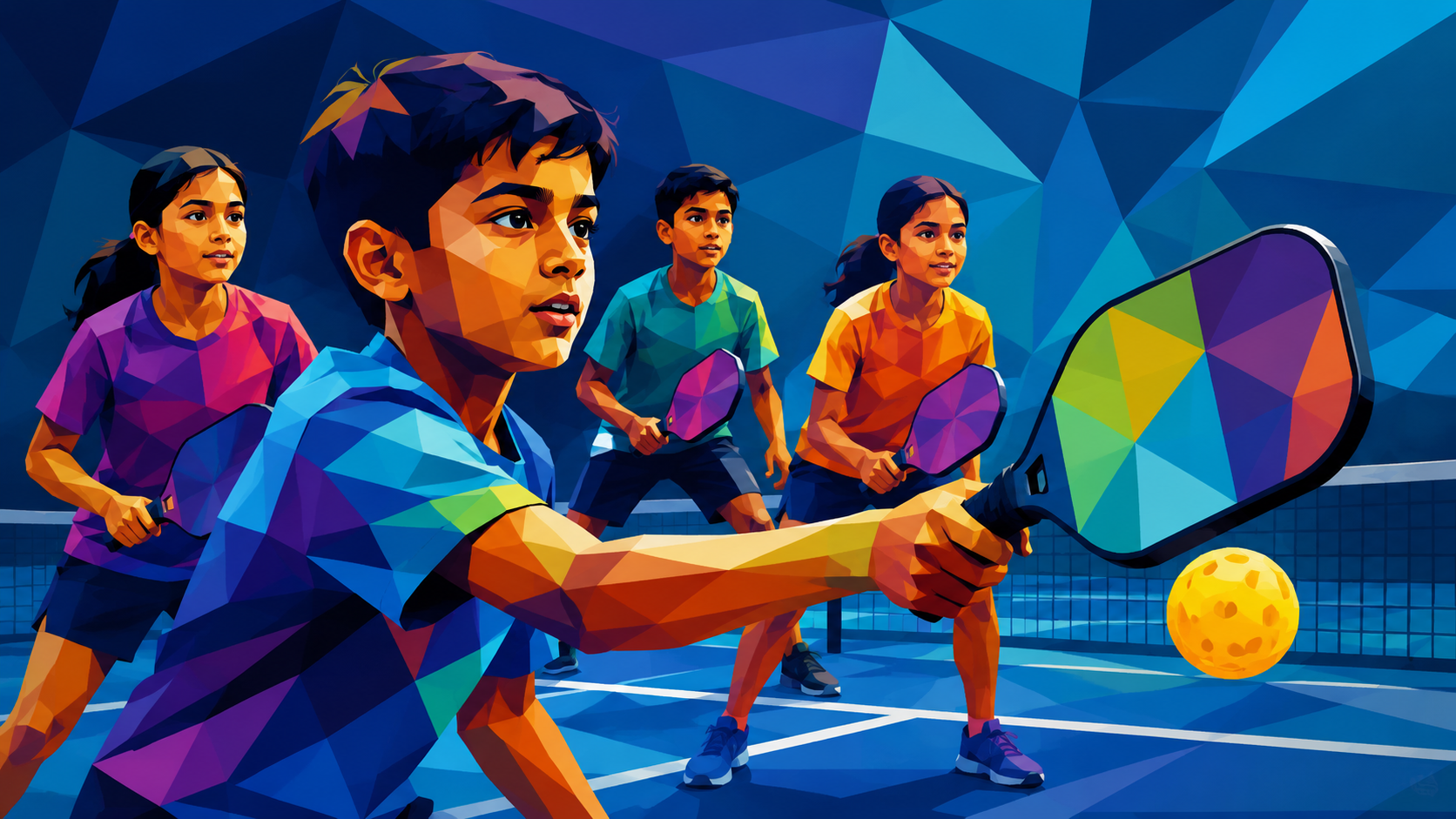
Working alongside AIPA-certified coach Vaidehi Gupte, the school introduced the sport in April 2025. Early sessions were modest. Students learned on makeshift courts using wooden paddles, with coaching adapted specifically for deaf and differently-abled athletes.
The first objective was participation.
The second was belief.
For players learning through visual communication, demonstration became just as important as instruction. Progress relied on observation, repetition and shared experience.
What began as an introduction to a new sport gradually became something much more structured.
From Participation to Recognition
After several months of training, five students were selected for a wider exposure programme that took them beyond the school environment and into India’s growing pickleball ecosystem.
They trained alongside hearing players, played practice matches and experienced a more competitive setting.
Most significantly, they were registered on DUPR, the global rating system used by amateur and professional players worldwide.
On paper, that may seem like a small administrative step.
In reality, it represents a meaningful shift.
The students are no longer participating solely within a school programme. They have entered the same competitive framework used by players across India and around the world.
That does not remove every barrier facing disabled athletes.
But it does provide something that has historically been difficult to access.
Visibility.
The players are now part of the wider sporting structure rather than existing on its margins.
Why Pickleball Fits Projects Like This
Much of pickleball’s public conversation revolves around professional tours, investment, facilities and rankings.
Those stories matter.
Yet initiatives like the one at Mauli School help explain another reason the sport continues to spread so quickly.
Pickleball asks relatively little of a new participant. Courts can be adapted from existing spaces. Equipment remains comparatively affordable. New players can sustain rallies quickly and experience success early in their journey.
Those characteristics make the game accessible in ways many established racket sports struggle to match.
That accessibility is increasingly being tested far away from the professional spotlight.
Across the world, pickleball is appearing in schools, rehabilitation programmes and community initiatives. Similar themes emerged recently in our coverage of India’s evolving player pathway, where access and opportunity continue to shape the sport’s development.
At Mauli School, participation and competition are beginning to overlap.
The students are not being treated as a separate category. They are being introduced to the same structures and standards available to everyone else.
A Different Measure of Success
There will be bigger pickleball stories this year.
There will be larger prize purses, new facilities and headline-grabbing tournaments. Readers can find those developments across our latest global pickleball coverage and wider regional reporting.
Yet few stories better capture the sport’s potential than five students from a rural school taking their first steps onto a global ladder.
Because while ratings are designed to measure performance, these particular ratings represent something else entirely.
Opportunity.
Further Reading
- Latest pickleball news from around the world
- Tournament coverage and results
- Rankings and player profiles
- Regional pickleball coverage

Chris Beaumont
Founder and Editor-in-ChiefChris Beaumont is the founder and Editor-in-Chief of World Pickleball Magazine. Chris follows the global game closely, reporting on the latest news, developments, stories and tournaments from all five continents. He also hosts the World Pickleball Podcast, interviewing people at…
View All Articles →