For six days in Cary, the draw kept finding ways to misbehave.
Ben Johns disappeared from singles early. Catherine Parenteau was gone before the weekend. Anna Leigh Waters and Johns, the partnership that has made mixed doubles feel close to predetermined for much of the professional game’s recent history, were beaten by JW and Jorja Johnson in Saturday’s semi-final.
By Sunday morning, the Veolia Pickleball National Championships had become a tournament of disruption.
Then Championship Sunday arrived.
Waters won twice. Anna Bright won twice. Ben Johns and Gabriel Tardio remained unbeaten together.
And Hunter Johnson, perhaps the player who best represented everything that had made Cary unpredictable, lost the opening game of the men’s singles final before finishing the tournament by handing Federico Staksrud an 11-0.
Order returned.
Just not quite in the form it had arrived.
Key takeaways
- Anna Leigh Waters won women’s doubles and women’s singles to reach 196 career PPA titles, four short of 200.
- Anna Bright also left Cary with two golds, partnering Waters in women’s doubles and Hayden Patriquin in mixed.
- Ben Johns and Gabriel Tardio defeated Christian Alshon and Andrei Daescu to extend their unbeaten 2026 partnership to 54-0.
- Hunter Johnson came from behind to beat Federico Staksrud 7-11, 11-3, 11-0 for his ninth career singles title.
- Cary also provided evidence that tactical habits developed during Major League Pickleball are carrying back into PPA competition.
Waters loses one crown and leaves with two
Anna Leigh Waters came to Cary chasing history. She left four titles away from it.
Her women’s doubles victory alongside Bright was career title No. 195. Her singles victory over Kate Fahey was No. 196.
Two hundred is now close enough that every tournament carries the possibility of becoming the one.
But the numbers alone undersell what Waters did in North Carolina.
She and Bright spent most of the women’s doubles draw dismantling it. Across their first three matches, they outscored their opponents 66-7.
Tyra Black and Jorja Johnson presented a more interesting final because they had beaten Waters and Bright before.
They lasted three games.
11-5. 11-6. 11-3.
Waters and Bright collected their 24th title together.
Then came singles.
Fahey at least found a way to make Waters uncomfortable. After losing the first game 11-1, she stayed with her through the second and pushed the score to 11-9.
That qualified as resistance during a week when Waters had been almost absurdly dominant.
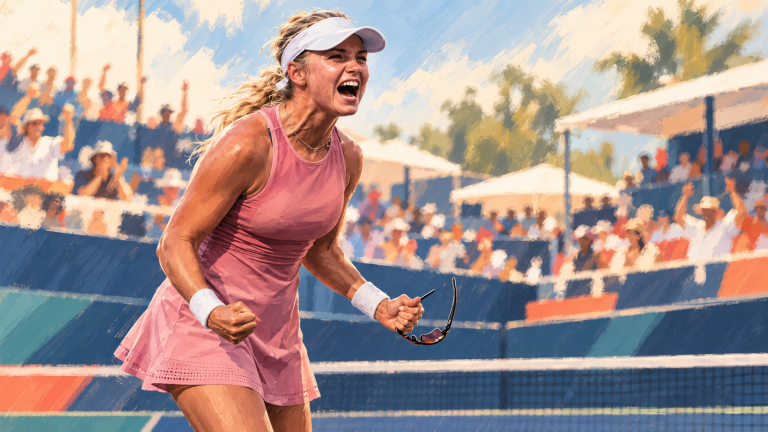
Across her first six singles games in Cary, Waters recorded four 11-0 scores. She then beat Kaitlyn Christian 11-5, 11-1 in Saturday’s semi-final.
Fahey stopped another pickle.
She could not stop another title.
Waters has not lost a professional singles match since May 30, 2024. Her unbeaten run has passed 830 days, and Cary delivered singles title No. 64.
The Triple Crown had disappeared when JW and Jorja Johnson beat Waters and Johns in Saturday night’s mixed doubles semi-final.
Waters responded by taking everything still available to her.
The Johnsons changed the tournament. Bright and Patriquin finished it
Anna Bright’s second gold came with Hayden Patriquin.
That one carried different baggage.
A week earlier, Bright and Patriquin had been part of the St. Louis Shock side beaten in the Major League Pickleball final in New York. Bright described that loss afterwards as painful. Patriquin said it had lit a fire under him.
Cary provided the response.
But the more interesting story was waiting across the net.
JW and Jorja Johnson had just produced the result of the tournament. After losing the first game 11-4 to Johns and Waters in Saturday’s semi-final, they won the next two 11-9, 11-6.
It was the first defeat for Johns and Waters since Anna Bright and Hayden Patriquin swept them at the Carvana Mesa Cup in February.
More important than the result itself was the way JW played.
His mixed doubles has been changing.
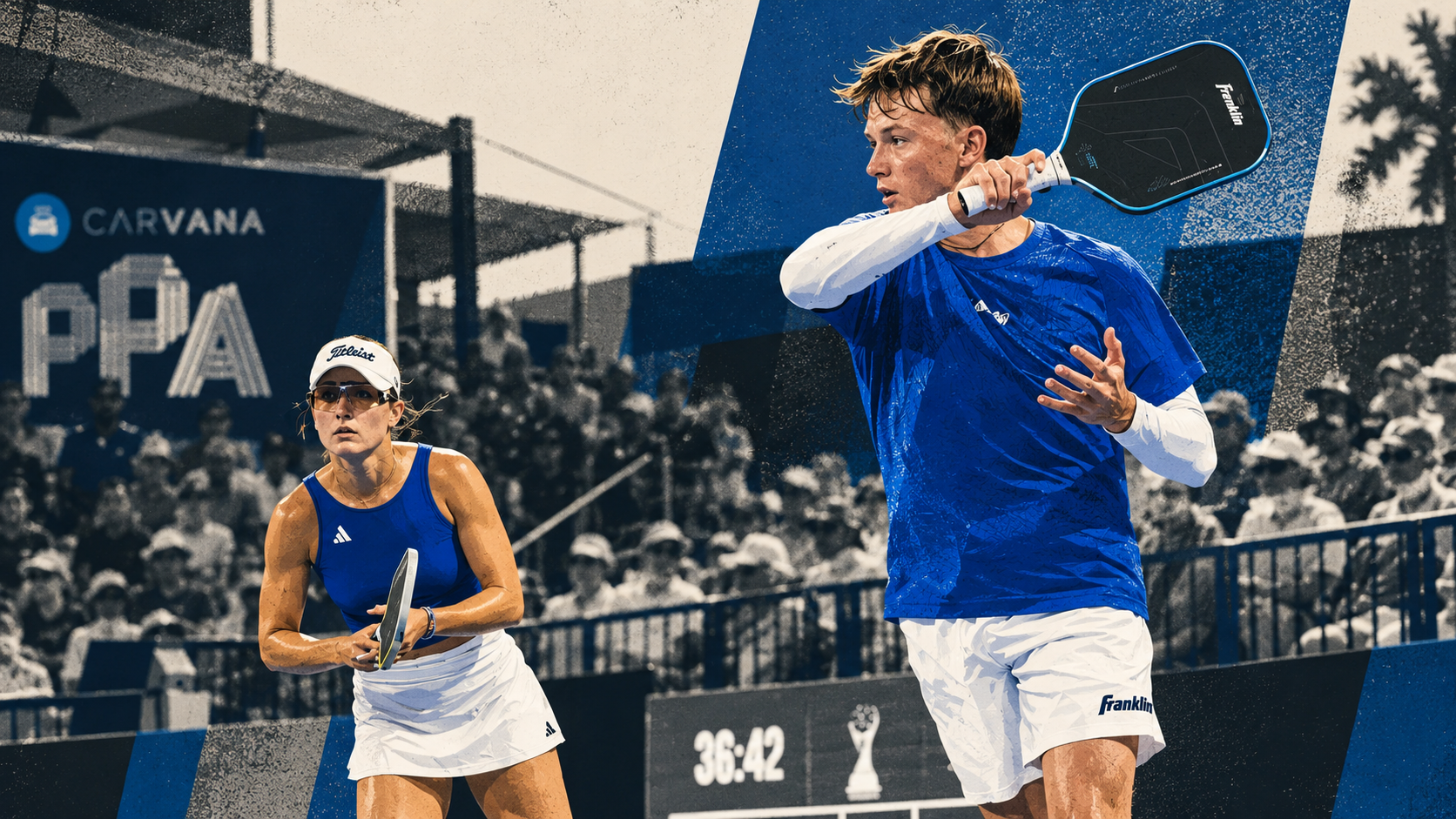
During the MLP season with the Dallas Flash, Johnson spent months being asked to occupy more court. Instead of operating within the more balanced geometry traditionally seen alongside Jorja, he increasingly took responsibility through the middle and into his partner’s side, looking to turn his forehand into the dominant attacking shot.
Those habits followed him back to the PPA Tour.
Against Johns and Waters, JW was not simply waiting for opportunities to arrive. He was actively trying to manufacture them, stretching his coverage and reducing the space available to Waters.
That does not mean MLP suddenly solved the most difficult partnership in professional pickleball.
It does mean Johnson returned from the team season with another version of himself.
Sunday offered the next test.
Bright and Patriquin took the opening game 11-9.
Then they pulled away.
11-3.
11-7.
The Johnsons had opened the tournament up. They could not close it.
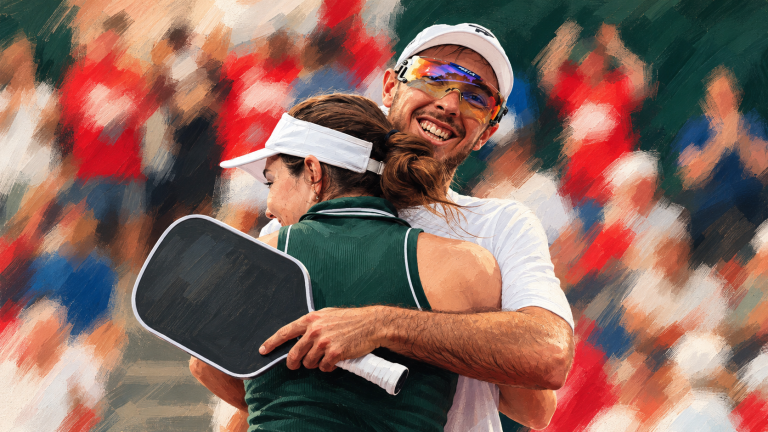
For Bright and Patriquin, it was their second title together. For Bright, it completed a two-gold Sunday after her women’s doubles victory with Waters.
It also added another piece of evidence to a mixed doubles hierarchy that is becoming more interesting.
Bright and Patriquin were responsible for the previous Waters-Johns defeat, sweeping them 11-8, 11-9, 11-3 in Mesa in February.
The Johnsons did it in Cary.
Johns and Waters remain the benchmark.
But beating them no longer requires imagining a result nobody has seen before.
There is now a small group that knows exactly what it feels like.
Johns and Tardio keep finding the answer
Men’s doubles remains different.
There, the ending is stubbornly familiar.
Ben Johns and Gabriel Tardio arrived in Cary unbeaten together in 2026.
They left 54-0.
That number makes the week sound easier than it was.
Will Howells and CJ Klinger took a game from them in the quarter-finals, a match we examined in our Cary semi-final preview. Federico Staksrud and Hayden Patriquin then pushed the opening game of Saturday’s semi-final to 15-13.
Christian Alshon and Andrei Daescu took Sunday’s final into a fourth.
Johns and Tardio kept solving whatever appeared.
They beat Alshon and Daescu 11-8, 11-8, 5-11, 11-5 for the title.
There was some tactical intrigue on the other side.
Alshon and Daescu had reunited for the first time since 2025, when they established themselves as one of the most productive men’s doubles partnerships on tour. In Cary, they reversed their familiar arrangement, with Alshon playing the left and Daescu the right.
It was good enough to reach Sunday.
It was not good enough to end the streak.
That distinction matters.
An unbeaten record in doubles is not merely a record of how often two players dominate when everything is comfortable. Over enough matches, bad games arrive. Opponents find patterns. Someone takes a game. Conditions change.
Eventually a partnership has to win while being inconvenienced.
Cary gave Johns and Tardio several versions of that problem.
Every time, the answer arrived before the defeat did.
Fifty-four matches into 2026, nobody has found a question they cannot solve.
Hunter Johnson puts himself back into the argument
Hunter Johnson’s Sunday was something else.
If Waters’ tournament was about sustained dominance and Johns-Tardio about sustained perfection, Johnson’s was about re-entry.
He already owned eight professional singles titles. This was not a breakthrough by an unknown player.
But his eighth had come in March.
Meanwhile, men’s singles kept moving.
Chris Haworth entered Cary as the top seed. Federico Staksrud remained one of the division’s reference points. The field around them has become deep enough that seedings increasingly describe the draw rather than predict it.
Johnson was seeded third.
On Saturday, he beat Haworth 11-9, 11-1.
Staksrud waited in the final.
Johnson lost the opening game 11-7.
Then something changed.
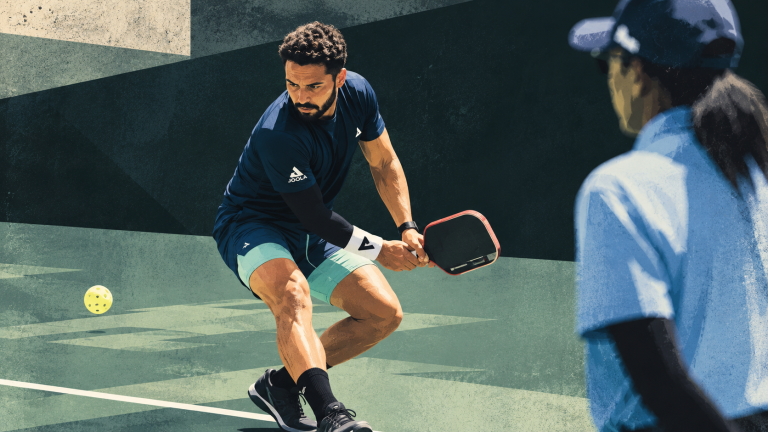
He stopped getting trapped behind the baseline. He began driving through the ball rather than allowing Staksrud to dictate the depth of the exchange. The points shortened. The court seemed to tilt.
Johnson won the second 11-3.
Then came the deciding game.
11-0.
Against Federico Staksrud.
In a PPA Major final.
Consider Johnson’s final three games in Cary.
11-1 against the tournament’s No. 1 seed.
11-3 against the No. 2.
11-0 against the No. 2.
Four points conceded.
Johnson’s ninth career singles title was his first since March and reinforced his place among the leading men’s singles players on the PPA Tour.
What happened on Sunday feels more important than the historical number.
Men’s singles currently has no equivalent of Waters. There is no player who walks into every tournament and reduces the draw to the identity of the runner-up.
Haworth can win it.
Staksrud can win it.
Others can win it.
Cary was Johnson’s reminder that he belongs inside that conversation too.
What came back from MLP
Cary was the opening event of the new 2026-27 PPA Tour season after the summer’s concentrated Major League Pickleball schedule.
It looked like it.
Not because PPA suddenly became MLP.
Because players returned carrying things they had learned elsewhere.
JW Johnson had spent months being asked to occupy more court in mixed doubles and brought that aggression back alongside his sister.
Bright and Patriquin arrived one week after the disappointment of losing the MLP championship and responded by winning together.
Players returned to familiar partnerships carrying habits developed with different teammates, different tactical responsibilities and under a different competitive structure.
That crossover is worth watching.
The relationship between PPA and MLP is often discussed through contracts, schedules, ownership and the architecture of the professional game.
The more interesting relationship may eventually be visible on court.
Team competition forces players into combinations they would not necessarily choose for themselves. It asks established players to solve different problems. It exposes them to different partners and demands.
Then they return to tour play.
JW Johnson’s Cary week offered one example of what can come back with them.
The hierarchy survived. The routes changed.
The easiest way to summarise Championship Sunday would be to list the champions.
Anna Leigh Waters.
Waters and Bright.
Bright and Patriquin.
Johns and Tardio.
Hunter Johnson.
Most are familiar names.
That is precisely why Cary was interesting.
This was a PPA Major worth 2,000 ranking points. The leading players were there. The stakes were substantial.
And the draw still moved.
We had already seen the warning signs when John Lucian Goins removed Johns and Sofia Sewing began breaking the women’s draw. By the quarter-finals, Cary’s outsiders had become genuine contenders.
The Johnsons beating Johns and Waters was not an exhibition curiosity. Hunter Johnson’s title was not created by a depleted field. Bright and Patriquin did not collect gold because the leading mixed partnership skipped the week.
They were all in North Carolina.
Some of them lost anyway.
By Sunday evening, much of the established order had reappeared.
Waters had two trophies.
Bright had two.
Johns and Tardio were still unbeaten.
But none of that restored the tournament to where it had begun.
Waters lost one crown and won two.
The Johnsons produced the upset of the week and left without gold.
Hunter Johnson finished a Major by handing Staksrud an 11-0.
Johns lost early in singles and then completed another unbeaten doubles tournament with Tardio.
Cary spent six days breaking the script.
On Sunday, the champions took it back.
They just could not put it back together exactly as it was.
Further reading
- The Johnsons Break Cary’s Script Again Before PPA Finals
- Waters Stays on Triple-Crown Course as Cary’s Semi-Finals Arrive
- Cary’s Outsiders Broke the Draw. Now the Contenders Have to Collide
- Cary Has Already Broken the Draw: What Matters Before the PPA Round of 16

Chris Beaumont
Founder and Editor-in-ChiefChris Beaumont is the founder and Editor-in-Chief of World Pickleball Magazine. Chris follows the global game closely, reporting on the latest news, developments, stories and tournaments from all five continents. He also hosts the World Pickleball Podcast, interviewing people at…
View All Articles →