
May 2026 will be remembered as one of the most significant months of the PPA season. As the 2025-26 campaign reached its conclusion, the Veolia Atlanta Pickleball Championships and the Toys “R” Us PPA Finals delivered a fitting finale: dominant champions, emerging stars, tactical innovation, and major developments that continue to reshape the professional game.
Waters and Johns Remain the Standard
At the top of the sport, Anna Leigh Waters and Ben Johns continued to remind everyone why they remain the benchmark.
In Atlanta, Waters secured her 44th career Triple Crown, overcoming a stern challenge from Kate Fahey in the women’s singles final before adding women’s doubles and mixed doubles gold. Her partnership with Anna Bright remained untouchable, with the pair claiming the women’s doubles title without dropping a game.
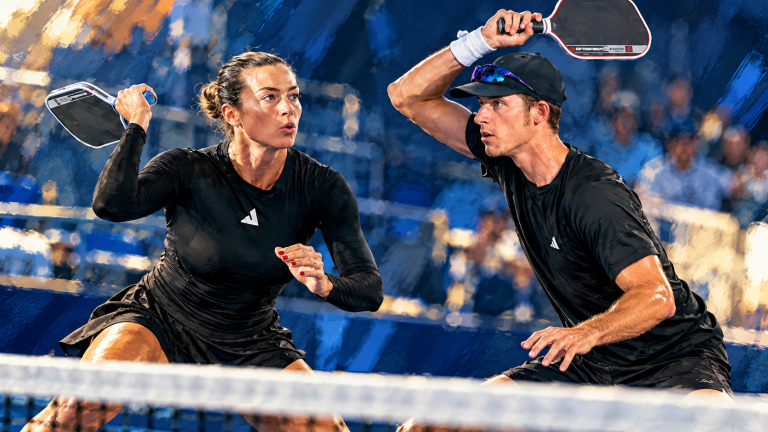
Waters carried that momentum into the PPA Finals, although a lingering knee injury eventually forced her withdrawal from women’s singles competition. Even so, she and Johns still captured the mixed doubles title, surviving a major semifinal scare against Bright and Hayden Patriquin before defeating Rachel Rohrabacher and Christian Alshon in the final.
On the men’s side, Johns and Gabe Tardio completed one of the most remarkable seasons in recent memory. The pair remained undefeated throughout their entire 2026 campaign, carrying their perfect record through both Atlanta and the PPA Finals.
Their dominance has become so routine that it risks being taken for granted. It should not be.
If you're following how the global game is shifting week by week, the World Pickleball Report breaks this down every day in our morning briefing.
Haworth Secures the Number One Spot
While Johns remains the dominant doubles player, Chris Haworth ended May as the clear number one in men’s singles.
The division has been fiercely competitive throughout the season, with Haworth, Federico Staksrud and Hunter Johnson regularly exchanging positions near the summit.
Haworth settled the debate by winning back-to-back titles.
He first captured gold in Atlanta, ending the remarkable run of teenage sensation Tama Shimabukuro, before adding the PPA Finals title with victory over John Lucian Goins.
Yet Haworth’s month also highlighted the increasingly sophisticated tactical battles occurring at the highest level.
At the PPA Finals he suffered a surprise loss to Connor Garnett, who employed a disciplined strategy designed specifically to neutralise Haworth’s preferred patterns. Rather than attempting spectacular winners, Garnett patiently controlled the rallies and forced Haworth into uncomfortable positions.
It was a reminder that elite pickleball is becoming increasingly nuanced, with tactical preparation often proving as important as athletic ability.
The Sport’s Next Generation Has Arrived
If May celebrated today’s champions, it also offered a glimpse of tomorrow.
No player generated more excitement than 15-year-old Tama Shimabukuro.
Entering the Atlanta singles draw as the No. 22 seed, Shimabukuro defeated multiple top players, including Federico Staksrud and Hunter Johnson, to reach the final and claim a silver medal.
More impressive than the results was the manner in which he achieved them. Observers noted significant improvements in his shot selection, adaptability, and use of the one-handed backhand volley, suggesting a player developing at remarkable speed.
Shimabukuro’s success extended into doubles, where he partnered with Yuta Funemizu, one of the most fascinating crossover athletes in professional pickleball.
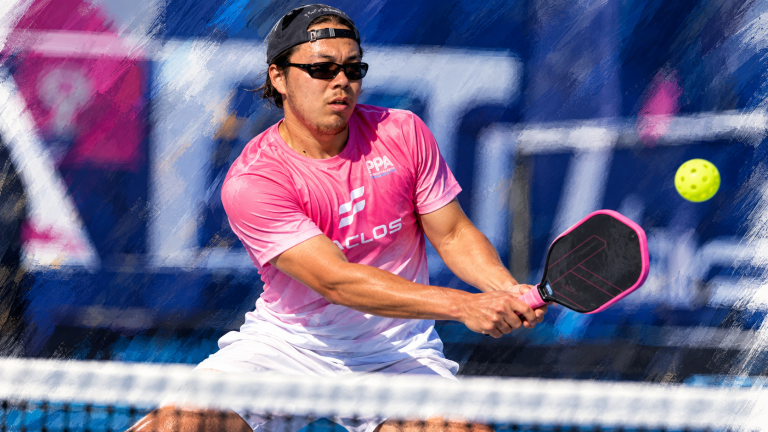
A former world-class soft tennis player, Funemizu has brought an unconventional style to pickleball, including the use of distinctive tomahawk volleys that regularly catch opponents off guard. Their strong Atlanta performance confirmed both players as names to watch moving forward.
Several others also strengthened their credentials for future breakthrough seasons, including Kiora Kunimoto, Rafa Lenhard and Nico Acevedo, all of whom impressed during the concurrent PPA 500 event in San Clemente.
Fahey Takes Her Opportunity
The withdrawal of Waters from singles competition at the PPA Finals created a rare opening in the women’s field.
Kate Fahey seized it.
Already established as one of the sport’s elite players, Fahey captured the season-ending title by defeating Brooke Buckner in the final. The victory secured her fourth singles gold medal of the season and reinforced her position as the world’s clear No. 2 player.
Her performance was particularly impressive given the consistency she has shown throughout the year. While Waters continues to dominate headlines, Fahey has quietly built one of the strongest seasons on tour.
A More Professional Sport
The action on court was matched by significant developments away from it.
During May, the United Pickleball Association of America (UPA-A) introduced its first standalone 71-page rulebook, representing another important step in the sport’s professionalisation.
The new framework formalises competition procedures, disciplinary standards, officiating protocols, and video review processes across the PPA Tour and Major League Pickleball.
The significance lies less in any individual rule and more in what the document represents: a sport increasingly focused on creating stable structures capable of supporting long-term growth.
Looking Beyond North America
May also delivered another landmark moment for pickleball’s international ambitions.
The PPA announced the launch of PPA Spain, with the inaugural season beginning in September 2026 and featuring seven events across the country.
The move further expands the tour’s global footprint and provides European players with a clearer pathway into the international rankings system.
It is another sign that professional pickleball is no longer solely a North American story.
The Season Ends, the Future Begins
As the 2025-26 season closes, the broad outlines of professional pickleball are becoming clearer.
The sport still belongs to stars such as Anna Leigh Waters, Ben Johns and Chris Haworth. Their consistency remains extraordinary.
But the challengers are coming.
Teenagers like Tama Shimabukuro are already proving they can compete with the sport’s established names. Tactical innovation continues to evolve at a rapid pace. International tours are expanding. Governance structures are becoming more sophisticated.
The champions remain on top.
The difference is that the gap beneath them is getting smaller every month.
Further Reading
- Latest pickleball news from around the world
- Tournament coverage and results
- Rankings and player profiles
- Regional pickleball coverage
Did you enjoy this June magazine article? You can download the whole issue to read at your own leisure here.

Chris Beaumont
Founder and Editor-in-ChiefChris Beaumont is the founder and Editor-in-Chief of World Pickleball Magazine. Chris follows the global game closely, reporting on the latest news, developments, stories and tournaments from all five continents. He also hosts the World Pickleball Podcast, interviewing people at…
View All Articles →