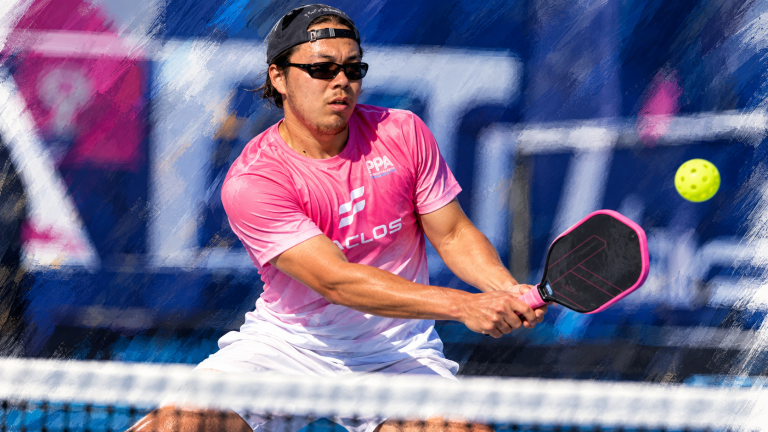

Anna Leigh Waters, Ben Johns and the world’s leading professionals are heading to the PPA Tour Asia Hong Kong Slam. With the seedings now announced, attention turns to Christopher Haworth, Kaitlyn Christian and the regional contenders trying to challenge the established hierarchy. For Hong Kong’s Hong Kit Wong, Chinese Taipei’s Chao Yi Wang and Australia’s Sahra Dennehy, the tournament offers something more significant than another appearance on an international stage.
Key Takeaways
- The Hang Seng Bank Hong Kong Slam takes place at Kai Tak Arena from 19–25 October, with 1,500 ranking points available to champions.
- Christopher Haworth and Kaitlyn Christian are listed as the leading men’s and women’s singles seeds in the tournament’s announced seedings.
- Anna Leigh Waters and Ben Johns headline a powerful doubles field, including their mixed partnership and their respective combinations with Anna Bright and Gabriel Tardio.
- Hong Kit Wong, Chao Yi Wang and Sahra Dennehy have recent results that make them important players to follow, rather than simply representatives of a developing region.
- The tournament provides another test of whether Asia’s emerging professional circuit is producing the competitive depth needed to challenge established international players.
The names at the top of the Hong Kong Slam seedings will be familiar to anyone following professional pickleball. Anna Leigh Waters, Ben Johns and several of their most successful doubles partners are preparing for another major tournament, this time at Kai Tak Arena, where the strongest international field assembled by PPA Tour Asia will compete from 19 October.
Yet the more revealing names may appear further down the list.
Hong Kit Wong has already established himself as one of the most consistent singles competitors on the Asian circuit. Chao Yi Wang has competed successfully in both regional and American tournaments, while Sahra Dennehy has developed into a serious contender across multiple disciplines. Their presence creates a different kind of interest from the familiar question of whether the established stars will add more titles to their records.
For those players, Hong Kong represents an opportunity to demonstrate that their regional success can translate into sustained competition against the world’s leading professionals.
That is what makes the seedings significant. They provide a starting point for examining the competitive distance between the established international hierarchy and the players attempting to join it.
Haworth and Christian Set the Singles Standard
Christopher Haworth heads the announced men’s singles seedings, while Kaitlyn Christian occupies the leading position in the women’s competition. Both enter with expectations that reflect their experience of competing at the highest level, although the challenges awaiting them are different.
Singles remains one of pickleball’s most physically demanding disciplines. Players must cover the entire court, control the depth of their returns and manage the balance between attacking opportunities and positional discipline. Against opponents capable of repeatedly placing the ball into difficult areas, a small reduction in movement or concentration can quickly change the direction of a match.
For Haworth, the top seeding establishes him as the player the rest of the men’s field must attempt to dislodge. The most interesting challengers, however, are not necessarily those carrying the highest international profiles.
Hong Kit Wong has already demonstrated that he belongs in serious discussions about the strength of Asian singles competition. The Hong Kong player finished 2025 as the leading men’s singles player in the PPA Tour Asia rankings, having collected medals across five of seven events.
That consistency matters. A single tournament breakthrough can attract attention, but repeatedly reaching the latter stages of professional competition provides stronger evidence of a player’s underlying level.
Wong has also experienced the frustration of coming close against opponents capable of producing decisive performances when the pressure increases. At the Macao Open, he lost the men’s singles final to 15-year-old Tama Shimabukuro 11-9, 11-9. Their subsequent meeting in the Kuala Lumpur Cup semi-finals also went Shimabukuro’s way, 11-7, 11-8.
Those results reveal something more useful than a straightforward account of regional success. Wong has been competitive against one of the circuit’s most promising young players, but he has also encountered the difficulty of turning competitive matches into victories.
Hong Kong offers another opportunity to address that challenge, this time in front of a home audience and against a particularly strong international field.
His progress should be measured through the quality of his performances as well as the round he eventually reaches.
Chao Yi Wang and Sahra Dennehy Give the Women’s Draw Genuine Depth
The women’s singles competition may provide an even more interesting examination of the regional game.
Christian arrives with considerable experience and an established record in professional singles. She won the women’s singles title at Cape Coral earlier this season and has remained competitive across major American events while also appearing regularly in Asia.
Her ability to operate across those different environments gives her an advantage that cannot be measured through seeding alone. She understands the tactical adjustments required against different opponents and has experience managing the physical demands of consecutive tournament weeks.
Chao Yi Wang, however, is considerably more than a developing player hoping to benefit from exposure to the international field.
The Chinese Taipei competitor has already established herself within the wider professional game. She entered the Kuala Lumpur Cup with a world ranking of No. 11, according to PPA Tour Asia, and has appeared in significant American draws as well as regional competitions.
At the Arizona Open in September, Wang was seeded sixth in women’s singles and also competed in women’s doubles alongside Milan Rane. Her presence in those competitions illustrates how the pathway between Asian and American professional pickleball is becoming increasingly active.
Dennehy brings a different recent history, including one of the strongest tournament performances produced by an Australian player on the Asian circuit this season.
At the Beijing Open in June, she reached all three professional finals and collected two gold medals. She defeated Wang in women’s singles and then overcame her again in women’s doubles alongside Yufei Long. A third title remained possible until Wang and Len Yang stopped her in the mixed doubles final.
That sequence provides important context for Hong Kong.
Dennehy has already demonstrated that she can win significant regional matches against opponents who are also competing at a high international level. Her challenge is to reproduce those performances consistently against the deeper field assembled for the Slam.
The women’s singles competition therefore offers a useful comparison between three different competitive trajectories: Christian’s established international experience, Wang’s increasingly active cross-regional career and Dennehy’s success within the developing Asia-Pacific tournament structure.
Their performances should reveal considerably more than the eventual medal positions.
Waters, Johns and the Doubles Standard
While the singles competitions provide opportunities for individual breakthroughs, the doubles draws present another challenge altogether.
Anna Leigh Waters and Anna Bright are scheduled to reunite in women’s doubles, while Ben Johns partners Gabriel Tardio in men’s doubles. Waters and Johns also resume their successful mixed doubles partnership.
All three combinations won gold at the Hanoi Cup in April, establishing an immediate connection between the opening stages of the Asian season and its most significant tournament.
Those results also explain why the established partnerships enter Hong Kong with such strong expectations.
At the highest level, doubles success depends on more than the ability to strike powerful shots. Partnerships must control the kitchen line, manage the middle of the court, recognise attacking opportunities and maintain their structure through rapid exchanges.
Waters and Bright are particularly effective at creating sustained pressure. Their opponents must defend without surrendering court position, while recognising that a loose return or poorly judged acceleration can immediately place them under further pressure.
Johns and Tardio offer a different combination of experience and attacking ability. Johns brings extensive tactical understanding, while Tardio’s speed and willingness to accelerate make him a dangerous partner when opportunities appear.
For emerging regional combinations, competing against partnerships of this standard offers an unusually demanding examination of their own tactical development.
The central question is whether they can maintain disciplined positioning and shot selection for long enough to create genuine opportunities, rather than relying on isolated winning exchanges.
Regional Partnerships Must Develop Together
Chao Yi Wang is also involved in the women’s doubles competition alongside Nok Yiu Tang, adding another dimension to her Hong Kong campaign.
The development of regional doubles partnerships is an important part of the wider competitive picture because individual progress does not automatically translate into collective success.
Two accomplished singles players may possess excellent movement, control and attacking ability, but doubles demands an additional level of understanding. Partners must recognise each other’s positioning, communicate effectively and make coordinated decisions during exchanges that can change direction within a fraction of a second.
That understanding develops through repeated competition against strong opposition.
For Asian professional pickleball, the ability to produce partnerships capable of challenging established international teams may prove just as important as developing individual singles champions.
Hong Kong will provide another opportunity to examine whether the region is making progress in that area.
It will also feature cross-regional combinations that reflect the changing nature of professional competition. Christian Alshon is scheduled to partner Japan’s Yuta Funemizu in men’s doubles, bringing together an established American professional and one of Japan’s leading international competitors.
Funemizu has already demonstrated his ability to compete against elite opposition. At the Arizona Open, he and Nicolas Acevedo defeated Johns and Federico Staksrud 11-4, 11-5 on their way to the men’s doubles final.
That result matters because it moves the discussion beyond the assumption that Asian players are simply trying to catch up.
Some are already producing results against established American professionals, and the opportunity to compete alongside them provides another route towards further development.
The Australia-to-Hong Kong Calendar Creates Another Test
The timing of the Hong Kong Slam adds another layer to the competitive picture.
The Australia Pickleball Cup takes place in Brisbane from 14–18 October, immediately before the Hong Kong tournament begins. Several players involved in the wider Asia-Pacific professional circuit are navigating a calendar that increasingly includes consecutive international events.
For competitors moving between tournaments, the challenge involves more than the journey itself. Recovery, practice time, preparation with doubles partners and the demands of playing multiple disciplines can all affect performance.
Those factors become increasingly important as the professional calendar expands beyond North America.
The development also creates opportunities. Players based in Australia and Asia can now compete against high-level international opposition at major events within their own region, reducing their dependence on travelling to the United States for every significant professional test.
That change could have lasting consequences for player development.
Regular exposure to stronger competition allows players to assess their weaknesses more frequently, develop tactical solutions and build the experience required to perform under pressure.
However, a larger calendar also demands careful decisions about which events to enter and how to balance competitive opportunities with physical preparation.
Hong Kong arrives at a point where those questions are becoming increasingly relevant to the international professional game.
What Would Constitute Progress for Asia?
The most obvious measure of success at any professional tournament is the final result, but that provides only part of the answer when assessing a developing regional circuit.
A major upset would undoubtedly attract attention. A local player defeating one of the leading international seeds would be an important achievement and could change expectations surrounding that competitor’s future.
Yet isolated results are not always reliable indicators of sustained progress.
A more meaningful assessment considers the number of regional players reaching the later rounds, the quality of their performances against established opponents and their ability to reproduce those performances across several tournaments.
Wong’s repeated encounters with Shimabukuro illustrate that distinction. The results have not always favoured the Hong Kong player, but they provide a useful record of his level against a young opponent who has become increasingly difficult to beat.
Dennehy’s performances in Beijing offer another example. Her two gold medals demonstrated an ability to win important matches across disciplines, while the mixed doubles defeat revealed how narrow the margins can become when attempting to complete a particularly demanding tournament.
Wang’s appearances in American competition provide a further measure, allowing her development to be assessed against opponents outside the regional circuit.
These are the kinds of competitive histories that make Hong Kong interesting.
The tournament does not need to produce a regional champion to demonstrate progress, although such a result would clearly be significant. It needs to provide evidence that more players are capable of challenging the established hierarchy and sustaining those challenges over time.
Hong Kong’s Importance Extends Beyond the Leading Seeds
The Slam represents the highest level of competition within PPA Tour Asia’s 2026 structure, with 1,500 ranking points available to champions and an announced professional prize money and payout package of up to US$1.1 million.
Those incentives help explain the quality of the international field, but the tournament’s longer-term significance depends on what happens beneath the leading names.
More than 1,000 players from over 25 countries and territories registered for the event, including more than 650 from Hong Kong. That substantial local participation provides a different foundation from a tournament built almost entirely around visiting professionals.
As WPM examined in its original Hong Kong Slam preview, the tournament brings the established professional hierarchy into direct contact with a large and increasingly ambitious regional player base.
The confirmed seedings now make that encounter more specific.
They identify the players expected to dominate, but they also provide a framework for examining which regional competitors are ready to challenge those expectations.
The presence of strong international professionals gives the event immediate competitive credibility. The progress of Wong, Wang, Dennehy and other regional contenders will help determine whether the Asian circuit is developing the depth required to sustain that credibility beyond individual showcase tournaments.
The Results Will Tell a More Important Story
Waters, Johns and the other leading international professionals arrive in Hong Kong with substantial expectations. Their experience, established partnerships and records of success make them formidable opponents, and there is little reason to assume that the developing regional field will overturn the established order simply because the tournament is being played in Asia.
Nevertheless, the competitive landscape is becoming more interesting.
Wong has established a record of consistent regional success. Wang has moved between Asian and American competition, while Dennehy has demonstrated her ability to win major matches across several disciplines. Funemizu has already contributed to a significant doubles victory over elite American opposition.
Those achievements suggest that the regional game is developing players whose progress deserves to be assessed through their results rather than their geographical origins.
Hong Kong will provide another opportunity to make that assessment.
For the leading seeds, the objective is straightforward: justify their positions and compete for titles. For the regional challengers, the tournament offers an opportunity to demonstrate that their previous achievements can withstand the demands of a stronger international field.
The champions will occupy the headlines when competition concludes on 25 October.
The performances beneath them may offer the more revealing picture of where professional pickleball in Asia is heading.
Further Reading
- Hong Kong Slam Brings the World’s Elite and Asia’s Next Wave Under One Roof
- Tama Shimabukuro Wins Second PPA Asia Singles Title in Kuala Lumpur
- Sahra Dennehy’s Kuala Lumpur Triple-Crown Challenge
- PPA Arizona Open: Johns and Staksrud Face Early Quarter-Final Test
- MLP Asia International Draft Reveals the League It Wants to Build

Chris Beaumont
Founder and Editor-in-ChiefChris Beaumont is the founder and Editor-in-Chief of World Pickleball Magazine. Chris follows the global game closely, reporting on the latest news, developments, stories and tournaments from all five continents. He also hosts the World Pickleball Podcast, interviewing people at…
View All Articles →