
Shiori Funamizu once chased a place at the Paralympic Games through wheelchair tennis. Now one of Japan’s leading wheelchair pickleball advocates is pursuing a different idea of sporting inclusion: not simply separate competition, but the chance to compete on equal terms alongside everyone else.
Key Takeaways
- Shiori Funamizu reached world No. 13 in wheelchair tennis and competed at Grand Slam level before discovering pickleball.
- She believes pickleball’s smaller court and playing characteristics allow her to compete more naturally alongside able-bodied players.
- Funamizu now competes in pickleball while helping develop para pickleball in Japan and serves as representative director of the Japan Para Pickleball Association.
- Her vision of inclusion extends beyond wheelchair-only competition: she wants to continue progressing in able-bodied divisions.
At 13 years old, Shiori Funamizu’s life changed in an instant.
An accident at sea left the Japanese teenager with a spinal cord injury and using a wheelchair. In the period that followed, she struggled to adjust to a radically different life.
Her family helped introduce her to para sport. Funamizu saw Japan’s legendary wheelchair tennis player Shingo Kunieda compete and, while still learning to navigate life in a wheelchair, eventually tried the sport herself.
Wheelchair tennis initially served a practical purpose.
“I started wheelchair tennis purely as a means to get used to life in a wheelchair,” Funamizu recalls. “But it became fun, and I wanted to push myself further.”
She did.
Funamizu represented Japan at junior level in the World Team Cup and progressed into international wheelchair tennis, eventually reaching world No. 13 and competing at Grand Slam level. Her ambitions stretched towards representing Japan at the Tokyo Paralympics before the COVID-19 pandemic disrupted that path.
Yet another sport was waiting for her.
And when Funamizu eventually found pickleball, she discovered something she had not expected.
A different kind of equality.
Discovering Pickleball in Hawaii
The word first reached Funamizu almost accidentally.
During a 2022 study-abroad programme in the United States focused on sports business, somebody sitting beside her on a flight mentioned pickleball. She knew little about it, although she later caught sight of people playing while visiting New York.
She did not pick up a paddle herself until 2024.
During a family trip to Hawaii, Funamizu stayed at Turtle Bay Resort on Oahu, where pickleball courts were available. The family tried the game and later continued playing on public courts in Honolulu.
This time, something clicked.
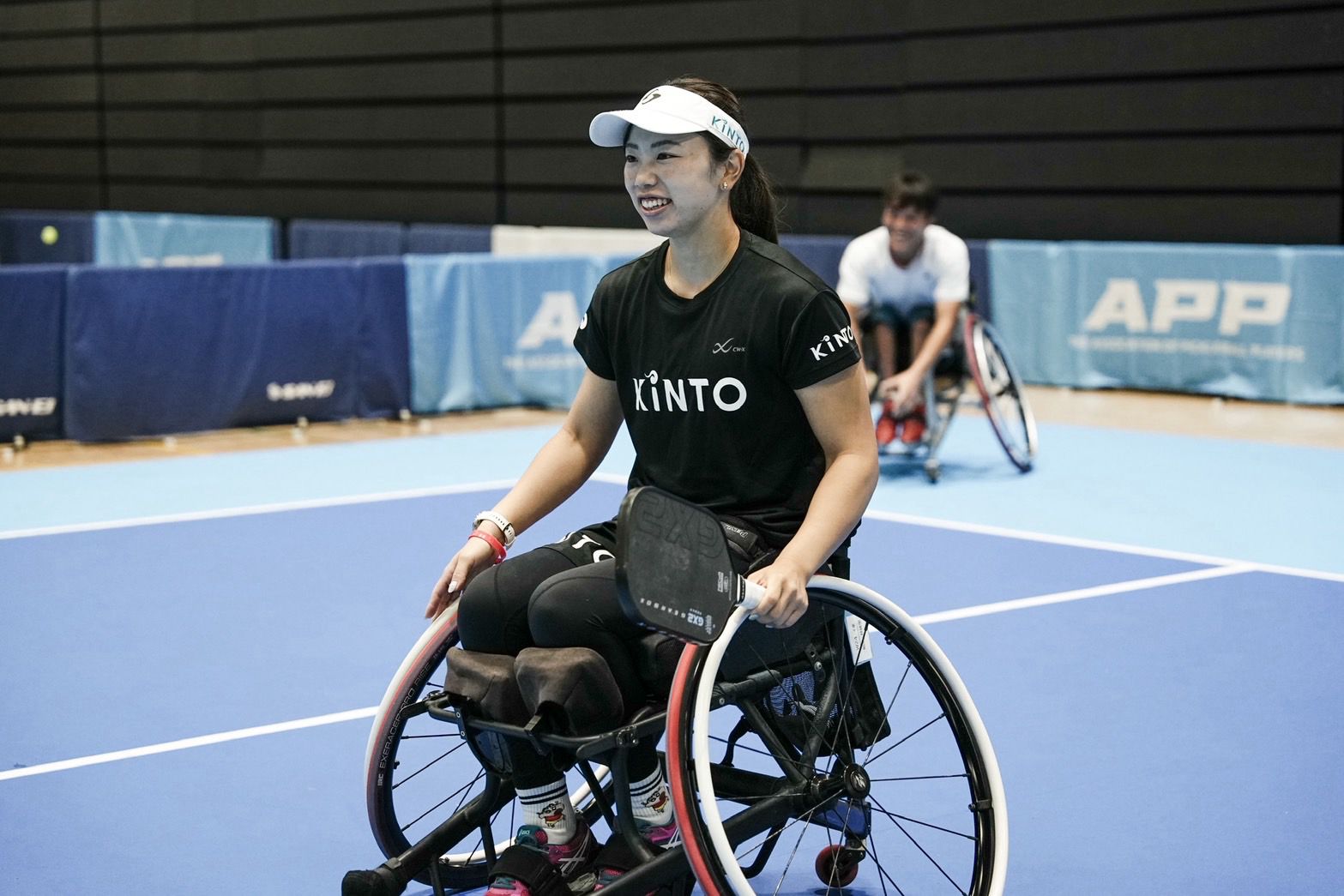
“Playing pickleball made me realise I could compete on equal terms,” she says.
The smaller court, underhand serve and doubles format changed the physical equation she had experienced in tennis.
In wheelchair tennis, Funamizu had sometimes felt the imbalance when playing with able-bodied opponents. The size of the court and speed of hard-hit balls could make recovering from a seated position difficult, and she could sense opponents moderating their play.
That was not necessarily the inclusion she wanted.
Funamizu did not want somebody on the other side of the net to feel they had to take something off the ball.
She wanted them to try to beat her.
Learning a Different Game
Returning to Japan, Funamizu searched for somewhere to continue playing.
She found an introductory opportunity at Matsudo Tennis Club, where Yonex provided paddles and instruction, before joining a pickleball group in Kamagaya.
Her wheelchair tennis experience gave her considerable racket-sport instincts, but pickleball presented a new tactical problem.
In tennis, Funamizu had often used the lob to create time and space, allowing her to reposition the wheelchair and reset for the next ball.
Pickleball did not always provide that luxury.
“You don’t have time to create space with lobs,” she explains. “It’s more about seizing the initiative.”
The non-volley zone created another challenge. Moving too far forward could leave insufficient time to retreat when the next ball arrived low and hard.
But there were advantages too. Her experience of close-range exchanges transferred well, while her lower seated position reduced some of the problems presented by overhead attacks in tennis.
Funamizu was not simply finding a wheelchair version of another racket sport.
She was learning pickleball.

“I’m Just Another Player”
For Funamizu, one of pickleball’s most powerful qualities is what happens when the distinction between wheelchair and able-bodied athlete begins to disappear.
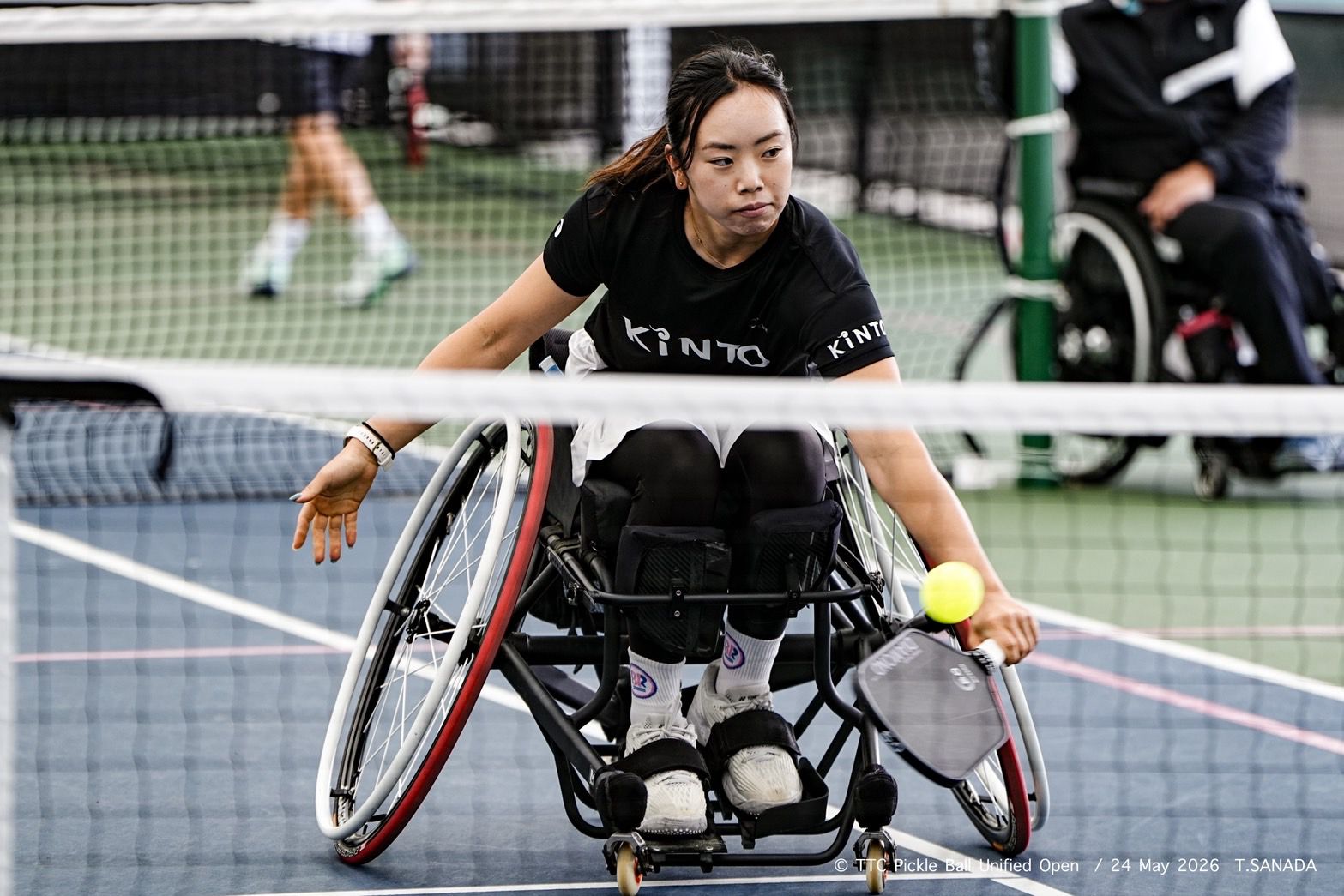
“When I’m on the court, I can forget I’m in a wheelchair,” she says. “I’m just another player competing against able-bodied opponents.”
That includes opponents refusing to make allowances for her.
They attack. They target her. They try to win.
For Funamizu, that is not a failure of inclusion. It is evidence of it.
There are still practical considerations. Sitting lower changes the trajectory at which some balls reach her, and she has adopted protective eyewear following close calls.
But she does not want the competitive environment diluted.
She wants the game.
Building Para Pickleball in Japan
Japan’s para pickleball scene remains young, but Funamizu has moved quickly from participant to organiser and advocate.
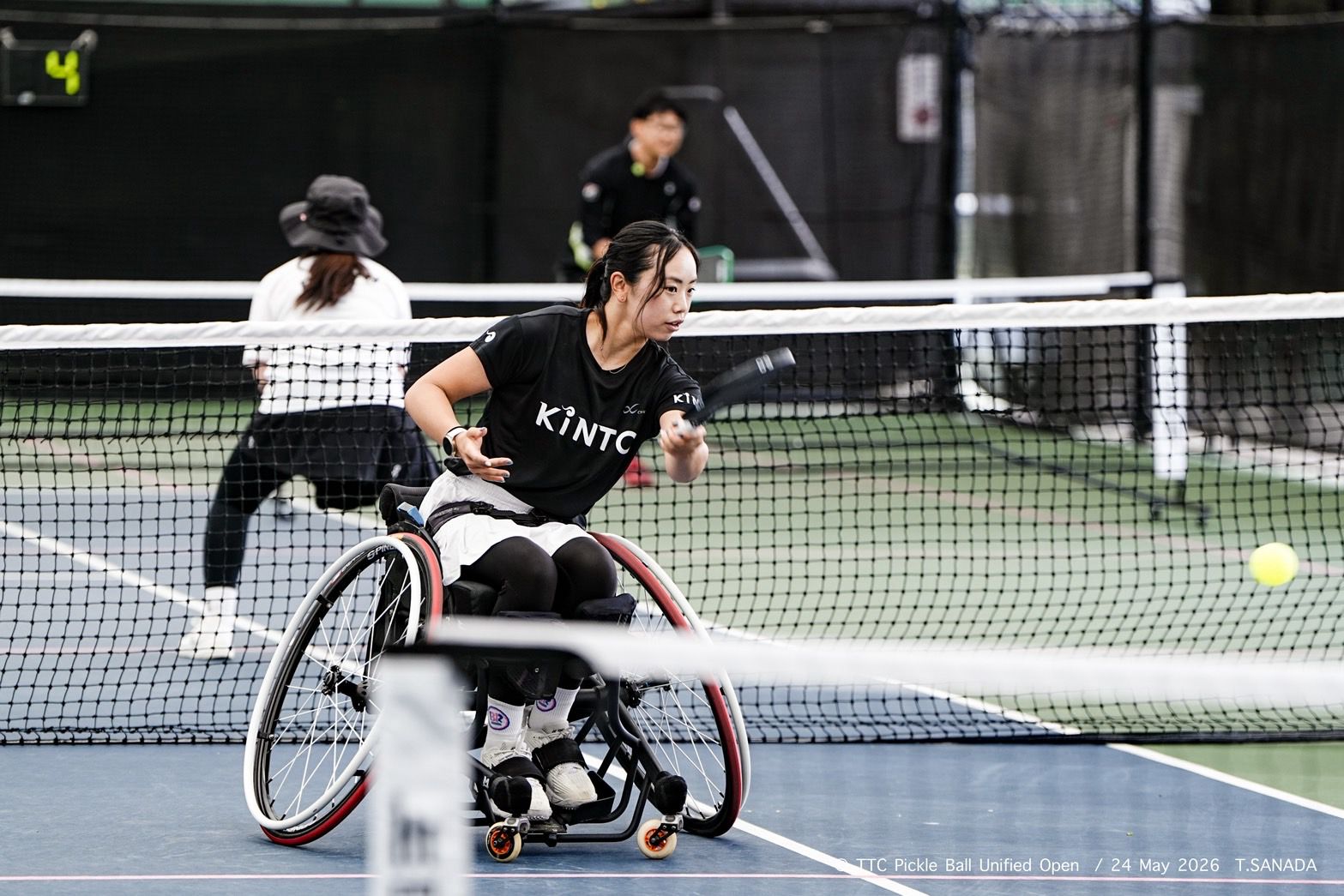
She now competes regularly in pickleball, including alongside able-bodied players, while helping create more opportunities for wheelchair athletes. In January 2025, the Japan Para Pickleball Association was established, with Funamizu serving as its representative director.
The organisation’s philosophy closely reflects her own approach to the game: building a community that crosses boundaries of disability, age and gender rather than treating para pickleball purely as an isolated discipline.
That work is beginning to move into practical development. In February 2026, Funamizu was among the instructors at a para pickleball training session in Ibaraki that introduced coaches and participants to equipment, rules, wheelchair use and considerations when teaching wheelchair players.
International competition presents another challenge.
Travel is expensive and sponsorship opportunities within wheelchair pickleball remain limited. Funamizu looks towards the United States, where wheelchair competition has become part of the developing tournament landscape.
Closer to home, international encounters involving players from elsewhere in Asia have offered Japanese wheelchair athletes an early glimpse of what a broader competitive pathway might eventually look like.
Her relationship with mobility company KINTO has consequently become particularly significant. KINTO’s own athlete profile records not only Funamizu’s extensive wheelchair tennis career but her developing pickleball and para-sport ambitions.
For Funamizu, mobility support has relevance beyond conventional sports sponsorship. Transportation itself can be a barrier for athletes who use wheelchairs, and she hopes stronger partnerships can eventually help create more opportunities to compete and travel.
A Sport Still Finding Its Space
Funamizu’s ambitions extend beyond her own results.
Much of Japanese pickleball still takes place inside school gymnasiums and community centres, sharing space with sports such as badminton, basketball and volleyball. Dedicated courts remain comparatively scarce, although that landscape is beginning to change.
As World Pickleball Magazine reported recently, PICKLR TOKYO TOYOSU opened in September with seven dedicated indoor courts, another indication that Japan is beginning to develop permanent pickleball infrastructure alongside its traditional shared-space model.
Funamizu nevertheless sees opportunity in the gymnasium network.
Existing badminton lines inside Japanese facilities provide a ready-made foundation for pickleball, while schools could eventually support junior clubs and more structured competition.
Corporate communities are already becoming part of that ecosystem through company pickleball circles and inter-company events. WPM has previously examined how unusually important corporate networks are becoming to Japan’s emerging pickleball structure.
“Pickleball is being used as a tool to build community,” Funamizu says.
Her own schedule reflects that enthusiasm.
Alongside work and her other sporting commitments, weekends can be filled with pickleball practice and tournaments.
She is not dabbling in another sport.
She is helping build one.

Inclusion Without Separation
That may ultimately be the most interesting part of Funamizu’s vision.
There is an obvious route for wheelchair pickleball to follow: create more dedicated divisions, increase participation and eventually build a larger competitive circuit.
Those opportunities matter. In the United States, wheelchair pickleball reached a significant milestone this year when more than 90 athletes competed at the first USA Pickleball-sanctioned wheelchair-exclusive national championship, a development WPM examined in June.
Funamizu wants wheelchair-specific opportunities too.
But she does not want wheelchair athletes confined to them.
“I want to keep advancing in able-bodied divisions,” she says.
Her idea of inclusion is competition alongside able-bodied players rather than permanent separation from them.
She also imagines a longer-term future in which pickleball could one day reach the Olympic Games and subsequently create a pathway towards Paralympic competition.
Those ambitions remain some distance away.
The more immediate challenge is building opportunities for people with disabilities to discover the game, creating facilities they can access and reducing the logistical barriers that can prevent athletes from competing.
Pickleball cannot remove all of those barriers.
But Funamizu believes its compact court and adaptable nature can remove some.
Her own experience offers a compelling example.
Wheelchair tennis introduced Funamizu to elite sport after an accident had changed her life. It took her into international competition and towards the highest levels of the game.
Pickleball has given her something different.
Not an easier court.
An equal one.
And when Shiori Funamizu rolls onto it, that is precisely how she wants to be treated.
Further Reading
- Wheelchair Pickleball Has Stopped Borrowing Its Place
- Japan’s New Pickleball Body Faces First World Cup Test
- The Dream Becomes Reality as PICKLR Opens in Japan

Fabrizio Lavezzari
Founder and Editor-in-ChiefFabrizio Lavezzari is a contributor to World Pickleball Magazine.
View All Articles →