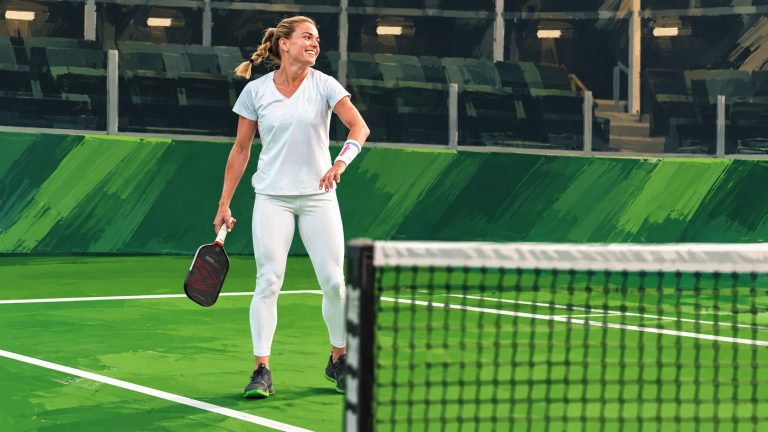
Five weeks ago, Kath Knowles was wondering whether she should walk away from pickleball altogether.
This week she admitted something else.
It was not about injury.
It was not about Birmingham.
It was not even really about pickleball.
“I’m still pretending that it really doesn’t matter if I don’t make it.
But that’s a lie.
It really does matter.”
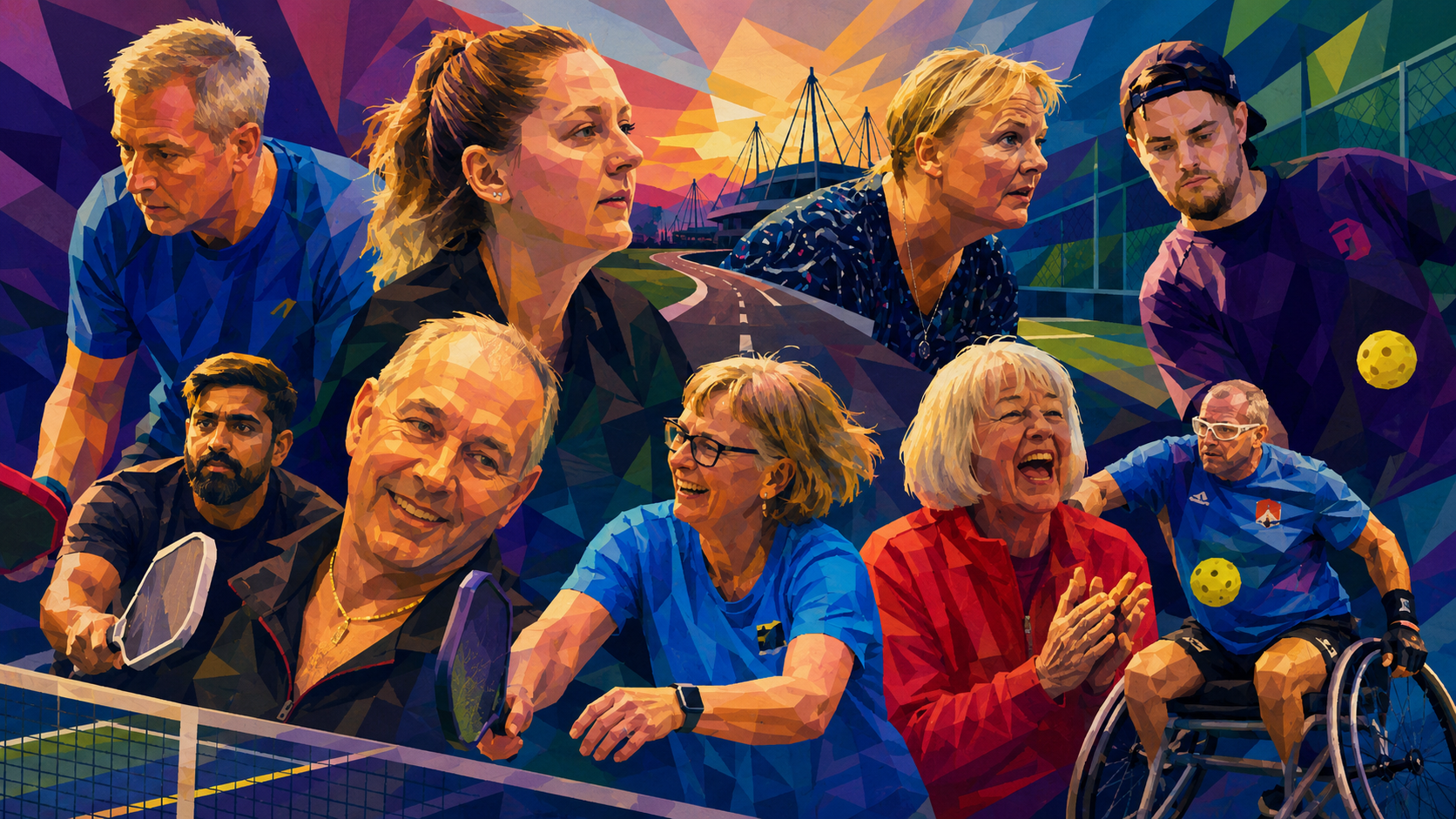
Across the country, without speaking to one another, nine people arrived at almost exactly the same conclusion.
The stories they had been telling themselves were beginning to crack.
Not dramatic lies. Not deliberate lies. The small protective stories people create when they care more than they want to admit.
The closer the English Open gets, the harder those stories are becoming to maintain.
And that was the real story of Week Five.
Nobody is pretending anymore.
The Lies We Tell Ourselves
Stephen laughed when he answered the question.
The biggest lie he tells himself?
That pickleball is “just for fun”.
The answer came with a joke attached, but the joke did not survive the sentence that followed.
“Deep down I know that’s a lie because of how competitive I am.”
It was one of the most honest answers of the week because it was so recognisable.
Most competitors have one. Something they say to reduce the pressure. Something that creates distance between themselves and disappointment. If it is just for fun, failure hurts less. If it does not matter, losing matters less. If expectations are low, there is less risk.
The problem is that eventually reality starts leaking through.
Stephen is planning new tournament partnerships. He is drilling more than he ever has before. He openly admits he wants to go deep at the English Open. His doubles partnership with Keillen is new, but the ambition is not vague.
“We aren’t there just to make up the numbers.”
Nobody doing those things is simply turning up for fun.
Hari’s lie was simpler.
“Probably that I’m fit enough.”
He did not dress it up.
Every tournament keeps delivering the same message. Better movement creates more options. More mobility means more time. More time means better decisions. Yet like many players, he continues to negotiate with the truth.
Life is busy. Court time is precious. Fitness work is easy to postpone because it rarely feels as urgent as the next game.
But deep down, Hari already knows.
“There’s another level there if I’m willing to address it properly.”
Karen Farnhill’s version was different.
“I lie to myself that I can compete with 20-year-olds.”
Then came the correction.
“Mentally and tactically yes, but physically no.”
There was no self-pity in it. No complaint. Just acceptance. A recognition that improvement does not always mean becoming younger, stronger or faster. Sometimes it means becoming smarter.
Her new motto says almost everything.
“Think before you dink.”
Sarah Reading’s answer took a different route.
She began by talking about DUPR.
Like many players, she says she is not obsessed with ratings. Then, gradually, another truth emerged.
The number matters.
Not only because of status. Not only because of ego. Because ratings open doors. Because ratings determine who you play with. Because ratings affect which spaces you feel you belong in.
Sarah wants to keep playing with people who stretch her. People who make her better. People who remind her there is another level to reach.
What began as a discussion about a rating slowly became a discussion about belonging.
And that was the pattern throughout the week.
The lie was never really the lie.
The lie was pointing towards the thing that mattered most.
The Cost of Caring
The hardest truths often arrive quietly.
Laura Yeomans spent much of the past week away from the court.
No tournaments. No drilling sessions. No desperate search for an immediate fix.
Just distance.
For a player who has spent much of this journey wrestling with confidence, expectation and the after-effects of disappointment, stepping away felt almost unnatural.
Yet her answers suggested something important.
The break was helping.
Not because it solved anything, but because it allowed her to stop pretending everything was fine.
For weeks, Laura has battled the same internal sentence.
“I’m not good enough.”
This week she admitted it openly.
At the same time, she admitted something else.
She knows she is capable.
Those two beliefs continue to exist side by side. One pulling her backwards. The other trying to drag her forwards.
That is the real tension in Laura’s story. Not whether she can play. Not whether she can compete. Whether she can recover the relationship with the game that existed before pressure began to change it.
Julie Vickerman arrived at a similar truth from a different direction.
For much of this project, Julie’s focus has been on everybody else.
The club. The players. The fourteen people she is taking to Birmingham. The community she has spent years building.
This week she finally admitted something that has been creeping into her answers for several weeks.
“I do feel that it’s important for me as well to do well.”
The phrase almost feels accidental.
As well.
As though she is still slightly surprised to hear herself say it.
But there it was.
The coach. The organiser. The community builder. Making space for the competitor.
Julie still wants everyone from her club to enjoy the English Open. That has not changed. But the disappointment of the Scottish Open has left a mark. Her serve still carries stress. The third shot drop still feels different in practice than it does under pressure. Her mixed partner is delaying an operation until after the tournament.
That creates another kind of responsibility.
Not just pressure to play well.
Pressure to honour the effort others are making to stand beside her.
Simon Heaps perhaps revealed the cost of caring most clearly of all.
For weeks he has spoken about urgency. About time. About the clock.
This week he admitted that the pressure is no longer coming from outside.
It is coming from him.
“Strangely I feel in the spotlight.”
Then came the clarification.
“It is not that other people are interested in me, but just the pressure I am putting on myself.”
That distinction matters.
Because once you stop pretending the goal matters less than it does, the pressure arrives naturally.
Simon wants gold. He says so plainly. He will shake hands if he is beaten by better opponents, but until the last point is lost, he will fight.
That is not a target.
That is identity.
Nobody Wants To Be Left Behind
Beneath every ambition sits a fear.
Sometimes it is obvious. Sometimes it hides remarkably well.
Kath’s fear arrived in one of the strongest sentences of the entire series.
“I had the horrible feeling of being on the periphery of something I was once the pivotal point of.”
It is difficult to read that line and not immediately understand it.
For months, Kath has watched tournaments happen without her. Players travel. Players compete. Players collect medals. Players return with stories.
And she has been forced to watch from the outside.
Not because she wanted to.
Because injury gave her no choice.
The fear is not missing a medal.
The fear is being left behind.
Simon is confronting a different version of the same thing.
Every answer seems to contain time.
The weeks are flying past. The chair is not quite right. The skills are not quite where he wants them. The improvements are not happening quickly enough.
Many athletes fear failure.
Simon seems to fear running out of chances to improve.
Sarah’s fear appears whenever she talks about draws and opponents.
She tries not to look too closely at who she is playing. The names matter. The reputations matter. She knows they affect her before the first serve has even been struck.
Hari found something similar in Liverpool, although his week ended in a different place.
He and his partner were among the lowest-rated teams in a merged 3.5 and 4.0 men’s doubles field. The results did not tell the whole story. The rallies did.
For once, he was not only thinking about the losses.
“We can play at this level.”
That is more than a tactical observation.
It is a belonging statement.
The same theme kept surfacing in different forms.
Karen said that belonging to the group is now as rewarding as playing.
Thomo spoke about the WhatsApp conversations, the banter, the encouragement and the late-night messages that keep him awake when he forgets to turn off notifications.
Julie is travelling to Birmingham with fourteen people from her club.
Sarah was stopped by a food bank volunteer who told her how proud people were of what she was doing and how much joy she had brought by introducing others to pickleball.
Stephen sent a holiday photograph with his family because, without their support, he knows he could not play as often as he does.
The project began as twelve separate roads to the English Open.
By Week Five, those roads were beginning to overlap.
People were borrowing belief from one another. Borrowing ideas. Borrowing courage. Borrowing language.
Simon’s line about losing his legs but not the competitor had already reached Kath.
Zoe’s thoughts on drilling had reached Julie.
Fossy’s determination at the hybrid tournament had reached Simon.
The group is no longer simply documenting the journey.
The group has become part of the journey.
The Things People Do When It Matters
There is a point in every sporting journey where the conversation changes.
At first, the questions are simple.
Do I enjoy this?
Am I improving?
Should I keep going?
Then, almost without noticing, the questions become something else.
How much am I willing to give?
How much space does this occupy in my life?
Who am I becoming because of it?
By Week Five, many of the players in this project seem to have crossed that line.
Sarah has been away from the court recently.
The response has not been calm acceptance.
It has been restlessness.
She set up a little table in the hallway with her son to practise fast hands because she was desperate to get back on court.
The image is funny. It is also revealing.
Nobody accidentally turns a hallway into a training space.
Nobody who is merely passing the time watches streams, analyses elite players, worries about ratings and practises indoors because the weather and life have kept them away from the court.
Pickleball has become woven into the rhythm of her ordinary days.
The same is true for Julie.
She recorded her update from America, reflecting on free public courts, good surfaces, friendly players and the kind of access that would transform participation back home.
Even on holiday, she was thinking about sports development.
Then came the detail that felt most Julie of all.
She lands in the UK at 2pm.
By 4pm, she will be coaching.
By the following day, drill sessions are already arranged.
Most people return from a long-haul flight looking for rest.
Julie is looking for court time.
Thomo’s journey has taken a different shape.
A few weeks ago, much of his focus was internal. Fitness. Fatigue. Frustration. The feeling of not quite preparing as he wanted.
Now he is actively placing himself in more demanding environments.
Driving further. Playing stronger opponents. Seeking out coaching. Looking for places where he can no longer rely on comfort.
Hurlands has become significant because of what it represents.
Not just another venue.
A decision to stop waiting for improvement and start creating the conditions for it.
For Stephen, the change is visible in how he talks about drilling.
It appears throughout his answers. Not as a side activity. As the only answer.
That matters.
A lot of players reach a point where they realise playing more games is not the same as getting better. Stephen sounds like someone who has crossed that threshold.
The game is becoming more intentional.
More deliberate.
More purposeful.
Then there is Simon.
Every week his story circles back to the same themes.
Time. Opportunity. Urgency.
This week those themes acquired a price tag.
A faster wheelchair. Smaller wheels. A significant cost. A chance, perhaps, to close the gap before Birmingham.
The detail matters because it turns determination into something tangible.
The commitment is no longer abstract.
It exists in research, decisions, money and deadlines.
All of them, in different ways, are arriving at the same destination.
The English Open may be the reason they started.
It is no longer the only reason they continue.
Nobody Is Pretending Anymore
The title sounds dramatic.
The reality is smaller.
And much more human.
There is no single moment. No grand declaration. No life-changing revelation.
Instead it arrives quietly.
A hallway drill session.
A conversation with a future partner.
A drive to a stronger club.
A holiday spent thinking about public courts.
A new wheelchair search.
A fitness admission.
A coaching session booked before the suitcase is unpacked.
A refusal to stop believing.
The point of no return is not when somebody decides they care.
That happened long ago.
The point of no return is when they stop pretending they do not.
That is what Week Five revealed.
Stephen stopped pretending it is just for fun.
Sarah stopped pretending ratings do not matter.
Hari stopped pretending fitness is not holding him back.
Karen stopped pretending age changes nothing.
Julie stopped pretending her own results matter less than everyone else’s.
Laura stopped pretending confidence is not a struggle.
Simon stopped pretending the pressure comes from anywhere other than himself.
Kath stopped pretending it would not hurt if she missed Birmingham.
The English Open is still two months away.
Yet in another sense, all of them have already arrived somewhere important.
A place where the excuses are fading.
A place where the protective stories no longer work.
A place where honesty feels unavoidable.
For months, Kath has been fighting injury.
For weeks, she has been fighting uncertainty.
Some days she believes she will make Birmingham.
Some days she does not.
This week brought another setback. Her intended partner, Frank, has had to withdraw while he waits for hip surgery.
Another obstacle.
Another reminder that nothing is guaranteed.
Yet when Kath thought about the week, she did not choose a photograph of a pickleball court.
She chose a framed picture from a King’s Garden Party.
Recognition for years of voluntary service to her community in Anglesey.
A reminder of everything she has already done.
A reminder of who she is beyond injury, beyond rankings, beyond tournaments.
She plans to repeat the same sentence every day this week.
Four words.
Simple.
Defiant.
Impossible to misunderstand.
“I’m not finished yet.”
Five weeks ago, Kath was wondering whether she should walk away.
This week she is not talking about leaving.
She is talking about returning.
And perhaps that is the real significance of Week Five.
Not one of these players knows exactly what Birmingham will bring.
Some are chasing medals.
Some are chasing confidence.
Some are chasing fitness.
Some are simply chasing a place back on court.
But none of them are pretending anymore.
The English Open is getting closer.
The stories they tell themselves are getting harder to maintain.
And every answer this week points towards the same conclusion.
They are not finished yet.

Chris Beaumont
Founder and Editor-in-ChiefChris Beaumont is the founder and Editor-in-Chief of World Pickleball Magazine. Chris follows the global game closely, reporting on the latest news, developments, stories and tournaments from all five continents. He also hosts the World Pickleball Podcast, interviewing people at…
View All Articles →