Main image: Photo: The Kitchen Pickleball
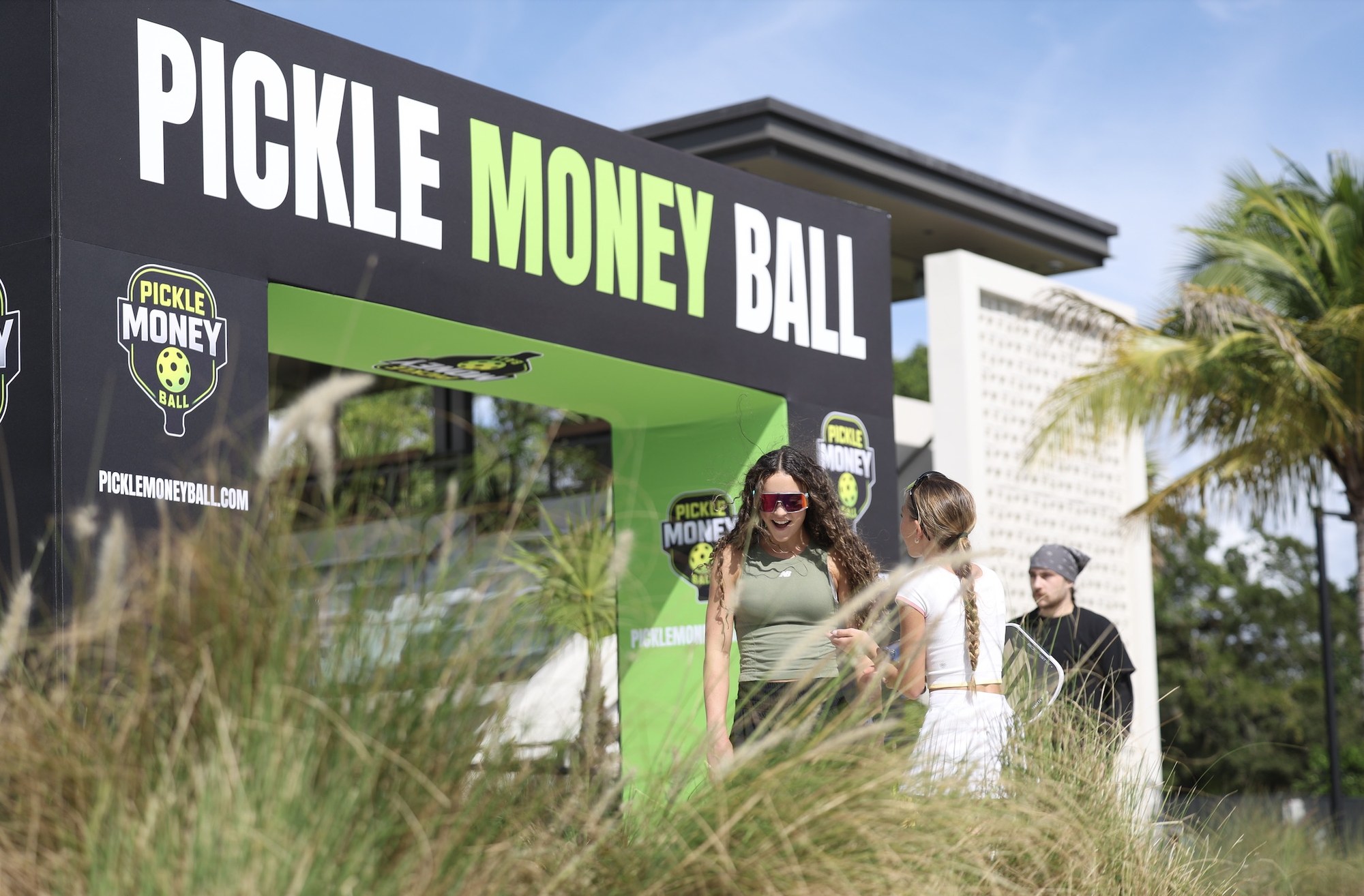
The short answer: Pickle Money Ball’s East Coast Regional at The Fort in Fort Lauderdale (22–25 October) offered about $625,000 to amateur players, paying 16 places deep in every DUPR division, with the same money at 3.5 as at 5.0+. About 200 players qualified for a National Championship in Las Vegas next July worth more than $1 million. The flat payouts are what make the model work, and also what make it vulnerable.
Alex Lantz and his partner did what most club players never do at a tournament: they finished in the money. Sixteenth of 27 teams in their division was the last paid place, and it was worth $325 each. The entry fee had been $400 per player, plus a $25 office fee. Lantz, a 5.2-rated player who wrote up the weekend for The Kitchen, had technically been paid and still come home poorer.
That is not a complaint about Pickle Money Ball. It is a description of how it works, and of why it is the most interesting experiment in amateur pickleball. Medals cost an organiser almost nothing. Cash forces every decision about divisions, ratings and who is allowed to enter to carry real consequences.
How does Pickle Money Ball pay out?
Every division pays the same. Branded Pickleball‘s event listing puts the pool at $25,000 for each doubles division and $12,500 for each singles division, and The Kitchen reported first-place finishers in Fort Lauderdale taking $2,000 per player. A 3.5 team and a 5.0+ team are playing for identical money.
Co-founder Clay Deen knows how unusual that sounds. After the first event in Mesa in March he told The Kitchen: “There was a barrier we faced going into that first tournament, that this is ‘Too good to be true,’ because there’s no real standard in pickleball for paying out money – especially a large amount of money and paying out a lot of places.”
The published numbers for Florida are not entirely consistent, and it is worth being plain about that. The pickleballtournaments.com listing gives $625,000 across 29 divisions; an older Pickle Money Ball page advertised a “$600,000 guaranteed payout” across 25 brackets. Registrations appear as 564 on the listing, 616 on Pickle Money Ball‘s events page and “550+” in The Kitchen’s report. The older payout table showed $4,800 to winning doubles teams, where The Kitchen’s figure from the weekend works out at $4,000. None of these gaps changes the shape of the event, but anyone deciding whether to spend $425 on an entry deserves a single, current payout table.
Can the prize money add up?
Only with volume. A full 64-team doubles division brings in $51,200 in player fees against a $25,000 pool, which leaves room for venue, referees and streaming. Lantz’s division, at 27 teams, would have brought in $21,600, less than its advertised payout. Players enter more than one bracket, and sponsorship is not public, so the real margin is unknown. But the arithmetic says something important: Pickle Money Ball is underwriting thin divisions with full ones, and its guarantee is only as safe as its biggest brackets.
The flat structure also moves money in a way the sport has not seen. Because the pool is identical at every level, the money per unit of skill is highest at the bottom. A 3.5 player’s $2,000 is a far bigger return on ability than a 5.0’s. That is the democratic appeal, and it is exactly the incentive that sandbagging feeds on.
Does Pickle Money Ball have a sandbagging problem?
It has a sandbagging risk, and it is clearly aware of it. Its competition rules set a player’s tournament rating as the higher of their best DUPR in the previous 90 days or their best across their last 20 rated matches, bar anyone from playing more than 0.5 below that rating, and allow the tournament director to move or disqualify players “without refund” for manipulating ratings. Unrated players aged 18 to 30 must enter 4.0 or above. DUPR, the official rating partner, sells the deal on exactly that point; its chief executive, Tito Machado, said in January, in DUPR‘s announcement, that “accurate, unified ratings are essential when you’re operating at this scale.”
The problem is that the incentive reaches beyond any single organiser’s rules. In a Reddit thread in late May about cash-prize amateur events (not Pickle Money Ball specifically), one player described entering a 2.5 money division as a 3.4 and losing the final to a team featuring a player who “had been playing 4.5 tournaments a few months ago”. “The amount of sandbagging for these moneyballs is off the charts,” the user wrote. That is anecdote, not evidence, but it shows what players expect to find when cash appears.
Pickle Money Ball’s defences are better than most: the look-back window is long and the tournament director’s discretion is wide. The weaker point is at the top, not the bottom.
Should professionals play amateur money events?
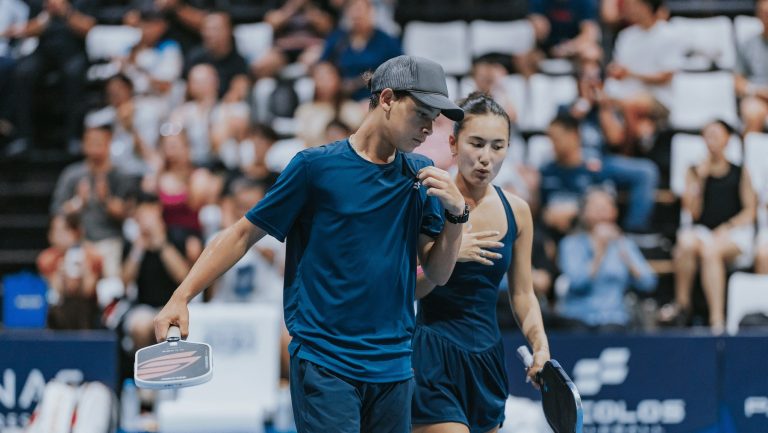
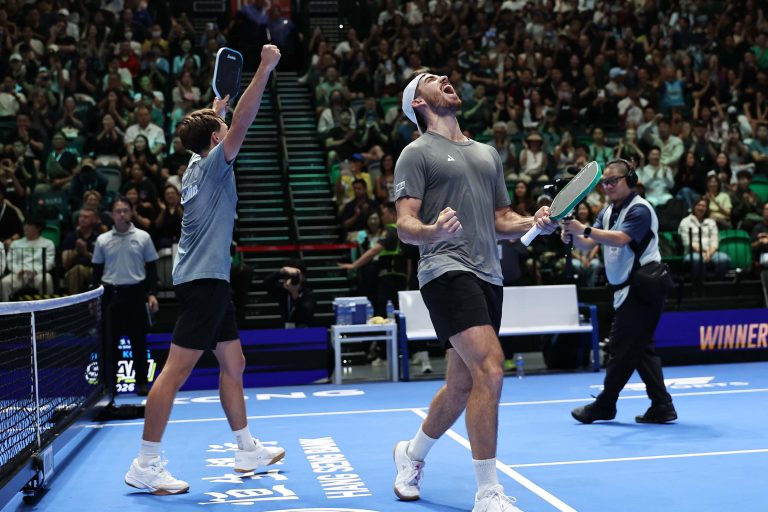
The Kitchen named Jack Munro, Richard Livornese Jr., Max Manthou, Tanner Tomassi and Ryler DeHeart in the Fort Lauderdale field. Munro and Livornese have just won their seventh straight APP men’s doubles title, and Manthou reached a D-Joy Tour final in Vietnam this year. The Kitchen did not say which divisions they entered, and nobody broke a rule by entering. A 5.0+ division is open-ended by definition, and for touring players whose routes to income are narrow, a $2,000 cheque is real money.
But it changes what the top division is. A 5.0 amateur who pays $425 to enter is, in effect, helping to fund a payout that a full-time professional is favourite to collect. The 3.5 divisions are protected by rating rules; the 5.0+ division has no ceiling at all. The fix is straightforward: an open or pro division with its own pool, and a capped 5.0–5.49 bracket for the genuine amateurs. Pickle Money Ball has shown it can run big, refereed, streamed events, including through two days of rain in Florida. Protecting the players it was built for is the next job.
Deen’s view, after the weekend, was that the response “reinforces what we’ve believed from the beginning: When you invest in the players and give them something worth competing for, they show up.” They did, in their hundreds. The question for Las Vegas is which players the $1 million is really for.
Pickle Money Ball: key facts
- Fort Lauderdale entry: $400 per player per event plus $25 office fee; up to 64 teams per division; 16 places paid
- Ratings: DUPR, higher of best rating in last 90 days or last 20 rated matches
- Next event: Super Series qualifier, Spring Valley, California, 7–10 January 2027
- National Championship: Mandalay Bay, Las Vegas, 26–31 July 2027, more than $1 million in payouts
Frequently asked questions
An amateur pickleball tour that pays prize money in every division. Players are grouped by DUPR rating and the top 16 in each division are paid, with the same pool at every level.
The tournament listing gives $625,000 across 29 divisions; an older organiser page advertised a $600,000 guaranteed payout across 25 brackets. Winners took $2,000 per player, according to The Kitchen.
A player’s rating is the higher of their best DUPR in the last 90 days or across their last 20 rated matches, nobody may play more than 0.5 below it, and the tournament director can move or disqualify players without refund.

Chris Beaumont
Founder and Editor-in-ChiefChris Beaumont is the founder and Editor-in-Chief of World Pickleball Magazine. Chris follows the global game closely, reporting on the latest news, developments, stories and tournaments from all five continents. He also hosts the World Pickleball Podcast, interviewing people at…
View All Articles →