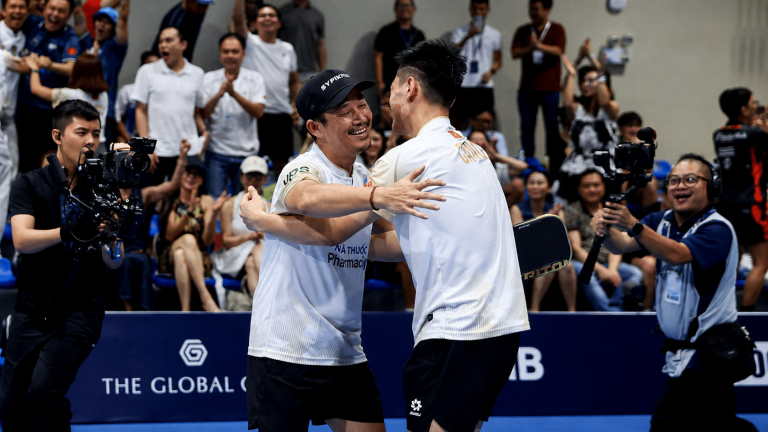

Phuc Huynh’s withdrawal is not an isolated protest. It is an early signal that pickleball’s global expansion is entering a phase where control and growth may not align.
- Exclusivity models may be clashing with Asia’s developing pickleball ecosystem
- Restricting player movement risks slowing organic growth in emerging markets
- The PPA faces a strategic choice between control and collaboration
When expansion meets resistance
Every sport reaches this point.
A model that works in one region is exported into another, with the assumption that structure will carry across unchanged.
That assumption is now being tested in pickleball.
The decision by Phuc Huynh to withdraw from the MB Hanoi Cup has exposed more than a disagreement. It has exposed a fault line in how the PPA is approaching its expansion into Asia.
At the centre of it are exclusivity rules tied to PPA Tour Asia, limiting where players can compete.
On paper, that is understandable.
In this context, it looks premature.
The problem is not the model. It is the timing
Exclusivity is a familiar tool in professional sport.
It protects investment. It ensures participation. It gives tours control over their product.
In a mature market, that structure can stabilise a system.
Asia is not there yet.
Across much of the region, pickleball is still forming its base. Player pools are developing. Local tournaments are building identity. Community momentum is still fragile.
In that phase, openness is not a weakness. It is the mechanism.
Players move between events. Circuits overlap. Growth comes through visibility and shared access.
Lock a system too early, and you don’t strengthen it. You shrink it.
This is where pressure begins
This is not just about contracts.
It is about alignment between a global tour and a local ecosystem.
A leading player stepping away from his own home event is not a minor disruption. It is an early sign that the system being introduced may not yet fit the environment it is entering.
There are precedents.
Golf fractured when LIV challenged the PGA Tour’s control over player movement. Tennis has spent decades balancing competing tours and governing bodies, often without clean resolution. In each case, the same question sits underneath.
Who controls access?
Pickleball is now entering that phase.
The risk is not failure. It is misalignment
The PPA’s ambition in Asia is clear and, in many ways, necessary. A fragmented sport does not professionalise easily.
But structure without alignment creates resistance.
If this approach leans too heavily towards control, the consequences are predictable:
- players will push back
- local circuits will lose relevance
- engagement will fragment
If it leans towards collaboration, the upside is far greater:
- regional ecosystems strengthen
- talent pathways deepen
- legitimacy builds alongside growth
That is the balance.
And it is already under strain.
The point where growth can narrow
This is the risk.
Not collapse. Not failure.
Premature control.
If the system tightens before the base has fully formed, the sport does not expand cleanly. It narrows.
That is harder to fix later than it is to avoid now.
Stay ahead of the global game by signing up for the World Pickleball Report.
What comes next matters more than what just happened
The withdrawal from the MB Hanoi Cup is not the defining moment.
The response to it might be.
Pickleball is no longer just growing. It is organising itself. Decisions made at this stage will shape how open, how connected, and how competitive the global game becomes.
The tours that succeed will not be the ones that impose control fastest.
They will be the ones that understand when to wait.
Further Reading
- Latest pickleball news from around the world
- Tournament coverage and results
- Rankings and player profiles
- Regional pickleball coverage

Chris Beaumont
Founder and Editor-in-ChiefChris Beaumont is the founder and Editor-in-Chief of World Pickleball Magazine. Chris follows the global game closely, reporting on the latest news, developments, stories and tournaments from all five continents. He also hosts the World Pickleball Podcast, interviewing people at…
View All Articles →