WORLD — OPINION
Key Takeaways
- This story reflects a key shift defining the maturity and expansion of the global pickleball landscape in July 2026.
- Decisions and infrastructure investments made now are establishing the long-term foundations of the sport.
The Unlikely Diplomat
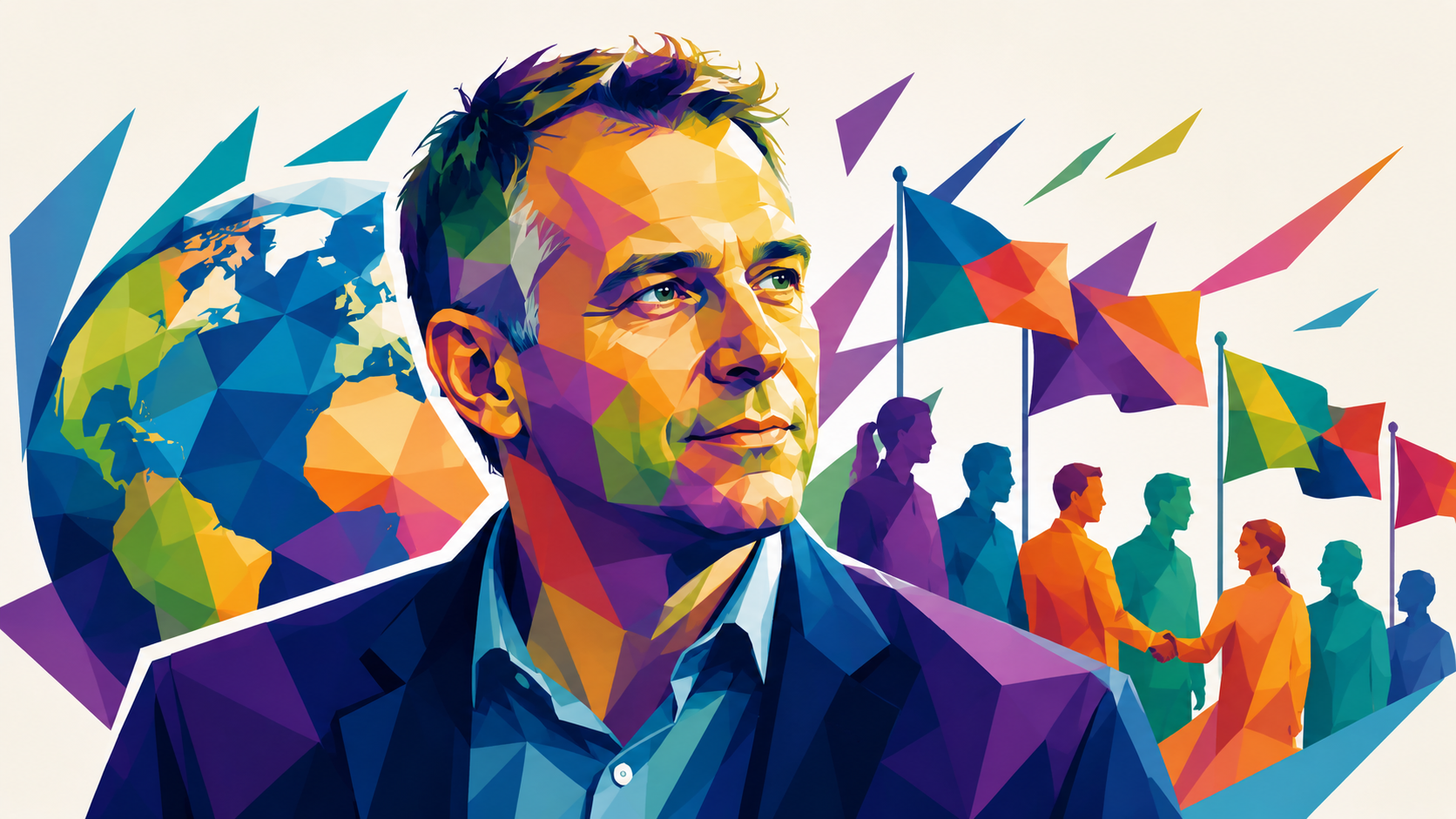
How a paddle sport became the world’s most unexpected foreign policy
By Lee Whitwell
We have over 200 contacts in our phone. At least half of them we know by first name, last name — and the word Pickleball. “Sarah Pickleball.” “Marco Pickleball.” “The Danish bloke from the net post at nationals.” These are not acquaintances. These are friends. Real ones. The kind adults are not supposed to make anymore.
Here is what nobody tells you about getting older: your circle shrinks. Not because you become unlikeable — though that is certainly possible — but because life gets structured. You have your work people, your neighbourhood people, your school-run people. The walls go up. The diary fills. The last time most adults made a genuine new friend, they were probably standing in a queue at a university fresher’s fair holding a lukewarm beer.
And then pickleball happened. And the walls came down.
The Third Space, Unpacked
I wrote a book called The Third Space Effect built around a deceptively simple idea: the third space is the place that is neither home nor work — the pub, the park, the community hall, the court. It is where social identity is born. Where you stop being someone’s colleague or someone’s spouse and start simply being yourself, among people who chose to show up in the same place for the same reason.
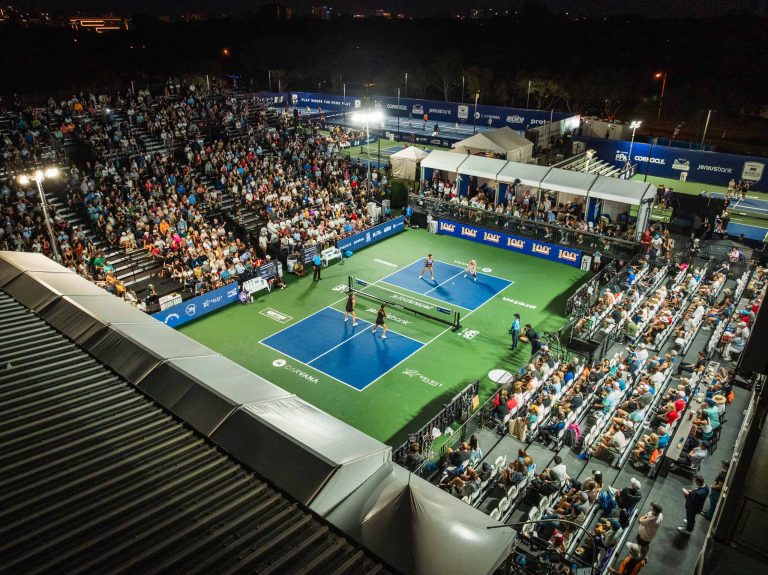
Pickleball is one of the most powerful third spaces ever accidentally invented. The kitchen — that seven-foot zone at the net — is not just a court marking. It is a social contract. You stand there, close to a stranger, and you figure each other out in real time. There is nowhere to hide. And when the game ends, you are not strangers anymore.
What I did not anticipate, when I wrote that book, was that the third space was about to go international.
If you're following how the global game is shifting week by week, the World Pickleball Report breaks this down every day in our morning briefing.
Lines on a Flat Surface
Something remarkable is happening on Facebook pages, in WhatsApp groups, and in the comment sections of club accounts around the world. Someone posts: “Visiting Barcelona in September — where can I play?” Within an hour, they have twelve replies, three court locations, two dinner invitations, and at least one offer of a spare bedroom.
The pickleball community has quietly become the world’s most effective referral network. It is part Craigslist, part TripAdvisor, part old-school neighbourhood watch — except the neighbourhood now stretches across continents. People are not just playing pickleball. They are booking holidays around courts. Choosing hotels with outdoor courts. Planning itineraries that route through cities specifically because someone in a Facebook group said the club there was welcoming.
The sport creates friendships that extend far beyond the community that drew them. Lines on a flat surface — that is all a pickleball court is, at its most literal. But those lines are doing extraordinary social work. They are generating trust at a speed most adults have forgotten was possible.
The Unlikely Diplomat
I am Gibraltar-born. We compete in the United States. We are building an academy partnership in Tuscany. We are planning a retreat in Kenya. We will be on a court in Finland before the year is out. In every single one of those places, we will know someone. Not because we are diplomats, or world travellers with an impressive LinkedIn network. Because we play pickleball.
If you’re following how the global game is shifting day by day, the World Pickleball Report breaks this down in our daily briefing.
No governing body orchestrated this. No foreign ministry signed off on it. No cultural exchange programme funded it. It happened because a ball went over a net, and two people on opposite sides of it started talking, and one of them said “if you’re ever in…” and the other one actually showed up.
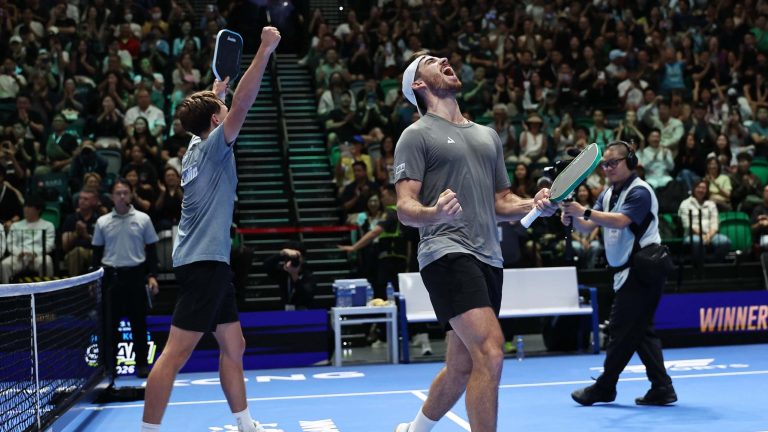
Tournament culture has accelerated this beyond anything the sport’s founders could have imagined. Players travel to compete, arrive in a city they do not know, and immediately have a community. They are housed by fellow players who have a spare room and zero hesitation about offering it, because the court is sufficient vetting. If you play pickleball, you are already trusted. The shared language of the sport overrides everything else.
We have made more genuine friendships in our adult life through pickleball than we ever thought possible at this stage. That is not a small claim. That is a remarkable one. Because adult friendships are supposed to be hard. They are supposed to require proximity, shared history, years of slow accumulation. Pickleball skips most of that. It puts you in a situation of immediate collaboration, of reading each other, of relying on each other — and it does it in ninety minutes on a Tuesday morning. The friendship comes pre-loaded.
What This Actually Means
We are living through a global loneliness epidemic that health researchers have been warning about for over a decade. Adults are more connected digitally and more isolated socially than at any point in modern history. The structures that used to create community — the pub, the church, the civic club, the union hall — have eroded. We moved faster, worked longer, and outsourced our social lives to screens.
Pickleball walked into that gap without asking permission. It is not trying to solve loneliness — it does not have a mission statement about belonging or a social impact deck. It is just a sport that happens to put people in the same space, at the same time, with a shared purpose, at a pace that allows conversation. And it turns out that is exactly the formula human beings require to connect.
The third space has gone global. And nobody needed a passport.
The next time you land in a city you have never visited and pull up a Facebook group to find a court, notice what happens. Notice how quickly a stranger becomes a recommendation, a recommendation becomes a conversation, a conversation becomes a dinner, a dinner becomes a friendship that outlasts the trip by years.
That is not a travel hack. That is diplomacy. The most human kind. Built on lines on a flat surface, and everything that happens on either side of the net.
📖 Read the Full July 2026 Issue
This article appears in Issue #18 of World Pickleball Magazine — download the complete edition free.
Further Reading
- Latest pickleball news from around the world
- Tournament coverage and results
- Rankings and player profiles
- Regional pickleball coverage
Lee Whitwell is a World #1 ranked Senior Female Professional Pickleball Player, APP National Coach, published author, and co-founder of Game ChangeHER Events and Academy. She writes the Sunday Serve newsletter and co-hosts the Pour Decisions podcast.
For a clearer view of where the sport is heading each week, you can join the World Pickleball Report here.

Chris Beaumont
Founder and Editor-in-ChiefChris Beaumont is the founder and Editor-in-Chief of World Pickleball Magazine, published by World Pickleball Media Ltd. He follows the global game closely, reporting on news, developments, stories and tournaments from all five continents. He also hosts the World Pickleball…
View All Articles →