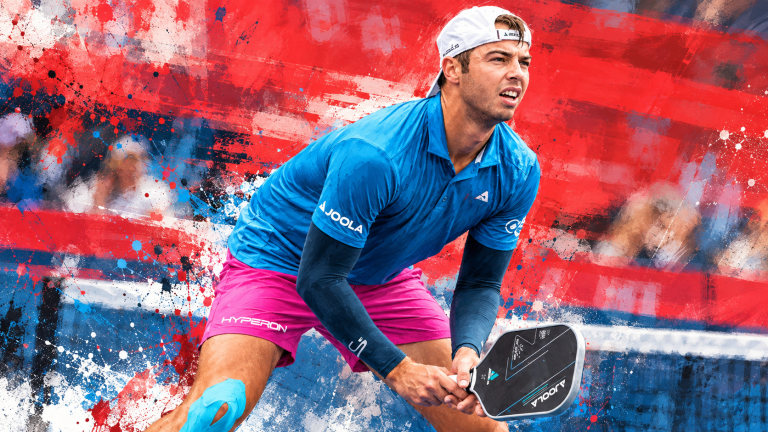
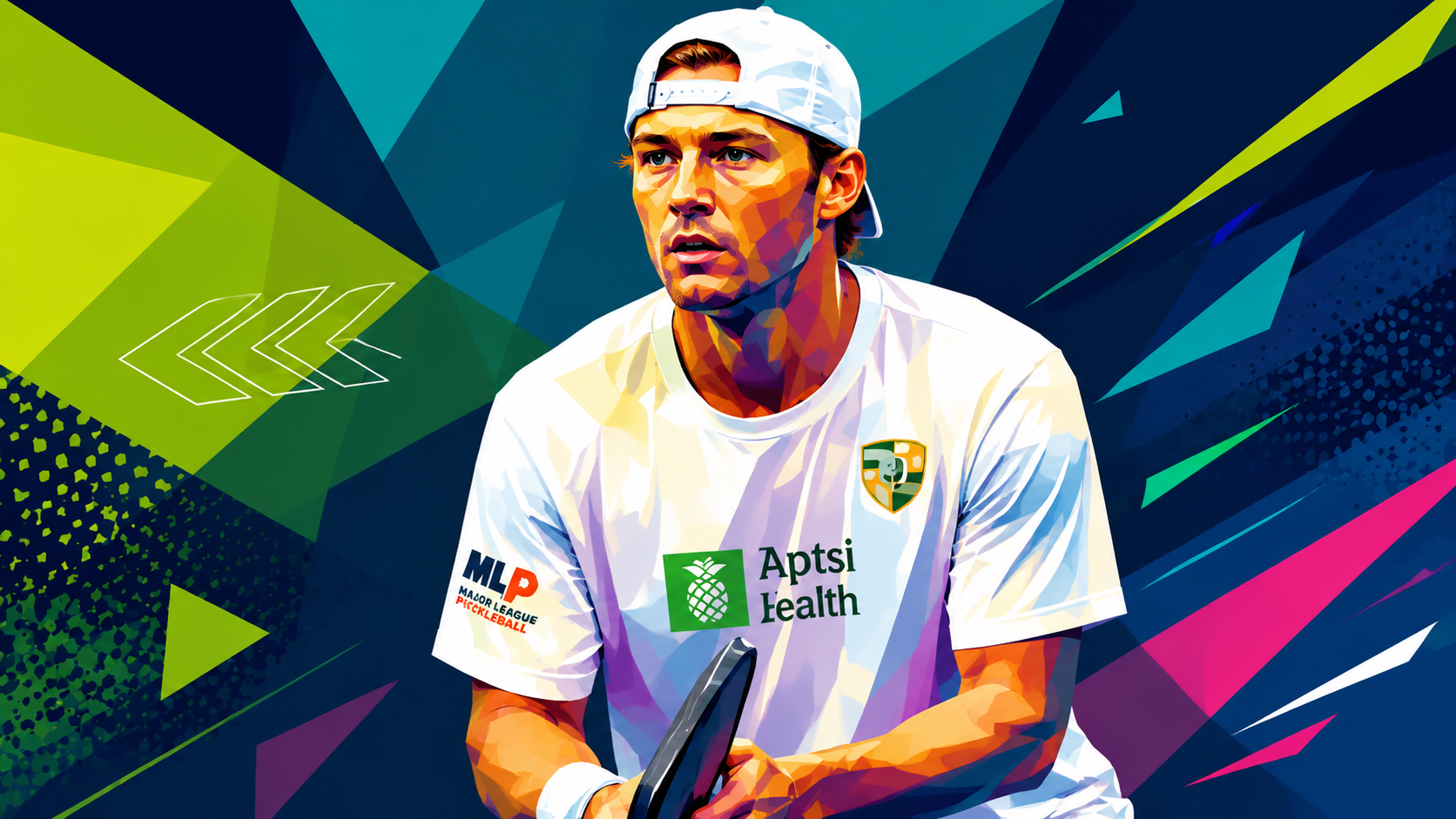
Casey Diamond’s move from the APP Tour to the United Pickleball Association is not a headline-grabbing transfer in isolation, but it reflects a growing pattern in the sport: once players establish themselves on the APP, the next step increasingly leads into the UPA ecosystem.
- Casey Diamond leaves the APP Tour to join the UPA on a three-year deal
- The move reflects a growing talent flow from APP into higher-density UPA competition
- The APP’s role is increasingly resembling a development stage within the wider professional structure
From regular APP action to the PPA and MLP
Casey Diamond has been one of the APP Tour’s more consistent performers over the past year. Often partnering Sofia Sewing in mixed doubles, he built a profile as a dependable presence in later rounds, regularly pushing into medal positions and becoming one of the more established names on the circuit.
His move to the United Pickleball Association marks a shift into a more concentrated competitive environment, bringing together the PPA Tour and Major League Pickleball under a single structure.
While the step up in opposition is the obvious sporting factor, the more important change is structural. The UPA environment compresses competition levels into a tighter weekly rhythm, where depth of field and repeated exposure to top-tier opponents becomes the norm rather than the exception.
For players like Diamond, the question is no longer whether they can compete at this level, but how consistently they can sustain performance inside it.
The economics behind the move
The sporting argument sits alongside a financial one that is becoming increasingly influential in player movement across the professional game.
The UPA model combines base guarantees with significantly higher upside through prize money and team-based earnings in Major League Pickleball. For players outside the very top earnings bracket, that balance between security and performance-linked reward is proving decisive.
Diamond’s decision therefore reflects both ambition and structure. It is a move into a system where higher-level exposure and financial return are more directly linked to performance in elite competition environments.
This is not an isolated trend
Diamond joins a growing list of players making the same transition.
High-profile APP competitor Chris Haworth has already moved into the UPA system, while multiple-time gold medallist Parris Todd has also followed the same path. International players have increasingly aligned themselves with the UPA structure as the primary destination for elite competition.
The pattern is becoming more consistent. The APP continues to provide a platform for development and competitive entry, while the UPA increasingly functions as the final destination for players who establish themselves at the top of that system.
The key question emerging from this movement is whether professional pickleball still operates as two competing tours, or whether it is gradually settling into a single hierarchy with a clear progression route.
The APP remains an important competitive environment, particularly for players building experience and ranking depth. But the repeated movement of established talent into the UPA suggests that the highest level of competition is increasingly concentrated in one place.
That does not diminish the APP’s role. It does, however, redefine it within the wider structure of the professional game.
What this means
If this pattern continues, Diamond’s move will not be viewed as an exception. It will sit within a predictable progression: establish on the APP, test and refine, then transition into the UPA system for sustained elite competition.
The long-term implication is less about individual careers and more about competitive balance. Once movement becomes predictable, the shape of the sport begins to stabilise around it.
And that is where this story ultimately sits.
Further Reading
- Latest pickleball news from around the world
- Tournament coverage and results
- Rankings and player profiles
- Regional pickleball coverage

Noah Burns-Green
Founder and Editor-in-ChiefNoah Burns-Green is an APP Correspondent for World Pickleball Magazine and a member of the WPM Academy. Aged 21, he has recently completed his first year studying at Solent University and is developing his skills in sports journalism through regular…
View All Articles →