
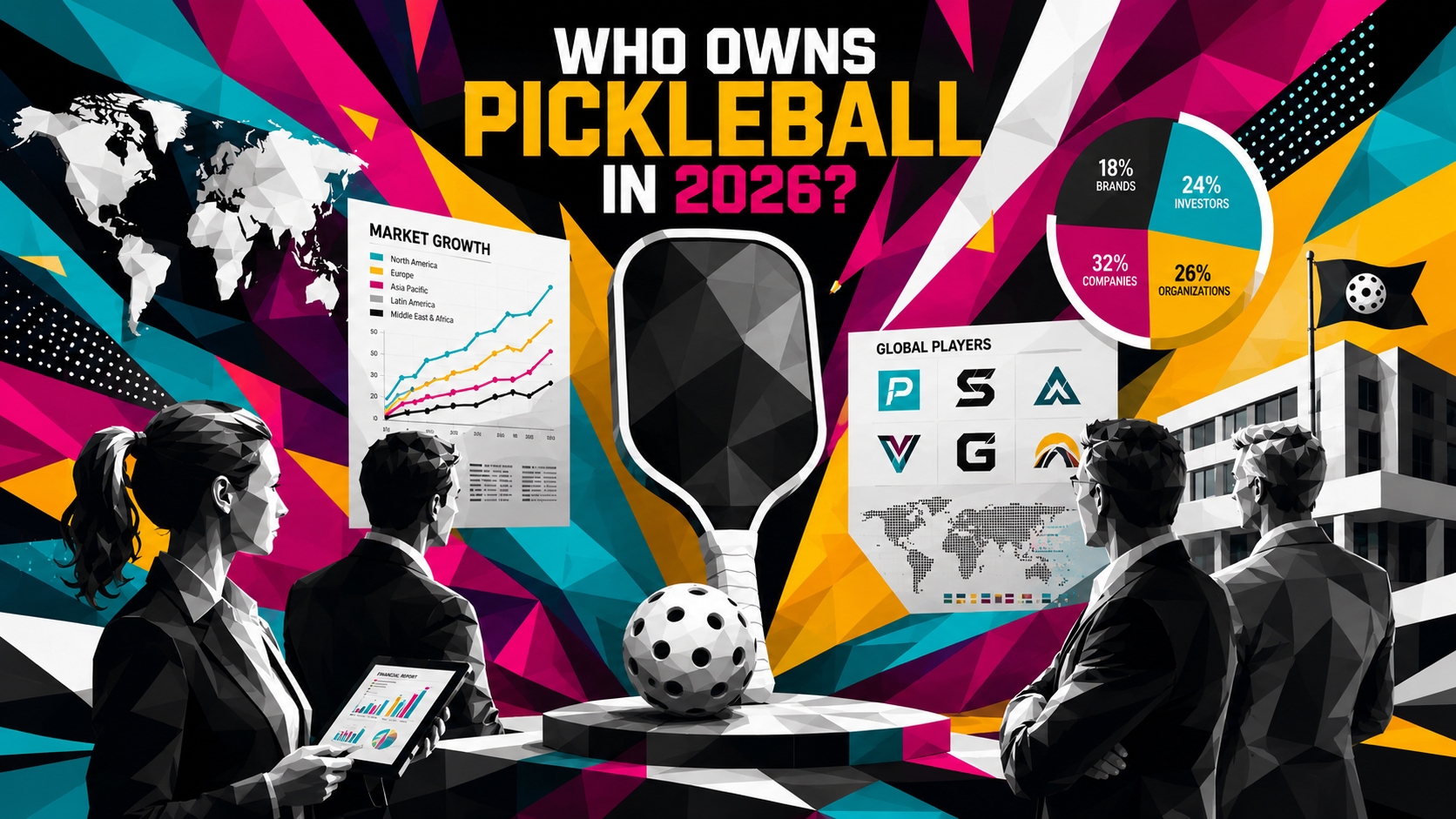
Inside the struggle for control of the world’s fastest-growing sport
The bid lasted only a few moments.
Inside Major League Pickleball’s player allocation process, franchise owners were making decisions that would have sounded absurd only a few years ago. One player. One contract. One moment that captured how dramatically the economics of pickleball had changed.
The St. Louis Shock committed approximately $1.23 million to secure Anna Bright.
The figure itself was not remarkable by the standards of football, basketball or golf. Across those sports, seven-figure contracts barely raise an eyebrow.
In pickleball, it felt different.
The number mattered because of what it represented.
Money had arrived.
Serious money.
Institutional money.
The kind of money that attracts investment banks, private equity firms, lawyers, consultants and multinational sponsors.
The kind of money that transforms a sport from a participation activity into a commercial asset.
For much of the past decade, pickleball’s story was refreshingly simple. More people played. More courts were built. More tournaments appeared. Manufacturers rushed into the market. Television networks became curious.
Growth drove everything.
In 2026, a different story is beginning to emerge.
Power.
Who controls the professional tours?
Who controls the rules?
Who controls the players?
Who controls the technology?
Who controls the international future of the game?
Most importantly, who benefits if pickleball continues its extraordinary rise?
Those questions sit at the centre of the sport’s business landscape.
The answers are neither simple nor universally agreed.
Some point towards Apollo Sports Capital and Pickleball Inc.
Others point towards USA Pickleball.
Others towards the APP and its expanding international alliances.
Others still look towards the World Pickleball Federation, the Global Pickleball Federation and a collection of national governing bodies attempting to establish authority in an increasingly crowded landscape.
For the first time in its history, pickleball has become valuable enough for multiple organisations to compete for influence.
The battle is no longer about whether pickleball will survive.
The battle is about who will shape what it becomes.
The $750 Million Machine
If there is one event that defines the business of pickleball in 2026, it is the creation of Pickleball Inc.
On 1 May, Apollo Sports Capital announced a landmark $225 million investment into the newly formed company. The transaction valued the organisation at approximately $750 million and instantly became the largest investment deal in the sport’s history.
The headlines focused on the capital.
The real story was the structure.
Apollo did not invest in a league.
It invested in an ecosystem.
Under the Pickleball Inc. umbrella sit the Carvana PPA Tour and Major League Pickleball, the two most influential professional properties in North America. Alongside them sit Pickleball Central, PickleballTournaments.com, Pickleball Play Solutions, Pickleball TV, Pickleball.com and Just Courts.
Viewed separately, these are successful businesses.
Viewed together, they form something much more powerful.
A recreational player may register for a tournament through software owned by the ecosystem. Purchase equipment from a retailer owned by the ecosystem. Watch professional content produced by the ecosystem. Attend events organised by the ecosystem. Eventually play on courts installed by the ecosystem.
Very few sports possess this degree of vertical integration.
Even fewer have achieved it so quickly.
Connor Pardoe remains one of the key architects of the structure. Billionaire investor Tom Dundon continues to exert enormous influence. Apollo’s arrival adds institutional credibility and financial power.
The significance extends beyond pickleball.
Private equity firms do not invest because they enjoy a sport.
They invest because they believe an asset can generate exceptional returns.
Apollo’s involvement signals a belief that pickleball can become one of the world’s most valuable emerging sports properties.
Combined revenues across Pickleball Inc.’s assets exceeded $140 million during 2025. Sponsorship revenues across the professional ecosystem continue rising. Television audiences continue growing. International opportunities continue expanding.
Apollo’s investment is effectively a wager on what pickleball might become five or ten years from now.
The firm is not betting on paddles and plastic balls.
It is betting on infrastructure.
It is betting on audience growth.
It is betting on ownership.
Yet ownership in pickleball is not as straightforward as it appears.
If you're following how the global game is shifting week by week, the World Pickleball Report breaks this down every day in our morning briefing.
One Sport, Many Governments
Most mature sports have a clear chain of authority.
Football has FIFA.
Golf has established global governing structures.
Tennis has internationally recognised organisations overseeing competition.
Pickleball does not.
Instead, it has something resembling a political map in constant motion.
USA Pickleball remains the most established governing body in the United States. It oversees national championships, officiating programmes, amateur competition structures and rule development.
Yet the professional game increasingly operates beyond its control.
The rise of the United Pickleball Association of America has created a second centre of power. Backed by the commercial strength of the PPA and MLP ecosystem, the UPA-A has introduced separate certification systems, governance frameworks and professional standards.
The consequences are tangible.
Some paddles approved under USA Pickleball standards are not approved under UPA-A certification.
Manufacturers must navigate multiple pathways.
Players increasingly operate under different competitive environments depending on where they compete.
The split has become one of the most significant governance developments in the sport.
Yet the story extends beyond North America.
The APP has adopted a very different strategy.
Rather than consolidating control through exclusive contracts and vertical integration, it has pursued alliances.
Its growing international coalition stretches across Europe, Asia, Australia, Canada and other developing markets.
The goal is clear.
Build a global pathway that exists outside the Pickleball Inc. structure.
Meanwhile, the World Pickleball Federation and Global Pickleball Federation continue pursuing legitimacy as international governing organisations.
Neither possesses universal recognition.
Neither controls the professional game.
Yet both recognise the same opportunity.
If pickleball eventually enters major multi-sport events or achieves Olympic recognition, the question of international governance becomes enormously important.
History suggests that the organisations controlling governance often hold influence far beyond the rulebook.
They shape international competition.
They influence funding.
They determine pathways to recognition.
They help decide who sits at the table when the sport’s future is discussed.
In 2026, pickleball has multiple claimants.
No single organisation has achieved uncontested authority.
That uncertainty may ultimately prove more important than any individual investment deal.
The New Cold War
If governance represents one front in the struggle for control, geography represents another.
The battle for pickleball’s future is increasingly international.
And nobody wants to arrive second.
During 2026, two announcements revealed how rapidly the global race is accelerating.
The APP launched its Asia Tour.
The PPA launched PPA Spain.
Neither move was accidental.
Both were strategic.
Spain is widely viewed as one of the most important expansion opportunities outside North America. The country’s deep racquet-sport culture, established padel infrastructure and favourable climate create obvious opportunities for growth.
The PPA’s seven-event Spanish circuit is not simply a tournament schedule.
It is a territorial claim.
A declaration that one of the sport’s most influential commercial organisations intends to establish a permanent foothold in Europe.
The APP’s strategy has focused elsewhere.
Asia.
Malaysia.
Thailand.
Vietnam.
Taiwan.
China.
India.
Together these markets represent populations measured not in millions but billions.
The logic is obvious.
The next generation of players may not emerge from Arizona or Florida.
They may emerge from Mumbai, Bangkok or Kuala Lumpur.
India has become particularly significant.
Participation is growing rapidly.
New courts continue appearing across the country.
Corporate interest is increasing.
The World Pickleball League has attracted investment and celebrity involvement.
The market remains fragmented enough for multiple organisations to believe they can establish leadership.
Dubai represents another fascinating battleground.
Government support, strong infrastructure, international connectivity and year-round playing conditions make it an attractive destination for events, sponsors and investors.
No single organisation currently controls these markets.
That reality explains why international expansion has become so aggressive.
Everyone understands the same thing.
North America may have built pickleball.
The global market could determine who ultimately owns its future.
The Platform Economy
One reason Apollo’s investment attracted so much attention is that it highlighted a reality many people had overlooked.
Pickleball Inc. is not merely a sports company.
It is increasingly a platform business.
Platform businesses operate differently from traditional sports organisations.
The value does not come solely from matches or events.
The value comes from controlling connections.
The relationship between players and tournaments.
The relationship between tournaments and technology.
The relationship between technology and data.
The relationship between data and sponsorship.
The relationship between sponsorship and media.
Every additional layer strengthens the whole.
That is why PickleballTournaments.com matters.
That is why Pickleball Play Solutions matters.
That is why Pickleball Central matters.
That is why Just Courts matters.
Each asset generates revenue independently.
Together they create leverage.
This is perhaps the strongest argument supporting Apollo’s investment.
The company did not purchase a league.
It purchased an interconnected ecosystem with multiple revenue streams and substantial growth potential.
The question now is whether that ecosystem can continue expanding quickly enough to justify its valuation.
The Facility Reckoning
The facility boom remains one of pickleball’s defining business stories.
It is also becoming one of its most complicated.
For several years, opening an indoor pickleball facility appeared almost foolproof. Demand surged. Memberships climbed. Investors rushed to convert warehouses and retail spaces into clubs.
Today, the market is becoming more selective.
Brands such as The Picklr and Pickleball Kingdom continue expanding aggressively. Multi-unit agreements are being signed. New territories continue opening.
Yet beneath the optimism, concerns are emerging.
Construction costs remain high.
Operating costs continue rising.
Public courts provide free alternatives.
Competition is increasing.
The result is a market beginning to separate winners from losers.
Scale matters.
Capital matters.
Operational expertise matters.
The strongest operators increasingly possess all three.
Alternative models are also gaining attention.
Chicken N Pickle’s eatertainment approach combines courts, hospitality, food, beverage and events. Revenue does not depend exclusively on court bookings.
That diversification creates resilience.
The lesson is becoming clear.
The facility gold rush phase is ending.
The business phase is beginning.
The Paddle Wars
Every growing industry eventually discovers intellectual property.
Pickleball is no exception.
JOOLA’s sweeping patent campaign against multiple competitors has become one of the most consequential legal stories in the sport.
At the centre of the dispute lies control over paddle technology.
What began as an industry driven by participation now increasingly resembles a mature sporting goods market.
Innovation matters.
Patents matter.
Certification matters.
Market share matters.
The significance extends beyond the courtroom.
If successful, legal action could influence product availability, manufacturing strategies and future research investment.
Manufacturers understand the stakes.
The next generation of paddle technology may help determine the next generation of market leaders.
The paddle wars are not simply about equipment.
They are about power.
What Sponsors Are Really Buying
Perhaps the clearest evidence of pickleball’s evolution comes from the brands entering the sport.
Nike signed Anna Leigh Waters.
Ares Management became title sponsor of the Pickleball Slam.
Powerball attached its name to the State Championship Series.
Oceanview secured naming rights to the USA Pickleball National Championships.
These organisations are not investing because pickleball is fashionable.
They are investing because they believe its audience has value.
Pickleball participants tend to be active consumers.
They travel.
They purchase equipment.
They pay for coaching.
They participate frequently.
From a sponsorship perspective, these characteristics are highly attractive.
The media numbers strengthen the argument.
The PPA Masters generated record audiences, averaging 791,000 viewers and peaking above one million.
The figures remain modest compared with global sports giants.
They are substantial for a sport of pickleball’s age.
Sponsors are no longer buying possibility.
They are buying access.
So Who Owns Pickleball?
The simplest answer is Apollo Sports Capital and Pickleball Inc.
The most accurate answer is nobody.
Not completely.
Not yet.
Apollo controls the most powerful commercial machine in the sport.
The PPA and MLP sit within its orbit.
The technology infrastructure is formidable.
The capital advantage is undeniable.
Yet ownership and control are not the same thing.
USA Pickleball continues to influence huge sections of the amateur game.
The APP continues building international alliances.
The World Pickleball Federation and Global Pickleball Federation continue pursuing legitimacy.
National federations continue operating independently.
Europe remains contested.
Asia remains contested.
India remains contested.
The Middle East remains contested.
The future remains contested.
Which brings us back to Anna Bright.
A million-dollar contract symbolised pickleball’s arrival as a serious business.
Yet it also symbolised something else.
A sport valuable enough for people to fight over.
The defining business story of pickleball in 2026 is not that somebody owns the sport.
It is that several powerful organisations are attempting to.
Apollo has built the biggest machine.
The next decade will determine whether that machine becomes the unquestioned centre of the pickleball world or merely one powerful force among many.
For now, the struggle continues.
And that may be the clearest sign yet that pickleball has truly arrived.
Further Reading
- Latest pickleball news from around the world
- Tournament coverage and results
- Rankings and player profiles
- Regional pickleball coverage
Did you enjoy this June magazine article? You can download the whole issue to read at your own leisure here.

Chris Beaumont
Founder and Editor-in-ChiefChris Beaumont is the founder and Editor-in-Chief of World Pickleball Magazine. Chris follows the global game closely, reporting on the latest news, developments, stories and tournaments from all five continents. He also hosts the World Pickleball Podcast, interviewing people at…
View All Articles →