
The Report
The outsiders are starting to win
World Pickleball Report sponsored by PKLBull
The outsiders are starting to winToday we look at Kuala Lumpur’s draw-breaking qualifiers, the players changing Asian pickleball, MLP’s new roster economy, India’s attention problem and the global stories widening the sport’s map.
This is the World Pickleball Report, brought to you by PKLBull.
The old order is becoming harder to protect.
That is the thread running through today’s Report.
In Kuala Lumpur, qualifiers and lower seeds did not just steal a few matches. They changed the feel of the tournament. In Asia, the next wave no longer looks like a handful of isolated prospects. It looks like depth.
In MLP, the new six-player roster format may change what a valuable player actually is. In India, the IPBL is trying to build relevance in an age where athletes are often discovered through clips before matches. And in Europe, Rome showed how smaller markets are starting to connect to the professional ecosystem.
This is not just growth.
It is pressure on the old assumptions.

Big feature: Kuala Lumpur’s qualifiers are no longer surprises
The Panas Kuala Lumpur Open was supposed to reinforce the established order on the Asian circuit.
Instead, it exposed how unstable that order may already have become.
Japanese qualifier Nasa Hatakeyama reached the men’s singles final after beating multiple seeded players. Vietnam’s Truong Vinh Hien moved within one win of a maiden Asian singles title. Mihae Kwon broke through in the women’s draw. Kei Sawaki, still only 15, pushed the top seed to the edge.
What matters: this was not just a tournament with upsets. It was a sign that Asian pickleball’s second tier is becoming dangerous enough to reshape entire draws.
Read the Kuala Lumpur lead story
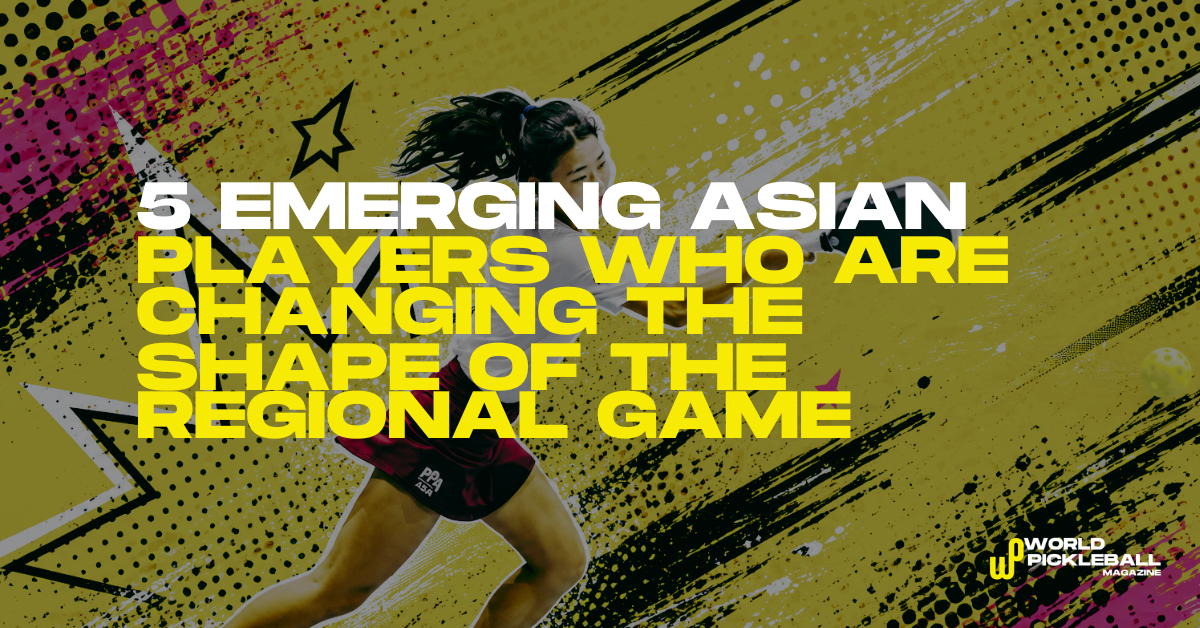
Five Asian players international fans need to know
The deeper story in Kuala Lumpur is not one breakout player.
It is the number of players who suddenly look ready to disrupt the regional hierarchy.
Nasa Hatakeyama brings composure. Truong Vinh Hien looks like a regional benchmark. Nguyen Hung Anh showed Vietnam’s depth. Kei Sawaki represents the speed of Japan’s youth development. Mihae Kwon showed how unpredictable the women’s field is becoming.
What matters: Asia is no longer producing occasional spoilers. It is beginning to produce waves of players who look comfortable at the professional level.
Read the five-player watchlist

The May issue gives the bigger picture
The daily news shows what moved today.
The magazine helps explain why those movements matter.
Across global development, tactics, player stories, pro tours and the business of the sport, the May issue gives you the deeper read in one place.
Download the free May 2026 issue

MLP may have changed what a valuable player is
The 2026 Major League Pickleball season is not just bringing six-player rosters.
It may be bringing a new player economy.
Specialists, DreamBreaker closers, left-side fit, mixed doubles chemistry and role acceptance may now matter as much as raw ranking strength. The best roster may no longer be the one with the most famous names. It may be the one with the fewest tactical dead ends.
What matters: MLP is moving closer to a true franchise league, where roster intelligence can matter as much as individual talent.
Read the MLP roster value analysis

Indian pickleball has entered the attention economy
There was a time when athletes became famous because they won.
Modern sport increasingly expects them to become visible first.
The IPBL understands that reality. Younger fans are finding athletes through clips, personalities and short-form narratives before they ever watch a full match. That gives Indian pickleball a huge opportunity, but also a real risk.
What matters: a league can manufacture excitement faster than it can manufacture depth. India’s next test is turning attention into lasting competitive culture.
Read the IPBL attention economy analysis

In other news: the global ecosystem is widening
Not every important development arrives as a major final or a major investment announcement.
The APP’s 2026 Touring Pro class points toward a more formal youth-to-pro pathway. Katherine Serrano’s Triple Crown in Rome showed the growing credibility of European events. Ryan Fu’s Italian visit showed how American professionals are beginning to treat secondary international markets as meaningful competitive and commercial spaces.
What matters: pickleball is becoming broader, deeper and harder to define through a purely North American lens.
Sponsored: PKLBull
Most paddles are priced like luxury products.
That does not mean they should be.
Good paddles. Dinky price. No bull.
One thing to watch
The interesting question now is not simply whether pickleball is getting bigger.
It is who is adjusting fastest to the sport’s new demands.
In Asia, lower seeds and qualifiers are becoming harder to control. In MLP, teams are being forced to think like real franchises. In India, attention is arriving before full infrastructure. In Europe, smaller markets are beginning to feel connected to the professional game.
The easy explanations are running out.
The sport is still growing, but the better story is that the old map no longer explains it.