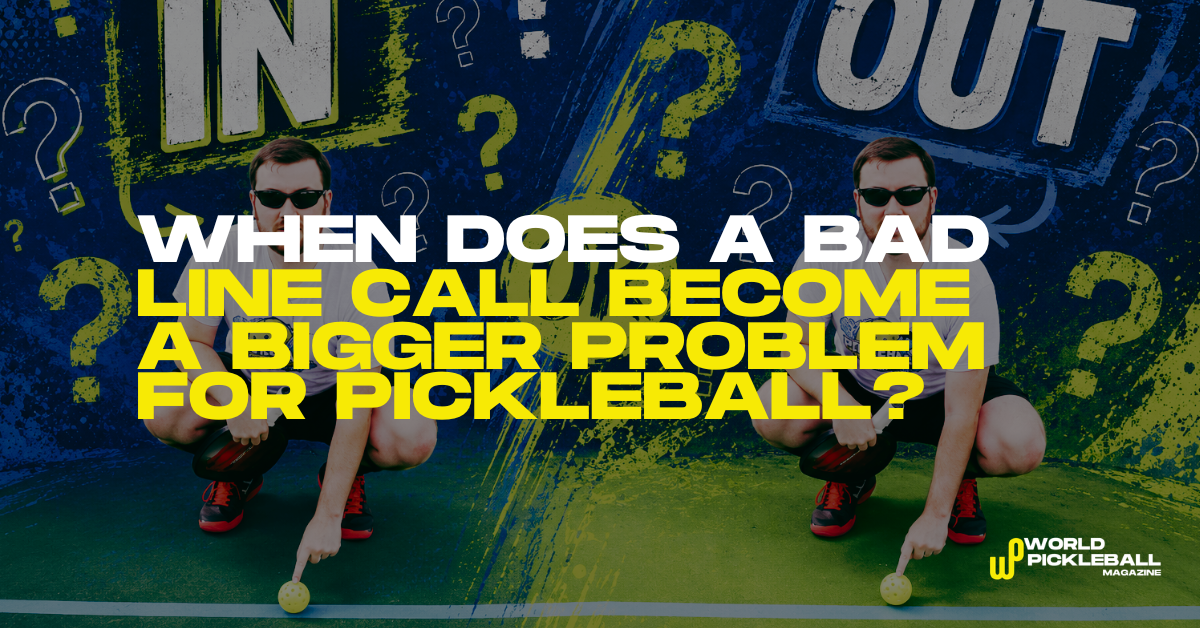
Professional pickleball’s latest line-calling debate is about far more than one disputed point or one viral clip. As prize money, rankings, and visibility rise, the sport is being forced to confront a difficult question: can the honour system that helped build pickleball survive the pressures of professional competition?
- Debate around disputed line calls and “hooking” has intensified across professional pickleball.
- The deeper issue is structural: pickleball’s self-officiating culture is colliding with professional stakes.
- The sport now faces pressure to modernise officiating as money, broadcasts, and scrutiny grow.
The point had already finished when the noise started.
One player stopped near the baseline. Spectators behind the court immediately began reacting. Within minutes, freeze frames and replay clips of another disputed line call were spreading across pickleball social media.
Then came the question from Zane Navratil that professional pickleball can no longer comfortably avoid.
“At what point do you become a hook?”
Navratil’s latest discussion with The Dink did not simply revisit a few controversial calls. It exposed something deeper beneath the professional game: growing concern that pickleball’s old systems are struggling to keep pace with the level the sport has reached.
Because this is no longer only about one bad line call.
It is about trust.
The Problem Is Bigger Than One Player
Professional pickleball has always relied heavily on self-officiating. At recreational level, that culture helped make the sport unusually welcoming. Players were expected to resolve disputes themselves. Fairness sat within the social fabric of the game.
That system becomes far harder to maintain once rankings, sponsorships, contracts, prize money, and broadcast exposure enter the equation.
Players reviewing clips on phones after matches is now part of the modern scene. So are slow-motion replays, social posts, comments from other professionals, and instant judgement from fans who can watch the same call over and over again.
That scrutiny changes everything.
Singles creates its own pressures too. There is less shared accountability, sharper angles, faster directional changes, and more isolated pressure moments. Players are often forced to make split-second decisions immediately after covering large areas of court.
Honest mistakes will always happen.
The problem begins when competitors and spectators start believing those mistakes consistently move in one direction.
Pickleball’s Professional Boom Has Changed the Stakes
A few years ago, many professional pickleball events still felt close to the sport’s recreational roots. The atmosphere was intimate. Prize money was smaller. Broadcast scrutiny was lighter.
That environment no longer exists.
Professional pickleball now operates with major sponsorships, growing television audiences, franchise ownership groups, streaming partnerships, international expansion plans, and increasingly serious financial consequences attached to winning.
That is why this conversation belongs alongside the wider questions shaping professional pickleball news, not as gossip but as part of the sport’s growing pains.
The PPA and other professional bodies are already under pressure to show that review systems, sanctions, and officiating standards are strong enough for the modern game. Players do not only want punishment after the fact. They want confidence that the process is consistent, visible, and trusted.
Professional sports do not survive on perfection. They survive on belief in the process around the competition.
If you’re following how the global game is shifting week by week, the World Pickleball Report breaks this down every day in our morning briefing.
Why Pickleball Is Feeling the Pressure So Quickly
Tennis evolved over decades alongside officiating infrastructure. Chair umpires, line judges, electronic review, formal challenge systems, and broadcast technology all became part of the sport’s professional machinery.
Pickleball has developed much faster.
It is trying to professionalise during the social media age, where every controversial call can be clipped, slowed down, replayed, and debated almost instantly. That gives the sport less room to mature quietly.
The sport has exploded commercially while still carrying elements of its recreational culture directly into elite competition. In many ways, that community-driven identity remains one of pickleball’s greatest strengths.
But it also creates tension.
The very thing that helped make pickleball socially accessible may now be creating structural problems at professional level.
That does not mean self-officiating was a mistake. It means the sport is entering a different phase of maturity.
The Real Danger Is Erosion of Trust
This is why the conversation matters beyond one controversial clip online.
The danger for pickleball is not simply that players get angry at calls. Every sport experiences officiating frustration.
The bigger danger is slower and more damaging: erosion of trust in the system itself.
If players begin believing opponents are gaining unfair advantages through repeated questionable calls, resentment grows quickly. If spectators begin assuming controversial moments are inevitable, confidence in outcomes weakens. If broadcasters and sponsors begin questioning the reliability of officiating standards, the credibility of the product itself comes under pressure.
That is why this debate now feels important rather than dramatic.
Professional pickleball is transitioning from community sport into major sport in real time. Transitions like that expose stress fractures.
The question facing the tours is no longer whether disputed calls exist.
The question is whether the sport’s systems are evolving quickly enough to handle the level professional pickleball has already reached.
Pickleball built its culture on trust. The challenge now is whether it can protect that culture while building a professional system strong enough to survive success.
For a clearer view of where the sport is heading each month, you can download the latest free issue of World Pickleball Magazine.
Further Reading
- Latest pickleball news from around the world
- Tournament coverage and results
- Rankings and player profiles
- Regional pickleball coverage

Chris Beaumont
Founder and Editor-in-ChiefChris Beaumont is the founder and Editor-in-Chief of World Pickleball Magazine. Chris follows the global game closely, reporting on the latest news, developments, stories and tournaments from all five continents. He also hosts the World Pickleball Podcast, interviewing people at…
View All Articles →