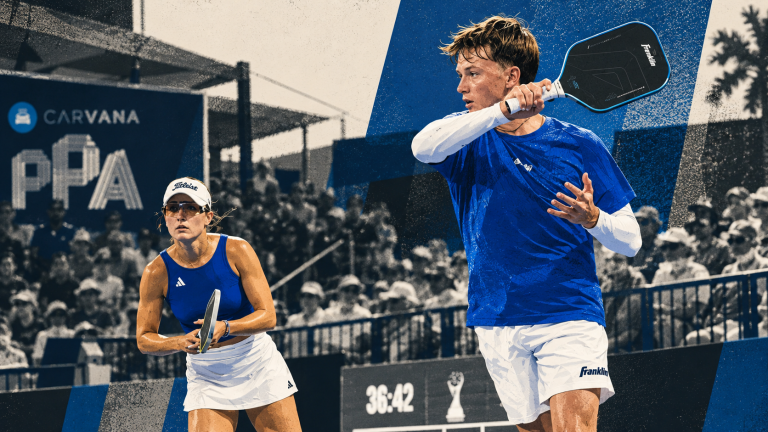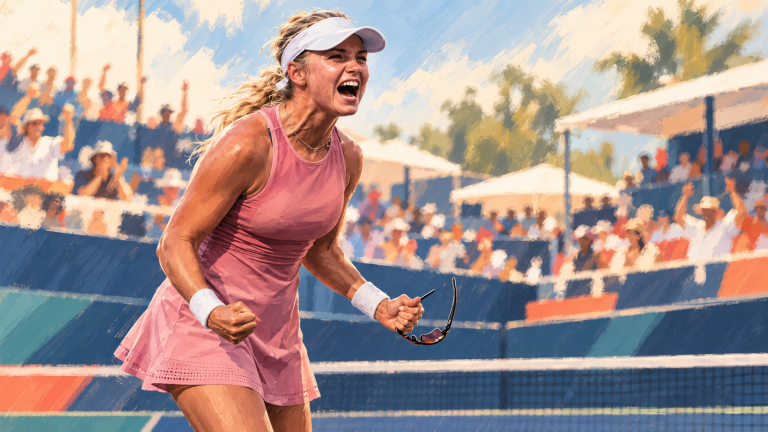

Major League Pickleball’s 2026 structure is not simply a longer calendar with bigger venues. It is the clearest sign yet that team pickleball is trying to move beyond the feel of a travelling event circuit and become a genuine sports league with rhythm, identity, and stakes.
- MLP’s 2026 season will feature 20 teams competing across nine regular-season events.
- The league has removed the old split structure and is pushing towards a cleaner, easier-to-follow competition model.
- The bigger shift is philosophical: MLP is increasingly behaving like a sports league rather than a collection of standalone pickleball weekends.
By the end of August, professional pickleball wants its team champion crowned in the middle of New York City rather than inside another anonymous convention hall.
That is the real signal inside Major League Pickleball’s 2026 season structure.
Yes, there are practical details. Twenty teams. Nine regular-season events. A midseason tournament. Three playoff rounds. A championship weekend in New York from August 28 to 30.
But the more important point is what the league is trying to become.
MLP’s 2026 calendar feels less like a list of tournaments and more like an attempt to create an actual sporting season.
From Travelling Event Series to Coherent League Structure
The league confirmed this week that all 20 teams will compete in one level during the 2026 campaign, with each franchise playing five regular-season events across the schedule.
The season opens in Dallas in May before moving through markets including Phoenix, San Clemente, Washington D.C., St. Louis, and Orlando. The playoffs then run through Dallas, Newport Beach, and finally New York City.
That may sound like straightforward scheduling. In reality, it is a substantial structural shift.
Until now, MLP has often felt closer to a travelling entertainment property than a fully formed league. The split between Premier and Challenger divisions created confusion for casual viewers, event importance sometimes blurred together, and the season could feel fragmented unless fans were already deeply invested.
There was atmosphere. There were celebrity owners. There were viral moments and loud crowds. But there was not always the sense of a coherent sporting journey from opening weekend through to championship conclusion.
The 2026 structure appears designed to fix that.
A single 20-team competition, clearer playoff pathways, recurring team markets, and a defined season rhythm all push MLP closer to the conventions of established professional leagues rather than a collection of loosely connected events.
The league’s midseason tournament in Grand Rapids, Michigan, scheduled for July, reinforces that approach. It gives the calendar a checkpoint moment instead of allowing the season to blur into one long run of interchangeable weekends.
If you’re following how the global game is shifting week by week, the World Pickleball Report breaks this down every day in our morning briefing.
Why MLP Is Chasing Emotional Attachment
The challenge facing MLP now is not visibility.
Professional pickleball already has attention. It has celebrity investment, broadcast partnerships, highlights, social clips, and a growing audience.
The harder challenge is attachment.
Tournament sports naturally create spikes of excitement. A final feels important. A rivalry feels important. A dramatic match point spreads online quickly.
Building repeat emotional investment is far harder.
That is why MLP increasingly talks about team markets, rivalries, playoff races, and city identity. The league is trying to create the habits that traditional sports leagues rely on: fans recognising fixtures, following standings, caring about postseason qualification, and identifying with teams beyond individual players.
This is also where MLP separates itself from the individual-tour structure currently shaping the PPA calendar.
The PPA remains built around individual careers, rankings, changing partnerships, and weekly bracket progression. MLP is attempting to create something with a different emotional texture. Team benches are louder. Coaching matters more. Crowds often react differently. Players themselves regularly describe MLP weekends as a mental reset from the grind of constant individual competition.
That distinction is becoming central to professional pickleball’s identity.
Why the New York Finale Actually Matters
The New York championship weekend is especially revealing.
The location matters not because it sounds glamorous, but because recognisable settings create sporting memory.
A final staged in New York carries a different visual identity from another interchangeable indoor venue. Television understands that. Sponsors understand it too.
MLP increasingly appears aware that atmosphere and backdrop are not side details. They are part of the product.
The league is also continuing to widen the ecosystem around its events. Minor League Pickleball and Junior MLP competitions are expected to feature at selected stops again in 2026, helping weekends feel broader than a single pro draw.
That layered structure matters because leagues become stronger when fans feel they are entering a world rather than simply watching isolated matches.
The Real Test Starts Now
There are still major questions ahead.
Can franchises build lasting identities?
Can fans stay invested between events?
Can team pickleball create repeat viewing habits rather than isolated moments of attention?
Can the league maintain quality while balancing expansion and commercial pressure?
Those questions matter far more than whether the calendar is bigger than last year’s.
Because the real story of MLP’s 2026 season is not expansion.
It is coherence.
Plenty of sports properties can create noise for a weekend. What Major League Pickleball is trying to build now is something far harder: a season people feel connected to before it even begins.
For a clearer view of where the sport is heading each month, you can download the latest free issue of World Pickleball Magazine.
Further Reading
- Latest pickleball news from around the world
- Tournament coverage and results
- Rankings and player profiles
- Regional pickleball coverage

Chris Beaumont
Founder and Editor-in-ChiefChris Beaumont is the founder and Editor-in-Chief of World Pickleball Magazine. Chris follows the global game closely, reporting on the latest news, developments, stories and tournaments from all five continents. He also hosts the World Pickleball Podcast, interviewing people at…
View All Articles →