
When some of tennis’s most recognisable figures start openly discussing why pickleball connected so quickly with recreational players, the conversation stops being a novelty debate and becomes something more uncomfortable for the sport they came from.
- John McEnroe and other major tennis figures are increasingly acknowledging pickleball’s recreational appeal.
- The issue is not simply court space or participation numbers, but how differently the two sports feel to new players.
- Pickleball’s rise may reveal long-standing accessibility and retention problems tennis struggled to solve.
For years, much of tennis treated pickleball as a curiosity.
A retirement pastime. A temporary recreational trend. Something that would eventually settle back into the margins.
That tone has changed noticeably.
When figures like John McEnroe begin openly discussing why pickleball has connected so quickly with recreational players, it carries a different kind of weight.
Not because tennis is disappearing.
And not because pickleball is replacing one of the world’s biggest sports.
But because some of tennis’s most recognisable voices are now acknowledging something the participation numbers have been suggesting for years: pickleball identified frustrations recreational players increasingly felt with traditional racket sports.
The important point is that pickleball did not invent demand.
It exposed unmet demand that tennis had gradually stopped serving particularly well.
That distinction matters.
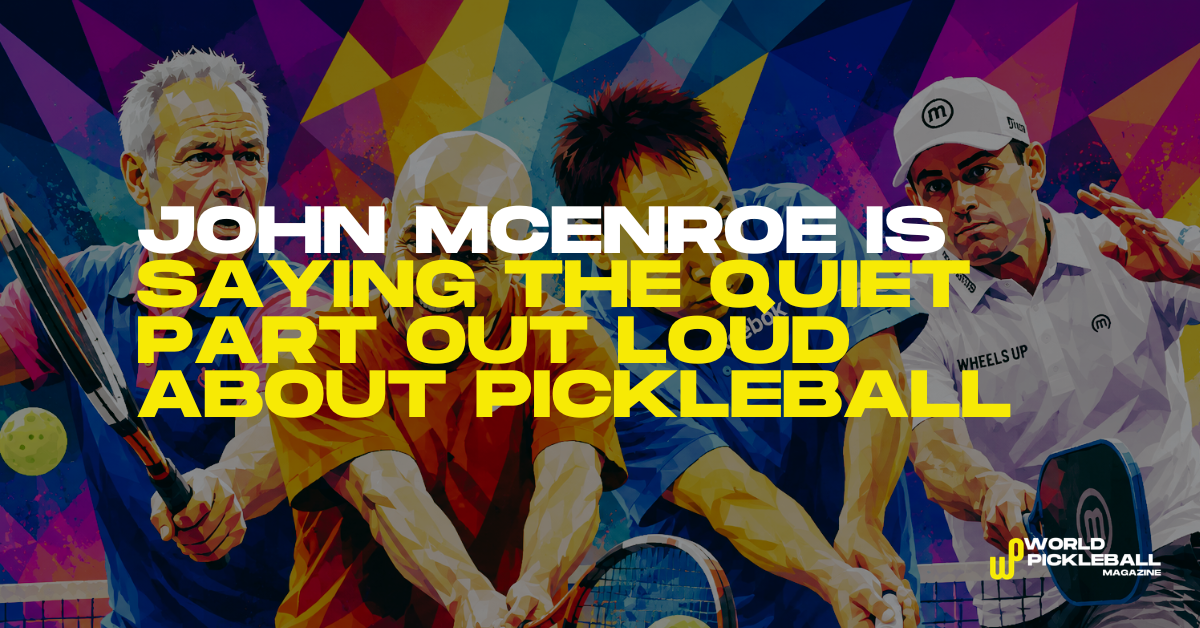
The recent tennis legends interview on pickleball, featuring McEnroe, Andre Agassi, Andy Roddick and Michael Chang was eye-opening.
The Tennis Names Make This Harder To Ignore
The names involved are significant.
Agassi, Roddick, and Chang all represent different generations and identities within modern tennis culture.
Yet the themes emerging from the conversation are remarkably similar.
The issue is not simply that pickleball is easier.
It is that the sport removes friction almost immediately.
If you’re following how the global game is shifting week by week, the World Pickleball Report breaks this down every day in our morning briefing.
The Accessibility Tennis Underestimated
For decades, tennis largely treated difficulty as part of its identity.
The learning curve mattered. Technical mastery mattered. Repetition mattered. The struggle to improve was often framed as part of the sport’s appeal.
Pickleball evolved around a very different recreational experience.
Rallies happen faster for beginners. Courts feel less physically intimidating. New players can become socially functional within a single session rather than after months of technical work.
It also fits more naturally into modern recreational habits built around shorter sessions and flexible social play.
That changes the emotional experience dramatically.
The difference is not just athletic.
It is psychological.
Pickleball reduces embarrassment faster.
It creates competence faster.
And perhaps most importantly, it creates social inclusion faster.
That is why the court-conversion conversation has become so emotionally charged inside parts of the tennis world.
The economics matter, of course. Clubs can often fit multiple pickleball courts onto one tennis surface. Participation demand increasingly follows those numbers.
But the deeper issue sits elsewhere.
Clubs are ultimately responding to behaviour.
And recreational behaviour has changed.
A Different Kind Of Sporting Experience
What makes the current conversation interesting is that many of the tennis figures discussing pickleball are not dismissing it anymore.
That alone marks a shift.
Agassi’s involvement in pickleball has already blurred the cultural boundary between the sports. Roddick increasingly speaks about participation realities with far more nuance than the old “real sport versus fad” framing that dominated earlier conversations.
McEnroe’s role matters most symbolically.
He represents old-school tennis intensity. Competitive edge. Tradition. Broadcast authority.
So when he openly discusses why pickleball has resonated with recreational audiences, it sounds less like marketing hype and more like reluctant recognition that something meaningful has shifted.
Tennis institutions now face a delicate balancing act.
Protecting the identity and traditions of tennis still matters enormously. Elite tennis remains one of the world’s premier global sports products.
But recreational participation no longer behaves the same way it did 20 or 30 years ago.
Modern players increasingly prioritise accessibility, flexibility, social connection, lower entry pressure, and immediate enjoyment.
Pickleball aligned naturally with those preferences.
That does not mean tennis failed.
But it may mean tennis underestimated how strongly recreational audiences were beginning to value ease of entry and social immediacy.
What This Really Says About Pickleball
The symbolism should not be overstated.
Tennis is not disappearing, and pickleball does not need tennis to collapse in order to continue growing.
But the fact that some of tennis’s most recognisable voices are now openly discussing why pickleball connected so quickly says something important about how recreational sport itself is changing.
The sports that grow fastest in the next decade may not simply be the ones with the richest traditions or biggest stars.
They may be the ones that make participation feel easiest to begin.
Further Reading
- Latest pickleball news from around the world
- Tournament coverage and results
- Rankings and player profiles
- Regional pickleball coverage
For a clearer view of where the sport is heading each month, you can download the latest free issue of World Pickleball Magazine.

Chris Beaumont
Founder and Editor-in-ChiefChris Beaumont is the founder and Editor-in-Chief of World Pickleball Magazine. Chris follows the global game closely, reporting on the latest news, developments, stories and tournaments from all five continents. He also hosts the World Pickleball Podcast, interviewing people at…
View All Articles →