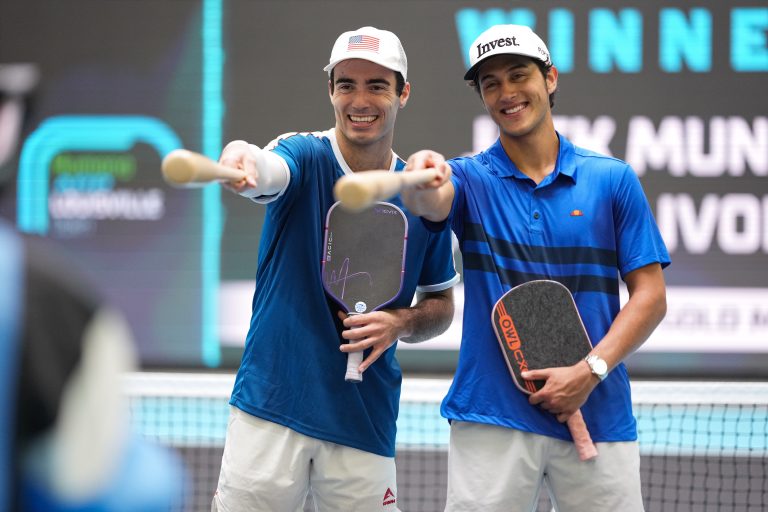

Belfast City Park has become one of Northern Ireland’s busiest pickleball locations, but growing participation has brought a familiar community tension: how do public courts balance active sport with nearby residents’ peace and quiet?
Key Takeaways
- Belfast City Park has become a busy pickleball hub, with courts used throughout the day
- Nearby residents have raised concerns about noise from regular play
- The dispute raises a wider question about how growing sports share public space responsibly
Belfast City Park has become one of the most active pickleball locations in Northern Ireland. From early mornings to late evenings, the courts are rarely empty.
For many players, it has quickly become a social hub and a place to stay active. But for some residents living nearby, the rapid rise of the sport has brought an unexpected issue: noise.
A Growing Clash In Belfast City Park
Local residents have raised concerns about the sound coming from the courts throughout the day.
The issue is not limited to one group of players or a specific time slot. Early sessions often attract older players, while evenings see younger groups and social play extending later into the night.
For those living closest to the park, the constant activity has begun to affect daily life.
At the centre of this is a simple tension that many growing sports eventually face. One group sees participation, health and community building. The other sees disruption to the environment they live in.
The Player Perspective
For many involved, pickleball has become more than just a sport.
It is widely seen as a low-impact activity that allows people of different ages to stay active. Several participants in Belfast are reportedly new to regular exercise, using pickleball as a way to build routine, fitness and social connection.
Supporters argue that this is one of the sport’s strongest qualities. Unlike many traditional sports, pickleball allows players to control pace and intensity, making it accessible to a wide range of abilities.
It has also become a social outlet, with many players describing it as a way to meet new people and stay engaged in the community.
Voices From The Community
One Belfast resident and pickleball enthusiast, Larry Caldwell, believes the solution may lie in communication rather than conflict.
He has suggested that residents and players meet directly at the courts to better understand each other’s perspectives.
The idea reflects a wider belief among some players that the issue is not the sport itself, but the lack of shared understanding between those using the space and those living nearby.
Possible Solutions
Local authorities and community organisers are now exploring potential ways to address the issue.
Several options have been discussed:
- Installing noise-reducing barriers around the courts
- Adjusting playing hours to reduce late evening disruption
- Exploring alternative court surfaces or equipment
However, each solution presents challenges.
Barriers and infrastructure changes would require funding and council approval. Adjusting equipment, such as using quieter paddles, may also create cost barriers for players and could affect the quality of play.
Relocation of the courts has also been mentioned. While this could ease tensions in the current area, it raises another issue: accessibility. Many players rely on the current location due to walking distance or public transport links.
A Wider Question For The Sport
Belfast may be an early example, but it is unlikely to be the last.
As pickleball continues to spread across communities, more cities will face the same challenge: how to balance accessible public sport with residential peace and quiet.
The issue is not whether pickleball should exist in public spaces. It is how those spaces are managed when a quiet recreational activity becomes a regular, high-use community sport.
That makes Belfast an important local story with a wider lesson.
The question is no longer whether pickleball can attract players. It clearly can.
The question is how communities choose to manage that success.
And in Belfast, that conversation has already begun.
Further Reading
- Latest pickleball news from around the world
- Tournament coverage and results
- Rankings and player profiles
- Regional pickleball coverage

Harmon Ghotra
Founder and Editor-in-ChiefHarmon is a member of the World Pickleball Media Academy. A sports journalism student at Solent University, Harmon is a Community Correspondent.
View All Articles →