

Professional pickleball continues to evolve rapidly behind the scenes, with governance questions, ratings adjustments, television-focused formats, and personality-driven media all shaping the sport’s next phase.
- Differences between UPA and USAP officiating came into focus again this week
- DUPR has introduced new ratings distinctions for mixed doubles and 50+ competition
- The PPA Tour is investing more heavily in broadcast formats and narrative storytelling
Professional pickleball’s growing pains surfaced again this week after differing officiating decisions exposed the increasingly awkward divide between the UPA and USAP rulebooks.
Brazilian pro Eric Oncins received an unsportsmanlike conduct warning during the PPA Tour event in Sacramento after blowing on a ball as it crossed the net, a call made by referee Don Stanley. Yet the same act had gone unpenalised earlier during PPA Asia competition in Hanoi.
The incident itself may appear minor, but the wider issue matters more. As professional pickleball expands internationally, consistency across officiating and rule interpretation is becoming increasingly important for players, broadcasters, and tournament organisers alike.
The UPA has since moved to ban the act entirely, while it technically remains permissible under current USA Pickleball rules.
DUPR Moves Towards More Specific Ratings
At the same time, DUPR announced a significant update to its ratings system, introducing separate mixed doubles ratings alongside new age-specific ratings for 50+ competition.
The changes reflect how much more sophisticated the sport’s data environment is becoming. Mixed doubles often produces very different tactical and statistical patterns from gender doubles, while age-bracket competition can distort comparative ratings if grouped too broadly inside one overall system.
In simple terms, the player base is now large and varied enough to require more precise modelling.
If you’re following how the global game is shifting week by week, the World Pickleball Report breaks this down every day in our morning briefing.
PPA Finals Switch To Group Play
Attention is also beginning to shift towards the season-ending Toys “R” Us PPA Finals in San Clemente, California, where organisers are experimenting with a different competitive format.
Instead of a traditional progressive knockout bracket, the event will use ATP Finals-style group play. Singles competitors will be placed into pools of four before the top two players advance into the weekend medal rounds, while doubles draws will feature 16-team fields.
The format creates a different television product from a standard tour stop. It guarantees elite players multiple appearances across the week, allows storylines to develop more gradually, and reduces the risk of major stars disappearing after a single early loss.
One early talking point is the absence of Anna Leigh Waters from the women’s singles field, despite her continued involvement elsewhere during finals week.
Partners Pushes Pickleball Into Storytelling Mode
Away from competition, the PPA Tour has also released a six-part docuseries titled Partners, produced by Shutterstock Studios and distributed across Amazon Prime, Pickleball TV, and YouTube.
The series focuses heavily on player relationships and off-court tension during the 2023 and 2024 seasons, including the formation of the Anna Leigh Waters and Anna Bright partnership, the Quang Duong family’s disagreements with tour management, and the breakup of Hunter Johnson and Parris Todd.
More than anything, the project reflects a growing understanding inside professional pickleball that audiences increasingly connect with personalities and emotional storylines as much as match results themselves.
That shift mirrors a broader trend across global sport, where behind-the-scenes access and long-form storytelling are becoming central parts of audience growth strategies rather than optional extras.
Why It Matters
Individually, these stories may seem unrelated. Together, they offer a useful snapshot of where professional pickleball currently sits.
The sport is becoming more structured, more data-driven, more commercially aware, and more conscious of how it presents itself both to fans and broadcasters.
That evolution brings opportunity, but also increasing complexity.
As professional pickleball continues to grow, the challenge is no longer simply attracting attention. It is building systems, formats, and narratives strong enough to sustain it.
For a clearer view of where the sport is heading each month, you can download the latest free issue of World Pickleball Magazine.
Further Reading
- Latest pickleball news from around the world
- Tournament coverage and results
- Rankings and player profiles
- Regional pickleball coverage
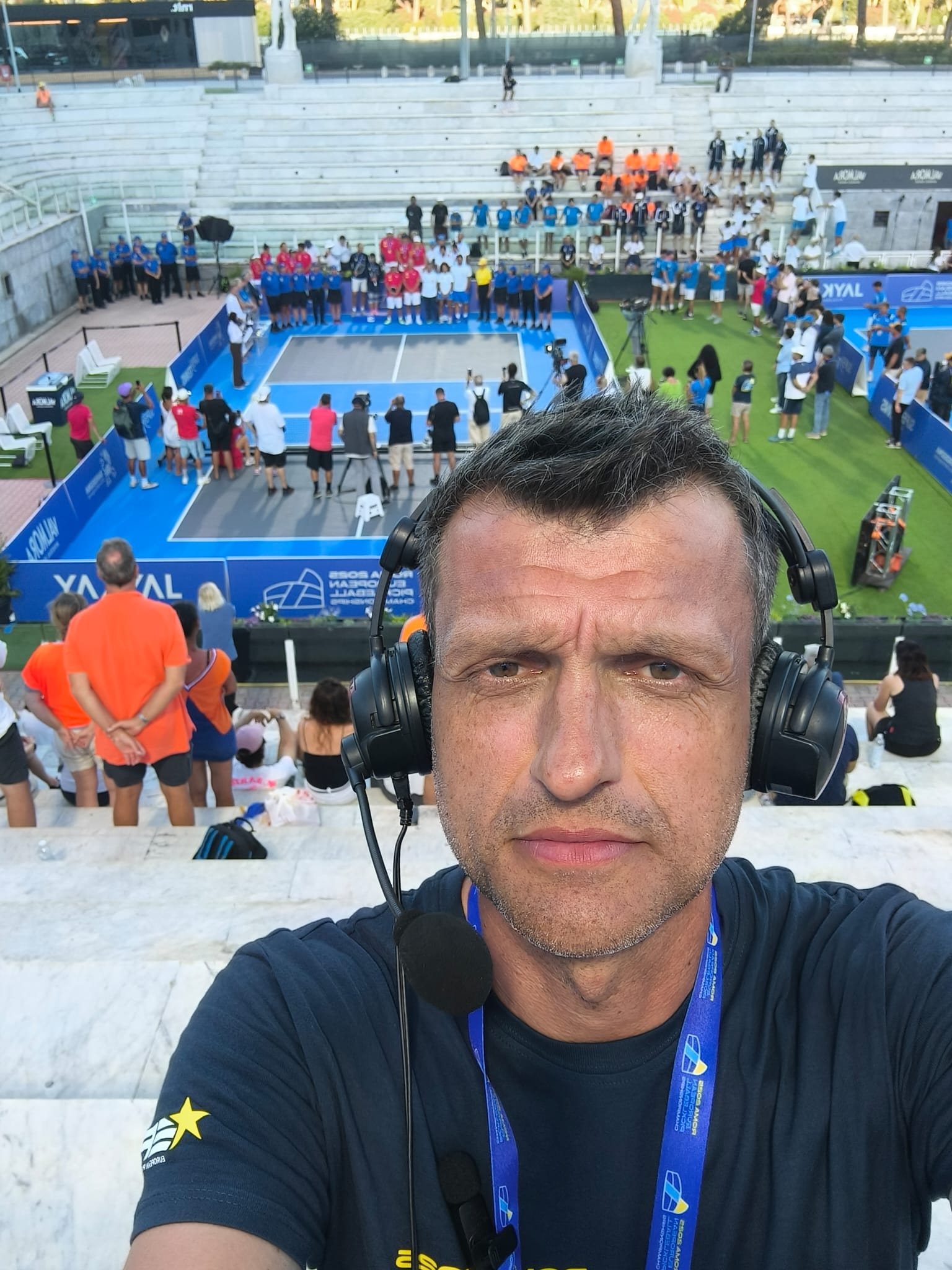
Chris Beaumont is the founder and Editor-in-Chief of World Pickleball Magazine. Chris follows the global game closely, reporting on the latest news, developments, stories and tournaments from all five continents. He also hosts the World Pickleball Podcast, interviewing people at all levels of pickleball. Chris is also an avid player, currently struggling to make the breakthrough from 4.0 to 4.5.