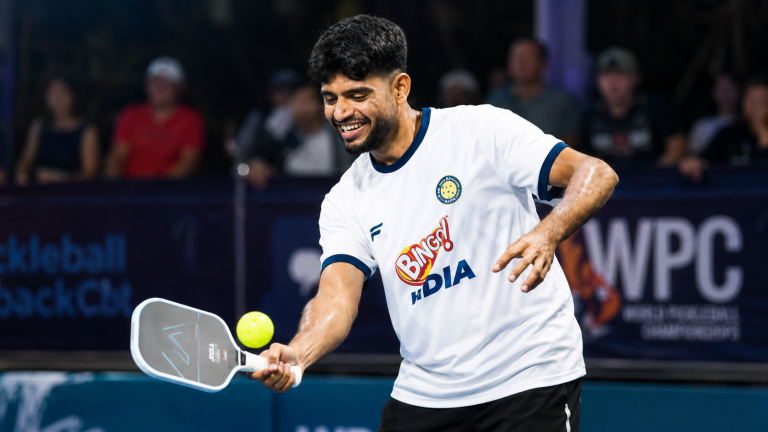
MLP Asia’s six inaugural franchises have selected 18 domestic players before next week’s International Draft. The more revealing question is not who won the first stage of roster building, but what each team has chosen to build around.
Key Takeaways
- All six MLP Asia franchises have selected three domestic players, with at least one man and one woman required on each roster.
- The remaining three roster positions will be filled through the live International Draft on Monday 14 September.
- Several teams already possess established professional experience, existing doubles chemistry or players from UPA Asia’s Trailblazers development programme.
- Quan Do and Hien Truong give the Viet Panthers a proven partnership that has already won three PPA Tour Asia men’s doubles titles together.
- The Domestic Draft is about more than competitive balance. It gives each new franchise a local identity before international players arrive.
Before Major League Pickleball Asia adds the international names, the recognisable professionals and the players most likely to reshape the competitive order, it has done something more fundamental.
It has decided who belongs to each team first.
The six franchises that will contest MLP Asia’s inaugural season have completed their Domestic Drafts, selecting three home-market players apiece with at least one man and one woman required on every roster. Eighteen players are now locked in, six have been designated as captains and, when the league begins in Japan on 13 November, these are the players around whom MLP Asia will attempt to turn six newly created franchises into teams that actually mean something to the places whose names they carry.
The Dragon Warriors have Lingwei Kong, Anni Xie and Longsheng Liu. The Hong Kong Canons have Hong Kit Wong, Nok Yiu Tang and Marco Leung. The Malayan Stripes have Jimmy Liong, Syed Uzair and Athilla Miasara. The Manila Helios have Kim Saraza, Jacob Diago and Macy Ybanez. Team Tokyo have Yuta Funemizu, Aiko Yoshitomi and Rika Fujiwara. The Viet Panthers have Quan Do, Hien Truong and Sophia Nhi Huynh.
Kong, Wong, Liong, Saraza, Funemizu and Do will captain them.
MLP Asia’s full Domestic Draft announcement can be viewed here.
The obvious question is which team won the draft.
It is also the wrong question, at least for another week.
On Monday 14 September, MLP Asia will hold its International Draft, a live auction through which every franchise will fill the remaining three places on its six-player roster. Half of every team therefore remains unknown, and a single elite international doubles player, dominant woman or genuine singles specialist could completely change what we think we know about the competitive hierarchy.
What the Domestic Draft allows us to judge is something different.
Not which teams are best.
What they are being built around.
China Has Chosen Experience and Development Together
The Dragon Warriors provide perhaps the clearest example of a franchise using its three domestic positions to cover different stages of the player pathway.
Lingwei Kong is already an established professional.
A former ITF player who competed at No.1 singles and doubles for Wichita State, Kong subsequently moved into professional pickleball and now competes regularly on the PPA Tour. She is currently listed at No.28 in the women’s World Pickleball Rankings, giving the Dragon Warriors a captain whose professional experience extends well beyond the emerging Asian circuit.
Kong’s PPA Tour profile can be viewed here.
The more interesting part is what China has put around her.
Anni Xie was selected as one of eight UPA Asia Trailblazers for 2026, earning a two-year UPA Asia Pro contract and a six-week training and competition immersion in the United States. Longsheng Liu was selected for the same programme’s Rising Stars group, receiving a one-year pro contract and structured development support.
UPA Asia’s full 2026 Trailblazers class is available here.
That gives the Dragon Warriors an established professional and two players already being pushed through a formal regional development pathway, which is a more deliberate domestic foundation than simply selecting three available Chinese players and waiting for the international auction to supply the quality.
The auction can now be used to add around them rather than rescue them.
Malaysia Has Given Itself Options
The Malayan Stripes offer a different proposition.
Jimmy Liong has already accumulated substantial regional competition experience, including a quarter-final finish in men’s doubles alongside Loh Shi Sheng at the Beijing Open, while Syed Uzair is another member of the 2026 UPA Asia Trailblazers class.
Uzair’s selection is significant because it places another developing Asian professional inside an MLP roster where his contribution will count directly towards team results rather than existing around the margins of an imported product.
Athilla Miasara completes the domestic three and is active on the current PPA Tour Asia circuit, including the Shenzhen Open and this week’s Kuala Lumpur Cup.
The international auction will tell us considerably more about Malaysia because the gender balance of the finished roster will matter enormously. Liong and Uzair give the Stripes an intriguing domestic male base, but team pickleball cannot be solved by strength in one part of the roster alone.
That is precisely why grading these teams today would be premature.
What Malaysia has done is give itself options.
Monday determines what it does with them.
Manila Has Already Drafted Some Familiarity
The Manila Helios contain another small detail that could become useful once the league begins.
Captain Kim Saraza and Macy Ybanez have already shared a competitive court.
At the APP Asia Penang Open in July, the pair competed together in the mixed doubles 4.999-and-below category, giving Manila at least one pre-existing domestic combination before the international half of its roster is added.
That is not a result that suddenly makes Manila a contender.
It tells us something more useful.
Saraza and Ybanez have already had to communicate, divide a court and react to one another under tournament conditions, which has value in a league where six players from different competitive backgrounds will have relatively little time to determine which partnerships actually function.
Jacob Diago completes the domestic group.
There is not enough reliable public competitive evidence around Diago to manufacture a judgement about his likely MLP impact, and that uncertainty is worth acknowledging rather than filling the gap with assumptions.
The International Draft will reveal whether Manila believes its domestic foundation requires established experience around it or whether the franchise intends to pursue outright star power.
Tokyo Has the Most Recognisable Domestic Anchor
Team Tokyo may have the easiest domestic identity to explain.
Yuta Funemizu is already one of Japan’s most recognisable professional pickleball players and currently sits at No.33 in the men’s World Pickleball Rankings. In July, he won his first PPA Tour Asia medal by taking men’s doubles gold at the Sansan Tokyo Open alongside Tama Shimabukuro, beating Collin Johns and Len Yang in the final.
PPA Tour Asia’s Tokyo finals report can be read here.
Rika Fujiwara brings another layer of recent success. The former professional tennis player won the women’s singles title at the same Tokyo event and also reached the women’s doubles final alongside Kei Sawaki.
Aiko Yoshitomi completes a group that gives Tokyo something valuable before the auction begins: recognisability, recent results and a credible link between the franchise and the domestic game it is supposed to represent.
That matters more than it might in an established league because, when Team Tokyo walks onto court on the opening night of the season, Japanese spectators will not be looking at a franchise whose identity has been imported wholesale from somewhere else.
Whatever international names arrive next week, the team already contains Japanese players around whom the story can be told.
Vietnam Has Something Even Harder to Buy
If Tokyo has recognisability, the Viet Panthers have familiarity.
Quan Do and Hien Truong are already one of the most established men’s partnerships on PPA Tour Asia.
They won the Beijing Open together in June, but that title was not an isolated result. By the time they defeated Lý Hoàng Nam and Collin Johns in the Ho Chi Minh City Open final in August, it was their third PPA Tour Asia men’s doubles title as a pair, following victories in Hangzhou and Beijing.
WPM explored that partnership in depth after Ho Chi Minh City in Vietnam’s Biggest Name Brought Collin Johns. Its Best Partnership Beat Them.
That matters more in MLP than it would in a conventional individual tournament because chemistry is no longer theoretical when two players have already spent a season solving high-level opponents together.
Sophia Nhi Huynh adds another player with current PPA Tour Asia success.
At the Shenzhen Open in August, Huynh partnered Ho Tam to the women’s doubles title, beating Lingwei Kong and Selina Turulja 11-9, 3-11, 11-6 in the final. She also reached the mixed doubles final alongside Hien Truong, giving the Panthers another domestic combination with recent high-level evidence behind it.
Suddenly the Vietnam core looks unusually coherent.
Do and Truong have repeatedly won together. Huynh has already shared a final with Truong and owns a recent regional title of her own. All three arrive immediately after a World Cup in Da Nang that offered further evidence of the country’s growing competitive depth.
That does not make the Panthers the best team because half their roster still does not exist.
It does mean their auction strategy can begin from a clearer understanding of what they already possess.
Hong Kong Has Invested in Players Already Inside the Pathway
Hong Kong’s domestic selections also contain more professional experience than the list initially suggests.
Captain Hong Kit Wong has become one of PPA Tour Asia’s most consistent performers, including multiple men’s singles titles and regular doubles podiums.
Nok Yiu Tang is another member of the 2026 UPA Asia Trailblazers class and has already competed in professional main draws in the United States during the programme’s six-week immersion, including a Round of 32 appearance in women’s doubles at the Greater Zion Cup.
Marco Leung completes the Canons’ domestic three and has also competed on PPA Tour Asia, including the Beijing and Hanoi events.
The significant point is not that we can already calculate the strength of Hong Kong’s completed team.
We cannot.
It is that the domestic places are being occupied by players who are already inside the region’s professional and developmental system rather than functioning as ceremonial local additions.
Domestic Players Cannot Become Roster Decoration
This is ultimately the question hanging over the entire exercise.
A domestic-player requirement can become one of two things.
It can be the mechanism through which an Asian league develops Asian professionals, gives local audiences recognisable players and creates franchises whose geography means something beyond branding.
Or it can become a quota that teams satisfy before allowing imported stars to decide every important match.
MLP Asia has designed against the most obvious version of the second outcome by making exactly half of each six-player roster domestic, with at least one man and one woman required among those selections.
Roster rules alone, however, cannot guarantee relevance.
The domestic players have to play meaningful roles. They need to become recognisable. Their victories need to matter as much as those of the international names who arrive next week, and the league will need to resist any temptation to market the overseas professionals as the real product while treating its Asian players as supporting characters.
The early evidence suggests there is enough quality to make that possible.
Kong is an established professional. Xie, Tang and Uzair are Trailblazers. Liu is a Rising Star. Do and Truong have repeatedly won together. Huynh owns a recent PPA Tour Asia title. Funemizu and Fujiwara have won on home soil in Japan.
That is considerably more interesting than eighteen ceremonial local selections.
The International Draft Is Where Team-Building Gets Difficult
Now comes the auction.
Each franchise will bid for three international players on Monday 14 September, completing rosters divided equally between domestic and international talent.
At that point, the team-building exercise becomes genuinely strategic because the same international player will have completely different value depending upon which domestic core is trying to buy them.
Vietnam already has an established men’s partnership and another proven domestic woman. Does it spend aggressively on elite international women or search for players who maximise those existing combinations?
China has a proven female captain alongside two developing professionals. Does it prioritise experience and doubles stability?
Malaysia has an intriguing domestic male base. Does it use the auction to balance the roster elsewhere?
Tokyo already has a captain accustomed to international professional competition and two women with extensive racket-sport experience. Does that allow it to gamble on upside rather than reputation?
Manila possesses some existing familiarity. Does it buy players who complement it or simply chase the strongest names available?
Those are the questions that will allow Monday’s auction to be judged properly.
Not who signed the most famous player.
Who understood what they already had.
MLP Asia Is Trying to Make Geography Matter
The structure of the inaugural season makes all of this more important.
Competition begins in Japan on Friday 13 November, when Team Tokyo hosts Manila Helios and Malayan Stripes. Hong Kong hosts the following evening, before Manila and Vietnam take the two home nights in week two and China and Malaysia close the three-week pool stage on 27 and 28 November.
The complete MLP Asia pool schedule is available here.
After the six match nights, the top four teams advance to the play-offs. The semi-finals are scheduled for Friday 11 December, with the inaugural championship decided on Saturday 12 December.
It is a short runway on which to manufacture allegiance.
Established sports teams inherit histories, rivalries, neighbourhoods and generations of supporters who already understand why beating one opponent matters more than beating another. MLP Asia begins with none of that. Dragon Warriors against Viet Panthers is not yet a rivalry. Team Tokyo against Manila Helios does not yet carry memories from seasons past.
The league has to create them.
WPM examined that challenge when the home schedule was first revealed in MLP Asia Is Giving Every Franchise a Home Night. That Could Change What a Team Means.
The Domestic Draft is the next part of the same experiment.
Japan can recognise Funemizu. Vietnam has Do and Truong. China has Kong. Malaysia has Liong. Hong Kong has Wong. The Philippines has Saraza.
The international players arriving next week may be better known globally, and some will inevitably be stronger.
They should make the league better.
They cannot be allowed to make it less local.
Before the Stars Arrive
There will inevitably be comparisons with Major League Pickleball in the United States.
The format carries the name. The auction will draw attention according to the calibre of international players available, and every established American professional who signs will be interpreted somewhere as evidence that MLP Asia has arrived.
But the Asian league will not establish its value by becoming a smaller travelling version of the American product.
Its opportunity is different.
China against Vietnam can acquire meaning because Chinese and Vietnamese players are actually involved. Japan against the Philippines can become something because Japanese and Filipino supporters have somebody recognisably theirs on the court. Young Asian professionals can play alongside established international names rather than simply watching them occupy the most valuable roster positions.
None of that guarantees an audience.
It does give MLP Asia somewhere sensible to start.
Monday’s International Draft will be louder. The names will probably be bigger. Once the auction begins, the immediate conversation will naturally turn towards winners, losers and which franchise suddenly looks capable of taking the inaugural championship.
That is when we can start ranking them.
For now, the Domestic Draft has done something more foundational.
The international players will help decide how good these six teams become.
The domestic players have begun deciding who they belong to.
Further Reading
- MLP Asia Is Giving Every Franchise a Home Night. That Could Change What a Team Means
- Vietnam’s Biggest Name Brought Collin Johns. Its Best Partnership Beat Them
- The PPA Is Building Two Different Tours — And Asia Is Where It’s Testing the Future
- Kuala Lumpur Open Shows PPA Asia Is Becoming a Player Market, Not Just a Tour
Frequently Asked Questions
Who was selected in the 2026 MLP Asia Domestic Draft?
The six franchises selected 18 domestic players in total. Dragon Warriors chose Lingwei Kong, Anni Xie and Longsheng Liu. Hong Kong Canons selected Hong Kit Wong, Nok Yiu Tang and Marco Leung. Malayan Stripes selected Jimmy Liong, Syed Uzair and Athilla Miasara. Manila Helios selected Kim Saraza, Jacob Diago and Macy Ybanez. Team Tokyo selected Yuta Funemizu, Aiko Yoshitomi and Rika Fujiwara. Viet Panthers selected Quan Do, Hien Truong and Sophia Nhi Huynh.
How many players will each MLP Asia team have?
Each MLP Asia roster will contain six players. Three are domestic selections and three will be international players chosen through the International Draft.
When is the MLP Asia International Draft?
The live MLP Asia International Draft is scheduled for Monday 14 September 2026.
When does the first MLP Asia season begin?
The inaugural MLP Asia season begins in Japan on Friday 13 November 2026, with Team Tokyo hosting the opening match night.
When are the MLP Asia playoffs?
The top four teams after three weeks of group play will advance to the playoffs. The semi-finals are scheduled for Friday 11 December, followed by the championship final on Saturday 12 December.
Who are the MLP Asia team captains?
The inaugural captains are Lingwei Kong for Dragon Warriors, Hong Kit Wong for Hong Kong Canons, Jimmy Liong for Malayan Stripes, Kim Saraza for Manila Helios, Yuta Funemizu for Team Tokyo and Quan Do for Viet Panthers.

Chris Beaumont
Founder and Editor-in-ChiefChris Beaumont is the founder and Editor-in-Chief of World Pickleball Magazine. Chris follows the global game closely, reporting on the latest news, developments, stories and tournaments from all five continents. He also hosts the World Pickleball Podcast, interviewing people at…
View All Articles →