Before the World Cup reached the court, it was already happening on the plane.
One visiting player met members of the Costa Rican team during the journey to Vietnam. By the time they arrived in Da Nang, strangers carrying paddles and wearing different national colours had become familiar faces. Once the tournament began, the player went looking for their matches.
It was a small encounter that captured the scale of the week.
Almost 5,000 athletes from 81 countries and territories arrived in one Vietnamese coastal city. Some came with professional rankings and familiar names. Others travelled from places where pickleball remains a young sport, carrying their country’s colours into a competition few people at home would yet know how to measure.
They eventually found one another inside Tien Son Sports Arena.

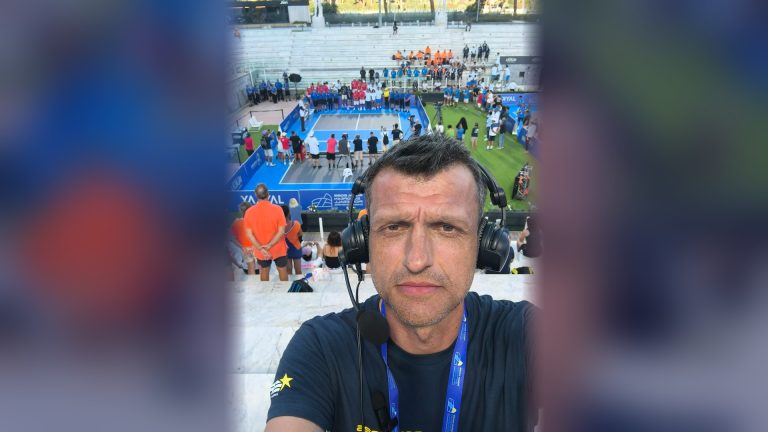
From the upper seats, the show court looked almost contained. A blue rectangle beneath the great curved roof, surrounded by officials, advertising boards and steep banks of spectators.
At court level, it felt considerably larger.
Every home player carried noise with them. An extended rally drew the crowd forward. A retrieval beyond the sideline brought another surge. When a Vietnamese player attacked a short ball, the reaction often began before the point had been completed.
Gordon Watson, reporting and commentating from Da Nang for World Pickleball Magazine, called the opening singles competition a “carnival of fantastic singles pickleball”.
The phrase captured the movement, sound and occasional disorder of an event far larger than the professional matches taking place on its main court.

The World Cup scheduled more than 8,500 matches across Tien Son and several venues around central Da Nang. Approximately 930 were played on 31 August alone. Somewhere, almost constantly, a team was warming up, a match was running late, a player was checking a court number or a group in national kit was trying to work out where it needed to be next.
There were paddles propped against seats, bags gathered beneath stairways and players watching over railings while waiting for their own names to be called. Languages changed every few steps. National shirts did most of the introductions.
“By the time they arrived in Da Nang, strangers carrying paddles and wearing national colours were greeting each other like teammates.”
Gordon Watson, World Cup Correspondent
Where are you from?
The question became a starting point for conversations between people who might otherwise have remained on opposite sides of the world.
The court supplied the common language.
Vietnamese spectators understood it immediately. They recognised when pressure was building inside a rally and when a player had escaped it. They knew when an attack had been earned, when a defender had stolen another ball and when a point had turned.

Their reactions gave Tien Son its rhythm.
That understanding mattered because the World Cup had arrived in a country where pickleball no longer needed to explain itself. Vietnam had already staged major international tournaments and filled this arena for the sport. Da Nang’s audience was ready before the delegations landed.
If you're following how the global game is shifting week by week, the World Pickleball Report breaks this down every day in our morning briefing.
The visiting players soon became part of the city around it.
Paddles appeared in hotel lobbies and hung from backpacks. National team clothing moved through cafés and restaurants. Players left the noise of the arena and returned to humid evenings, motorbikes, seafood stalls and the lights along the Han River.
Da Nang did not retreat behind the tournament. The city remained present throughout it.
The venues were spread across its centre, sending competitors between Tien Son, Tuyen Son and local clubs. A World Cup day could begin in a crowded sports hall, continue beside an unfamiliar court and end among players from several countries eating within sight of the coast.
For many visitors, the week was their first experience of Vietnam. For the host country, it was a chance to show what Asian pickleball already looked like when given a stage of this size.
This was the first Pickleball World Cup held in Asia. Previous editions had taken the competition from Lima to Florida. Da Nang moved its centre of gravity.
Asian players were no longer travelling to somebody else’s version of an international championship. For one week, the championship had come to them.
The clearest expression of that change arrived on 2 September, Vietnam’s National Day, when the formal opening ceremony filled the show court.
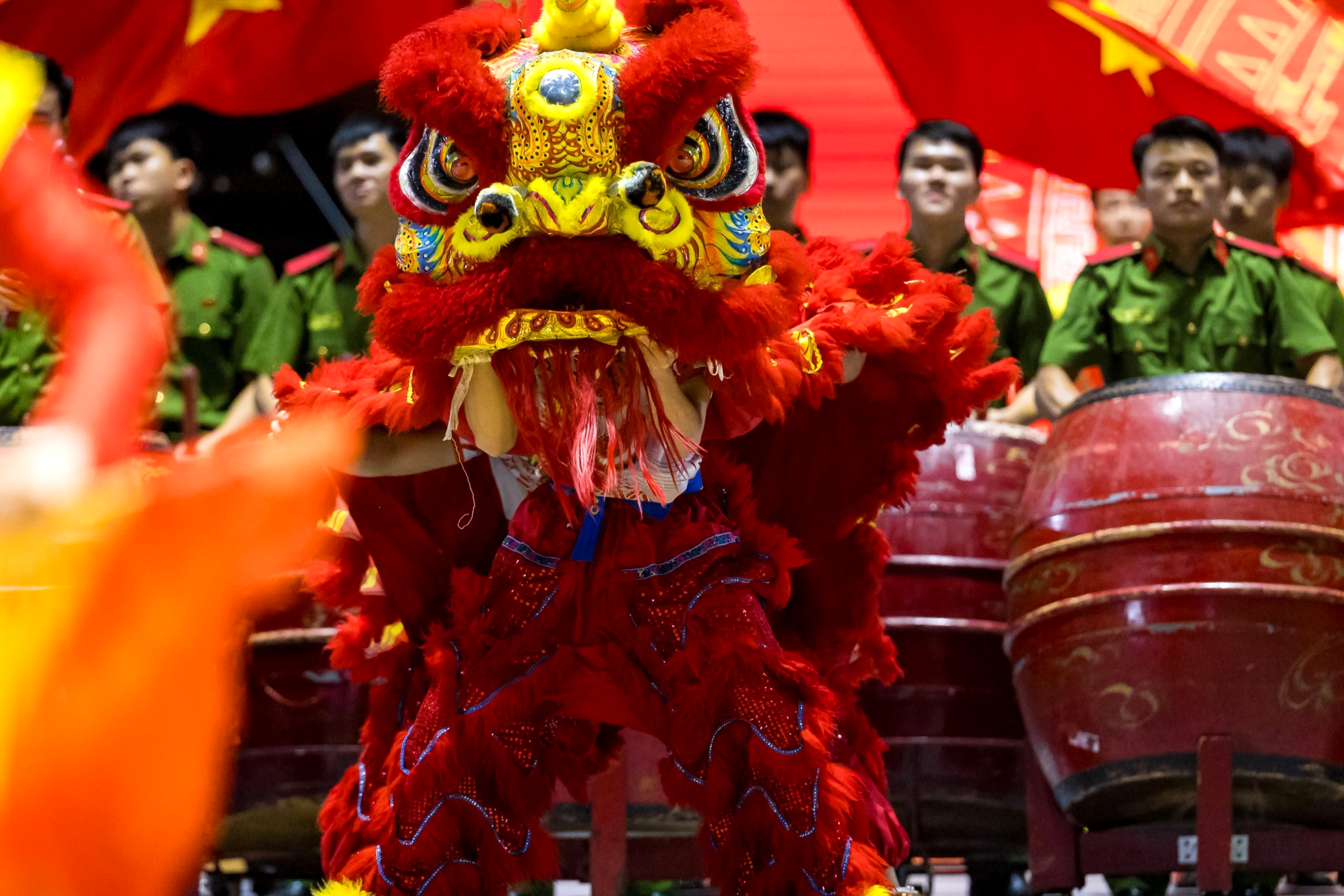
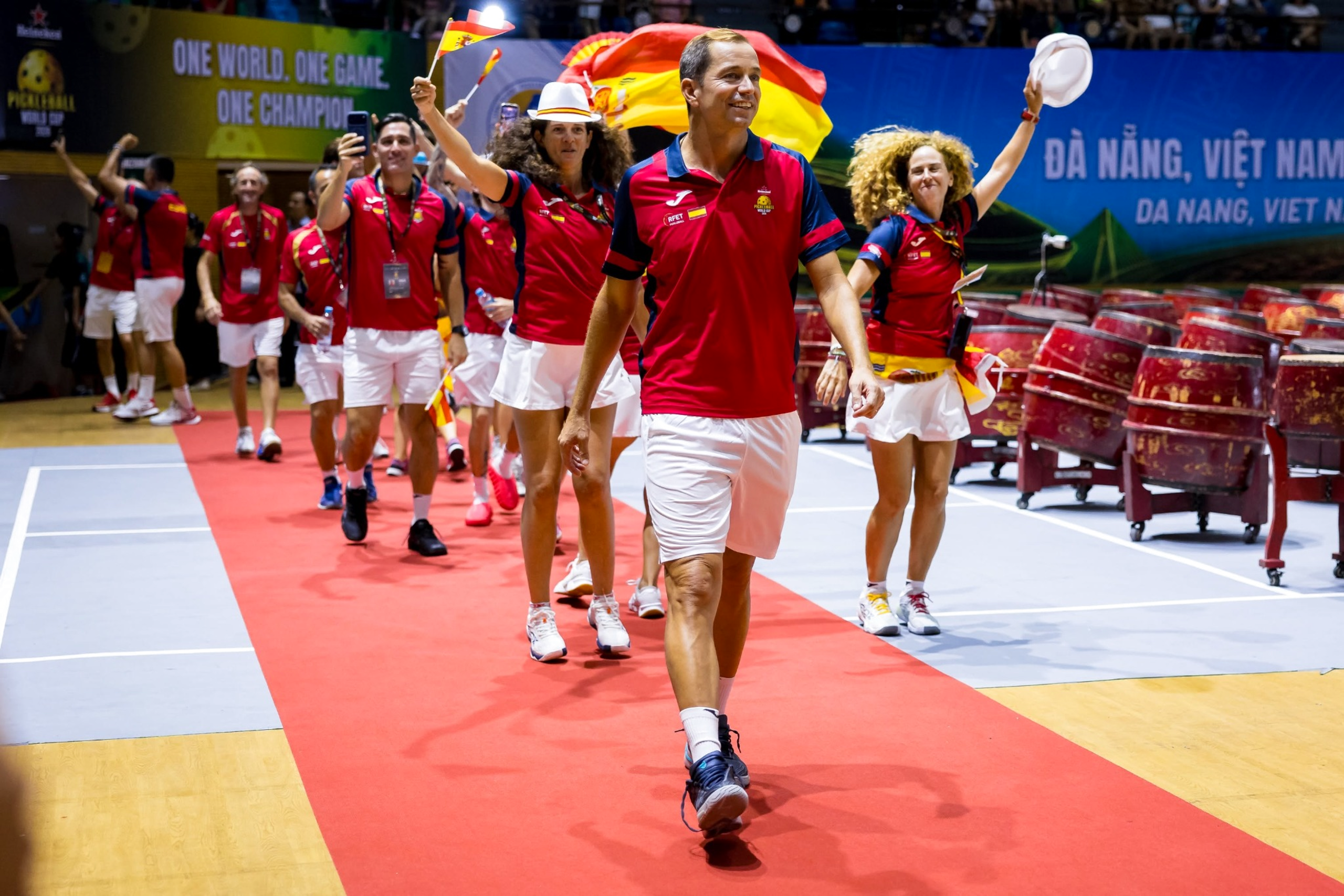
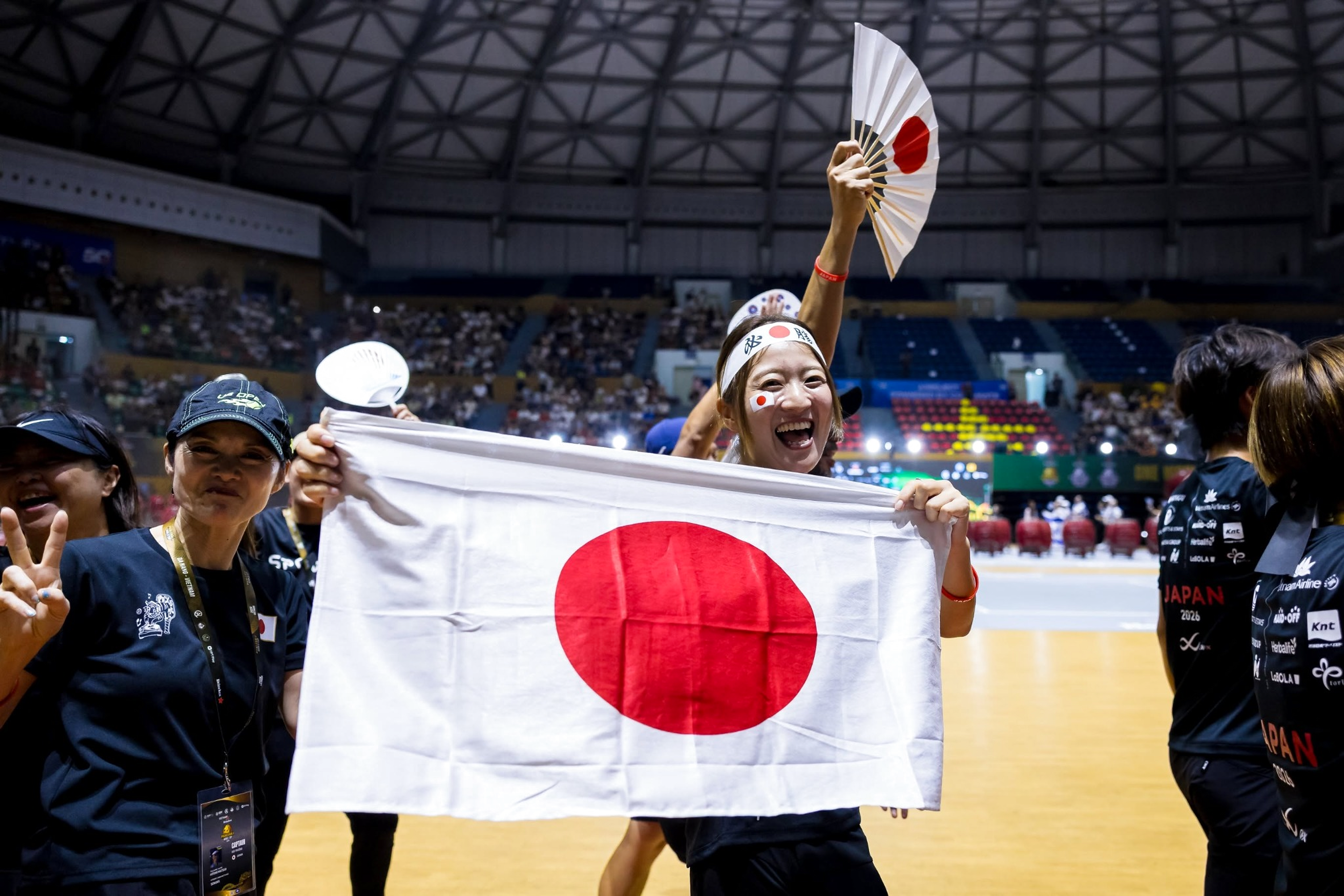
Athletes representing 65 countries and territories paraded through Tien Son Sports Arena. More than 1,000 officers, soldiers and cadets from Vietnam’s People’s Police Academy took part in the performance surrounding them. Flags crossed the court beneath the arena lights as each delegation was presented to the crowd.
The tournament also received two Guinness World Records, recognising the number of countries and territories represented and the value of its trophy.
The records described the scale of the occasion. The photographs showed what the figures meant.
One court was suddenly occupied by dozens of delegations, each carrying its own flag and its own history with the sport. Some represented established pickleball nations. Others had travelled from communities still building their first clubs, tournaments and national teams.
All had reached the same room.
The sight explained something the match schedule could not.
Pickleball’s international expansion is often discussed through announcements, participation figures and new events. Inside Tien Son, it became physical. It could be seen in the crowded entrances, heard in the changing languages and recognised in the ease with which players who had never met began watching and supporting one another.
For the thousands who passed through Tien Son, the lasting image may be the court during the parade, briefly crowded with flags and people whose separate journeys had ended in the same place.
For one week, one court was large enough to hold them all.
For a clearer view of where the sport is heading each week, you can join the World Pickleball Report here.

Chris Beaumont
Founder and Editor-in-ChiefChris Beaumont is the founder and Editor-in-Chief of World Pickleball Magazine. Chris follows the global game closely, reporting on the latest news, developments, stories and tournaments from all five continents. He also hosts the World Pickleball Podcast, interviewing people at…
View All Articles →