
The Black Bears have parted with every player named on their original 2026 roster. Their latest recruit has already belonged to Brooklyn, Texas and Miami this season.
Key takeaways
- California have acquired Dylan Frazier from Miami, making the Black Bears his fourth MLP franchise since February.
- None of the six players on California’s roster after the 2026 draft remains in the active group.
- Frazier will not appear in San Diego, leaving Chicago and Orlando for California to test their completed roster before the playoffs.
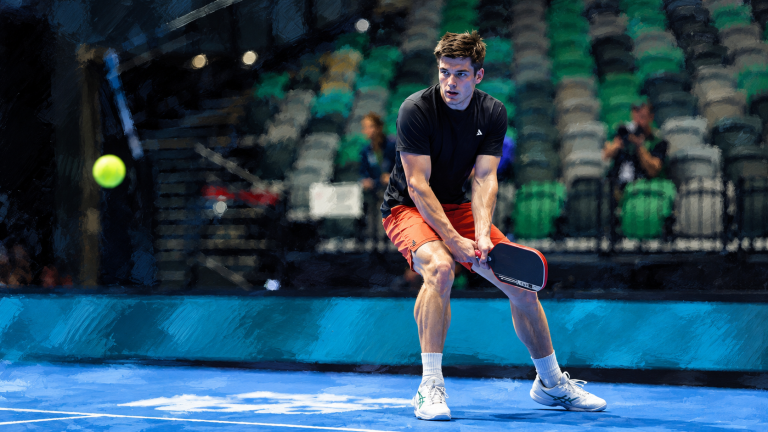
Dylan Frazier was the seventh player selected in the 2026 Major League Pickleball draft. Less than five months later, he belongs to his fourth team of the season.
Brooklyn drafted him for $170,000 in February. Texas followed. Then Miami. Now the California Black Bears have acquired one of the leading men’s doubles players in the sport as the final piece of a reconstruction that has extended far beyond the usual meaning of a mid-season rebuild.
California have not changed the balance of their roster. They have replaced it.
The six players listed by California after the February draft were Layne Sleeth, Kiora Kunimoto, Emma Nelson, Chris Haworth, Mohamed Anouar Braham and Michael Loyd. None remains in the active group.
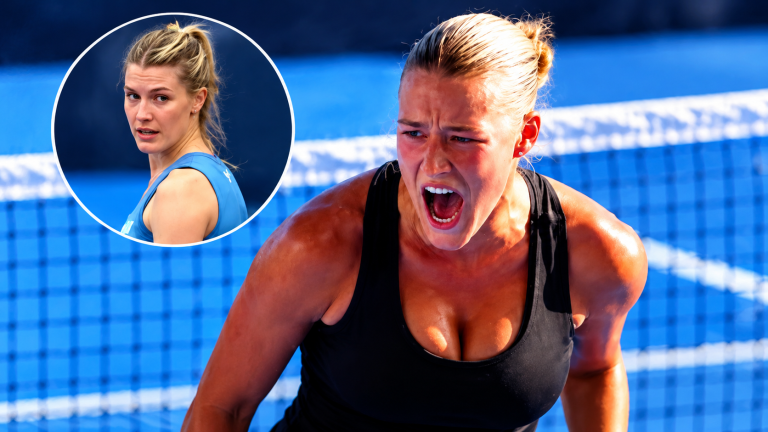
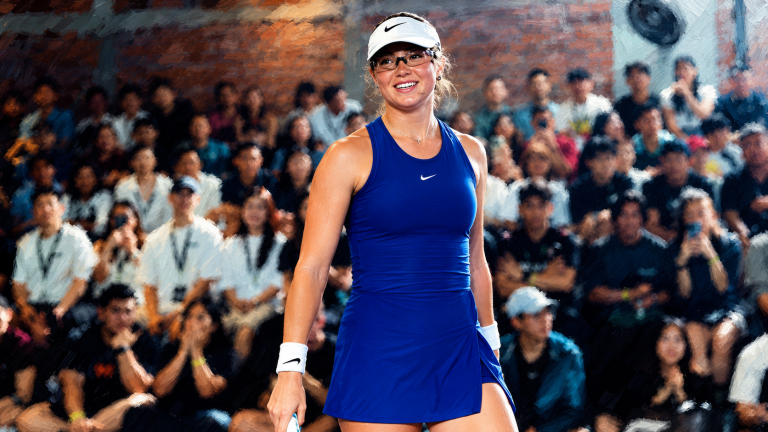
In their place are Sahra Dennehy, Zoey Weil, Jalina Ingram, Frazier, Pablo Tellez and Joey Wild, with Luca Mack on injured reserve. The shirt is the same. Almost everything underneath it has changed.
Frazier is the headline acquisition because of his level, but his arrival makes most sense when viewed as the end of that process. California have reached the point where small corrections are no longer available. The original roster has gone, several replacements have already moved on and the remaining schedule is short.
This is what is left.
Six players out, six players in
The speed of California’s reconstruction has made it easy to lose sight of its scale.
Michael Loyd left for Carolina in early June, with Connor Mogle moving in the opposite direction. Kiora Kunimoto and James Delgado were later sent to Bay Area as California received Mya Bui, Pablo Tellez and cash considerations.
The activity accelerated in the days before MLP San Diego. Emma Nelson was traded to Chicago for Jalina Ingram and cash. Mya Bui’s brief stay ended when she moved to Florida in the deal that brought Zoey Weil to California. Braham then went to Miami with cash considerations as the Black Bears completed their latest business with the same club.
The result bears no resemblance to the team California assembled in February.
That first group represented the league’s clearest low-cost experiment. The Black Bears spent $85,000 during the opening phase of the draft, selecting Kunimoto for $45,000, Haworth for $30,000 and Braham for $10,000. Loyd and Nelson were then added as bench players, while Sleeth and Haworth had been retained from 2025.
In a league without a draft spending cap, California chose not to compete for the most expensive positions. The reasonable interpretation was that they believed value could be found lower down the board while preserving room to make changes later.
They have certainly used that room. Their response to a 4-9 start has gone beyond replacing one partnership or repairing one weak position. Every part of the roster has been reconsidered.
Frazier’s four-team season
California’s instability is only half of the story. Frazier’s route to the Black Bears shows how fluid the wider MLP player market has become.
Brooklyn used the seventh draft position on a player capable of anchoring an elite men’s partnership. At $170,000, Frazier was not a speculative selection or an inexpensive player expected to outperform his cost. He was one of the most significant acquisitions of the opening round.
He did not remain in Brooklyn.
Moves to Texas and Miami followed before California became his fourth franchise of 2026. Each transfer brought different partners, different lineup possibilities and a different competitive situation.
In a six-player system, adapting to several partners is part of the job. Moving through four organisations in one season is something else.
That movement should not automatically be read as a judgement against Frazier. It can also be understood as evidence of his market value. He is good enough to improve a team immediately and valuable enough to unlock wider roster changes.
Those qualities can make a player both important and movable. The team holding him may need his ability on court while knowing that few other assets could command the same interest in a trade.
Frazier has spent 2026 on both sides of that calculation.
California’s final version will have to wait
The timing creates another problem. Frazier will not play for California at MLP San Diego.
His first appearance is expected in Chicago, with Orlando providing the final regular-season event before the playoffs. California must therefore contest another important weekend without the player who completes their latest roster.
The Black Bears do not have the luxury of treating this as preparation for 2027. Their 4-9 record has left them fighting to recover the present season, and San Diego will consume part of the remaining schedule before the new group has appeared together.
For now, California can offer only a partial view of the plan. Weil and Ingram have arrived to reconstruct the women’s combinations. Pablo Tellez gives them an established men’s presence. Dennehy and Wild complete the available group, while Mack remains on injured reserve.
Frazier should improve their competitive possibilities. The scale of that improvement cannot be known until California decide which partnerships to use and whether a collection assembled in stages can become a coherent match-day team.
The names are stronger than they were in February. Whether the team is stronger remains unanswered.
What California’s rebuild says about MLP
California’s season offers a useful test of what Major League Pickleball wants its player market to be.
The six-player roster was introduced to create strategic choice. Teams could vary their partnerships, respond to form and use specialists in particular matchups. Roster construction was meant to become a more important part of the competition.
California have taken that freedom to its outer limit.
They have shown that a roster can be continuously rebuilt rather than assembled once and refined. That has allowed them to respond when the original group failed to produce enough results, but it has removed almost every source of continuity.
There is a wider cost. Players can be drafted, presented as part of a season-long plan and moved within weeks. Partnerships become provisional. Supporters following a franchise must repeatedly learn who represents it. Team identity becomes harder to sustain when no member of the opening roster survives into the final weeks of the regular season.
The alternative would have been to leave a struggling team untouched. California were not obliged to preserve the February roster simply because they had assembled it. Once the season began to slip, using the available trade market was a defensible response.
The harder question is whether they acted early enough to benefit.
Frazier gives California a player around whom a credible late-season team can be organised. His arrival also reveals the severity of their position. Teams rarely replace every player when the first plan is working.
The Black Bears have now used every mechanism available to them. They drafted cheaply, traded for alternatives, moved several of those alternatives and finally secured one of the league’s leading men.
Frazier has already represented four franchises this season. California have already replaced an entire team.
He may also be the last player they have time to try.
Further Reading
- Latest pickleball news from around the world
- Tournament coverage and results
- Rankings and player profiles
- Regional pickleball coverage

Chris Beaumont
Founder and Editor-in-ChiefChris Beaumont is the founder and Editor-in-Chief of World Pickleball Magazine. Chris follows the global game closely, reporting on the latest news, developments, stories and tournaments from all five continents. He also hosts the World Pickleball Podcast, interviewing people at…
View All Articles →