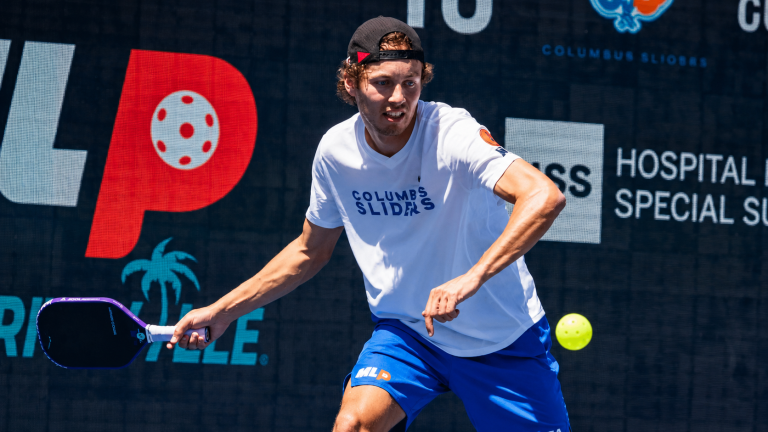
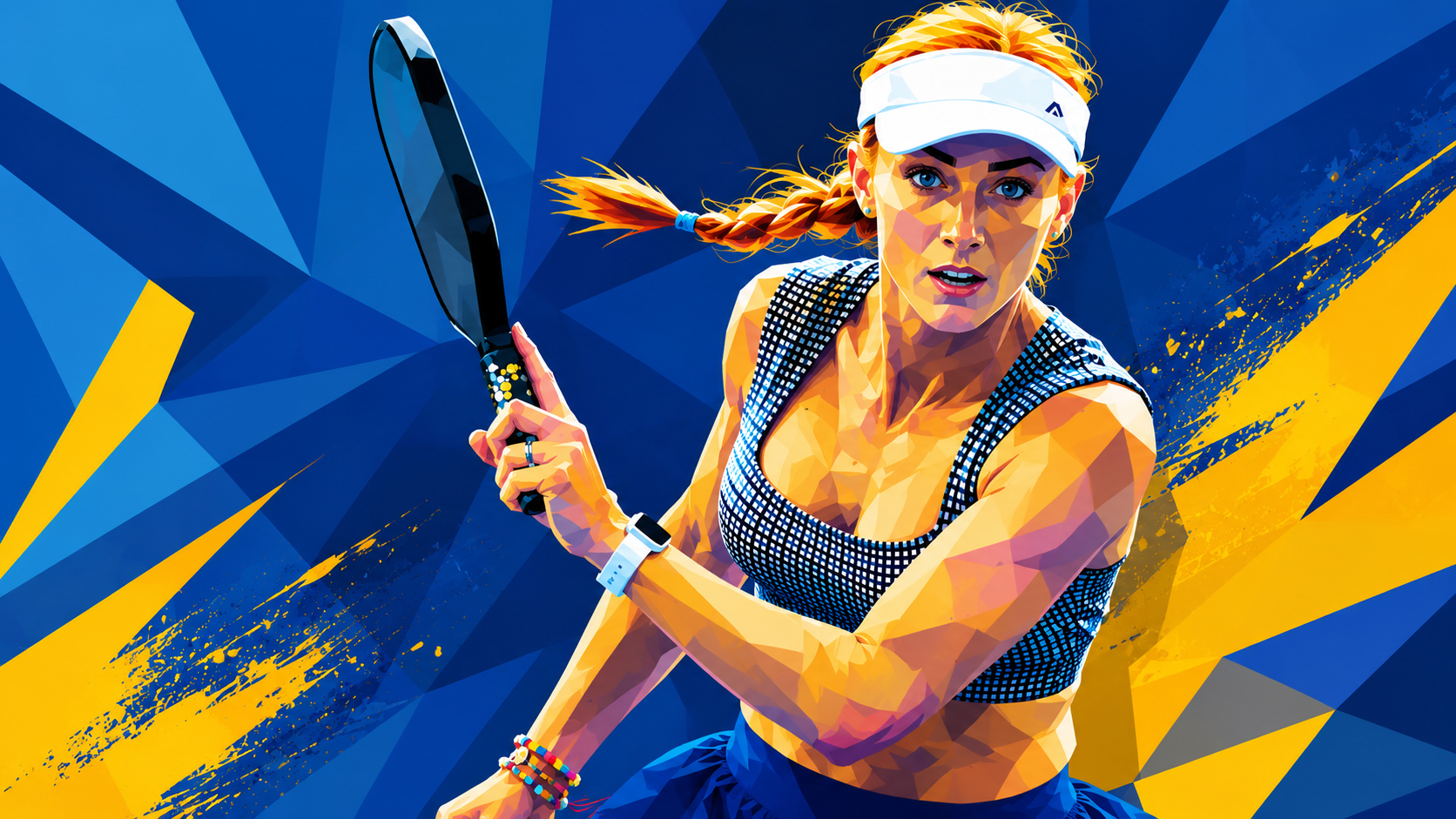
The Australian professional has built her career on patience, control and consistency. Now she is changing grips, changing tactics and questioning habits that once brought success. The challenge is not learning something new. It is deciding what to leave behind.
- Sarah Burr is making significant technical and tactical changes to her game as elite pickleball evolves.
- Modern paddle technology and increased spin are forcing players to rethink established habits and patterns.
- Her focus on the fourth shot offers insight into how high-level doubles strategy is changing around the world.
Most athletes spend their careers trying to become more like themselves.
Sarah Burr is attempting something more difficult.
She is trying to become someone else.
Not completely. Not overnight. But enough to keep pace with a sport that no longer looks quite the same as the one she first learned to master.
Speaking to Ryan Henry about the realities of life as a professional pickleball player, Sarah Burr repeatedly returned to a common theme. The game she learned five years ago is not quite the same game she is playing today.
The Gold Coast Glory captain has built her career on qualities that coaches usually celebrate. Patience. Discipline. Consistency. A willingness to construct points rather than rush them.
Those strengths have not disappeared.
The question Burr is wrestling with is whether they are enough on their own anymore.
“Paddles are definitely more powerful now, a lot more spin is generated as well,” she said. “It’s definitely shorter points, more firefights.”
It is a simple observation, but it carries a deeper implication.
If the game has changed, players have a choice. Adapt to it, resist it, or risk being left somewhere in between.
Burr has chosen adaptation.
That decision sounds straightforward until you look at what adaptation actually means.
It means changing a grip that has become second nature.
It means spending hours repeating movements that once happened instinctively.
It means accepting that the version of yourself that achieved success may not be the version required for the next stage of your career.
That is uncomfortable territory for any athlete.
It is particularly uncomfortable when the old version was working perfectly well.
The Cost of Starting Again
Burr’s decision to move away from a traditional Continental grip towards an Eastern forehand grip is not a cosmetic adjustment.
It is a fundamental change to how she wants the ball to behave.
More spin.
More shape.
More ability to attack.
The modern professional game increasingly rewards players who can create pressure rather than simply absorb it. That does not mean patience has become obsolete. It means patience now has to exist alongside aggression.
For Burr, that has required an honest assessment of her own game.
The challenge is not that she suddenly lacks the skills that made her successful.
The challenge is that opponents are arriving with new ones.
A generation ago, a player could spend years refining a style and trust it would remain largely relevant throughout their career.
Pickleball is not offering that luxury.
The sport is evolving too quickly.
Equipment changes. Tactical ideas spread. Players learn from each other faster than ever before.
The result is a constant pressure to improve.
More unusually, it creates pressure to unlearn.
And unlearning may be the hardest skill in sport.
Finding New Ways to Control a Rally
One of the areas Burr has focused on most heavily is the fourth shot.
For years, pickleball discussion has been dominated by the third shot. Recreational players were taught to obsess over it. Professionals built entire systems around it.
Burr believes the fourth shot deserves far more attention.
The reason is rooted in how modern doubles is being played.
Teams are becoming increasingly effective at working their way to the kitchen line. Simply returning the ball is often no longer enough. The receiving team needs to create problems before opponents establish control.
That can mean using spin.
It can mean attacking feet.
It can mean applying pressure during transition rather than waiting for the rally to settle.
The fourth shot is no longer just a response.
Increasingly, it is an opportunity.
For Burr, understanding that shift has become part of understanding where the sport itself is heading.
The game she entered rewarded survival.
The game she sees developing rewards initiative.
Neither approach is entirely right or entirely wrong.
The challenge is knowing when to use each one.
What Happens When a Sport Changes Around You?
The easiest version of this story would be to frame it as a tale of technological progress.
Paddles become more powerful.
Players adapt.
The end.
The reality is more complicated.
Every tactical evolution creates winners and losers.
Every new idea asks players to reconsider old habits.
Every change creates uncertainty.
That uncertainty is where Burr currently finds herself.
Not because she is struggling.
Not because she is falling behind.
But because she recognises that standing still is no longer a strategy.
The most revealing part of her story is not the grip change or the discussion around spin.
It is her willingness to challenge assumptions that once felt settled.
Many athletes spend years searching for an identity.
Burr already found hers.
Now she is deciding which parts of it are worth keeping.
The wider debate around paddle performance has become significant enough that both USA Pickleball and professional tours have introduced increasingly detailed equipment standards. Burr’s observations sit within a sport that is actively trying to balance innovation with competitive integrity.
The Next Version of Sarah Burr
There is no guarantee where this process ends.
The new grip may unlock another level.
The tactical adjustments may reshape parts of her game.
Some changes will work better than others.
That is the nature of reinvention.
What feels significant is the willingness to undertake it at all.
Professional sport often celebrates certainty.
The athletes who know exactly who they are.
The athletes who trust their strengths.
The athletes who stick to their principles.
Burr’s story offers a different lesson.
Sometimes growth comes from questioning those strengths.
Sometimes progress requires uncertainty.
And sometimes the hardest thing in sport is not learning something new.
It is letting go of something that already worked.
Over the course of her conversation with Ryan Henry, Burr returned repeatedly to the challenge of adjustment. Not adjustment because something had gone wrong, but adjustment because the sport itself continues to evolve.
Sarah Burr is not rebuilding because she failed.
She is rebuilding because she believes pickleball has changed.
Whether she is right may help determine what the next version of elite pickleball looks like.
The hardest thing in pickleball may no longer be improving.
It may be abandoning the version of yourself that already worked.
Further Reading
- Latest pickleball news from around the world
- Tournament coverage and results
- Rankings and player profiles
- Regional pickleball coverage

Chris Beaumont
Founder and Editor-in-ChiefChris Beaumont is the founder and Editor-in-Chief of World Pickleball Magazine. Chris follows the global game closely, reporting on the latest news, developments, stories and tournaments from all five continents. He also hosts the World Pickleball Podcast, interviewing people at…
View All Articles →