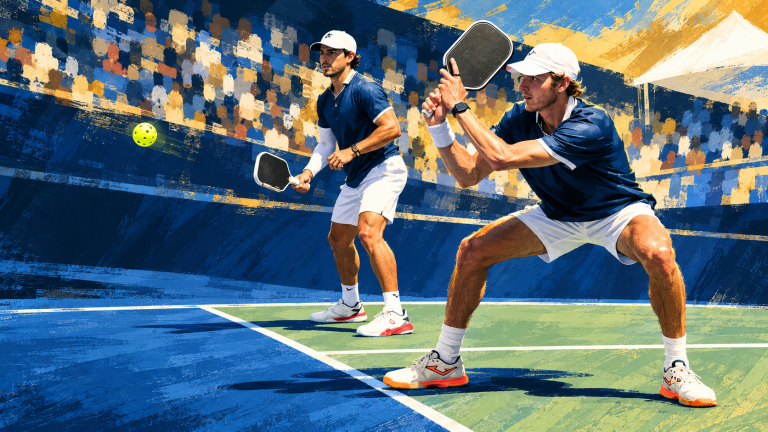

The WPC event in Penang delivered clear winners across singles, doubles, and mixed, with Vanshik Kapadia leading the week through multiple titles — and a wider field showing competitive depth across every level.
- Vanshik Kapadia won men’s singles and mixed doubles, emerging as the standout performer
- Women’s, doubles, and age-group titles were shared across multiple winners
- Repeat appearances across draws highlighted a structured and active competitive base
Kapadia Anchors the Event Across Formats
The World Pickleball Championship stop in Penang produced defined winners across every major draw, with one player consistently at the centre of it.
Vanshik Kapadia won the men’s singles title and added the mixed doubles title alongside Vrushali Thakare, completing the strongest multi-event performance of the tournament.
He also reached the latter stages of the men’s doubles draw, maintaining a presence across formats rather than focusing on a single category.
Women’s and Age-Group Titles Add Breadth
Across the women’s divisions, results were distributed across multiple winners.
Ingrid Lau won the women’s 50+ category, while Lam Ying Suet took the women’s 60+ title, underlining the strength of the age-based draws.
These were not lightly contested brackets. They produced clear winners through structured draws that aligned with the standard seen in the open events.
If you’re following how the global game is shifting week by week, the World Pickleball Report breaks this down every Wednesday.
Doubles Results Reflect Competitive Balance
In doubles, titles were shared rather than controlled.
The men’s doubles competition saw multiple pairings progress through competitive rounds, with no single team dominating the bracket from start to finish.
The mixed doubles title, secured by Kapadia and Thakare, came through a field featuring several established combinations, reinforcing the depth across that draw.
Across formats, the same pattern held. Different winners, competitive finals, and no reliance on a single pairing.
Repetition Across Draws Signals Structure
Looking beyond individual titles, the same names appeared repeatedly across the tournament.
Players moved between singles, doubles, and mixed draws, staying competitive deep into the event.
Kapadia’s two titles are the clearest example, but the wider field showed similar patterns.
This level of repetition reflects more than form. It indicates players competing regularly across formats and sustaining performance across multiple rounds.
A Tournament Already Operating at Depth
The 50+ and 60+ categories reinforced the same picture.
They were competitive, populated, and aligned with the broader event rather than sitting apart from it.
That adds context to the results. It points to a player base that extends across generations and supports continued competition at multiple levels.
For regional context on tournament structures and development, the global pickleball landscape continues to evolve across multiple markets.
What the Results Actually Show
Taken individually, the results show multiple winners across divisions.
Taken together, they show something more consistent.
Players are competing across formats, progressing through rounds, and returning to the latter stages of events.
This was not a tournament finding its feet.
It was one operating with structure already in place.
For a clearer view of where the sport is heading each week, you can join the World Pickleball Report here.
Further Reading
- Latest pickleball news from around the world
- Tournament coverage and results
- Rankings and player profiles
- Regional pickleball coverage

Chris Beaumont
Founder and Editor-in-ChiefChris Beaumont is the founder and Editor-in-Chief of World Pickleball Magazine. Chris follows the global game closely, reporting on the latest news, developments, stories and tournaments from all five continents. He also hosts the World Pickleball Podcast, interviewing people at…
View All Articles →