

The biggest names still reached Championship Sunday in Utah. The difference was how much they had to work for it.
Key Takeaways
- Ben Johns and Gabriel Tardio had to reshape their semi-final to survive
- Anna Leigh Waters still controls outcomes, but opponents are making her work earlier
- The PPA hierarchy remains intact, though the route to the final is becoming less comfortable
The semi-finals at the PPA Tour Greater Zion Cup did not produce a wave of shocks. They produced something more revealing.
Pressure.
The elite still advanced in Utah. But across the draws, the route to Championship Sunday looked less secure, less automatic, and far more demanding than the bracket might have suggested at first glance.
That was clearest in men’s doubles, where Ben Johns and Gabriel Tardio were forced into a proper mid-match correction against Federico Staksrud and Andrei Daescu. After dropping the opening game 4-11, they could easily have chased the match on emotion and made it worse. Instead, they changed its shape.
The adjustment came in transition. Rather than trying to match the pace coming at them, Johns and Tardio slowed the exchange down, reset more cleanly, and made the contest more structured. That shift dragged the semi-final away from a pure speed battle and turned it into a test of control. They edged the second game 11-9, then closed the third 11-6.
That is the point.
The top teams are still finding answers. What has changed is how often they are now being asked difficult questions.
The other men’s doubles semi-final carried a similar message. Hayden Patriquin and Christian Alshon beat JW Johnson and CJ Klinger in three games, 11-7, 5-11, 11-8, not by running away with the match but by handling the late moments better. This was not domination. It was management. The margins were tighter, and the decisive stretches felt earned rather than assumed.
The same tension ran through the women’s draws, even if the results looked more familiar.
Anna Bright and Anna Leigh Waters dismantled Rachel Rohrabacher and Catherine Parenteau 11-3, 11-3 in women’s doubles, a reminder that the very top can still produce brutal scorelines when rhythm arrives early. But in singles, Waters had to work harder. Lea Jansen pushed the opening game to 13-11 before Waters took control of the second. The final result still leaned in the expected direction. The path there did not feel quite so comfortable.
Kate Fahey, who moved into the singles final with an 11-4, 11-5 win over Kaitlyn Christian, offered another version of the same theme. Her route was composed rather than explosive. She did not need to overwhelm the match. She managed it cleanly, and that matters in a field where more players are capable of extending rallies and exposing loose patches.
In mixed doubles, Waters and Ben Johns remained structurally superior in a 11-3, 11-6 win over Staksrud and Fahey, while JW and Jorja Johnson responded to a dropped second game by hammering home an 11-0 decider against Anna Bright and Hayden Patriquin. Even there, the pattern held. The best pairs are still winning, but they are being pushed into moments where they have to adjust, respond, and close with authority.
That is what the Utah semi-finals really told us.
The hierarchy has not collapsed. This is not Seattle. The biggest names are still in the finals, still collecting opportunities, still controlling the broad shape of the weekend. But the old version of control, where reputation and first-strike quality could carry a match from start to finish, is becoming less reliable.
Now the top of the game is asking for something slightly different.
Less cruise control. More problem-solving.
Less assumption. More evidence.
The PPA elite still hold the line. But they are doing so by solving matches later, not by owning them early. That may sound like a small distinction. It is not. Over time, that is how pressure turns from background noise into something more serious.
Stay ahead of the global game by signing up for the World Pickleball Report, our weekly newsletter covering the stories, shifts and talking points that matter across the sport.
The elite still control the results. The question now is how long they can keep controlling the terms.
Further Reading
- Latest pickleball news from around the world
- Tournament coverage and results
- Rankings and player profiles
- Regional pickleball coverage
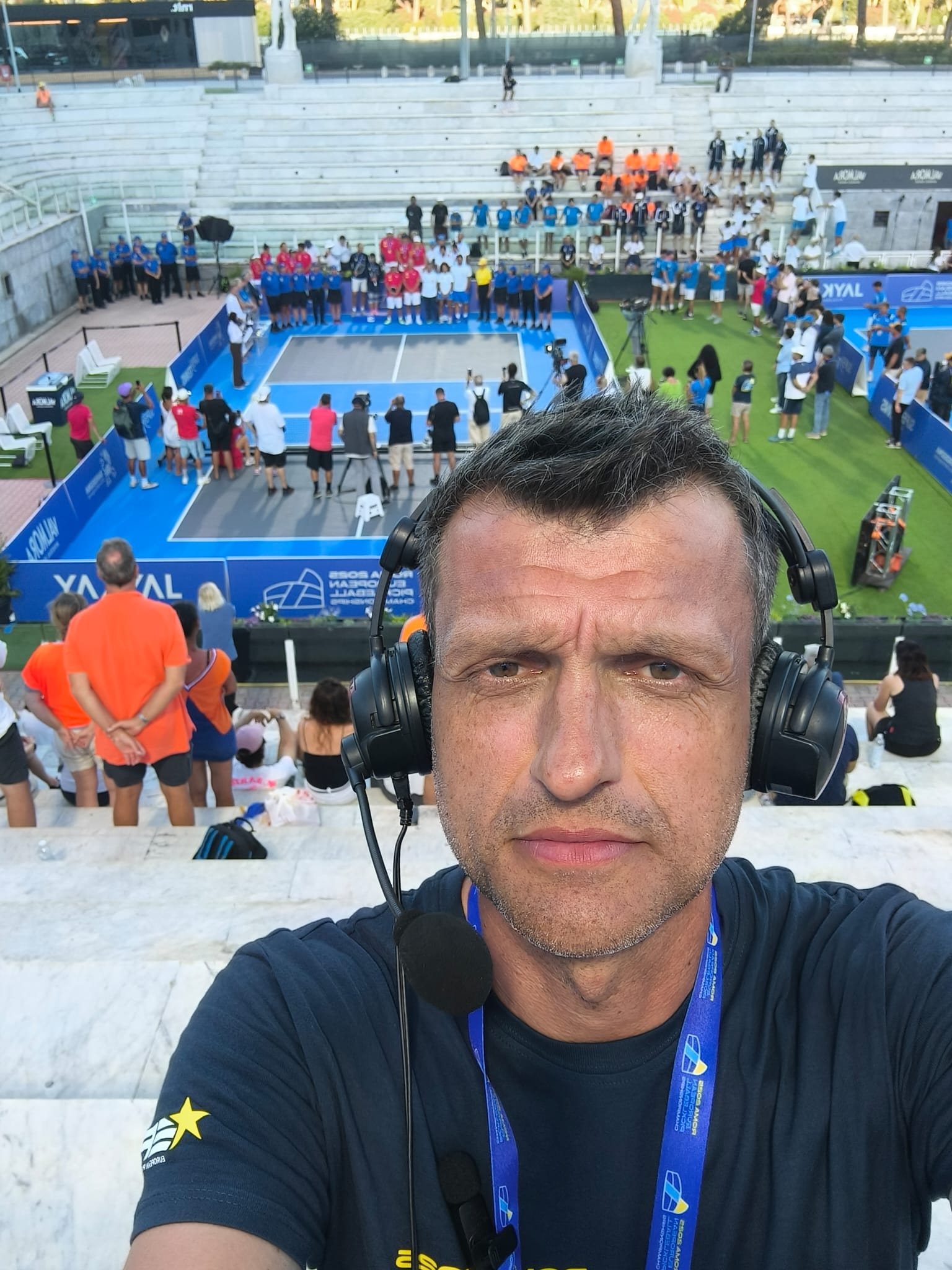
Chris Beaumont is the founder and Editor-in-Chief of World Pickleball Magazine. Chris follows the global game closely, reporting on the latest news, developments, stories and tournaments from all five continents. He also hosts the World Pickleball Podcast, interviewing people at all levels of pickleball. Chris is also an avid player, currently struggling to make the breakthrough from 4.0 to 4.5.