Enjoying our coverage?
The March 2026 issue of World Pickleball Magazine is now live, featuring global league developments, tournament analysis, exclusive interviews, and stories from across the international pickleball community.
Follow @worldpickleballmagazine on Facebook and Instagram for daily pickleball news, and listen to the World Pickleball Podcast on Spotify, iTunes, and other major podcast platforms.
Noe Khlif beating Jack Sock will take the headlines.
It should not define the round.
Because across the five draws, two completely different versions of professional pickleball are playing out at the same time, and they do not quite fit together.
Control still exists. Just not everywhere.
There are still parts of the sport where the hierarchy feels firm.
Anna Leigh Waters continues to move through the women’s singles draw with the kind of authority that removes doubt before it starts. In women’s doubles, her partnership with Anna Bright still looks like the clearest expression of control anywhere in the sport. The best players look like the best players. The matches behave as expected.
That is one version of the quarter-finals.
Elsewhere, certainty disappears quickly.
Khlif’s straight-games win was not chaotic. That is the point. It was measured, clean, and built on control of its own. That makes it more significant than a loose upset or one hot stretch. It asks a harder question about what the men’s draw actually is right now.
Elsewhere, it looked very different.
Federico Staksrud had to fight his way through a difficult match rather than impose himself on it. Christian Alshon looked every bit like a player who belongs in the latter stages, whatever the bracket says next to his name. In men’s doubles, the established pairs are still there, but the space around them feels unstable. You can sense how little it would take for the draw to shift.
This is where the tournament gets interesting.
Not because everything is wide open. It is not.
Not because the old order has vanished. It has not.
It is interesting because the sport is no longer moving in one neat direction. Some brackets are settling into clear pecking orders. Others still feel volatile, messy, and far harder to predict. For a professional game still defining its top level, that is not a weakness. It may be the thing that makes it worth watching.
The quarter-finals are where it collides.
That split is what gives today its edge.
The compelling thing about these quarter-finals is not simply who is left. It is that you can no longer assume how a match will be played, only who is in it.
Khlif against Christian Alshon sits squarely on the volatile side of the draw, where confidence and form may matter more than reputation. Waters against Jorja Johnson comes with a very different feel. That is a match framed by expectation, but not without tension.
Men’s doubles may be where the whole theme lands most clearly. The top pairings remain intact, but they no longer feel protected from the draw beneath them. Matches that once looked routine now feel narrow. A couple of loose games, one bad spell, one opponent playing freely, and the whole picture changes.
The problem is no longer whether the field is closing in.
It is understanding what the shape of the top of the sport actually is.
Stay ahead of the global game by signing up for the World Pickleball Report.
The names are familiar.
The patterns are not.
And that uncertainty is starting to define the sport.
Further Reading
- Latest pickleball news from around the world
- Tournament coverage and results
- Rankings and player profiles
- Regional pickleball coverage
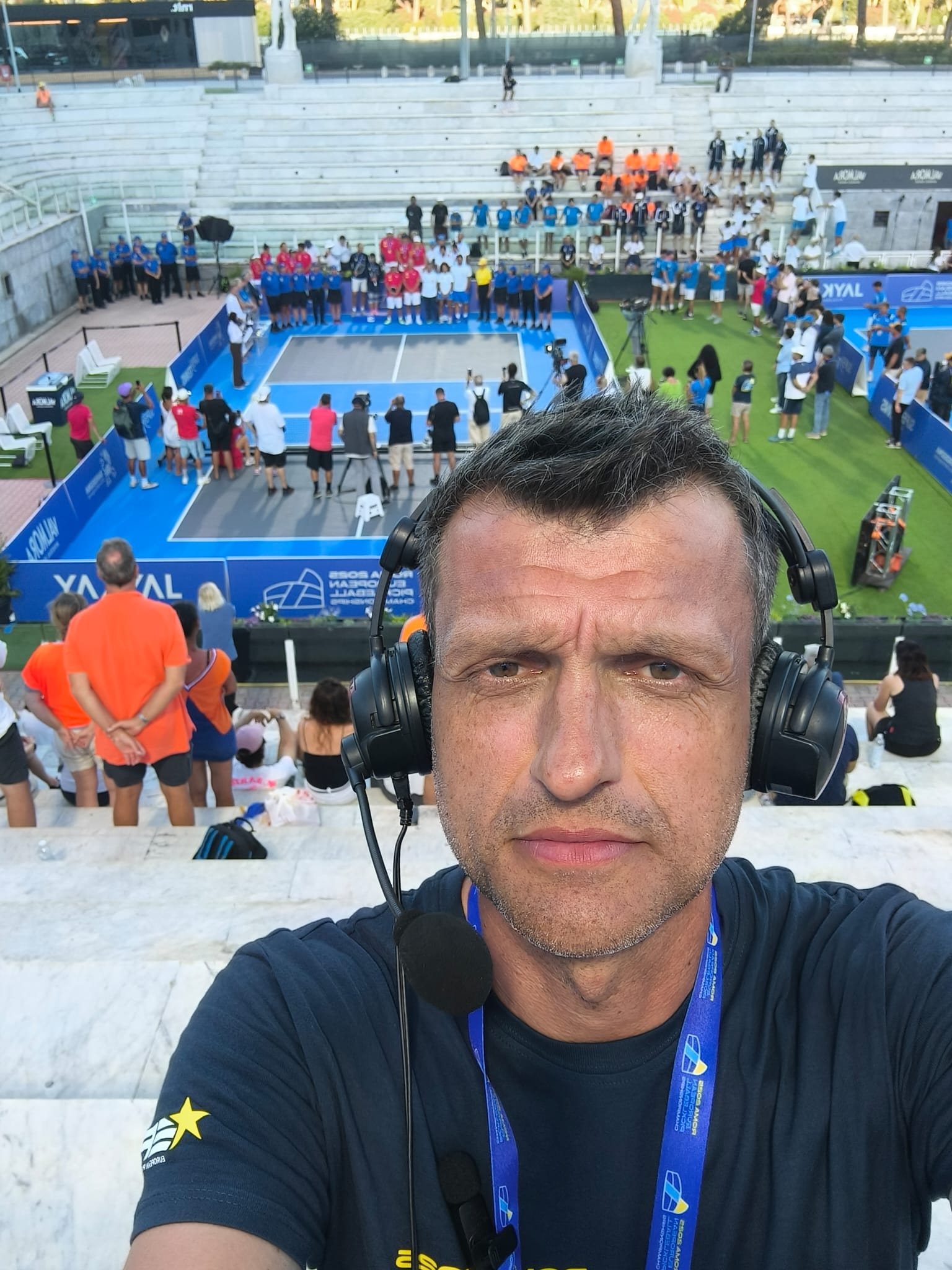
Chris Beaumont is the founder and Editor-in-Chief of World Pickleball Magazine. Chris follows the global game closely, reporting on the latest news, developments, stories and tournaments from all five continents. He also hosts the World Pickleball Podcast, interviewing people at all levels of pickleball. Chris is also an avid player, currently struggling to make the breakthrough from 4.0 to 4.5.