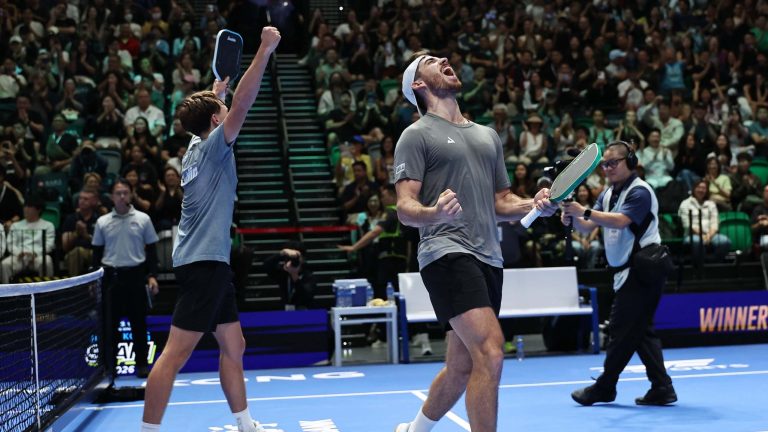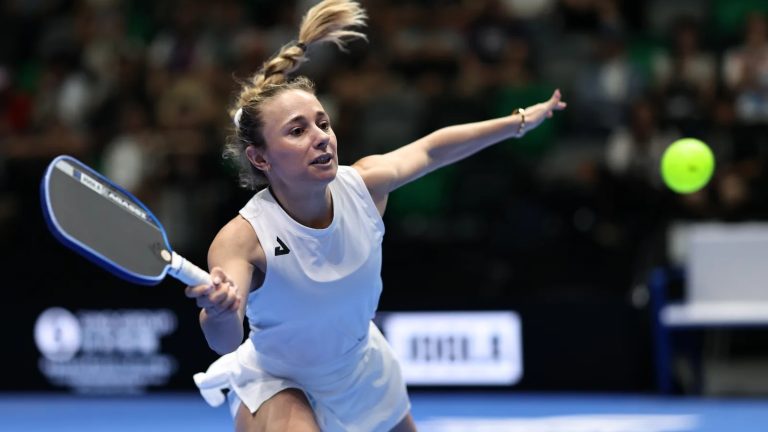

Major League Pickleball arrives in Dallas with new roster combinations, a suspended star, and a format change that could quietly reshape how franchises build teams in the future. The biggest shift may not be who was traded, but what a valuable pickleball player now looks like.
- MLP’s new six-player format is increasing the value of specialist deployment and tactical substitutions.
- Franchises are beginning to build around matchup strategy rather than simply collecting the strongest all-round players.
- Dallas may offer the clearest sign yet that MLP is evolving into a more sophisticated team sport ecosystem.
For most of its existence, Major League Pickleball rewarded survival.
Teams needed players capable of carrying heavy workloads across an entire event weekend. Men’s doubles, women’s doubles, mixed doubles, DreamBreakers, long match days, emotional swings, physical fatigue. The best franchises usually had the most complete and adaptable four-player cores.
Versatility mattered more than tactical specialisation.
Dallas changes that equation.
The league’s updated six-player structure, arriving as MLP Dallas opens the 2026 regular season at Pickler Universe, quietly alters the logic of roster construction itself. By the end of the weekend, the most important takeaway may not be who wins the event.
It may be what the event reveals about the future of professional pickleball team-building.
The New Jersey Gamble
The headline move remains Jorja Johnson’s arrival at the New Jersey 5s.
On paper, pairing Johnson with Anna Leigh Waters immediately creates one of the strongest women’s combinations in the sport. But the more revealing part of the trade may be what it says about how franchises now value lineup optimisation.
Under previous MLP structures, teams were often forced to prioritise balance above all else. Weaknesses became exposed repeatedly because the same core players had to absorb every format and every pressure situation.
The six-player system changes that.
Managers can now think more aggressively about matchup deployment, energy preservation, and role-specific usage. A player may no longer need to be elite across every format to become strategically valuable.
That creates entirely different roster questions.
Do you prioritise chemistry or explosiveness? Singles quality or doubles stability? Late-match endurance or specialist firepower?
Those are conversations MLP teams are now openly having.
The emotional layer surrounding the Johnson trade only sharpens the spotlight further. Brooke Buckner moved the other way to the Dallas Flash, creating a potential showdown where Jorja could face both her former franchise and her brother, JW Johnson, in front of a Texas crowd.
That storyline alone would have dominated previous MLP weekends.
In Dallas, it may only be part of the story.
Specialists Suddenly Matter More
The most important structural shift in Dallas is not celebrity. It is tactical deployment.
Under older formats, franchises often hesitated to carry players with narrower skill profiles because every roster spot needed maximum versatility. Specialists could become liabilities over a long event.
Now they may become weapons.
That is why the arrival of Jack Sock at the Orlando Squeeze matters beyond the tennis crossover headlines.
Under previous structures, a player like Sock would have been pressured to become complete quickly. The new format allows teams to weaponise elite traits immediately while protecting weaker areas through selective deployment.
That is a completely different developmental environment.
A franchise can now deploy stronger singles players more aggressively, preserve physically demanding players for key moments, manipulate mixed doubles matchups, protect weaker partnerships, and build late-match DreamBreaker strategies around specialist athletes.
The league is moving away from survival depth and toward tactical deployment.
And that changes what a valuable player looks like.
The DreamBreaker Effect
The six-player structure may have its biggest impact inside DreamBreakers.
For years, DreamBreakers rewarded teams with complete lineups capable of surviving physically and emotionally deep into matches. Endurance mattered almost as much as raw singles ability because the same players were repeatedly carrying multiple disciplines beforehand.
Dallas may start to alter that dynamic.
Teams can now preserve specialist singles players more effectively, potentially creating designated closers or late-match weapons specifically for DreamBreaker situations.
That introduces an entirely new layer of strategy.
A franchise could theoretically preserve a high-level singles athlete through doubles rotations before unleashing them late in a DreamBreaker against an exhausted opponent. It could protect a vulnerable mixed pairing, hold back a high-upside athlete, or build the closing sequence around matchups rather than reputation.
The more tactical the league becomes, the more visible coaching decisions become too. Substitutions create opportunity, but they also create accountability.
Suddenly, MLP starts looking less like a touring exhibition format and more like a genuine tactical team sport.
Dallas May Be A Glimpse Of The Future
The defending champion Columbus Sliders arrive in Texas without suspended star Parris Todd, forcing another immediate test of roster adaptability. Their response was to bring in Australian player Danni-Elle Townsend, another sign that international recruitment is becoming increasingly important as franchises search for deployable depth rather than simply recognisable names.
Elsewhere, the Texas Ranchers’ decision to trade Christian Alshon for Dylan Frazier reflects something similar. These are no longer purely talent-acquisition decisions. They are philosophical decisions about fit, balance, chemistry, and strategic identity.
That matters.
Because if this system succeeds, future MLP drafts may stop resembling traditional pickleball recruitment entirely. Teams could begin building around role balance, matchup data, substitution flexibility, and specialist deployment rather than simply collecting the highest-ranked players available.
Versatility built early MLP.
Specialisation may define its next phase.
Why It Matters
MLP Dallas still contains the usual ingredients: rivalries, crowd moments, franchise drama, and star names.
But underneath all of that, something more significant may already be happening.
The league is starting to think strategically rather than simply spectacularly.
And once team-building logic changes, almost everything changes with it: player value, roster construction, recruitment pathways, international scouting, salary leverage, tactical coaching, and even how young players develop.
Dallas may ultimately be remembered as the weekend when MLP teams stopped building lineups and started building chess pieces.
For years, professional pickleball rewarded the players who could do everything. The six-player era may now reward the teams that understand exactly when, and how, to use each piece instead.
Further Reading
- Latest pickleball news from around the world
- Tournament coverage and results
- Rankings and player profiles
- Regional pickleball coverage

Chris Beaumont
Founder and Editor-in-ChiefChris Beaumont is the founder and Editor-in-Chief of World Pickleball Magazine, published by World Pickleball Media Ltd. He follows the global game closely, reporting on news, developments, stories and tournaments from all five continents. He also hosts the World Pickleball…
View All Articles →