

The professional pickleball landscape experienced a profound structural shift at the Carvana Mesa Cup on February 22, 2026, hosted at the Arizona Athletic Grounds in Mesa, Arizona. In a stark departure from historical precedent, third-seeded Anna Bright and Hayden Patriquin dismantled the top-seeded defending champions, Anna Leigh Waters and Ben Johns, in straight games to capture the mixed doubles title. The decisive 11-8, 11-9, 11-3 victory concluded a six-match losing streak for the challengers and signalled a potential changing of the guard at the pinnacle of the sport.
Simultaneously, the tournament witnessed significant developments across the singles and gender doubles disciplines, fundamentally altering the expectations surrounding the elusive triple crown achievement. Chris Haworth continued his dominant run in men’s singles by defeating Ben Johns, while Waters rebounded from her mixed doubles defeat to secure two gold medals in women’s singles and women’s doubles. These compounding results underscore a rapidly evolving competitive environment where specialised excellence is beginning to challenge the era of omnipotent individual dominance across all brackets.
For the global racket sports community, the developments in Mesa resonate far beyond North America. The systematic dismantling of a historically dominant partnership provides international coaches and athletes with a new tactical blueprint for high-level mixed doubles. Furthermore, the physical toll exacted by an increasingly deep talent pool highlights the maturation of professional pickleball into a highly demanding athletic discipline that mirrors the developmental trajectories of legacy sports.
The mixed doubles final served as the definitive focal point of the weekend, characterised by a stark departure from the typical match flow associated with Waters and Johns. Patriquin implemented an aggressive, centre-court strategy from the opening rally, driving the ball directly at the opposition’s torsos to severely compress their reaction times. By leaning heavily into creative offensive placements and soft drops from the non-volley zone line, Patriquin successfully bypassed the baseline-oriented hands battles that typically favour the defending champions. The statistical disparity was overwhelming, with the victorious pairing registering an 18-3 advantage in clean winners, fourteen of which were generated by Patriquin.
The psychological turning point materialised during the second game. Waters and Johns initially surged to a 5-0 advantage, threatening to restore their customary control over the match trajectory. Environmental variables complicated the sequence, as sunlight filtering through the stadium canopy forced Bright to execute a mid-game eyewear adjustment to manage visibility challenges. Following a notable instance of sportsmanship where Johns self-reported a paddle-to-ground fault, Bright and Patriquin stabilised their emotions. Bright explicitly credited her detached, measured emotional state for preventing a collapse similar to the one the pair experienced weeks prior in Cape Coral, where they surrendered a match point.
Beyond the mixed doubles arena, the Mesa Cup highlighted the intense physical demands of the contemporary professional circuit. Chris Haworth swiftly defeated a visibly fatigued Ben Johns in the men’s singles final, claiming an 11-6, 11-6 victory that solidified his status as one of only seven men in the association’s history to secure consecutive tournament titles. Haworth’s ascendancy establishes him as the premier force in men’s singles for the 2026 season. Conversely, Anna Leigh Waters demonstrated remarkable psychological resilience following her mixed doubles setback. She methodically channelled her energy, maintaining strict emotional containment to defeat Kate Fahey 11-3, 11-1 in women’s singles, adding to her earlier women’s doubles triumph alongside Bright.
In men’s doubles, tradition and resilience prevailed. Johns partnered with Gabe Tardio to secure their twelfth collaborative title in a gruelling four-game battle against Christian Alshon and Patriquin. After trailing 0-7 in the fourth game, Johns and Tardio engineered a remarkable recovery to force extra points, eventually sealing the championship 8-11, 11-6, 11-8, 13-11. Tardio’s unpredictable forehand speed-ups proved crucial in navigating the intense offensive exchanges that defined the match. The pair celebrated the hard-fought victory with their customary tradition of visiting a Korean barbecue establishment and a local casino.
What’s the Score?
The aura of invincibility surrounding the Waters-Johns partnership has officially fractured, revealing that intelligent, hyper-aggressive tactical adjustments can neutralise historical dominance. Entering the match with a 59-2 record in championship finals and pursuing their sixtieth collaborative title, their straight-games defeat fundamentally alters the competitive hierarchy. The results from Mesa confirm that the professional ranks have achieved a depth of talent where executing a triple crown is no longer a standard expectation, but rather an anomaly requiring extraordinary endurance against highly specialised opponents.
Hit it Deeper!
The tactical evolution witnessed in Mesa provides a critical study in modern competitive theory. For years, the prescribed method for challenging elite defensive pairings involved prolonged rallies and patient attrition. Bright and Patriquin entirely discarded this philosophy, opting instead for high-velocity, high-risk interventions that disrupted the established rhythm of the game. By controlling the middle of the court and initiating offensive sequences from unorthodox positions, Patriquin forced the sport’s premier strategists into a reactive posture. This strategic blueprint will undoubtedly be analysed and replicated by coaching staff internationally, accelerating the sport’s transition toward an aggressive, front-court-dominant meta.
Furthermore, the divergent fortunes of the premier athletes in the singles brackets highlight a growing physiological reality within professional pickleball. The sheer volume of matches required to reach Championship Sunday across three separate disciplines imposes a compounding physical debt. Haworth’s decisive victory over Johns illustrates the inherent advantage of specialised focus. As the global tour calendar expands and international talent infiltrates the brackets, the era of the all-discipline generalist may be drawing to a close, replaced by athletes who optimise their training and scheduling for specific events.
This paradigm shift holds substantial implications for the global growth of the sport. International federations developing high-performance programs can draw a clear lesson from the Mesa Cup: specialised training regimens targeting aggressive middle-court control and discipline-specific endurance are the new prerequisites for podium contention. The democratisation of tactical knowledge, facilitated by high-profile upsets, ensures that emerging markets will not need to retrace the foundational steps of early professionals, but can instead immediately adopt these advanced strategic frameworks.
The World Pickleball Magazine Verdict
The 2026 Carvana Mesa Cup will be remembered as the tournament where the prevailing hierarchy of professional pickleball was permanently recalibrated. Bright and Patriquin did not merely win a championship; they provided conclusive evidence that the sport’s defensive monoliths can be systematically deconstructed through calculated aggression and emotional discipline.
As athletes proceed toward the next stage of the international season at the SXY Newport Beach Open, the narrative has irreversibly shifted from maintaining dynastic streaks to navigating an era of unprecedented parity. Global pickleball is accelerating toward a specialised, fiercely competitive future where historical dominance offers no protection against tactical innovation.
Further Reading
- Latest global pickleball news coverage
- Complete tournament results and schedules
- World rankings and player profiles
- USA pickleball development and tour updates
- Official PPA Tour website
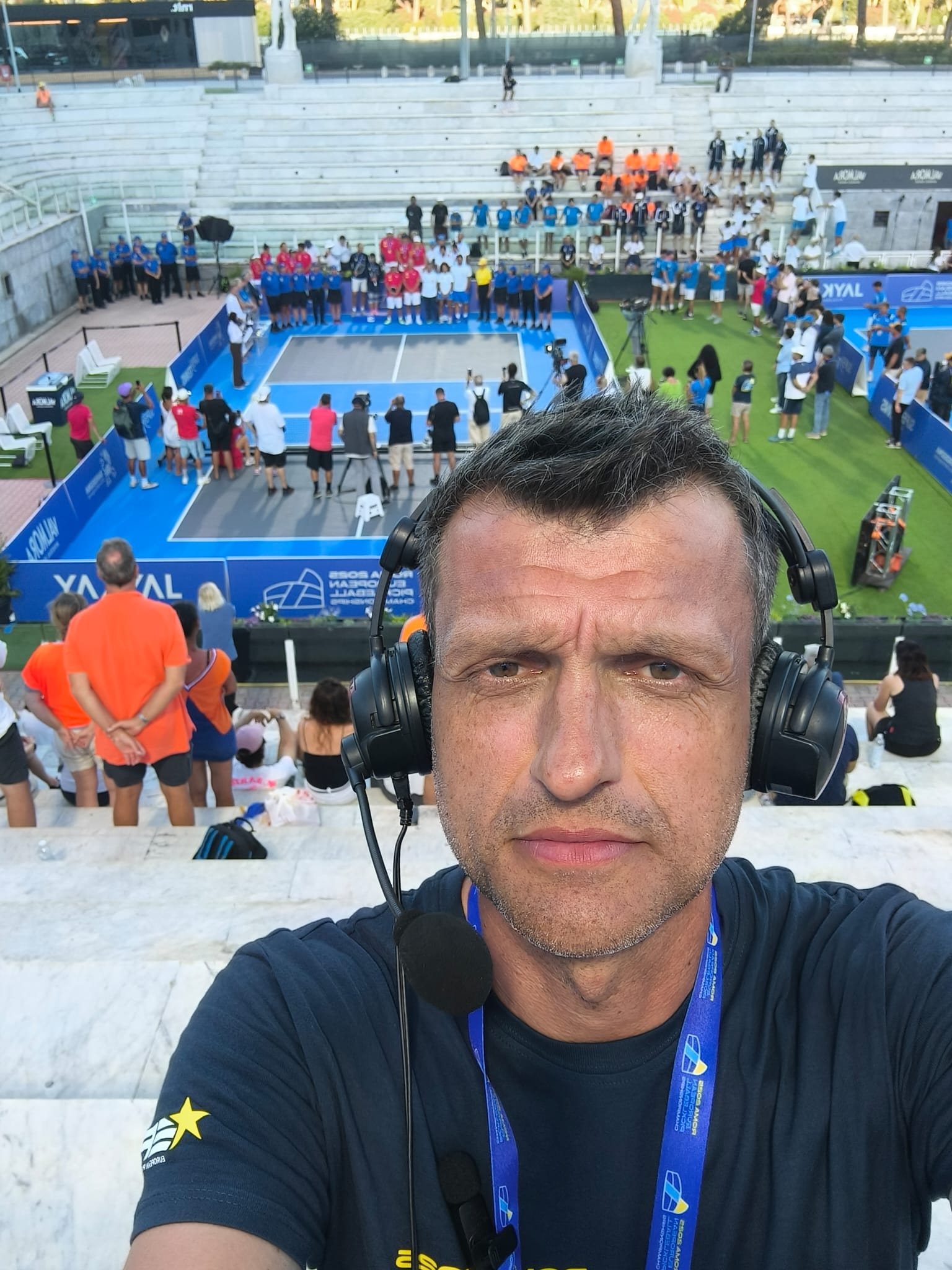
Chris Beaumont is the founder and Editor-in-Chief of World Pickleball Magazine. Chris follows the global game closely, reporting on the latest news, developments, stories and tournaments from all five continents. He also hosts the World Pickleball Podcast, interviewing people at all levels of pickleball. Chris is also an avid player, currently struggling to make the breakthrough from 4.0 to 4.5.