

Europe has spent years persuading adults to try pickleball. What it has not yet built properly is a generation raised inside the sport itself. Italy’s new Next Gen Pickleball Youth Tournament may be one of the clearest signs yet that this is beginning to change.
- Italy will host a junior-focused European pickleball tournament for under-14 and under-18 players in June.
- The event gives young players a rare structured competition pathway linked to DUPR.
- The bigger issue is whether Europe can build junior depth before the United States pulls further ahead.
A different kind of European pickleball story
For years, one of the strangest things about European pickleball has been the age profile.
Across much of the continent, tournaments have largely been filled with adults who discovered the sport later in life through tennis, padel, badminton or squash. Junior players have existed, but often at the edges of the system rather than inside a clear development pathway.
In many countries, talented teenagers have regularly found themselves competing against adults simply because there were too few youth structures available.
That is why the Next Gen Pickleball Youth Tournament in Italy matters more than it may first appear.
Italy gives juniors a proper stage
On 20 and 21 June, young players from across Europe are due to travel to Pickleball Colle in Colle di Val d’Elsa, near Siena, for one of the continent’s clearest attempts yet to create a serious junior competition environment.
The tournament will feature under-14 and under-18 categories, with singles and doubles competition for boys and girls.
The event will also feed into DUPR, giving young European players a place inside a recognised global rating structure rather than leaving their progress hidden inside local or national events.
That detail matters.
For years, many of Europe’s best young players have developed quietly. There has been limited consistency between countries, limited international junior competition and almost no obvious ladder connecting grassroots participation to elite-level opportunity.
If you’re following how the global game is shifting week by week, the World Pickleball Report breaks this down every day in our morning briefing.
The United States is already moving faster
The urgency becomes clearer when Europe is measured against the United States.
Through the Junior PPA Tour, young American players are already competing in junior-specific events attached to the professional circuit. They are playing around the same ecosystem as the sport’s biggest names, learning the rhythms of high-level pickleball before adulthood.
That matters because many of these players are not simply tennis or padel converts. They are increasingly pickleball-native athletes.
They grow up understanding the kitchen. They learn transition patterns early. They recognise speed-ups, resets and counters as part of their first racket-sport education rather than as habits added later.
That creates a different kind of player.
Europe is still building introductory pathways at the same time the United States is already producing juniors raised inside the sport.
The next phase is harder than participation growth
The first phase of pickleball’s European expansion was relatively simple to understand. Convince adults to try it. Build recreational communities. Open courts. Run local tournaments.
The second phase is harder.
Europe now has to decide whether it wants to become a genuine producer of elite players or remain primarily a recreational market supported by older demographics and crossover racket-sport athletes.
That is the real tension underneath this story.
Without meaningful investment in younger age groups, the competitive gap between North America and Europe could easily widen over the next decade.
Why Italy matters
Italy increasingly appears determined not to fall behind.
The country has become one of Europe’s more ambitious pickleball organisers, helped by a strong racket-sports culture, growing event infrastructure and increasing international links inside the professional game.
The location also feels symbolic.
Colle di Val d’Elsa is not being used simply as a venue for another participation event. It is being positioned as a meeting point for a generation of players who may eventually shape the European game in a very different way to those who built its first wave.
Why it matters
Europe does not lack recreational pickleball players anymore.
What it still lacks is a generation raised inside the sport from the beginning.
That is a completely different challenge.
The Next Gen tournament will not solve that alone. No single event could. But it does show that some organisers are beginning to understand the scale of the task.
Europe is not just trying to introduce people to pickleball now.
It is trying to build players who may one day compete with those who never had to discover the sport later.
For a clearer view of where the sport is heading each month, you can download the latest free issue of World Pickleball Magazine.
Further Reading
- Latest pickleball news from around the world
- Tournament coverage and results
- Rankings and player profiles
- Regional pickleball coverage
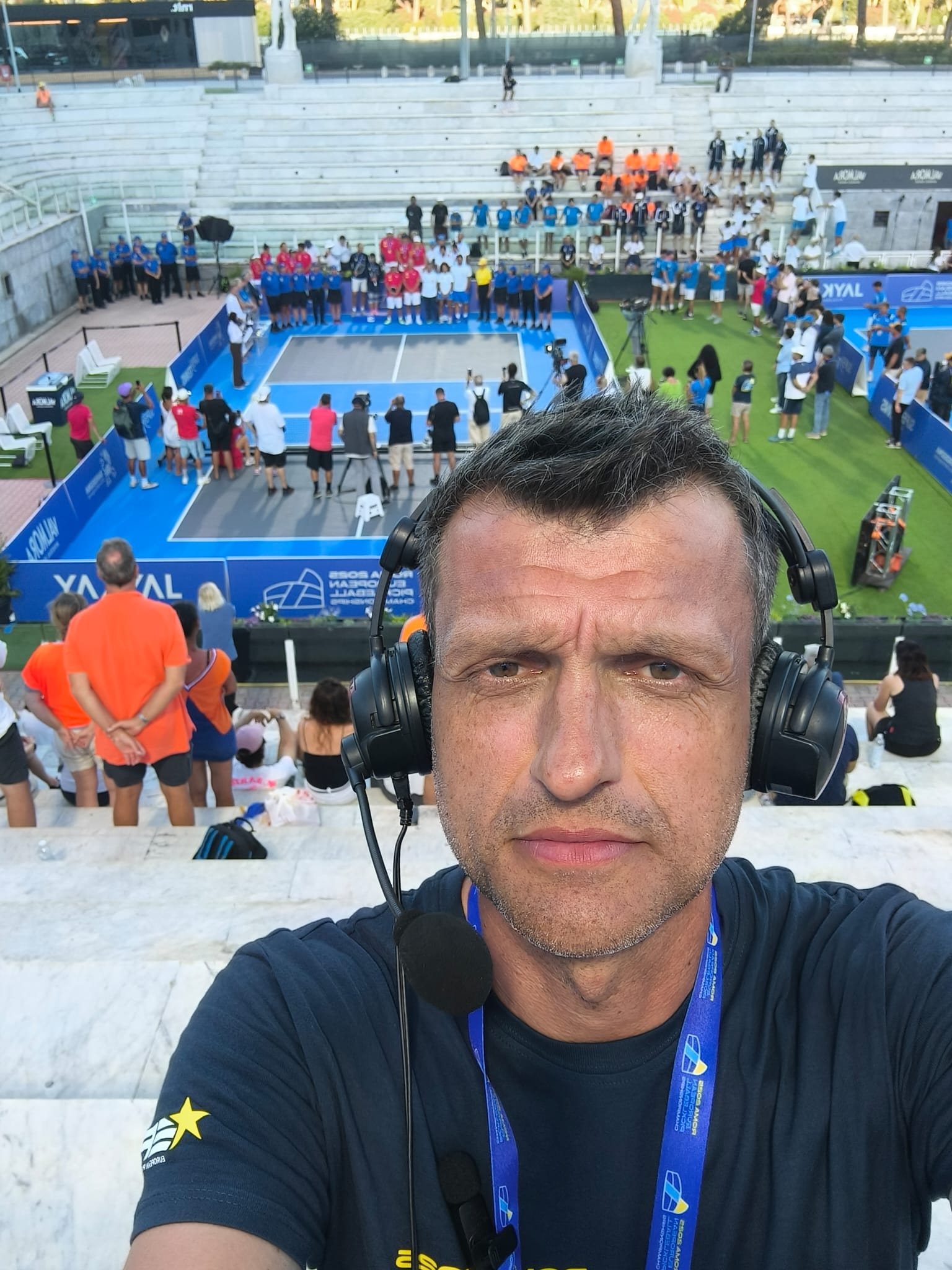
Chris Beaumont is the founder and Editor-in-Chief of World Pickleball Magazine. Chris follows the global game closely, reporting on the latest news, developments, stories and tournaments from all five continents. He also hosts the World Pickleball Podcast, interviewing people at all levels of pickleball. Chris is also an avid player, currently struggling to make the breakthrough from 4.0 to 4.5.